Building Blocks
This section contains fundamental products for the synthesis of organic and biological compounds. Building blocks are the essential starting materials used to construct complex molecules through various chemical reactions. They play a critical role in drug discovery, material science, and chemical research. At CymitQuimica, we offer a diverse range of high-quality building blocks to support your innovative research and industrial projects, ensuring you have the essential components for successful synthesis.
Subcategories of "Building Blocks"
- Boronic Acids & Boronic Acid Derivatives(5,778 products)
- Chiral Building Blocks(1,243 products)
- Hydrocarbon Building Blocks(6,097 products)
- Organic Building Blocks(61,048 products)
Found 203115 products of "Building Blocks"
Sort by
Purity (%)
0
100
|
0
|
50
|
90
|
95
|
100
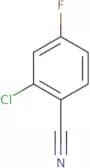
2-Chloro-4-fluorobenzonitrile
CAS:<p>2-Chloro-4-fluorobenzonitrile is a drug that has been shown to have antitumor effects by binding to the CB2 receptor. It inhibits hydrogenation reduction of the molecule, which may be due to its ability to react with both functional groups. 2-Chloro-4-fluorobenzonitrile has also been shown to inhibit progesterone receptor, which may lead to an increase in progesterone levels and a decrease in estrogen levels. The pharmacokinetic properties of this compound are not yet known.</p>Formula:C7H3ClFNPurity:Min. 95%Color and Shape:White PowderMolecular weight:155.56 g/molCyclic-3-(1,2-ethanediylacetal)-17β-cyano-17α-hydroxy-estra-5(10),9(11)-dien-3-one
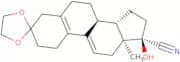
CAS:Cyclic-3-(1,2-ethanediylacetal)-17beta-cyano-17alpha-hydroxy-estra-5(10),9(11)-dien-3 -one is a chemical compound that is used as a reaction component, reagent, and high quality research chemical. It can be used as a useful scaffold or building block for the synthesis of complex compounds. Cyclic-3-(1,2-ethanediylacetal)-17beta-cyano-17alpha -hydroxyestra-5(10),9(11)-diene 3 one has CAS number 3330019 5.Formula:C21H27NO3Purity:Min. 95%Color and Shape:White to off-white solid.Molecular weight:341.44 g/mol3-Chloro-4-fluoroaniline
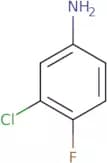
CAS:3-Chloro-4-fluoroaniline is an amine that is used as a chemical intermediate and an antimicrobial agent. It is a potent inhibitor of the enzyme IDO1. 3-Chloro-4-fluoroaniline has been shown to inhibit the growth of carcinoma cell lines and epidermal growth factor in vitro, which may be due to its ability to inhibit the production of protein data. This drug also inhibits the production of the growth factor n-dimethyl formamide by hydrolyzing it into dimethylamine and formic acid, which are then excreted in urine samples. 3-Chloro-4-fluoroaniline has been found to be highly effective at inhibiting IDO1, as well as other enzymes such as tryptophan 2,3 dioxygenase (TDO2) and indoleamine 2,3 dioxygenase (IDO).Formula:C6H5ClFNPurity:Min. 95%Color and Shape:Clear Liquid Solidified MassMolecular weight:145.56 g/mol3-Chloro-4-hydroxyphenylacetic acid.
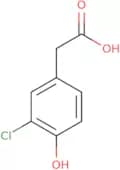
CAS:<p>3-Chloro-4-hydroxyphenylacetic acid is an organic compound that has a chemical structure that includes a phenyl group substituted with a chlorine atom. 3-Chloro-4-hydroxyphenylacetic acid is an intermediate in the synthesis of many drugs, and it is used to make the monosodium salt, which is a common form of this drug. 3-Chloro-4-hydroxyphenylacetic acid is one of the chemicals that has been shown to have physiological effects on humans and other animals. The most notable effect for humans is that it can be converted into cancerous cells by radiation. In addition, 3-chloro-4-hydroxyphenylacetic acid has been shown to have chemotherapeutic properties against prostate cancer cells and infectious diseases such as HIV and herpes simplex virus type 1 (HSV1). This chemical also exhibits immunomodulatory properties when administered system</p>Formula:C8H7ClO3Purity:Min. 98%Color and Shape:PowderMolecular weight:186.59 g/mol4-Chloropyrimidine
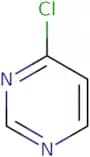
CAS:<p>4-Chloropyrimidine is a nucleophilic compound that is synthesized by the reaction of acetone with hydrogen chloride. The proton NMR spectrum of 4-chloropyrimidine has been determined and it has been shown to be active against herpes simplex virus in clinical studies. The synthesis of this compound is accomplished using a flow system. It can be prepared from trifluoroacetic acid and carbon disulphide or from sodium hydroxide and amines. The structure of 4-chloropyrimidine was determined by X-ray crystallography. It reacts with organic compounds to form new compounds, such as fluorine, which are often toxic to humans or animals.</p>Formula:C4H3ClN2Purity:90%MinColor and Shape:Off-White PowderMolecular weight:114.53 g/mol3-Iodo-[1,2,3]triazolo[1,5-α]pyridine
CAS:<p>3-Iodo-[1,2,3]triazolo[1,5-α]pyridine is a fine chemical that is used as a versatile building block in the synthesis of complex compounds. It has been shown to be an intermediate for research chemicals and as a reaction component in reactions with other chemicals. 3-Iodo-[1,2,3]triazolo[1,5-α]pyridine is also a useful scaffold for the production of drugs. The compound can be synthesized from readily available starting materials and has the advantage of being easily purified. 3-Iodo-[1,2,3]triazolo[1,5-α]pyridine has CAS No. 916756-21-3 and a molecular weight of 219.27 g/mol.</p>Formula:C6H4IN3Purity:Min. 95%Color and Shape:PowderMolecular weight:245.02 g/mol2-(2-(2-Chloroethoxy)ethoxy)ethanol
CAS:2-(2-(2-Chloroethoxy)ethoxy)ethanol (CETOI) is a coumarin derivative that is used as an additive in the fabrication of polyurethane. Magnetic resonance spectroscopy has shown that CETOI can be used as a probe to study amide groups by its ability to form hydrogen bonds with amide groups. This chemical can also be used in regenerative medicine and cyclic peptides. Azobenzene monomers have been shown to inhibit viral replication, including influenza virus, through the formation of covalent bonds with phosphate groups on dsDNA.Formula:C6H13ClO3Purity:Min. 95%Color and Shape:Colorless Clear LiquidMolecular weight:168.62 g/molChloro-1-propanol
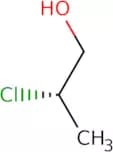
CAS:Chloro-1-propanol is a product that is used as an organic solvent and a reaction medium. It can be used in the synthesis of chlorinated compounds, such as epoxides, chloride gas, and oxetane. Chloro-1-propanol is not carcinogenic, although it does contain traces of impurities that are carcinogenic. Chloro-1-propanol has a high yield with relatively low cost and can be obtained by reacting chlorine with alcohols or phenols. This product is hydrophobic and reacts well with other molecules that are also hydrophobic. The reactivity of chloro-1-propanol increases when it reacts with chloride gas or hydrochloric acid to form divalent ions.Formula:C3H7ClOPurity:Min. 95%Color and Shape:Colorless Clear LiquidMolecular weight:94.54 g/mol(1S)-3-(Methylsulfanyl)-1-(2H-1,2,3,4-tetrazol-5-yl)propan-1-amine
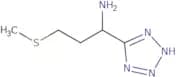
CAS:Versatile small molecule scaffoldFormula:C5H11N5SPurity:Min. 95%Color and Shape:PowderMolecular weight:173.24 g/molN-Methylquinolin-5-amine
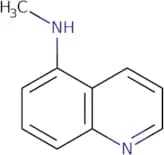
CAS:Versatile small molecule scaffoldFormula:C10H10N2Purity:Min. 95%Color and Shape:PowderMolecular weight:158.2 g/mol4-Chlorobenzamide
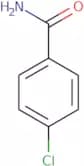
CAS:4-Chlorobenzamide is a quaternary ammonium compound that is used in the synthesis of other organic compounds. 4-Chlorobenzamide reacts with malonic acid to form a compound called 4-chlorobenzoic acid. The reaction mechanism involves formation of hydrogen bonds and an electrophilic substitution. 4-Chlorobenzamide is also found in environmental pollution, where it can be degraded by hydroxyl radicals and chlorine. It can be found as a chloride salt or amide depending on the pH. The functional groups are carbonyl group, which has a carbon atom double bonded to an oxygen atom, and hydroxyl group, which has a hydroxyl radical attached to a carbon atom.Formula:C7H6ClNOPurity:Min. 95%Color and Shape:PowderMolecular weight:155.58 g/mol2-Chloro-1,1,1-trimethoxyethane
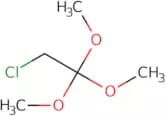
CAS:<p>2-Chloro-1,1,1-trimethoxyethane is a reagent that is used in the synthesis of recombinant proteins. It is also used to produce monoclonal antibodies. Fatty acids can be analyzed by using these reagents as they are soluble in this solvent. The structural analysis of fatty acids has been shown to have anticancer activity. 2-Chloro-1,1,1-trimethoxyethane reacts with glycosyl residues on lysine residues in proteins and produces an acid that causes the protein to unfold and denature. This reaction has been shown to have anticancer activity against cervical cancer cells in human liver cells.</p>Formula:C5H11ClO3Purity:Min. 97.5%Color and Shape:Colorless Clear LiquidMolecular weight:154.59 g/mol6-Chloro-7-iodo-7-deazapurine
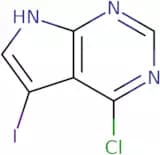
CAS:<p>6-Chloro-7-iodo-7-deazapurine is a nucleoside analogue that is synthesized by a cross-coupling reaction between 6-chloro-2,4(1H,3H)-pyrimidinedione and 7-iodo-7-(trifluoromethyl)purine. 6CIDP has been shown to inhibit growth of epidermal cells at concentrations as low as 0.1 µM, with cytostatic effects seen at 10 µM. 6CIDP has also been shown to potently inhibit the replication of the human papilloma virus in vitro and in vivo. 6CIDP is currently being investigated for the treatment of AIDS and other viral infections. The molecular modeling studies on this compound have revealed that it may be a potent inhibitor of the epidermal growth factor receptor (EGFR).</p>Formula:C6H3ClIN3Purity:Min. 98 Area-%Color and Shape:White PowderMolecular weight:279.47 g/molCyclopentylmethanol
CAS:Cyclopentylmethanol is a chemical compound with the molecular formula CH3OH. It is a colorless liquid that is soluble in water and has a distinctive, sweet odor. Cyclopentylmethanol is used as an intermediate in organic synthesis and as a solvent for nitrocellulose, cellulose acetate, cellulose nitrate, and similar materials. It reacts with chlorine at high temperatures to form chlorinated cyclopentylmethanols. This reaction can be used to synthesize hydroxyapatite (a mineral) from calcium phosphate (a mineral). Cyclopentylmethanol also reacts with nicotinic acetylcholine receptors in the brain, causing them to desensitize. Hydroxyapatite can also be synthesized by reacting cyclopentylmethanol with dinucleotide phosphate and hydroxyl group containing compounds such as esters or soluble guanylate cyclase enzymes. The reactions produce hydrogenFormula:C6H12OPurity:Min. 95%Color and Shape:Clear Colourless LiquidMolecular weight:100.16 g/mol(2E)-3-(1,3-Oxazol-2-yl)prop-2-enoic acid
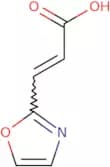
CAS:<p>1,3-Oxazole is an organic compound that belongs to the class of 1,3-diketones. It is a versatile building block that can be used in many different reactions. 1,3-Oxazole has been shown to be a reagent for use in research and as a speciality chemical. It has also been shown to be a useful intermediate for the synthesis of complex compounds. The compound is also a useful scaffold for developing high quality drug candidates with potential applications in medicine or other fields.</p>Formula:C6H5NO3Purity:Min. 95%Molecular weight:139.11 g/mol5-(Trifluoromethyl)thiophene-3-carboxylic acid
CAS:<p>Versatile small molecule scaffold</p>Formula:C6H3F3O2SPurity:Min. 95%Molecular weight:196.15 g/mol3,3,3-Trifluoropropane-1,2-diamine dihydrochloride
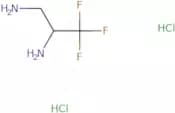
CAS:3,3,3-Trifluoropropane-1,2-diamine dihydrochloride is a high quality chemical that belongs to the group of useful building blocks. It is a versatile and complex compound that can be used in research or as a reagent. 3,3,3-Trifluoropropane-1,2-diamine dihydrochloride is also a reaction component for the synthesis of other compounds. This compound has been used as an intermediate for the production of pharmaceuticals and pesticides. It has been studied for its ability to inhibit protein kinase C (PKC) and calcium ion channels.Formula:C3H7F3N2•(HCl)2Purity:Min. 95%Molecular weight:201.02 g/mol6-Formylpicolinic acid
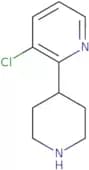
CAS:Versatile small molecule scaffoldFormula:C7H5NO3Purity:Min. 95%Color and Shape:PowderMolecular weight:151.12 g/mol3-Chloro-2-(piperidin-4-yl)pyridine
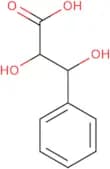
CAS:Versatile small molecule scaffoldFormula:C10H13ClN2Purity:Min. 95%Color and Shape:PowderMolecular weight:196.67 g/mol2,3-Dihydroxy-3-phenylpropanoic acid
CAS:<p>2,3-Dihydroxy-3-phenylpropanoic acid is a monocarboxylic acid and a benzenes. It has been shown to have antimicrobial properties against bacteria such as Staphylococcus aureus, Proteus vulgaris, and Klebsiella pneumoniae. The monocarboxylic acid inhibits bacterial growth by binding to the beta subunit of the enzyme DNA gyrase, which is necessary for DNA replication. 2,3-Dihydroxy-3-phenylpropanoic acid also binds to the beta subunit of the enzyme RNA polymerase and prevents mRNA synthesis, thus inhibiting protein synthesis in bacteria. !-- --> !-- --> !-- --> !-- --> !-- --> !-- --> !-- --></p>Formula:C9H10O4Purity:Min. 95%Color and Shape:PowderMolecular weight:182.17 g/mol

![3-Iodo-[1,2,3]triazolo[1,5-α]pyridine](/_next/image/?url=https%3A%2Fstatic.cymitquimica.com%2Fproducts%2F3D%2Fthumb-webp%2FRLB75621.webp&w=3840&q=75)