Building Blocks
This section contains fundamental products for the synthesis of organic and biological compounds. Building blocks are the essential starting materials used to construct complex molecules through various chemical reactions. They play a critical role in drug discovery, material science, and chemical research. At CymitQuimica, we offer a diverse range of high-quality building blocks to support your innovative research and industrial projects, ensuring you have the essential components for successful synthesis.
Subcategories of "Building Blocks"
- Boronic Acids & Boronic Acid Derivatives(5,778 products)
- Chiral Building Blocks(1,243 products)
- Hydrocarbon Building Blocks(6,097 products)
- Organic Building Blocks(61,048 products)
Found 203115 products of "Building Blocks"
Sort by
Purity (%)
0
100
|
0
|
50
|
90
|
95
|
100
4-Chloro-7-azaindole
CAS:4-Chloro-7-azaindole (4CA) is a molecule that has been shown to have significant cytotoxicity against cancer cells in vitro. 4CA inhibits the growth of cancer cells by binding to their DNA, preventing the synthesis of new DNA strands and leading to cell death. The inhibitory effect of 4CA on cancer cells can be attributed to its ability to bind to nitrogen atoms in the molecule's skeleton. This binding prevents the formation of hydrogen bonds between the molecule and other molecules or proteins, which are necessary for the synthesis of new DNA strands. 4CA has been shown to be active against human ovarian carcinoma and carcinoma cell lines in vitro.Formula:C7H5N2ClPurity:Min. 95 Area-%Color and Shape:PowderMolecular weight:152.58 g/mol1,4,5-Oxadiazepane hydrochloride
CAS:<p>1,4,5-Oxadiazepane hydrochloride is a high quality reagent with a CAS number of 329704-29-2. It is used as a complex compound and useful intermediate in the production of fine chemicals. This chemical has been found to be useful as a scaffold or building block in the synthesis of many different compounds. It is also versatile enough to be used as a reaction component for the production of research chemicals.</p>Formula:C4H11ClN2OPurity:Min. 95%Color and Shape:PowderMolecular weight:138.59 g/mol3-Methoxybenzoic acid
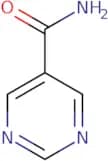
CAS:3-Methoxybenzoic acid is a compound that has two carboxyl groups, one on each of the two benzene rings. It is a white crystalline solid with a melting point of 86°C and a boiling point of 240°C at 1 mmHg. 3-Methoxybenzoic acid can be found in plants such as cranberries and strawberries. It also occurs naturally in animal fat, where it functions as an antioxidant and antimicrobial agent. 3-Methoxybenzoic acid has been shown to have synergistic effects when combined with protocatechuic acid in the treatment of carcinoma cells.Formula:C8H8O3Purity:Min. 95%Color and Shape:PowderMolecular weight:152.15 g/molPyrimidine-5-carboxamide
CAS:Pyrimidine-5-carboxamide is a heterocyclic compound that is used as an inhibitor of the pan-PI3K. This drug binds to the CB2 receptor, which has been found in inflammatory cells in the gastrointestinal tract. Pyrimidine-5-carboxamide inhibits inflammatory bowel disease by inhibiting the activity of p38 MAP kinase and JNK, which are key mediators of inflammation. It also inhibits insulin resistance and liver fibrosis by targeting PI3K/Akt signaling pathways. Pyrimidine-5-carboxamide has been shown to have anti-inflammatory effects on the skin, hair follicles, and intestines; it may be used for treating alopecia areata, bowel disease, or hepatic cancer.Formula:C5H5N3OPurity:Min. 95%Color and Shape:PowderMolecular weight:123.11 g/mol4H-Cyclopenta[2,1-b:3,4-b']dithiophene
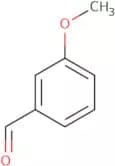
CAS:<p>4H-Cyclopenta[2,1-b:3,4-b']dithiophene is a molecule that has been shown to be photovoltaic. It has an optical absorption spectrum that peaks in the UV region and is able to absorb light from 300 to 400 nm. 4H-Cyclopenta[2,1-b:3,4-b']dithiophene can be fabricated into devices by means of cyclic voltammetry or other techniques. As a result of its high electron mobility and its ability to absorb visible light, this molecule may lead to high efficiency solar cells. Photovoltaic devices made with 4H-Cyclopenta[2,1-b:3,4-b']dithiophene have been shown to have efficiencies as high as 2%.</p>Formula:C9H6S2Purity:Min. 95%Color and Shape:PowderMolecular weight:178.28 g/mol3-Methoxybenzaldehyde
CAS:<p>3-Methoxybenzaldehyde is a chemical compound that is used as an intermediate in the synthesis of organic compounds. This compound has shown to be a potent inhibitor of several enzymes, including diamine tetraacetic acid (DAT)-dependent aminotransferase, trimethyl amine N-oxide reductase, and hydrochloric acid hydrolases. 3-Methoxybenzaldehyde also inhibits the growth of hepg2 cells and induces apoptosis. The chemical structure of this compound contains a boron nitride group that can form hydrogen bonds with other molecules and fatty acids that can act as a substrate for oxidation reactions.</p>Formula:C8H8O2Purity:Min. 98 Area-%Color and Shape:Clear LiquidMolecular weight:136.15 g/moltert-Butyl octahydrocyclopenta[c]pyrrol-4-ylcarbamate
CAS:<p>Tert-Butyl octahydrocyclopenta[c]pyrrol-4-ylcarbamate is a versatile building block that is a useful intermediate. It can be used as an additive in the synthesis of pharmaceuticals and other organic compounds. Tert-Butyl octahydrocyclopenta[c]pyrrol-4-ylcarbamate has been shown to possess antiviral activity, which may be due to its ability to inhibit viral DNA polymerase.</p>Formula:C12H22N2O2Purity:Min. 95%Color and Shape:PowderMolecular weight:226.32 g/mol2-Chloroquinoline
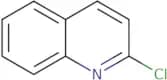
CAS:2-Chloroquinoline is a compound that has antimicrobial properties. It acts by inhibiting bacterial RNA synthesis and protein synthesis. 2-Chloroquinoline has been shown to have toxicological effects in animal studies, including cancer. It also inhibits the activity of the cb2 receptor and the CCR5 receptor, which are involved in tumor growth. The molecular docking analysis for this compound is available, which can be found on PubChem.Formula:C9H6ClNPurity:Min. 98%Color and Shape:PowderMolecular weight:163.6 g/molPF-04965842
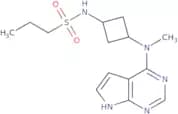
CAS:<p>PF-04965842 is an anti-inflammatory drug that belongs to the class of Jak1 inhibitors. It is used in the treatment of alopecia areata, dermatitis, and bowel disease. PF-04965842 is a selective inhibitor of JAK3 and blocks signaling through this pathway. PF-04965842 has been shown to have long-term efficacy in the treatment of inflammatory skin diseases such as atopic dermatitis and psoriasis. In addition, it has been demonstrated to be effective in reducing symptoms associated with inflammatory bowel disease (IBD) and ulcerative colitis. PF-04965842 also inhibits the production of proinflammatory cytokines by inhibiting the activation of inflammatory cells in the skin or gut.</p>Formula:C14H21N5O2SPurity:Min. 95%Color and Shape:PowderMolecular weight:323.41 g/mol(N,N,Dimethyl)-(3-aminopropyl)sulfonamidehydrochloride
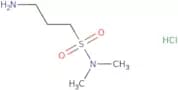
CAS:<p>(N,N,Dimethyl)-(3-aminopropyl)sulfonamidehydrochloride is a fine chemical that can be used as a reagent for research or as a speciality chemical. It is also an intermediate for the synthesis of complex compounds and has versatile building blocks for organic synthesis. This compound is used in the preparation of pharmaceuticals, agrochemicals, and other useful chemicals. CAS No. 91893-74-2.</p>Formula:C5H15ClN2O2SPurity:Min. 95%Color and Shape:PowderMolecular weight:202.7 g/mol5-Hydroxyindole-3-acetic acid
CAS:<p>5-Hydroxyindole-3-acetic acid is a versatile building block that is useful as a reagent, speciality chemical, and reaction component. It has been used in the synthesis of complex compounds with various applications. The compound can be distilled to produce high-purity 5-hydroxyindole-3-acetic acid for research purposes.</p>Formula:C10H9NO3Purity:Min. 98.0 Area-%Molecular weight:191.19 g/mol3-Methyl-2-nitrobenzoic acid
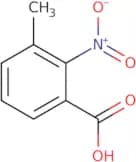
CAS:<p>3-Methyl-2-nitrobenzoic acid is a chemical that can be used for wastewater treatment. It has been shown to be effective against chlorantraniliprole, a pesticide that is often found in wastewater. 3-Methyl-2-nitrobenzoic acid also has the ability to reduce chloride levels by oxidizing it to produce chloride ions and nitrogen gas. This chemical can be used as an oxidation catalyst in wastewater treatment. 3-Methyl-2-nitrobenzoic acid has been shown to have photocatalytic activity with titanium dioxide and copper sulfate (CuSO4) under visible light illumination conditions.</p>Formula:C8H7NO4Purity:Min. 95%Color and Shape:PowderMolecular weight:181.15 g/mol3-Hydroxyindole
CAS:3-Hydroxyindole is a fine chemical that can be used as a versatile building block, useful intermediate, and research chemical. It is a complex compound that can be used to make compounds with a wide variety of properties. 3-Indole has been used in the synthesis of high quality reagents and as a reaction component. 3-Indole is soluble in water and other solvents such as ethanol and acetone. Its CAS number is 480-93-3.Formula:C8H7NOMolecular weight:133.15 g/mol2-Hydroxy-4-methoxybenzaldehyde
CAS:2-Hydroxy-4-methoxybenzaldehyde is an organic chemical that is used as a versatile building block for complex compounds, research chemicals, and reagents. It is also used as a speciality chemical and as a useful intermediate in the synthesis of other chemicals. 2-Hydroxy-4-methoxybenzaldehyde has CAS No. 673-22-3 and can be used to make many different types of compounds. This compound is a useful scaffold for the synthesis of diverse compounds with biological activity such as pharmaceuticals, agrochemicals, dyes, perfumes, fragrances, flavors and fragrances.Formula:C8H8O3Purity:Min. 99.0 Area-%Molecular weight:152.15 g/molN1-(4,5-Dihydro-1H-imidazol-2-yl)benzene-1,4-diamine dihydrochloride
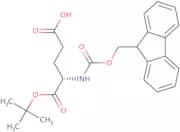
CAS:Versatile small molecule scaffoldFormula:C9H14Cl2N4Purity:Min. 95%Color and Shape:PowderMolecular weight:249.14 g/molFmoc-L-Glu-OtBu
CAS:<p>Fmoc-L-Glu-OtBu is a synthetic ligand that is used as a fluorescent probe in vivo. It has been shown to bind to semaglutide with high affinity, and it can be used to study the function of semaglutide in the cell. Fmoc-L-Glu-OtBu has also been found to have an inhibitory effect on cancer cells. This ligand can be synthesized by solid-phase synthesis and purified by column chromatography. The purity of Fmoc-L-Glu-OtBu is confirmed by elemental analysis, and its impurities are determined by fluorescence spectroscopy. The carboxylate group of Fmoc-L-Glu-OtBu is activated with sulfuric acid to form the corresponding active ester, which can then be conjugated with other molecules.</p>Formula:C24H27NO6Purity:Min. 95%Color and Shape:White PowderMolecular weight:425.47 g/mol2-Chloro-4-trifluoromethylbenzoic acid
CAS:<p>2-Chloro-4-trifluoromethylbenzoic acid is a chemical compound with the formula CHClFO. It can be obtained by deprotonation of 2,4,6-trichlorobenzoic acid with butyllithium and subsequent reaction with chlorotrifluoromethane. The product has two regioisomers, one in which the chlorine atom is attached to the para position on the benzene ring and the other in which it is attached to the ortho position. Substituents such as alkyl groups or lithium reagents can affect both reactivity and selectivity. The halogen substituent can also be replaced by other functional groups to make derivatives of this compound.</p>Formula:C8H4ClF3O2Purity:Min. 95%Color and Shape:PowderMolecular weight:224.56 g/mol2-(2-Methoxyethoxy)ethanol
CAS:<p>2-(2-Methoxyethoxy)ethanol is a sodium salt that has a synergic effect with other solvents. It is used in the preparation of samples for analytical purposes and in the reaction solution of various glycol ethers. 2-(2-Methoxyethoxy)ethanol also has an effect on thermal expansion, which can be utilized to monitor this parameter during sample preparation. The presence of nitrogen atoms in its structure makes it possible to use it as a reagent for the synthesis of styryl dyes. 2-(2-Methoxyethoxy)ethanol is an antirheumatic drug that belongs to the class of glycol esters and benzalkonium chloride.</p>Formula:C5H12O3Purity:Min. 95%Color and Shape:Colorless Clear LiquidMolecular weight:120.15 g/mol2-Chloro-6-fluorobenzaldehyde
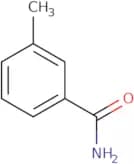
CAS:<p>2-Chloro-6-fluorobenzaldehyde is an impurity that can be found in wastewater. It has been shown to be a reactive intermediate for the synthesis of streptochlorin, which is a natural product with potential antibiotic activity. 2-Chloro-6-fluorobenzaldehyde is produced by the reaction of chlorine and anhydrous sodium, with acid as catalyst. The molecule has two fluorine atoms and one chloride atom. This compound can also be used in the treatment of waste water due to its ability to react with hydroxyl ions and chloride ions in the presence of hydrogen chloride or hydrochloric acid. The pain model was evaluated using nmr spectra and optical properties.</p>Formula:C7H4ClFOPurity:Min. 95%Color and Shape:White PowderMolecular weight:158.56 g/mol3-Methylbenzamide
CAS:<p>3-Methylbenzamide is an organic compound that belongs to the class of benzamides. It has been shown to cause a decrease in blood pressure and a decrease in viscosity, as well as an increase in blood flow to the testes. 3-Methylbenzamide has also been shown to inhibit the enzyme that catalyzes the conversion of tyrosine into dopamine and may be used for the treatment of Parkinson's disease with mild symptoms. The chemical ionization technique was used to study the binding of 3-methylbenzamide with rat plasma proteins and showed that this molecule binds with high affinity to albumin and alpha 1-acid glycoprotein. This binding was found to be reversible, which suggests that 3-methylbenzamide may not be metabolized by liver enzymes.</p>Formula:C8H9NOPurity:Min. 95%Color and Shape:White PowderMolecular weight:135.16 g/mol


![4H-Cyclopenta[2,1-b:3,4-b']dithiophene](/_next/image/?url=https%3A%2Fstatic.cymitquimica.com%2Fproducts%2F3D%2Fthumb-webp%2FFC13994.webp&w=3840&q=75)
![tert-Butyl octahydrocyclopenta[c]pyrrol-4-ylcarbamate](/_next/image/?url=https%3A%2Fstatic.cymitquimica.com%2Fproducts%2F3D%2Fthumb-webp%2FKHA69312.webp&w=3840&q=75)