Building Blocks
This section contains fundamental products for the synthesis of organic and biological compounds. Building blocks are the essential starting materials used to construct complex molecules through various chemical reactions. They play a critical role in drug discovery, material science, and chemical research. At CymitQuimica, we offer a diverse range of high-quality building blocks to support your innovative research and industrial projects, ensuring you have the essential components for successful synthesis.
Subcategories of "Building Blocks"
- Boronic Acids & Boronic Acid Derivatives(5,778 products)
- Chiral Building Blocks(1,242 products)
- Hydrocarbon Building Blocks(6,098 products)
- Organic Building Blocks(61,059 products)
Found 199580 products of "Building Blocks"
Sort by
Purity (%)
0
100
|
0
|
50
|
90
|
95
|
100
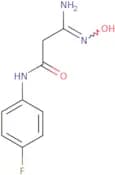
N-(4-Fluorophenyl)-2-(N'-hydroxycarbamimidoyl)acetamide
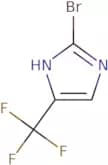
CAS:<p>Versatile small molecule scaffold</p>Formula:C9H10FN3O2Purity:Min. 95%Molecular weight:211.19 g/mol2-Bromo-4-(trifluoromethyl)-1H-imidazole
CAS:<p>Versatile small molecule scaffold</p>Formula:C4H2BrF3N2Purity:Min. 95%Molecular weight:214.97 g/mol[(Thiophen-2-yl)methyl]urea
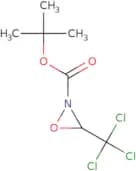
CAS:<p>Versatile small molecule scaffold</p>Formula:C6H8N2OSPurity:Min. 95%Molecular weight:156.21 g/moltert-Butyl 3-(trichloromethyl)oxaziridine-2-carboxylate
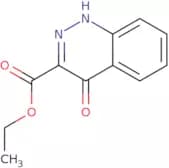
CAS:<p>Versatile small molecule scaffold</p>Formula:C7H10Cl3NO3Purity:Min. 95%Molecular weight:262.5 g/molEthyl 4-oxo-1,4-dihydrocinnoline-3-carboxylate
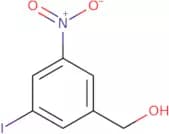
CAS:<p>Versatile small molecule scaffold</p>Formula:C11H10N2O3Purity:Min. 95%Molecular weight:218.21 g/mol(3-Iodo-5-nitrophenyl)methanol
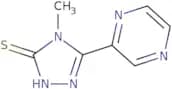
CAS:Versatile small molecule scaffoldFormula:C7H6INO3Purity:Min. 95%Molecular weight:279.03 g/mol4-Methyl-5-(pyrazin-2-yl)-4H-1,2,4-triazole-3-thiol
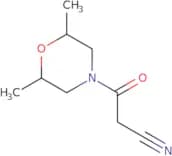
CAS:<p>Versatile small molecule scaffold</p>Formula:C7H7N5SPurity:Min. 95%Molecular weight:193.23 g/mol3-(2,6-Dimethylmorpholin-4-yl)-3-oxopropanenitrile
CAS:<p>Versatile small molecule scaffold</p>Formula:C9H14N2O2Purity:Min. 95%Molecular weight:182.22 g/molMethyl 3-[2-(trimethylsilyl)ethynyl]pyridine-2-carboxylate
CAS:<p>Versatile small molecule scaffold</p>Formula:C12H15NO2SiPurity:Min. 95%Molecular weight:233.34 g/mol2H,6H,7H-Pyrazolo[3,4-d]pyridazin-7-one
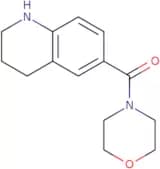
CAS:<p>Versatile small molecule scaffold</p>Formula:C5H4N4OPurity:Min. 95%Molecular weight:136.11 g/mol6-(Morpholine-4-carbonyl)-1,2,3,4-tetrahydroquinoline
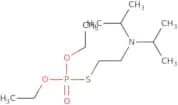
CAS:Versatile small molecule scaffoldFormula:C14H18N2O2Purity:Min. 95%Molecular weight:246.3 g/molS-(2-(Diisopropylamino)ethyl) O,O-diethyl phosphorothioate
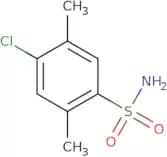
CAS:<p>S-(2-(Diisopropylamino)ethyl) O,o-diethyl phosphorothioate is a potent organophosphorus insecticide. It inhibits the enzyme acetylcholinesterase (AChE), which is responsible for the breakdown of acetylcholine. The binding of S-(2-(Diisopropylamino)ethyl) O,o-diethyl phosphorothioate to AChE leads to an accumulation of acetylcholine at cholinergic synapses, resulting in paralysis and death. Studies have shown that this compound has a greater potency than chlorpyrifos against phellinus. This insecticide also has the ability to enhance bacterial growth by increasing 3-ethylbenzthiazoline-6-sulfonic acid production and reducing the redox potential. The optimum pH for S-(2-(Diisopropylamino)ethyl) O,o-diethyl phosphor</p>Formula:C12H28NO3PSPurity:Min. 95%Molecular weight:297.4 g/mol4-Chloro-2,5-dimethylbenzenesulfonamide
CAS:Versatile small molecule scaffoldFormula:C8H10ClNO2SPurity:Min. 95%Molecular weight:219.69 g/mol4-{[2-(1H-Imidazol-5-yl)ethyl]carbamoyl}butanoic acid
CAS:<p>4-{[2-(1H-Imidazol-5-yl)ethyl]carbamoyl}butanoic acid (4AICB) is a potent replication inhibitor of the influenza virus. It targets the viral RNA polymerase (RdRP), which is essential for virus replication and transcription. 4AICB inhibits the activity of RdRP by binding to its active site, thereby preventing the initiation of transcription. This mechanism of action has been shown to be effective against influenza A viruses and other RNA viruses. In addition, this drug has been shown to inhibit growth factor signaling pathways in human hematopoietic cells, which may be responsible for its anti-inflammatory effects. 4AICB also possesses pharmacokinetic properties that make it an ideal candidate for use as a diagnostic agent or as a treatment for inflammatory diseases. It can be administered orally or intravenously and is rapidly absorbed from the gastrointestinal tract or injected sites into systemic circulation, with rapid</p>Formula:C10H15N3O3Purity:Min. 95%Color and Shape:PowderMolecular weight:225.24 g/moltert-Butyl N-[3-(chloromethyl)phenyl]carbamate
CAS:<p>Versatile small molecule scaffold</p>Formula:C12H16ClNO2Purity:Min. 95%Molecular weight:241.71 g/mol{[(4-Methoxyphenyl)methylidene]amino}thiourea
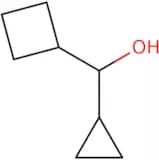
CAS:<p>4-Methoxyphenylmethyldeneamine (4MMDA) is an enzyme inhibitor that inhibits the diphenolase activity of D-alanyl-D-alanine ligase and D-alanyl-D-alanine dipeptidase. 4MMDA has been shown to inhibit the growth of bacteria by binding to molybdenum in a competitive manner, thereby preventing the formation of bacterial enzymes. This drug also inhibits chloride ion flow through the cytoplasmic membrane. The inhibition of chloride ion flow leads to a decrease in cell volume and cell death. 4MMDA also has an inhibitory effect on monophenolase activity and can be used as a fungicide.</p>Formula:C9H11N3OSPurity:Min. 95%Molecular weight:209.27 g/molCyclobutyl(cyclopropyl)methanol
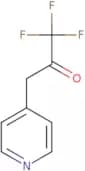
CAS:<p>Versatile small molecule scaffold</p>Formula:C8H14OPurity:Min. 95%Molecular weight:126.2 g/mol1,1,1-Trifluoro-3-(pyridin-4-yl)propan-2-one
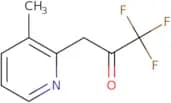
CAS:Versatile small molecule scaffoldFormula:C8H6F3NOPurity:Min. 95%Molecular weight:189.13 g/mol1,1,1-Trifluoro-3-(3-methylpyridin-2-yl)propan-2-one
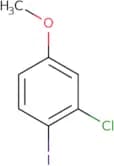
CAS:<p>Versatile small molecule scaffold</p>Formula:C9H8F3NOPurity:Min. 95%Molecular weight:203.16 g/mol2-Chloro-1-iodo-4-methoxybenzene
CAS:<p>2-Chloro-1-iodo-4-methoxybenzene (2CIOMB) is a reactive, electron-rich compound that has been shown to be capable of inducing DNA damage and cytotoxicity. 2CIOMB binds to DNA through the electron acceptor mechanism and can form covalent bonds with both deoxyribose and ribose residues in DNA. 2CIOMB also has been shown to inhibit protein synthesis. The metabolism of 2CIOMB in microorganisms is well understood and can be used for environmental monitoring. The elimination of 2CIOMB from animals has been well studied as well, although its relevance for humans is not known. In addition, 2CIOMB is fluorescent in the UV region, which makes it useful in analytical chemistry applications.</p>Formula:C7H6ClIOPurity:Min. 95%Molecular weight:268.48 g/mol

![[(Thiophen-2-yl)methyl]urea](/_next/image/?url=https%3A%2Fstatic.cymitquimica.com%2Fproducts%2F3D%2Fthumb-webp%2FUIA53912.webp&w=3840&q=75)
![Methyl 3-[2-(trimethylsilyl)ethynyl]pyridine-2-carboxylate](/_next/image/?url=https%3A%2Fstatic.cymitquimica.com%2Fproducts%2F3D%2Fthumb-webp%2FUIA62303.webp&w=3840&q=75)
![2H,6H,7H-Pyrazolo[3,4-d]pyridazin-7-one](/_next/image/?url=https%3A%2Fstatic.cymitquimica.com%2Fproducts%2F3D%2Fthumb-webp%2FUIA63104.webp&w=3840&q=75)
![4-{[2-(1H-Imidazol-5-yl)ethyl]carbamoyl}butanoic acid](/_next/image/?url=https%3A%2Fstatic.cymitquimica.com%2Fproducts%2F3D%2Fthumb-webp%2FUIA69463.webp&w=3840&q=75)
![tert-Butyl N-[3-(chloromethyl)phenyl]carbamate](/_next/image/?url=https%3A%2Fstatic.cymitquimica.com%2Fproducts%2F3D%2Fthumb-webp%2FUIA70658.webp&w=3840&q=75)
![{[(4-Methoxyphenyl)methylidene]amino}thiourea](/_next/image/?url=https%3A%2Fstatic.cymitquimica.com%2Fproducts%2F3D%2Fthumb-webp%2FUIA71286.webp&w=3840&q=75)