Building Blocks
This section contains fundamental products for the synthesis of organic and biological compounds. Building blocks are the essential starting materials used to construct complex molecules through various chemical reactions. They play a critical role in drug discovery, material science, and chemical research. At CymitQuimica, we offer a diverse range of high-quality building blocks to support your innovative research and industrial projects, ensuring you have the essential components for successful synthesis.
Subcategories of "Building Blocks"
- Boronic Acids & Boronic Acid Derivatives(5,780 products)
- Chiral Building Blocks(1,241 products)
- Hydrocarbon Building Blocks(6,100 products)
- Organic Building Blocks(61,024 products)
Found 205297 products of "Building Blocks"
Sort by
Purity (%)
0
100
|
0
|
50
|
90
|
95
|
100
3-(4-Fluorophenyl)cyclopentan-1-amine
CAS:Versatile small molecule scaffoldFormula:C11H14FNPurity:(%) Min. 80%Molecular weight:179.23 g/mol5-Amino-N,N-dimethyl-1H-pyrazole-4-carboxamide
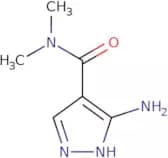
CAS:Versatile small molecule scaffoldFormula:C6H10N4OPurity:Min. 95%Color and Shape:PowderMolecular weight:154.17 g/mol6-(Aminomethyl)-2-naphthol
CAS:Versatile small molecule scaffoldFormula:C11H11NOPurity:Min. 95%Molecular weight:173.21 g/mol(1-Aminoethane-1,1-diyl)diphosphonic acid
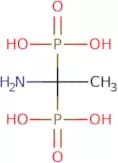
CAS:(1-Aminoethane-1,1-diyl)diphosphonic acid (HEDPA) is a synthetic phosphonate that is soluble in water and organic solvents. HEDPA has been used in gravimetric analysis because it is stable to boiling point and can be easily dried on the surface of a glass plate. It also has been used as a reagent for the synthesis of hydroxy methyl phosphonates and other phosphonate compounds. In crystal x-ray diffraction, HEDPA shows strong hydrogen bonding interactions with counterions such as PO43-, SO42-, or NH4+. The coordination chemistry of HEDPA involves metal ions such as Fe3+, Cu2+, Co2+, Ni2+, Cr3+, Mn2+, Zn2+, Cd2+ and Al3+. Functional theory predicts that the architecture of HEDPA's supramolecular units are either tetrahedral or octahedral. InfFormula:C2H9NO6P2Purity:Min. 95%Color and Shape:PowderMolecular weight:205.04 g/mol(1S,3S)-1-(Boc-amino)cyclohexan-3-amine
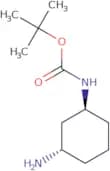
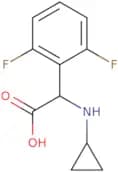
CAS:Versatile small molecule scaffoldFormula:C11H22N2O2Purity:Min. 95%Molecular weight:214.3 g/mol2-(Cyclopropylamino)-2-(2,6-difluorophenyl)acetic acid
CAS:Versatile small molecule scaffoldFormula:C11H11F2NO2Purity:Min. 95%Color and Shape:PowderMolecular weight:227.21 g/molPhenyl sulfamate
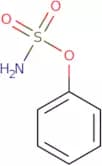
CAS:Phenyl sulfamate is a monosodium salt that has been shown to inhibit the growth of cancer cells in vitro. It has been used as an antimicrobial agent to treat chronic arthritis and atherosclerotic lesions. Phenyl sulfamate inhibits the activity of enzymes that are involved in the synthesis of proteins, such as collagenase, elastase, and proteases. The irreversible inhibition by phenyl sulfamate is due to its ability to react with sulfamoyl chloride (SOC). This reaction leads to the formation of a covalent bond between the enzyme and phenyl sulfamate, which cannot be reversed by any known chemical or enzymatic process.Formula:C6H7NO3SPurity:Min. 95%Color and Shape:PowderMolecular weight:173.19 g/mol2-Amino-4-oxopentanoic acid hydrochloride
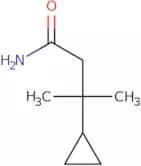
CAS:Versatile small molecule scaffoldFormula:C5H9NO3•HClPurity:Min. 95%Color and Shape:PowderMolecular weight:167.59 g/mol3-Cyclopropyl-3-methylbutanamide
CAS:Versatile small molecule scaffold
Formula:C8H15NOPurity:Min. 95%Color and Shape:PowderMolecular weight:141.21 g/mol4-[(1E)-Prop-1-en-1-yl]phenol
CAS:Eugenol is a phenolic compound and the main active ingredient of clove oil. Eugenol has been shown to have antioxidant, anti-inflammatory, analgesic, and antimicrobial properties. It also inhibits the growth of cancer cells in vitro (mcf-7 cells). The mechanism of eugenol’s activity is not well understood. It may involve activation of adenine nucleotide levels by inhibiting the production of p-hydroxybenzoic acid or by increasing nucleotide levels by inhibiting the conversion to p-hydroxybenzoic acid. Eugenol also inhibits bacterial DNA gyrase and topoisomerase IV, which are enzymes that maintain the integrity of bacterial DNA. This inhibition leads to cell death by inhibiting protein synthesis. Eugenol has been shown to inhibit mineralization in petunia plants and may have a similar effect on human bone tissue.Formula:C9H10OPurity:90%Molecular weight:134.17 g/mol4-[(1E)-3-Hydroxyprop-1-en-1-yl]phenol
CAS:4-[(1E)-3-Hydroxyprop-1-en-1-yl]phenol (4-HP) is a natural compound that belongs to the group of polyphenols. It is one of the main constituents of the plant extract, which is obtained from leaves of the plant Ferula communis. 4-HP has been shown to have antiinflammatory activity by inhibiting prostaglandin synthesis in 3T3-L1 preadipocytes. The synergic effect can be explained by a combination of its antioxidant and antiinflammatory properties. In an analytical method, 4-HP was found to be present in ferulic acid and p-hydroxybenzoic acid. 4-HP also inhibits dna polymerase activity and rna synthesis at low concentration levels. The mechanism of action may be due to the inhibition of bacterial dna gyrase and topoisomerase I, leading to bacterial cell death.Formula:C9H10O2Purity:Min. 95%Molecular weight:150.17 g/mol1-[3-(Piperidine-1-carbonyl)phenyl]methanamine
CAS:Versatile small molecule scaffoldFormula:C13H18N2OPurity:Min. 95%Color and Shape:Clear LiquidMolecular weight:218.29 g/mol4-aminobutan-2-one hydrochloride
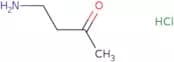
CAS:4-Aminobutan-2-one hydrochloride is a β-unsaturated compound that can be synthesized by the condensation of methyl ketone and sulfide. This reaction converts the carbonyl group to an aminoketone group. The isomers of 4-aminobutan-2-one hydrochloride include 3,4-dimethylketone and 2,3,5,6-tetramethylketone. 4-Aminobutan-2-one hydrochloride can be used as a precursor for nitriles and sulfur compounds. It also selectively reacts with sodium sulfide in water to produce cyanoacetate or with sodium hydroxide to produce hydrogen cyanide and sulfides.Formula:C4H10ClNOPurity:Min. 95%Color and Shape:PowderMolecular weight:123.58 g/mol5-Chlorosulfonyl-2-hydroxybenzoic acid
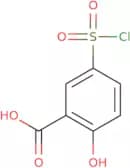
CAS:5-Chlorosulfonyl-2-hydroxybenzoic acid is a convergent, clean, and efficient synthesis of the pharmaceutical drug sildenafil. It has been shown to be a reagent for the preparation of sildenafil. 5-Chlorosulfonyl-2-hydroxybenzoic acid is an organic compound that belongs to the class of compounds called sulfonamides. This compound has been shown to be an efficient and effective synthetic intermediate in the preparation of sildenafil.Formula:C7H5ClO5SPurity:Min. 95%Color and Shape:PowderMolecular weight:236.63 g/mol(S)-1-(2-Amino-propan-1-yl)-4-methyl-piperazine
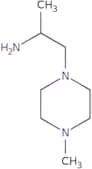
CAS:(S)-1-(2-Amino-propan-1-yl)-4-methyl-piperazine is a reagent, reaction component and building block for speciality chemicals. It is a versatile intermediate that has been used in the synthesis of complex compounds. (S)-1-(2-Amino-propan-1-yl)-4-methyl-piperazine is an important building block for the synthesis of a variety of pharmaceuticals and other organic compounds. This compound can be used as an intermediate or reagent to produce high quality research chemicals.Formula:C8H19N3Purity:Min. 95%Molecular weight:157.26 g/mol2-Hydroxy-3,4-dihydro-2H-1,4-benzoxazin-3-one
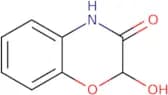
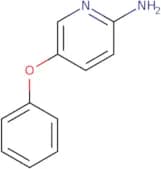
CAS:2-Hydroxy-3,4-dihydro-2H-1,4-benzoxazin-3-one is a versatile compound with various applications. It is commonly used in the production of coatings and as a fatty acid leaching agent. Additionally, it is utilized in the synthesis of research chemicals such as imatinib and sildenafil citrate.Formula:C8H7NO3Purity:Min. 95%Molecular weight:165.15 g/mol5-Phenoxypyridin-2-amine
CAS:5-Phenoxypyridin-2-amine is a useful scaffold that can be used as a reaction component, reagent, or intermediate. It is an aromatic compound with a benzene ring and pyridine group and has the CAS number 64064-68-2. 5-Phenoxypyridin-2-amine can be used as a building block for organic synthesis and as an intermediate for other compounds. This product can also be used to create complex compounds that are difficult to synthesize in other ways.
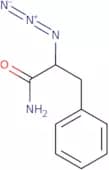
Formula:C11H10N2OPurity:Min. 95%Color and Shape:PowderMolecular weight:186.21 g/mol2-Azido-3-phenylpropanamide
CAS:Versatile small molecule scaffold
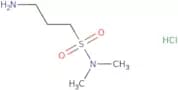
Formula:C9H10N4OPurity:Min. 95%Color and Shape:PowderMolecular weight:190.2 g/mol(N,N,Dimethyl)-(3-aminopropyl)sulfonamidehydrochloride
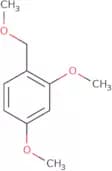
CAS:(N,N,Dimethyl)-(3-aminopropyl)sulfonamidehydrochloride is a fine chemical that can be used as a reagent for research or as a speciality chemical. It is also an intermediate for the synthesis of complex compounds and has versatile building blocks for organic synthesis. This compound is used in the preparation of pharmaceuticals, agrochemicals, and other useful chemicals. CAS No. 91893-74-2.Formula:C5H15ClN2O2SPurity:Min. 95%Color and Shape:PowderMolecular weight:202.7 g/mol2,4-Dimethoxy-1-(methoxymethyl)benzene
CAS:Versatile small molecule scaffoldFormula:C10H14O3Purity:Min. 95%Color and Shape:Clear LiquidMolecular weight:182.22 g/mol



![4-[(1E)-Prop-1-en-1-yl]phenol](/_next/image/?url=https%3A%2Fstatic.cymitquimica.com%2Fproducts%2F3D%2Fthumb-webp%2FVAA64939.webp&w=3840&q=75)
![4-[(1E)-3-Hydroxyprop-1-en-1-yl]phenol](/_next/image/?url=https%3A%2Fstatic.cymitquimica.com%2Fproducts%2F3D%2Fthumb-webp%2FVAA64940.webp&w=3840&q=75)
![1-[3-(Piperidine-1-carbonyl)phenyl]methanamine](/_next/image/?url=https%3A%2Fstatic.cymitquimica.com%2Fproducts%2F3D%2Fthumb-webp%2FRQB68866.webp&w=3840&q=75)