Building Blocks
Subcategories of "Building Blocks"
- Boronic Acids & Boronic Acid Derivatives(5,780 products)
- Chiral Building Blocks(1,241 products)
- Hydrocarbon Building Blocks(6,100 products)
- Organic Building Blocks(61,024 products)
Found 205297 products of "Building Blocks"
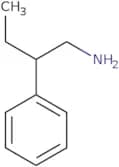
2-Phenylbutan-1-amine
CAS:Controlled Product2-Phenylbutan-1-amine is an optical isomer of the more common 1-phenylbutan-2-amine. It has been used as a chiral building block in the synthesis of pharmaceuticals and industrial products. 2-Phenylbutan-1-amine selectively reacts with propionic acid to produce optically pure 2-(4-methoxyphenyl)propionic acid, which can be used in the production of fluoroquinolone antibiotics, such as flurbiprofen. 2-Phenylbutan-1-amine has also been studied for its ability to hydrolyze microorganisms and amides.Formula:C10H15NPurity:Min. 95%Color and Shape:PowderMolecular weight:149.23 g/molN-α-Boc-N-ε-Fmoc-L-lysine
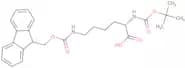
CAS:N-alpha-Boc-N-epsilon-Fmoc-L-lysine is a cyclic peptide that has antimicrobial properties. The peptide is synthesized from the amino acid lysine and contains a sequence of lysine residues. N-alpha-Boc-N-epsilon-Fmoc-L-lysine can be used to treat herpes simplex virus infections and influenza virus infections. It also has the potential to neutralize glycopeptide antibiotics, such as vancomycin, by binding to their cell wall targets and interfering with the function of these molecules. In addition, this peptide can be used to manufacture insulin analogues with improved pharmacokinetic properties and increased stability in blood plasma.Formula:C26H32N2O6Purity:Min. 95%Color and Shape:White To Off-White SolidMolecular weight:468.54 g/mol4-Acetylbenzoic acid
CAS:4-Acetylbenzoic acid is a reactive functional group that is used to synthesize esters and amides. It has been shown to have anticancer activity in vitro, which may be due to the disruption of basic cellular proteins involved in DNA replication. 4-Acetylbenzoic acid is soluble in neutral pH and reacts with nucleophiles such as hydroxide ions or alcohols, forming alcohols or acetates respectively. The reaction mechanism for this compound is nucleophilic attack on the carbonyl carbon, followed by loss of water from the leaving group. Significant cytotoxicity has been observed in vitro at concentrations of 2mM and higher. This effect was particularly pronounced for cells exposed to radiation or treated with 4-acetylbenzoic acid before being exposed to radiation.
Formula:C9H8O3Purity:Min. 95%Color and Shape:White PowderMolecular weight:164.16 g/mol3-Acetylbenzonitrile
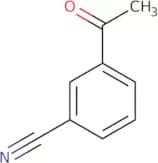
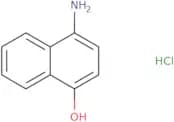
CAS:3-Acetylbenzonitrile is an isomeric, asymmetric synthesis that has been synthesised in the presence of copper complex and salicylic acid. The reaction was carried out with a gaseous phase, where the chalcone was formed. The experimental techniques used were cross-coupling reactions and molecular modeling techniques. 3-Acetylbenzonitrile has been synthesised by a rationalized enthalpic approach that includes alcohol dehydrogenases and molecular modeling techniques.Formula:C9H7NOPurity:Min. 95%Color and Shape:PowderMolecular weight:145.16 g/mol4-Amino-1-naphthol hydrochloride
CAS:4-Amino-2-methyl-1-naphthol is a menadione analog. Most commonly seen in its hydrochloride form, 4-amini-2-methyl-1-naphtol posseses vitamin K activity, effective against microbes and bacteria, and as antibiotic.Formula:C10H9NO•HClPurity:Min. 85.0 Area-%Color and Shape:PowderMolecular weight:195.65 g/mol2,3-Dichloro-N-[2-({2-[(2,3-dichlorophenyl)amino]ethyl}amino)ethyl]aniline
CAS:2,3-Dichloro-N-[2-({2-[(2,3-dichlorophenyl)amino]ethyl}amino)ethyl]aniline is a chemical compound that is used as a building block in the synthesis of other chemicals. It is also used as a reagent, speciality chemical and research chemical. This product has many uses in the field of organic chemistry, such as use as an intermediate in organic reactions or as a scaffold for complex compounds. 2,3-Dichloro-N-[2-({2-[(2,3-dichlorophenyl)amino]ethyl}amino)ethyl]aniline has high quality and can be used to synthesize many different products.Formula:C16H17Cl4N3Purity:Min. 95%Color and Shape:PowderMolecular weight:393.1 g/mol4-Aminohippuric acid sodium
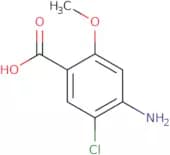
CAS:4-Aminohippuric acid sodium (4AHA) is a drug that is used as a diagnostic tool for measuring renal plasma flow and renal function. The drug is administered intravenously and its optical properties are measured. 4AHA is filtered by the kidneys, which causes it to be excreted in urine. A sensor is placed on the patient's arm and measures the concentration of 4AHA in the blood flowing through the arm. This measurement can then be used to calculate renal plasma flow, which indirectly indicates kidney function. 4AHA can also be used to measure sodium levels in blood plasma, as it binds to sodium ions in solution. However, this application of 4AHA has been superseded by newer technologies such as ion-selective electrodes and magnetic resonance imaging, which offer improved accuracy at lower cost.Formula:C9H10N2NaO3Purity:Min. 95%Color and Shape:PowderMolecular weight:217.18 g/mol4-Amino-5-chloro-2-methoxybenzoic acid
CAS:4-Amino-5-chloro-2-methoxybenzoic acid is a compound that has been shown to be a potent 5-HT4 receptor agonist. It is used in the treatment of obesity and diabetes. The molecular structure of 4-Amino-5-chloro-2-methoxybenzoic acid consists of a carbonyl group and an amine group, which are bound to each other by a covalent bond. This molecule is found to bind to the 5HT4 receptor with high affinity, which leads to its efficacy as an antiobesity agent.Formula:C8H8ClNO3Color and Shape:White PowderMolecular weight:201.61 g/mol4-Hydroxybenzoic acid
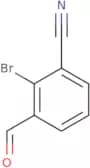
CAS:4-Hydroxybenzoic acid is a plant metabolite that is found in many plants and fruits. 4-Hydroxybenzoic acid has been shown to have anti-diabetic effects in vitro. This compound also has anti-inflammatory properties, which may be due to its ability to inhibit the production of effector proteins such as nitric oxide synthase and cyclooxygenase. The biological activity of 4-hydroxybenzoic acid is dependent on the concentration; at low concentrations it inhibits glucose uptake by cells, while at high concentrations it prevents cell growth.Formula:C7H6O3Purity:Min. 98 Area-%Color and Shape:White Off-White PowderMolecular weight:138.12 g/mol2-Bromo-3-formylbenzonitrile
CAS:2-Bromo-3-formylbenzonitrile is a high quality chemical that is used as a reagent, a complex compound, and an intermediate in the synthesis of other fine chemicals. It can be used as a useful building block to form other compounds with speciality chemicals. 2-Bromo-3-formylbenzonitrile is versatile and can be used as a reaction component for many different reactions. 2-Bromo-3-formylbenzonitrile has been classified by the Chemical Abstracts Service (CAS) number 446864-55-7 and is also known by its synonyms: 2-(bromomethyl)-benzonitrile; 3-(cyanomethyl)-benzonitrile; bromobenzonitrile; bromobenzene nitrile; 3-(cyanomethyl)benzonitrile.Formula:C8H4BrNOPurity:Min. 95%Color and Shape:PowderMolecular weight:210.03 g/mol{2-Bromo-4-[(2-chlorophenyl)methoxy]-5-methoxyphenyl}methanamine
CAS:This is a chemical intermediate with the CAS No. 937598-86-2. It is a versatile building block that can be used to synthesize new drugs and pharmaceuticals, as well as other fine chemicals. This compound has been shown to be useful in reactions such as the formation of heterocycles, the synthesis of complex compounds, and the preparation of research chemicals. The high quality of this chemical makes it suitable for use in many different types of reactions.Formula:C15H15BrClNO2Purity:Min. 95%Color and Shape:PowderMolecular weight:356.64 g/moln-Heptyl 4-hydroxybenzoate
CAS:n-Heptyl 4-hydroxybenzoate is a preservative and antimicrobial agent that is used in cosmetics, pharmaceuticals, and food. It is primarily used to inhibit the growth of bacteria and fungi. The mechanism by which heptyl 4-hydroxybenzoate inhibits the growth of microorganisms is not well understood. It has been shown to be an effective inhibitor of Gram-positive bacteria such as Bacillus subtilis, but not against Gram-negative bacteria such as Escherichia coli. Heptyl 4-hydroxybenzoate has been shown to have no effect on the growth of probiotic bacteria such as Lactobacillus acidophilus. The chemical structure of n-heptyl 4-hydroxybenzoate includes a glycol ether moiety and two parabens that are linked by hydrogen bonds. These bonds can be broken by enzymes found in rat liver microsomes, leading to the release of n-Formula:C14H20O3Purity:Min. 95%Color and Shape:White Off-White PowderMolecular weight:236.31 g/molFmoc-Trp(5-OH)-OH
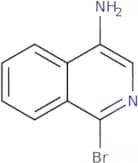
CAS:Fmoc-Trp(5-OH)-OH is a molecule that has been shown to have anticancer activity. It inhibits the proliferation of cancer cells and inhibits the production of fatty acids. It also has antiinflammatory properties and inhibits the growth of bacteria by inhibiting chloride channels. Fmoc-Trp(5-OH)-OH has been shown to inhibit the binding of 4-methylumbelliferone (4MU) to human erythrocytes, which is an indicator of its capability as a coumarin derivative. Fmoc-Trp(5-OH)-OH has also been found to be effective against tuberculosis through hydrogen bond interactions with the enzyme mycobacterium tuberculosis DNA polymerase.Formula:C26H22N2O5Purity:Min. 95%Color and Shape:PowderMolecular weight:442.5 g/mol1-Bromoisoquinolin-4-amine
CAS:Versatile small molecule scaffold
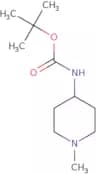
Formula:C9H7BrN2Purity:Min. 95%Color and Shape:PowderMolecular weight:223.07 g/moltert-Butyl N-(1-methylpiperidin-4-yl)carbamate
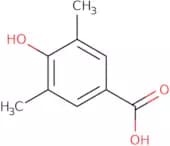
CAS:Versatile small molecule scaffoldFormula:C11H22N2O2Purity:Min. 95%Color and Shape:PowderMolecular weight:214.3 g/mol4-Hydroxy-3,5-dimethylbenzoic acid
CAS:4-Hydroxy-3,5-dimethylbenzoic acid (4HDMBA) is an antimicrobial agent that inhibits bacterial cell growth by binding to the GyrA subunit of DNA gyrase. It is a potent inhibitor of the GyrA subunit, with activity against both mutant and wild type strains. 4HDMBA also has anticancer activity in vitro and in vivo studies have shown that it can inhibit the growth of cells from human cancer cell lines. 4HDMBA is synthesized by reacting amide with chloroacetyl chloride. The carboxylate group on 4HDMBA can be transformed into a hydroxyl group by reaction with sodium hydroxide. The chemical structure of 4HDMBA includes a hydroxy group, a chlorine atom, and a hydroxyl group.Formula:C9H10O3Purity:Min. 95%Color and Shape:PowderMolecular weight:166.17 g/mol2-Acetylfuran
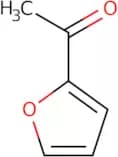
CAS:2-Acetylfuran is a chemical compound that has been shown to have in vitro antifungal activity. It is an aromatic, hydroxylated compound with a 2-acetyl group and two double bonds, one of which is conjugated. 2-Acetylfuran has been used as a model system for the study of biological properties and kinetic data. It also inhibits the reaction by binding to the pyrimidine compound, preventing it from undergoing nucleophilic substitution. This inhibition can be reversed by adding ethyl decanoate to the reaction solution, which may be due to its ability to chelate the metal ion that activates the enzyme.2-Acetylfuran has been tested for its ability to inhibit fungal growth in tissue culture by inhibiting RNA synthesis. The matrix effect can cause variations in results obtained when using different solvents and this should be taken into account when conducting experiments with 2-acetylfuran.Formula:C6H6O2Purity:Min. 95%Color and Shape:Yellow Clear LiquidMolecular weight:110.11 g/mol8-Amino-2-naphthol
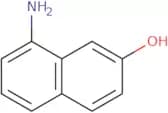
CAS:8-Amino-2-naphthol (8AN) is a natural product that has been found to have anti-inflammatory, antioxidant, and antiviral properties in vitro. It has been shown to inhibit the production of protonated species of 8AN by adding a proton to the hydroxyl group on the naphthalene ring. This reaction occurs at an activation energy of 17.2 kJ/mol and is reversible, with a protonation equilibrium constant of 1.0 x 10 M. The intramolecular hydrogen transfer mechanism is shown in Figure 1 below:Formula:C10H9NOPurity:Min. 98 Area-%Color and Shape:White PowderMolecular weight:159.18 g/moltert-Butyl 3-formyl-5H,6H,7H,8H-[1,2,4]triazolo[4,3-α]pyrazine-7-carboxylate
CAS:Tert-butyl 3-formyl-5H,6H,7H,8H-[1,2,4]triazolo[4,3-α]pyrazine-7-carboxylate is a research chemical that is used as a building block in the synthesis of complex compounds. It is also used as a reagent and a speciality chemical. Tert-butyl 3-formyl-5H,6H,7H,8H-[1,2,4]triazolo[4,3-α]pyrazine-7-carboxylate is an intermediate in the synthesis of other chemicals with high quality and versatile building blocks. It has been used in reactions to produce various heterocycles including 1-(2'-aminophenoxy)propane hydrochloride.
Formula:C11H16N4O3Purity:Min. 95%Color and Shape:PowderMolecular weight:252.27 g/mol6-(Aminomethyl)-2-naphthol
CAS:Versatile small molecule scaffoldFormula:C11H11NOPurity:Min. 95%Molecular weight:173.21 g/mol


![2,3-Dichloro-N-[2-({2-[(2,3-dichlorophenyl)amino]ethyl}amino)ethyl]aniline](/_next/image/?url=https%3A%2Fstatic.cymitquimica.com%2Fproducts%2F3D%2Fthumb-webp%2FZGC85789.webp&w=3840&q=75)


![{2-Bromo-4-[(2-chlorophenyl)methoxy]-5-methoxyphenyl}methanamine](/_next/image/?url=https%3A%2Fstatic.cymitquimica.com%2Fproducts%2F3D%2Fthumb-webp%2FMMB59886.webp&w=3840&q=75)


![tert-Butyl 3-formyl-5H,6H,7H,8H-[1,2,4]triazolo[4,3-α]pyrazine-7-carboxylate](/_next/image/?url=https%3A%2Fstatic.cymitquimica.com%2Fproducts%2F3D%2Fthumb-webp%2FZWB06903.webp&w=3840&q=75)