Building Blocks
Subcategories of "Building Blocks"
- Boronic Acids & Boronic Acid Derivatives(5,780 products)
- Chiral Building Blocks(1,241 products)
- Hydrocarbon Building Blocks(6,100 products)
- Organic Building Blocks(61,029 products)
Found 205306 products of "Building Blocks"
1-[3-(Trifluoromethyl)phenyl]-1H-1,2,3-triazole-4-carboxylic acid
CAS:1-[3-(Trifluoromethyl)phenyl]-1H-1,2,3-triazole-4-carboxylic acid (TFTCA) is a versatile building block used as a reagent in research and speciality chemical synthesis. TFTCA is used as a reactant in the synthesis of complex compounds and can be used as an intermediate or scaffold. The compound has been used to synthesize drugs such as 3,5-dichloro-N-(3-(trifluoromethyl)phenyl)-2-thiophenecarboxamide (PF23410), which is a potent inhibitor of protein kinase C.Formula:C10H6F3N3O2Purity:Min. 95%Color and Shape:PowderMolecular weight:257.17 g/molPyrimidine-5-carboxamide
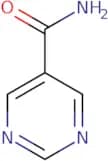
CAS:Pyrimidine-5-carboxamide is a heterocyclic compound that is used as an inhibitor of the pan-PI3K. This drug binds to the CB2 receptor, which has been found in inflammatory cells in the gastrointestinal tract. Pyrimidine-5-carboxamide inhibits inflammatory bowel disease by inhibiting the activity of p38 MAP kinase and JNK, which are key mediators of inflammation. It also inhibits insulin resistance and liver fibrosis by targeting PI3K/Akt signaling pathways. Pyrimidine-5-carboxamide has been shown to have anti-inflammatory effects on the skin, hair follicles, and intestines; it may be used for treating alopecia areata, bowel disease, or hepatic cancer.Formula:C5H5N3OPurity:Min. 95%Color and Shape:PowderMolecular weight:123.11 g/mol2-{[(9H-Fluoren-9-yl)methoxy]carbonyl}-1,2,3,4-tetrahydroisoquinoline-6-carboxylic acid
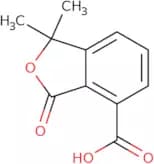
CAS:2-{[(9H-Fluoren-9-yl)methoxy]carbonyl}-1,2,3,4-tetrahydroisoquinoline-6-carboxylic acid is a high quality reagent. It is a useful intermediate for the synthesis of various complex compounds. This compound is also a useful scaffold and building block for research chemicals. 2-{[(9H-Fluoren-9-yl)methoxy]carbonyl}-1,2,3,4-tetrahydroisoquinoline-6-carboxylic acid is versatile in that it can be used as a reaction component in different reactions.Formula:C25H21NO4Purity:Min. 95%Color and Shape:PowderMolecular weight:399.4 g/mol1,1-Dimethyl-3-oxo-1,3-dihydro-2-benzofuran-4-carboxylic acid
CAS:Versatile small molecule scaffoldFormula:C11H10O4Purity:Min. 95%Color and Shape:PowderMolecular weight:206.19 g/mol1-{[(9H-Fluoren-9-yl)methoxy]carbonyl}-3-hydroxypiperidine-2-carboxylic acid
CAS:1-{[(9H-Fluoren-9-yl)methoxy]carbonyl}-3-hydroxypiperidine-2-carboxylic acid is a reaction component that can be used in the synthesis of a variety of chemical compounds. This product has been shown to be useful as a scaffold for the synthesis of complex compounds, and as an intermediate for the synthesis of speciality chemicals. It has also been found to have versatile building block properties and is used in the production of fine chemicals.Formula:C21H21NO5Purity:Min. 95%Color and Shape:PowderMolecular weight:367.4 g/mol1-[3-(Trifluoromethyl)phenyl]cyclobutan-1-amine
CAS:Versatile small molecule scaffoldFormula:C11H12F3NPurity:Min. 95%Color and Shape:Clear LiquidMolecular weight:215.21 g/molα-Sulfophenylacetic acid
CAS:Alpha-Sulfophenylacetic acid is a high quality reagent that is useful as an intermediate in the synthesis of complex compounds. It is also a fine chemical that can be used as a building block for the synthesis of speciality chemicals and research chemicals. Alpha-sulfophenylacetic acid is a versatile building block for reactions involving organic synthesis, and can be used as a reaction component to produce dyes, pharmaceuticals, pesticides, and herbicides.Formula:C8H8O5SPurity:Min. 95.0 Area-%Molecular weight:216.21 g/molRef: 3D-S-9630
1kgTo inquire5kgTo inquire10kgTo inquire25kgTo inquire2500gTo inquire-Unit-kgkgTo inquireOrcinol monohydrate
CAS:Orcinol monohydrate is a high quality chemical that can be used as a reagent, complex compound, or useful intermediate in the synthesis of fine chemicals. It is also an important building block in the synthesis of other compounds. This product has CAS No. 6153-39-5 and is classified as a speciality chemical. It is also a versatile building block that can be used as a reaction component in organic syntheses.Formula:C7H10O3Molecular weight:142.16 g/mol2-Hydroxy-4-(pyrrolidin-1-yl)benzaldehyde
CAS:Versatile small molecule scaffoldFormula:C11H13NO2Purity:Min. 95%Molecular weight:191.23 g/mol7-Methyl-2,7-diazaspiro[3.5]nonane dihydrochloride
CAS:7-Methyl-2,7-diazaspiro[3.5]nonane dihydrochloride is a fine chemical that is used as a versatile building block in the synthesis of complex compounds. It has CAS No. 1588441-26-2 and can be used as a research chemical, reagent, or speciality chemical. This compound is useful for the production of high quality and useful intermediates and reaction components. 7-Methyl-2,7-diazaspiro[3.5]nonane dihydrochloride also has scaffold properties that can be used to synthesize other organic molecules with potential use as pharmaceuticals or agrochemicals.Formula:C8H16N2•(HCl)2Purity:Min. 95%Color and Shape:PowderMolecular weight:213.15 g/molEthyl 2-[(benzenesulfonyl)methyl]prop-2-enoate
CAS:Ethyl 2-[(benzenesulfonyl)methyl]prop-2-enoate is a chemical compound that is commonly used as a building block in the synthesis of other compounds. It has shown to be effective in research, as it can be used as an intermediate or a reaction component. CAS No. 89295-32-9 is the Chemical Abstracts Service registry number for this chemical. This compound is also known by its synonym of ethyl propanoate benzenesulfonate, and it has been found to have useful properties such as being a versatile building block and being a fine chemical. This product is high quality and is a reagent that has been found to be useful in many chemical reactions.
Formula:C12H14O4SPurity:Min. 95%Color and Shape:Clear LiquidMolecular weight:254.3 g/mol2-Hydroxy-4-methoxybenzaldehyde
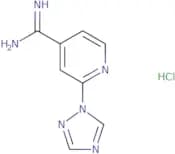
CAS:2-Hydroxy-4-methoxybenzaldehyde is an organic chemical that is used as a versatile building block for complex compounds, research chemicals, and reagents. It is also used as a speciality chemical and as a useful intermediate in the synthesis of other chemicals. 2-Hydroxy-4-methoxybenzaldehyde has CAS No. 673-22-3 and can be used to make many different types of compounds. This compound is a useful scaffold for the synthesis of diverse compounds with biological activity such as pharmaceuticals, agrochemicals, dyes, perfumes, fragrances, flavors and fragrances.Formula:C8H8O3Purity:Min. 99.0 Area-%Molecular weight:152.15 g/mol2-(1H-1,2,4-Triazol-1-yl)pyridine-4-carboximidamide hydrochloride
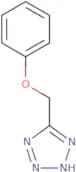
CAS:2-(1H-1,2,4-Triazol-1-yl)pyridine-4-carboximidamide hydrochloride is a versatile building block that can be used in the synthesis of many compounds. This compound is a fine chemical and may be useful as a research chemical or as a speciality chemical. CAS No. 1421606-01-0.Formula:C8H9ClN6Purity:Min. 95%Color and Shape:PowderMolecular weight:224.65 g/mol5-(Phenoxymethyl)-2H-1,2,3,4-tetrazole
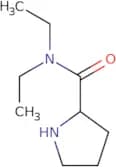
CAS:5-(Phenoxymethyl)-2H-1,2,3,4-tetrazole is a versatile compound with various applications. It acts as a hydroxyl radical scavenger and is commonly used as an inhibitor in chemical reactions. Additionally, it has antiviral properties and has been studied for its potential in treating viral infections. This compound is also used in the production of cellulose-based materials, where it enhances the properties of the final product. It has been found to improve the mechanical strength and thermal stability of cellulose materials. In the field of medicine, 5-(Phenoxymethyl)-2H-1,2,3,4-tetrazole is known as a CYP3A4 substrate. This means that it can interact with enzymes involved in drug metabolism, affecting how certain medications are processed by the body. Researchers have studied its interactions with drugs like carbamazepine and ezetimibe. Furthermore, this compound has shownFormula:C8H8N4OPurity:Min. 95%Color and Shape:PowderMolecular weight:176.18 g/molN,N-Diethylpyrrolidine-2-carboxamide
CAS:Versatile small molecule scaffoldFormula:C9H18N2OPurity:Min. 90%Color and Shape:PowderMolecular weight:170.25 g/moltert-Butyl 3-formyl-5H,6H,7H,8H-[1,2,4]triazolo[4,3-α]pyrazine-7-carboxylate
CAS:Tert-butyl 3-formyl-5H,6H,7H,8H-[1,2,4]triazolo[4,3-α]pyrazine-7-carboxylate is a research chemical that is used as a building block in the synthesis of complex compounds. It is also used as a reagent and a speciality chemical. Tert-butyl 3-formyl-5H,6H,7H,8H-[1,2,4]triazolo[4,3-α]pyrazine-7-carboxylate is an intermediate in the synthesis of other chemicals with high quality and versatile building blocks. It has been used in reactions to produce various heterocycles including 1-(2'-aminophenoxy)propane hydrochloride.
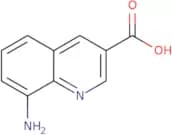
Formula:C11H16N4O3Purity:Min. 95%Color and Shape:PowderMolecular weight:252.27 g/mol8-Aminoquinoline-3-carboxylic acid
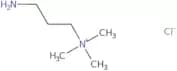
CAS:8-Aminoquinoline-3-carboxylic acid is a small molecule that inhibits the activity of the enzyme, catechol-O-methyltransferase (COMT), which is responsible for the demethylation of dopamine. 8-Aminoquinoline-3-carboxylic acid has been shown to be potent and selective in inhibiting COMT and thereby preventing the degradation of dopamine. This compound has been used in screening assays to identify other small molecules that can act as COMT inhibitors. The role of COMT in neurodegenerative diseases such as Parkinson's disease and Alzheimer's disease has been investigated using this inhibitor as a model system. 8-Aminoquinoline-3-carboxylic acid also binds to methylated DNA, which may explain its effect on cellular growth factor signaling pathways.Formula:C10H8N2O2Purity:Min. 95%Color and Shape:PowderMolecular weight:188.19 g/mol(3-Aminopropyl)trimethylazanium chloride
CAS:(3-Aminopropyl)trimethylazanium chloride is a fine chemical that is used as a building block and reagent in the synthesis of various organic compounds. It has been shown to be useful for reactions involving nucleophilic aromatic substitution, radical addition, and cycloaddition reactions. (3-Aminopropyl)trimethylazanium chloride has also been shown to be an effective intermediate in the synthesis of various pharmaceuticals. The CAS number is 19223-69-9.Formula:C6H17ClN2Purity:Min. 95%Color and Shape:PowderMolecular weight:152.66 g/mol2-[(1-Carboxyethyl)amino]propanoic acid
CAS:2-[(1-Carboxyethyl)amino]propanoic acid (CEPA) is a cell lysing agent that can be used to kill bacteria, fungi, and viruses. CEPA has antimicrobial activity against Gram-positive and Gram-negative bacteria, including MRSA, VRE, and Candida. CEPA has been shown to have chronic pulmonary effects in mice by inhibiting the growth of lung tissue cells. It also inhibits the growth of metastable tumor cells in mice. CEPA binds to the peptidoglycan layer of bacterial cell walls and causes cell lysis by disrupting hydrogen bonding interactions between water molecules and CEPA's carboxyl group. CEPA is a member of group P2 in the CID database with a chemical stability in water vapor greater than 90%. CEPA is soluble in metoprolol succinate at pH 5-6 but insoluble at pH 8 or higher due to the formation of hydrogen tartrate crystals.
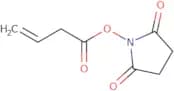
Formula:C6H11NO4Purity:Min. 95%Molecular weight:161.16 g/mol3-Butenoic acid, 2,5-dioxo-1-pyrrolidinyl ester
CAS:3-Butenoic acid, 2,5-dioxo-1-pyrrolidinyl ester is a fine chemical that can be used as a scaffold for the synthesis of complex compounds. This chemical is also useful as an intermediate in the synthesis of chemicals and research chemicals. It has CAS number 388091-45-0 and a molecular weight of 220.3 g/mol. 3-Butenoic acid, 2,5-dioxo-1-pyrrolidinyl ester is soluble in organic solvents such as acetone or chloroform and is not toxic to humans at low doses.Formula:C8H9NO4Purity:Min. 95%Color and Shape:PowderMolecular weight:183.16 g/mol
![1-[3-(Trifluoromethyl)phenyl]-1H-1,2,3-triazole-4-carboxylic acid](/_next/image/?url=https%3A%2Fstatic.cymitquimica.com%2Fproducts%2F3D%2Fthumb-webp%2FNEA93433.webp&w=3840&q=75)

![2-{[(9H-Fluoren-9-yl)methoxy]carbonyl}-1,2,3,4-tetrahydroisoquinoline-6-carboxylic acid](/_next/image/?url=https%3A%2Fstatic.cymitquimica.com%2Fproducts%2F3D%2Fthumb-webp%2FNKD22621.webp&w=3840&q=75)
![1-{[(9H-Fluoren-9-yl)methoxy]carbonyl}-3-hydroxypiperidine-2-carboxylic acid](/_next/image/?url=https%3A%2Fstatic.cymitquimica.com%2Fproducts%2F3D%2Fthumb-webp%2FSMA38434.webp&w=3840&q=75)
![1-[3-(Trifluoromethyl)phenyl]cyclobutan-1-amine](/_next/image/?url=https%3A%2Fstatic.cymitquimica.com%2Fproducts%2F3D%2Fthumb-webp%2FUTB21835.webp&w=3840&q=75)


![7-Methyl-2,7-diazaspiro[3.5]nonane dihydrochloride](/_next/image/?url=https%3A%2Fstatic.cymitquimica.com%2Fproducts%2F3D%2Fthumb-webp%2FNNC44126.webp&w=3840&q=75)
![Ethyl 2-[(benzenesulfonyl)methyl]prop-2-enoate](/_next/image/?url=https%3A%2Fstatic.cymitquimica.com%2Fproducts%2F3D%2Fthumb-webp%2FPDA29532.webp&w=3840&q=75)

![tert-Butyl 3-formyl-5H,6H,7H,8H-[1,2,4]triazolo[4,3-α]pyrazine-7-carboxylate](/_next/image/?url=https%3A%2Fstatic.cymitquimica.com%2Fproducts%2F3D%2Fthumb-webp%2FZWB06903.webp&w=3840&q=75)
![2-[(1-Carboxyethyl)amino]propanoic acid](/_next/image/?url=https%3A%2Fstatic.cymitquimica.com%2Fproducts%2F3D%2Fthumb-webp%2FUIA75519.webp&w=3840&q=75)