Building Blocks
Subcategories of "Building Blocks"
- Boronic Acids & Boronic Acid Derivatives(5,780 products)
- Chiral Building Blocks(1,241 products)
- Hydrocarbon Building Blocks(6,100 products)
- Organic Building Blocks(61,029 products)
Found 205306 products of "Building Blocks"
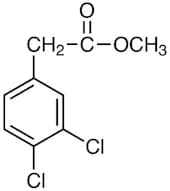
Methyl 3,4-Dichlorophenylacetate
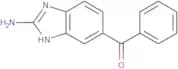
CAS:Formula:C9H8Cl2O2Purity:>98.0%(GC)Color and Shape:Colorless to Light orange to Yellow clear liquidMolecular weight:219.062-Amino-5(6)-benzoylbenzimidazole
CAS:2-Amino-5(6)-benzoylbenzimidazole is an antifilarial and anthelmintic drug that belongs to the benzimidazole class. It is used for the treatment of filarial infections in humans, including lymphatic filariasis, which is caused by worms transmitted by mosquitoes. 2-Amino-5(6)-benzoylbenzimidazole has low bioavailability due to its poor water solubility. The drug can be administered orally or topically and is metabolized in the liver. The metabolites are excreted in urine as glucuronides and sulfates.
Formula:C14H11N3OPurity:Min. 95%Color and Shape:PowderMolecular weight:237.26 g/molNeu5Acα(2-6)Galβ(1-3)GlcNAc-β-pNP
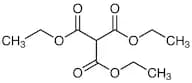
Formula:C31H45N3O21Purity:>97.0%(HPLC)Color and Shape:White to Light yellow to Green powder to crystalMolecular weight:795.70Triethyl Methanetricarboxylate
CAS:Formula:C10H16O6Purity:>97.0%(GC)Color and Shape:White or Colorless to Almost white or Almost colorless powder to lump to clear liquidMolecular weight:232.232-Amino-5-methylthiazole
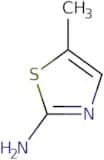
CAS:2-Amino-5-methylthiazole is a nonsteroidal anti-inflammatory drug (NSAID) that inhibits the enzyme cyclooxygenase. It has been shown to inhibit the activity of two different types of cyclooxygenase, COX-1 and COX-2, in vitro. 2-Amino-5-methylthiazole also has shown antimicrobial activity against Escherichia coli and Staphylococcus aureus. This compound is stable in high salt concentrations and at high pH values. 2-Amino-5-methylthiazole does not contain any nitrogen atoms but does have an electron rich aromatic ring and a methyl group on the side chain. The redox potential for this molecule is -0.16 V vs SHE at pH 7.4, making it more likely to be oxidized than reduced, which may explain its low reactivity with hydrogen peroxide and its ability to be stable inFormula:C4H6N2SPurity:Min. 95%Color and Shape:Off-White PowderMolecular weight:114.17 g/mol7-Chloroquinoline-3-carboxylicacid
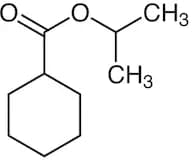
CAS:7-Chloroquinoline-3-carboxylicacid (7CQCA) is a synthetic compound that has been shown to have regulatory, immunomodulatory, and anticancer properties. It is a potent inhibitor of mammalian DNA polymerase beta and it has been shown to induce apoptosis in human prostate cancer cells by inhibiting the production of cAMP. 7CQCA also inhibits the proliferation of mouse CD1 leukemia cells in vitro and induces apoptosis in these cells. The compound was found to be more effective when used with other agents such as triticum aestivum extract, which may be due to its synergistic interaction with these compounds.Formula:C10H6ClNO2Purity:Min. 95%Color and Shape:Off-White PowderMolecular weight:207.61 g/molIsopropyl Cyclohexanecarboxylate
CAS:Formula:C10H18O2Purity:>98.0%(GC)Color and Shape:Colorless to Almost colorless clear liquidMolecular weight:170.252-Methyl-5-nitroimidazole-1-propanol
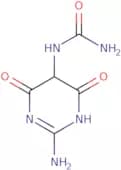
CAS:2-Methyl-5-nitroimidazole-1-propanol (2MI) is a matrix effect correction reagent that can be used to reconstitute the original concentrations of drugs in plasma and urine samples. It is also used for sample preparation, validation and quality control. 2MI has been shown to bind with cervical cancer cells, which may be due to its ability to bind with drug receptors on the surface of these cells. A liquid chromatography-mass spectrometry (LC-MS/MS) method was developed to measure 2MI in plasma and urine samples. The method was validated using test samples and showed good agreement with the target concentration.Formula:C7H11N3O3Purity:Min. 95%Color and Shape:PowderMolecular weight:185.18 g/mol2-Amino-5-ureido-4,6-pyrimidinedione
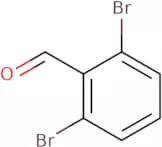
CAS:2-Amino-5-ureido-4,6-pyrimidinedione is a chemical building block that can be used in research, as a reagent for the synthesis of other compounds, or as an intermediate. It is also a versatile building block and reaction component. 2-Amino-5-ureido-4,6-pyrimidinedione is a high purity compound with a CAS number of 21823-25-6.Formula:C5H7N5O3Purity:Min. 95%Color and Shape:PowderMolecular weight:185.14 g/mol2,6-Dibromobenzaldehyde
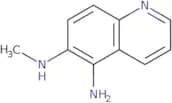
CAS:2,6-Dibromobenzaldehyde is an imidazole derivative that has been shown to be a potent inhibitor of tyrosine kinase. It has been shown to inhibit the replication of virus type-1 and is effective in the treatment of pain models. 2,6-Dibromobenzaldehyde also inhibits the activity of enzymes, such as phosphodiesterases and protein kinases. This compound has shown promising results in animal studies for the treatment of human immunodeficiency virus type 1 (HIV-1) infection. The pharmacokinetic properties of 2,6-dibromobenzaldehyde have been studied in rats and dogs with oral administration and found to be linear and rapid with high bioavailability.Formula:C7H4Br2OPurity:Min. 95%Color and Shape:PowderMolecular weight:263.91 g/mol5-Amino-6-(methylamino)quinoline
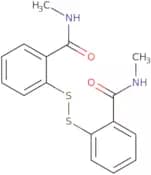
CAS:5-Amino-6-(methylamino)quinoline is a molecule that inhibits the enzymatic activity of tyrosine phosphatases and has been shown to inhibit the growth of typhimurium ta98, which is resistant to quinoxaline. It has also been shown to be mutagenic in vitro. 5-Amino-6-(methylamino)quinoline has an imidazole ring and is synthesized from 2-methylbenzothiazole and N,N'-dimethylethylenediamine. The synthesis of this compound takes place in two steps with the first step being an oxidative cyclization followed by a reductive amination.Formula:C10H11N3Purity:Min. 95%Color and Shape:Green Brown To Brown SolidMolecular weight:173.21 g/molDithio-2,2'-bis(N-methylbenzamide)
CAS:Dithio-2,2'-bis(N-methylbenzamide) is a chlorphenesin and benzyl alcohol combination that also contains pyrithione, benzyl chloride and benzalkonium chloride. It is a microbicide that inhibits the growth of bacteria by reacting with their cell membranes. Dithio-2,2'-bis(N-methylbenzamide) is used in cosmetics as a preservative, and has been shown to have antimicrobial properties against the section Micrococcus luteus. This product also contains imidazolidinyl urea as an anti-fungal agent.
Formula:C16H16N2O2S2Purity:Min. 95%Color and Shape:White PowderMolecular weight:332.44 g/molDL-Alanine methyl ester hydrochloride
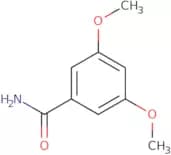
CAS:DL-Alanine methyl ester hydrochloride is a cytotoxic drug that is used to treat cancer. It inhibits the growth of cancer cells by binding to guanine in the cell's DNA and preventing its incorporation into DNA during replication. The substance also inhibits amino acid transport, causing a shortage of amino acids for protein synthesis. This leads to cell death by nucleophilic attack on the bond between two amino acids. DL-Alanine methyl ester hydrochloride has been shown to be effective against murine leukemia, HIV, and Herpes simplex virus type 1 (HSV-1). DL-Alanine methyl ester hydrochloride has two geometric isomers: L-alanine methyl ester hydrochloride and D-alanine methyl ester hydrochloride. These substances have different reactivities due to their different geometric shapes. Magnetic resonance spectroscopy can be used to differentiate between these substances in vivo, as well as in vitro.Formula:C4H9NO2·HClPurity:Min. 95%Color and Shape:White PowderMolecular weight:139.58 g/mol3,5-Dimethoxybenzamide
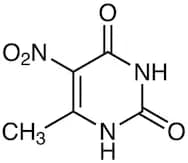
CAS:3,5-Dimethoxybenzamide belongs to the class of quinolone drugs. It is a potentiator of nabilone, which is a synthetic cannabinoid similar to THC. 3,5-Dimethoxybenzamide has been shown to be an electron-deficient compound that reacts with 5-hydroxytryptamine (serotonin) in vitro. This reaction leads to the formation of hydrogen bonds and modifications in the structure of serotonin molecules. 3,5-Dimethoxybenzamide also has grignard reagent activity and can be used as a carboxyamide or amide precursor in organic synthesis.Formula:C9H11NO3Purity:Min. 95%Color and Shape:PowderMolecular weight:181.19 g/mol6-Methyl-5-nitrouracil
CAS:Formula:C5H5N3O4Purity:>95.0%(T)(HPLC)Color and Shape:Light orange to Yellow to Green powder to crystalMolecular weight:171.113,7-Dibromodibenzo[b,d]thiophene
CAS:3,7-Dibromodibenzo[b,d]thiophene is a polymerizable monomer that can be used for the synthesis of polymers with interesting optical properties. This material has been shown to undergo copolymerization with vinyl ethers and vinyl esters in the presence of sodium carbonate. The resulting copolymer has semiconducting properties and gel permeation chromatography showed a ring structure. Cross-coupling reactions have been used to synthesize 3,7-dibromodibenzo[b,d]thiophene from 2-bromo-1,3-dithiolane and 2-iodobenzene.
Formula:C12H6Br2SPurity:Min. 95%Color and Shape:White PowderMolecular weight:342.05 g/mol2-Nitroimidazole
CAS:2-Nitroimidazole is a compound that has been shown to have significant cytotoxicity against tumor cells. It is also an anti-cancer drug with a matrix effect on solid tumours, and has been shown to inhibit the synthesis of DNA, RNA, and proteins in vitro. 2-Nitroimidazole is also active against infectious diseases such as HIV, herpes simplex virus type 1, and influenza A virus. The biological properties of this compound are currently being studied by analytical methods such as LC/MS and HPLC/UV.Formula:C3H3N3O2Purity:Min. 95%Color and Shape:PowderMolecular weight:113.07 g/mol4-Bromoisatin
CAS:4-Bromoisatin is a synthetic compound that reversibly inhibits the activity of telomerase and has been shown to be effective against a broad range of bacterial species. It binds to the catalytic site on telomerase and prevents the synthesis of ribonucleotides, which are necessary for DNA replication. 4-Bromoisatin is synthesized by humans, but can also be found in plants such as coffee beans and black tea leaves. The antibacterial properties of 4-bromoisatin may be due to its ability to inhibit the biosynthesis of purine, an essential component in bacterial DNA synthesis.Formula:C8H4BrNO2Purity:Min. 95%Color and Shape:Orange PowderMolecular weight:226.03 g/mol2,5-Difluoro-4-methylbenzoic acid methyl ester
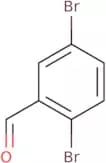
CAS:2,5-Difluoro-4-methylbenzoic acid methyl ester is used as a reactive chemical in synthesis of pharmaceuticals and other chemicals. 2,5-Difluoro-4-methylbenzoic acid methyl ester reacts with amines to form the corresponding amides. It can also react with alcohols to form the corresponding ethers or it can be used as an intermediate for preparing other chemicals such as 4-(2,5-dichloro-4-methylphenyl)morpholine.Formula:C9H8F2O2Purity:Min. 95%Molecular weight:186.16 g/mol2,5-Dibromobenzaldehyde
CAS:2,5-Dibromobenzaldehyde is a synthetic compound that has been shown to have a red fluorescent emission. It is also thermally stable and can be used in the synthesis of quinoline derivatives. 2,5-Dibromobenzaldehyde may be used as a potential fluorescent label for viologen or amines. This compound can undergo an intermolecular Diels-Alder reaction with diacetate to form a bicyclic system, which is important to the understanding of its interactions with other compounds.Formula:C7H4Br2OPurity:Min. 95%Color and Shape:PowderMolecular weight:263.91 g/mol






![3,7-Dibromodibenzo[b,d]thiophene](/_next/image/?url=https%3A%2Fstatic.cymitquimica.com%2Fproducts%2F3D%2Fthumb-webp%2FFD62242.webp&w=3840&q=75)