Building Blocks
This section contains fundamental products for the synthesis of organic and biological compounds. Building blocks are the essential starting materials used to construct complex molecules through various chemical reactions. They play a critical role in drug discovery, material science, and chemical research. At CymitQuimica, we offer a diverse range of high-quality building blocks to support your innovative research and industrial projects, ensuring you have the essential components for successful synthesis.
Subcategories of "Building Blocks"
- Boronic Acids & Boronic Acid Derivatives(5,781 products)
- Chiral Building Blocks(1,242 products)
- Hydrocarbon Building Blocks(6,101 products)
- Organic Building Blocks(61,033 products)
Found 205320 products of "Building Blocks"
Sort by
Purity (%)
0
100
|
0
|
50
|
90
|
95
|
100
Methyl 5-methoxy-2-methylindole-3-acetate
CAS:Methyl 5-methoxy-2-methylindole-3-acetate is a versatile building block that can be used as a research chemical, reagent, or speciality chemical. It is also an intermediate in the synthesis of other compounds and has been shown to be useful in reactions involving nucleophilic substitution and electrophilic addition. This compound can be used as a scaffold for complex organic molecules. CAS No. 7588-36-5Formula:C13H15NO3Purity:Min. 95%Color and Shape:Beige SolidMolecular weight:233.26 g/molSodium Dodecylbenzenesulfonate (soft type) (mixture)
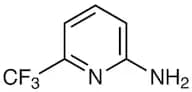
CAS:Sodium dodecylbenzenesulfonate is a surfactant that has been used in a wide variety of industrial and research applications. Sodium dodecylbenzenesulfonate is not considered to be toxicologically harmful, but it can produce byproducts that are hazardous. These byproducts are controlled by regulatory authorities and are removed during the manufacturing process. It can also absorb other chemicals, such as carbamates and silicone oils, from the atmosphere. The focus of its use is as an absorbent for water-based paints.Formula:C18H29NaO3SPurity:Min. 95%Color and Shape:PowderMolecular weight:348.48 g/mol2-Amino-6-(trifluoromethyl)pyridine
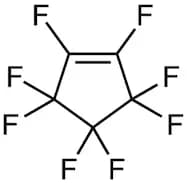
CAS:Formula:C6H5F3N2Purity:>98.0%(GC)(T)Color and Shape:Light yellow to Brown to Dark green powder to crystalMolecular weight:162.12Octafluorocyclopentene
CAS:Formula:C5F8Purity:>98.0%(GC)Color and Shape:Colorless to Almost colorless clear liquidMolecular weight:212.04Galβ(1-4)[Neu5Acα(2-6)]GlcNAc-β-pNP
Formula:C31H45N3O21Purity:>90.0%(HPLC)Color and Shape:White to Light yellow powder to crystalMolecular weight:795.70N-Isopropylaniline
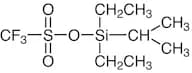
CAS:Formula:C9H13NPurity:>99.0%(GC)(T)Color and Shape:Colorless to Orange to Green clear liquidMolecular weight:135.21Diethylisopropylsilyl Trifluoromethanesulfonate
CAS:Formula:C8H17F3O3SSiPurity:>98.0%(T)Color and Shape:Colorless to Light yellow to Light orange clear liquidMolecular weight:278.366-Hydroxy-2-naphtoic acid
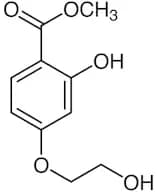
CAS:6-Hydroxy-2-naphtoic acid is an amide that is hydrolyzed to 6-hydroxybenzoic acid and formamide. It has been used as a viscosity modifier in the synthesis of polymers. 6-Hydroxy-2-naphtoic acid can be produced by a borane-tetrahydrofuran complex reaction with naphthalene. This reaction also produces p-hydroxybenzoic acid, which can then be converted to hydroxybenzoic acid with hydrochloric acid. The structural analysis of this compound has been performed using fluorescence probes and an inorganic acid.Formula:C11H8O3Purity:Min. 95%Color and Shape:Yellow PowderMolecular weight:188.18 g/molMethyl 4-(2-Hydroxyethoxy)salicylate
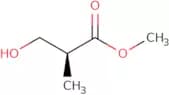
Formula:C10H12O5Purity:>98.0%(GC)Color and Shape:White to Light yellow to Light orange powder to crystalMolecular weight:212.20Methyl L-(S)-b-Hydroxyisobutanoate
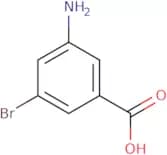
CAS:Methyl L-(S)-b-hydroxyisobutanoate is a spiroketal that belongs to the class of methyl ketones. It has been found to inhibit the growth of cancer cells in vitro and in vivo. This effect is mediated by its ability to inhibit fatty acid synthesis and its ability to activate Bafilomycin A1, which inhibits ATP synthase. Methyl L-(S)-b-hydroxyisobutanoate also has an asymmetric carbon atom at position 4, which makes it possible to synthesize stereoisomers with different biological properties. The hydroxyl group on the side chain is important for its biological function because it facilitates the binding to biomolecules.Formula:C5H10O3Purity:Min. 95%Color and Shape:PowderMolecular weight:118.13 g/mol3-Amino-5-bromobenzoic acid
CAS:3-Amino-5-bromobenzoic acid is a synthetic, water soluble anti-inflammatory agent. It is cytotoxic to macrophages in vitro and has significant efficacy in vivo. Its mechanism of action is to inhibit the synthesis of nucleotides in the cell. 3-Amino-5-bromobenzoic acid also inhibits inflammation by inhibiting prostaglandin synthesis and has been shown to be effective against seborrheic dermatitis. This drug has pharmacokinetic properties that are favourable for oral administration and is rapidly absorbed from the gastrointestinal tract with a half life of 2 hours. The drug is eliminated through the kidneys, with an elimination half life of 6 hours.Formula:C7H6BrNO2Purity:Min. 95%Color and Shape:PowderMolecular weight:216.03 g/mol(3R)-(-)-1-Benzyl-3-aminopyrrolidine
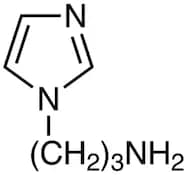
CAS:Formula:C11H16N2Purity:>98.0%(GC)(T)Color and Shape:Colorless to Almost colorless clear liquidMolecular weight:176.261-(3-Aminopropyl)imidazole
CAS:Formula:C6H11N3Purity:>97.0%(GC)Color and Shape:Colorless to Almost colorless clear liquidMolecular weight:125.18Heptylnonyl Adipate (so called) [Plasticizer]
CAS:Purity:mixture of Heptylnonyl adipate, Diheptyl adipate, Dinonyl adipate(GC)Color and Shape:Colorless to Almost colorless clear liquid4-Bromo-3-nitroacetophenone
CAS:4-Bromo-3-nitroacetophenone is a potent anticancer agent that has been shown to inhibit cancer cell growth by inhibiting the activity of dehydrogenase enzymes. It has been shown to be active against g1 phase cells, which are cells in the phase of cell cycle before mitosis. 4-Bromo-3-nitroacetophenone also has anti-inflammatory effects and can cross the blood brain barrier due to its hydrogen bond formation. This drug is selectively toxic to cancer cells while sparing healthy tissues and has been shown to be effective in treating inflammatory diseases, such as arthritis, by decreasing the production of proinflammatory cytokines.Formula:C8H6BrNO3Purity:Min. 95%Color and Shape:Yellow To Light (Or Pale) Yellow SolidMolecular weight:244.04 g/mol2,6-Dimethylbenzaldehyde
CAS:2,6-Dimethylbenzaldehyde is a colorless liquid with a sweet odor. It is used in the synthesis of fatty acids and as an intermediate for other compounds. This chemical has significant cytotoxicity against leukemia cells, and is used in the production of acrylonitrile. 2,6-Dimethylbenzaldehyde can be synthesized by reacting an amine with an acyl chloride, followed by hydrolysis of the resulting ester. A contactor is usually added to facilitate the reaction. The reaction can also be carried out in the presence of a phosphorane or organic solvent. 2,6-Dimethylbenzaldehyde can be hydrogenated to produce 2,4-dimethylaniline and 2,4,6-trimethylaniline.Formula:C9H10OPurity:Min. 95%Color and Shape:Clear White Solid Or Liquid (May Vary)Molecular weight:134.18 g/mol4-Chloro-7-(p-toluenesulfonyl)-7H-pyrrolo[2,3-d]pyrimidine
CAS:Formula:C13H10ClN3O2SPurity:>96.0%(HPLC)(N)Color and Shape:White to Orange to Green powder to crystalMolecular weight:307.752-Azido-1,3-bis[(2,2-dimethyl-1,3-dioxan-5-yl)oxy]propane
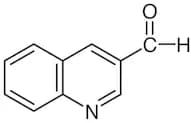
CAS:Formula:C15H27N3O6Purity:>95.0%(HPLC)Color and Shape:White or Colorless to Light orange to Yellow powder to lump to clear liquidMolecular weight:345.403-Quinolinecarboxaldehyde
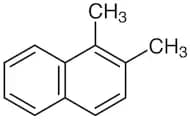
CAS:Formula:C10H7NOPurity:>96.0%(GC)(T)Color and Shape:White to Yellow to Green powder to crystalMolecular weight:157.171,2-Dimethylnaphthalene
CAS:Formula:C12H12Purity:>95.0%(GC)Color and Shape:Colorless to Light orange to Yellow clear liquidMolecular weight:156.23



![Galβ(1-4)[Neu5Acα(2-6)]GlcNAc-β-pNP](/_next/image/?url=https%3A%2Fstatic.cymitquimica.com%2Fproducts%2F3B%2Fthumb-webp%2FG0353.webp&w=3840&q=75)



![Heptylnonyl Adipate (so called) [Plasticizer]](/_next/image/?url=https%3A%2Fstatic.cymitquimica.com%2Fproducts%2F3B%2Fthumb-webp%2FA1388.webp&w=3840&q=75)


![4-Chloro-7-(p-toluenesulfonyl)-7H-pyrrolo[2,3-d]pyrimidine](/_next/image/?url=https%3A%2Fstatic.cymitquimica.com%2Fproducts%2F3B%2Fthumb-webp%2FC3036.webp&w=3840&q=75)
![2-Azido-1,3-bis[(2,2-dimethyl-1,3-dioxan-5-yl)oxy]propane](/_next/image/?url=https%3A%2Fstatic.cymitquimica.com%2Fproducts%2F3B%2Fthumb-webp%2FA2474.webp&w=3840&q=75)