Building Blocks
This section contains fundamental products for the synthesis of organic and biological compounds. Building blocks are the essential starting materials used to construct complex molecules through various chemical reactions. They play a critical role in drug discovery, material science, and chemical research. At CymitQuimica, we offer a diverse range of high-quality building blocks to support your innovative research and industrial projects, ensuring you have the essential components for successful synthesis.
Subcategories of "Building Blocks"
- Boronic Acids & Boronic Acid Derivatives(5,778 products)
- Chiral Building Blocks(1,242 products)
- Hydrocarbon Building Blocks(6,098 products)
- Organic Building Blocks(61,063 products)
Found 197855 products of "Building Blocks"
Sort by
Purity (%)
0
100
|
0
|
50
|
90
|
95
|
100
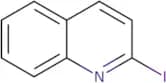
2-Iodoquinoline
CAS:<p>2-Iodoquinoline is a quinoline derivative that has been shown to be a potent inhibitor of the uptake of amyloid protein in vitro. 2-Iodoquinoline is also able to inhibit the growth of cancer cells and induce apoptosis. The mechanism by which 2-Iodoquinoline inhibits tumor cell growth may be due to its ability to activate epidermal growth factor receptor (EGFR). This compound has also been shown to stimulate epidermal growth through the activation of EGFR and other signaling pathways, such as phosphatidylinositol 3 kinase (PI3K) and mitogen-activated protein kinase (MAPK).</p>Formula:C9H6INPurity:Min. 95%Molecular weight:255.06 g/mol2-Naphthalenecarboxylic acid, 1,2,3,4-tetrahydro-4-oxo-
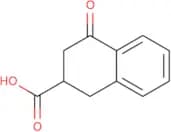
CAS:<p>2-Naphthalenecarboxylic acid, 1,2,3,4-tetrahydro-4-oxo-, is an organic compound that is a derivative of naphthalene. It can be synthesized by reacting benzene with acetic anhydride in the presence of a base catalyst. This product is used as a solvent and antioxidant in plastics manufacturing.</p>Formula:C11H10O3Purity:Min. 95%Molecular weight:190.2 g/mol2-Bromo-5-methylhexane
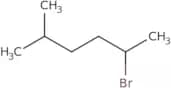
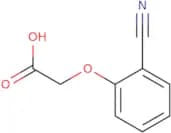
CAS:<p>2-Bromo-5-methylhexane is a homologous series of compounds with an alkylating agent that can inhibit cholinesterase and cause cancer. This compound has been shown to have anti-inflammatory properties, which may be due to its ability to modulate fatty acid metabolism. 2-Bromo-5-methylhexane also has been found to be effective in the treatment of prostate cancer cells. It is believed that this compound inhibits chloride channels, which are involved in the regulation of cell volume, and sodium channels, which are involved in nerve transmission. 2-Bromo-5-methylhexane also has fluorescence properties and can be used as a stain for sternal glands.</p>Formula:C7H15BrPurity:Min. 95%Molecular weight:179.1 g/mol2-(2-Cyanophenoxy)acetic acid
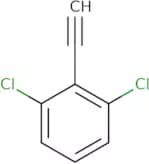
CAS:<p>Versatile small molecule scaffold</p>Formula:C9H7NO3Purity:Min. 95%Molecular weight:177.16 g/mol1,3-Dichloro-2-ethynylbenzene
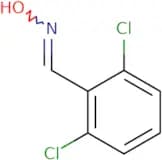
CAS:<p>Versatile small molecule scaffold</p>Formula:C8H4Cl2Purity:Min. 95%Molecular weight:171.02 g/mol(E)-2,6-Dichlorobenzaldehyde oxime
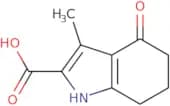
CAS:<p>(E)-2,6-Dichlorobenzaldehyde oxime is an oxime that has a high affinity for electron-rich molecules. It is a toxicant that targets toxicants with electron-donating groups such as benzene. This compound also has physicochemical properties such as solubility in water and lipids which make it suitable for mucosal administration. (E)-2,6-Dichlorobenzaldehyde oxime is used as a herbicide to control weeds in crops like soybeans and corn.</p>Formula:C7H5Cl2NOPurity:Min. 95%Molecular weight:190.02 g/mol3-Methyl-4-oxo-4,5,6,7-tetrahydro-1H-indole-2-carboxylic acid
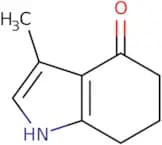
CAS:<p>Versatile small molecule scaffold</p>Formula:C10H11NO3Purity:Min. 95%Molecular weight:193.2 g/mol3-Methyl-4,5,6,7-tetrahydro-1H-indol-4-one
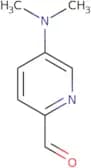
CAS:<p>Versatile small molecule scaffold</p>Formula:C9H11NOPurity:Min. 95%Molecular weight:149.19 g/mol5-(Dimethylamino)pyridine-2-carbaldehyde
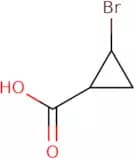
CAS:Versatile small molecule scaffoldFormula:C8H10N2OPurity:Min. 95%Molecular weight:150.18 g/molrac-(1R,2R)-2-Bromocyclopropane-1-carboxylic acid
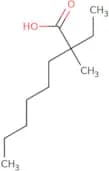
CAS:Versatile small molecule scaffoldFormula:C4H5BrO2Purity:Min. 95%Molecular weight:164.99 g/mol2-Ethyl-2-methyloctanoic acid
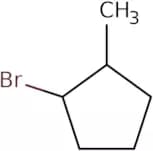
CAS:<p>Versatile small molecule scaffold</p>Formula:C11H22O2Purity:Min. 95%Molecular weight:186.29 g/mol1-Bromo-2-methylcyclopentane
CAS:<p>Versatile small molecule scaffold</p>Formula:C6H11BrPurity:Min. 95%Color and Shape:Clear LiquidMolecular weight:163.06 g/mol(2R)-2-{[(tert-Butoxy)carbonyl]amino}-3-{[(tert-butoxy)carbonyl]sulfanyl}propanoic acid
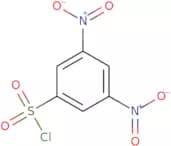
CAS:Versatile small molecule scaffoldFormula:C13H23NO6SPurity:Min. 95%Molecular weight:321.39 g/mol3,5-Dinitrobenzene-1-sulfonyl chloride
CAS:3,5-Dinitrobenzenesulfonyl chloride is a sulfonyl chloride that is used as a precursor in the synthesis of dendrimers. 3,5-Dinitrobenzene-1-sulfonyl chloride has been used to synthesize dendrimers with sulfonate groups on their surface. The sulfonate groups can be used to attach other molecules to the dendrimer and provide functionality. This compound can also be used to form tetranitrochloride by reacting it with sodium chlorite in aqueous solution.Formula:C6H3ClN2O6SPurity:Min. 95%Molecular weight:266.62 g/mol5-Chloro-1,3-dimethyl-1,2,3,4-tetrahydropyrimidine-2,4-dione
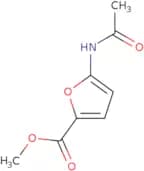
CAS:<p>5-Chloro-1,3-dimethyl-1,2,3,4-tetrahydropyrimidine-2,4-dione is a dipole that has a geometry of an equilateral triangle with a dihedral angle of 120°. It has two hydrogen bonds and one intermolecular hydrogen bond. The molecule is photodimerized in low concentration and can form dimers by stacking interactions at low concentrations. This compound also interacts with uracils and has been shown to be stable when exposed to light. 5-Chloro-1,3-dimethylpyrimidine-2,4-dione has been shown to have interactions with the ftir spectra of other compounds.</p>Formula:C6H7ClN2O2Purity:Min. 95%Molecular weight:174.58 g/molMethyl 5-acetamidofuran-2-carboxylate
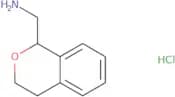
CAS:Versatile small molecule scaffoldFormula:C8H9NO4Purity:Min. 95%Molecular weight:183.16 g/mol(3,4-Dihydro-1H-2-benzopyran-1-yl)methanamine hydrochloride
CAS:Versatile small molecule scaffoldFormula:C10H14ClNOPurity:Min. 95%Molecular weight:199.68 g/mol[(3,4-Dihydro-1H-2-benzopyran-1-yl)methyl](methyl)amine hydrochloride
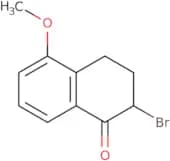
CAS:<p>Versatile small molecule scaffold</p>Formula:C11H16ClNOPurity:Min. 95%Molecular weight:213.7 g/mol2-Bromo-5-methoxy-3,4-dihydronaphthalen-1(2H)-one
CAS:Versatile small molecule scaffoldFormula:C11H11BrO2Purity:Min. 95%Molecular weight:255.11 g/mol(1-tert-Butylazetidin-2-yl)methanol
CAS:<p>Versatile small molecule scaffold</p>Formula:C8H17NOPurity:Min. 95%Molecular weight:143.23 g/mol

![(2R)-2-{[(tert-Butoxy)carbonyl]amino}-3-{[(tert-butoxy)carbonyl]sulfanyl}propanoic acid](/_next/image/?url=https%3A%2Fstatic.cymitquimica.com%2Fproducts%2F3D%2Fthumb-webp%2FGBA20258.webp&w=3840&q=75)

amine hydrochloride](/_next/image/?url=https%3A%2Fstatic.cymitquimica.com%2Fproducts%2F3D%2Fthumb-webp%2FGBA23158.webp&w=3840&q=75)