


Building Blocks
This section contains fundamental products for the synthesis of organic and biological compounds. Building blocks are the essential starting materials used to construct complex molecules through various chemical reactions. They play a critical role in drug discovery, material science, and chemical research. At CymitQuimica, we offer a diverse range of high-quality building blocks to support your innovative research and industrial projects, ensuring you have the essential components for successful synthesis.
Subcategories of "Building Blocks"
- Boronic Acids & Boronic Acid Derivatives(5,778 products)
- Chiral Building Blocks(1,243 products)
- Hydrocarbon Building Blocks(6,097 products)
- Organic Building Blocks(61,052 products)
Found 201390 products of "Building Blocks"
Sort by
Purity (%)
0
100
|
0
|
50
|
90
|
95
|
100
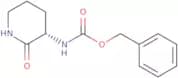
(S)-3-N-Cbz-Aminopiperidin-2-one
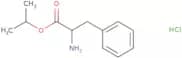
CAS:Versatile small molecule scaffoldFormula:C13H16N2O3Purity:Min. 95%Molecular weight:248.28 g/molPropan-2-yl (2S)-2-amino-3-phenylpropanoate hydrochloride
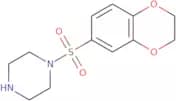
CAS:Versatile small molecule scaffoldFormula:C12H18ClNO2Purity:Min. 95%Molecular weight:243.73 g/mol1-(2,3-Dihydro-1,4-benzodioxine-6-sulfonyl)piperazine
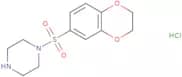
CAS:Versatile small molecule scaffoldFormula:C12H16N2O4SPurity:Min. 95%Molecular weight:284.33 g/mol1-(2,3-Dihydro-1,4-benzodioxine-6-sulfonyl)piperazine hydrochloride
CAS:Controlled Product1-(2,3-Dihydro-1,4-benzodioxine-6-sulfonyl)piperazine hydrochloride is an experimental drug that belongs to the group of pharmacological agents. It is a piperazine derivative with potent antagonistic effects against opioid receptors. It has been shown to have synergic effects when used with other drugs. Structural analysis revealed the presence of nitrogen atoms in the molecule and crystallinity was confirmed by x-ray diffraction data. The solubility of this compound in human serum is low. 1-(2,3-Dihydro-1,4-benzodioxine-6-sulfonyl)piperazine hydrochloride has been observed to inhibit the production of cytokines such as interleukin and tumor necrosis factor alpha (TNFα).Formula:C12H17ClN2O4SPurity:Min. 95%Molecular weight:320.79 g/mol2-Aminomethyl-3-phenylpropionic acid
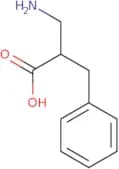
CAS:<p>2-Aminomethyl-3-phenylpropionic acid is a chemical compound that is used as a catalyst in the hydrocyanation of alkyne to produce unsaturated compounds. It is also an amino acid that contains an α-amino group and a carboxylic acid. 2-Aminomethyl-3-phenylpropionic acid has been shown to be effective for producing yields of up to 99% in nickel-based catalysts for the hydrocyanation of alkyne. This compound is also inexpensive, nonhazardous, and stable at high temperatures.</p>Formula:C10H13NO2Purity:Min. 95%Molecular weight:179.22 g/mol1-Bromo-1-ethoxycyclopropane
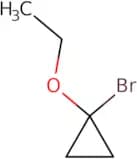
CAS:1-Bromo-1-ethoxycyclopropane is a structural modification of the cyclopropanone ring. It has been shown to be resistant to many bacteria, such as Pseudomonas aeruginosa and Escherichia coli, and also inhibits the growth of fungi. 1-Bromo-1-ethoxycyclopropane has been shown to act as an antibacterial agent by inhibiting the synthesis of proteins in bacteria and can work synergistically with aminoglycosides. 1-Bromo-1-ethoxycyclopropane may have a role in nature as it has been found to inhibit the growth of malonate oxidase from organisms such as Acinetobacter calcoaceticus.Formula:C5H9BrOPurity:Min. 95%Molecular weight:165.03 g/mol2-Chloro-6-methoxynicotinaldehyde
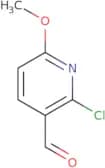
CAS:<p>Versatile small molecule scaffold</p>Formula:C7H6ClNO2Purity:Min. 95%Molecular weight:171.58 g/mol6-Chloro-2-methoxypyridine-3-carboxaldehyde
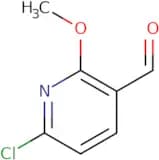
CAS:Versatile small molecule scaffoldFormula:C7H6ClNO2Purity:Min. 95%Molecular weight:171.58 g/mol5-(Bromomethyl)-3-methyl-2,3-dihydro-1,3-benzoxazol-2-one
CAS:<p>Versatile small molecule scaffold</p>Formula:C9H8BrNO2Purity:Min. 95%Molecular weight:242.07 g/mol2-(3-Methyl-2-oxo-2,3-dihydro-1,3-benzoxazol-5-yl)acetonitrile
CAS:<p>Versatile small molecule scaffold</p>Formula:C10H8N2O2Purity:Min. 95%Molecular weight:188.18 g/mol7-amino-5-chloropyrazolo[1,5-a]pyrimidine
CAS:<p>Versatile small molecule scaffold</p>Formula:C6H5ClN4Purity:Min. 95%Molecular weight:168.58 g/molN-(2-bromo-6-nitrophenyl)acetamide
CAS:N-(2-bromo-6-nitrophenyl)acetamide is a bidentate ligand that was synthesized as an acetylated derivative of diazonium salt. It binds to transition metal ions such as copper and nickel, which are important for the catalytic activity of many enzymes. The binding of N-(2-bromo-6-nitrophenyl)acetamide to the active site of these enzymes inhibits the reaction by forming a complex with the substrate, thereby preventing it from reacting with the enzyme. In addition, this ligand has been shown to have strong absorption in the visible range, which is useful for detection of transitions in organic molecules. Nitro groups can be introduced through nitration reactions or by adding nitrobenzene to N-(2-bromo-6-nitrophenyl)acetamide. One advantage of N-(2-bromo-6-nitrophenyl)acetamide over otherFormula:C8H7BrN2O3Purity:Min. 95%Molecular weight:259.06 g/mol4-(4-Methyl-3-nitrophenyl)morpholine
CAS:Versatile small molecule scaffoldFormula:C11H14N2O3Purity:Min. 95%Molecular weight:222.24 g/mol4-Aminopyrimidine-2-carbonitrile
CAS:<p>4-Aminopyrimidine-2-carbonitrile is an organic compound that is structurally related to pyrimidine derivatives. It is a drug candidate for the treatment of tuberculosis (TB) and other multidrug resistant bacteria. 4-Aminopyrimidine-2-carbonitrile has been shown to be more potent than formamide and triethyl orthoformate, but less potent than aminopyrazole. The mechanism of action of 4-aminopyrimidine-2-carbonitrile is not well understood, but it may involve an epoxide intermediate that generates reactive oxygen species, which causes necrosis in the bacterial cell. The drug also exhibits some activity against tumour necrosis factor alpha (TNFα).</p>Purity:Min. 95%3-Methyl-N-(prop-2-yn-1-yl)but-2-enamide
CAS:Versatile small molecule scaffoldFormula:C8H11NOPurity:Min. 95%Molecular weight:137.18 g/mol2-Chloro-4-ethoxybenzaldehyde
CAS:Versatile small molecule scaffoldFormula:C9H9ClO2Purity:Min. 95%Molecular weight:184.62 g/mol4-(3-Bromophenyl)oxane-4-carbonitrile
CAS:<p>Versatile small molecule scaffold</p>Formula:C12H12BrNOPurity:Min. 95%Molecular weight:266.14 g/mol1-{1-Methyl-1H-pyrazolo[3,4-d]pyrimidin-4-yl}piperazine
CAS:<p>Versatile small molecule scaffold</p>Formula:C10H14N6Purity:Min. 95%Molecular weight:218.26 g/mol3-Acetamido-1-methyl-1H-pyrazole-5-carboxylic acid
CAS:Versatile small molecule scaffoldFormula:C7H9N3O3Purity:Min. 95%Molecular weight:183.16 g/molMethyl (2E)-3-(5-methoxy-1H-indol-2-yl)prop-2-enoate
CAS:<p>Versatile small molecule scaffold</p>Formula:C13H13NO3Purity:Min. 95%Molecular weight:231.2 g/mol



![7-amino-5-chloropyrazolo[1,5-a]pyrimidine](/_next/image/?url=https%3A%2Fstatic.cymitquimica.com%2Fproducts%2F3D%2Fthumb-webp%2FVJA09596.webp&w=3840&q=75)


![1-{1-Methyl-1H-pyrazolo[3,4-d]pyrimidin-4-yl}piperazine](/_next/image/?url=https%3A%2Fstatic.cymitquimica.com%2Fproducts%2F3D%2Fthumb-webp%2FVJA44997.webp&w=3840&q=75)

