Building Blocks
This section contains fundamental products for the synthesis of organic and biological compounds. Building blocks are the essential starting materials used to construct complex molecules through various chemical reactions. They play a critical role in drug discovery, material science, and chemical research. At CymitQuimica, we offer a diverse range of high-quality building blocks to support your innovative research and industrial projects, ensuring you have the essential components for successful synthesis.
Subcategories of "Building Blocks"
- Boronic Acids & Boronic Acid Derivatives(5,778 products)
- Chiral Building Blocks(1,242 products)
- Hydrocarbon Building Blocks(6,098 products)
- Organic Building Blocks(61,084 products)
Found 198714 products of "Building Blocks"
Sort by
Purity (%)
0
100
|
0
|
50
|
90
|
95
|
100
Ethyl cyclopentane carboxylate
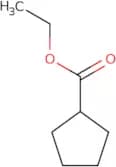
CAS:<p>Ethyl cyclopentane carboxylate is a cell signaling molecule that is synthesized from an amide and diacylglycerol. It has been shown to have therapeutic effects in autoimmune diseases, cancer, inflammatory diseases, bowel disease, and transfer reactions. Ethyl cyclopentane carboxylate inhibits the MCL-1 protein and CB2 receptor in the immune system. Ethyl cyclopentane carboxylate has also been shown to inhibit the inflammatory response in experimental models of inflammatory bowel disease by inhibiting the activity of the Cb2 receptor.</p>Formula:C8H14O2Purity:Min. 95%Molecular weight:142.2 g/molethyl 1-methyl-2-oxocyclopentane-1-carboxylate
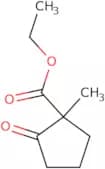
CAS:<p>Ethyl 1-methyl-2-oxocyclopentane-1-carboxylate is a cyclopentenone that has been shown to be effective against epidermoid carcinoma cells and lymphocytic leukemia. It has antitumor activity in vivo, with a good cytotoxicity profile. This compound binds to the DNA of tumor cells, causing mismatched base pairing through its diastereomeric interactions. This binding leads to disruption of the DNA helix, which causes cell death by apoptosis. Ethyl 1-methyl-2-oxocyclopentane-1-carboxylate also inhibits the growth of tissue culture cells. The toxic effects on these cells are dose dependent and can be reduced by irradiation or ethylene gas treatment.</p>Formula:C9H14O3Purity:Min. 95%Molecular weight:170.21 g/molEthyl 1-methyl-2-oxocyclohexane-1-carboxylate
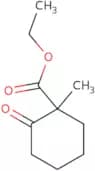
CAS:Ethyl 1-methyl-2-oxocyclohexane-1-carboxylate (EMOC) is a synthetic retinoid that was designed to have biological properties similar to those of retinoic acid. EMOC has been shown to inhibit the growth of cancer cells in vitro and in vivo, as well as to induce differentiation in these cells. It inhibits DNA replication by binding to chloride ions, which are essential for the enzymatic activity of DNA polymerase. EMOC also binds to the carbonyl group of diltiazem hydrochloride, a drug used for the treatment of high blood pressure and angina pectoris. The chemical structures of both compounds are similar, with one difference being that EMOC has an additional methyl group on its terminal half-life.Formula:C10H16O3Purity:Min. 95%Molecular weight:184.23 g/mol2-(2,3-Dihydro-1H-inden-5-yl)acetic acid
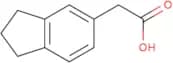
CAS:<p>2-(2,3-Dihydro-1H-inden-5-yl)acetic acid is an antiinflammatory drug used for the relief of acute or chronic pain and inflammation. It works by blocking the production of prostaglandins, which are chemical messengers that cause pain and inflammation. 2-(2,3-Dihydro-1H-inden-5-yl)acetic acid has been found to be effective in relieving pain and inflammation in a variety of conditions including osteoarthritis, rheumatoid arthritis, ankylosing spondylitis and psoriatic arthritis. The drug also has a role in preventing the formation of kidney stones because it prevents calcium oxalate crystals from forming. This compound can be reconstituted with water or alcohols to produce a solution for oral administration. 2-(2,3-Dihydro-1H-inden-5-yl)acetic acid</p>Formula:C11H12O2Purity:Min. 95%Molecular weight:176.21 g/mol1,3-Diphenylpropan-1-amine hydrochloride
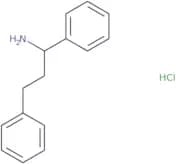
CAS:<p>Versatile small molecule scaffold</p>Formula:C15H18ClNPurity:Min. 95%Molecular weight:247.76 g/mol2-Methylcyclopentanamine hydrochloride
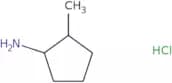
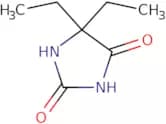
CAS:Versatile small molecule scaffoldFormula:C6H14ClNPurity:Min. 95%Molecular weight:135.64 g/mol5,5-Diethyl-imidazolidine-2,4-dione
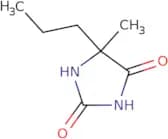
CAS:<p>5,5-Diethyl-imidazolidine-2,4-dione is an n-nitrosodiethylamine (NDELA) metabolite that binds to the cytochrome P450 enzyme and inhibits the activity of hydantoinase. It is also a ligand for the immunoreactive form of the enzyme in rats. 5,5-Diethyl-imidazolidine-2,4-dione has been shown to inhibit carcinogenesis in rats and enhance enzyme activities. This compound also interacts with drugs such as warfarin and phenytoin by enhancing their concentrations.</p>Formula:C7H12N2O2Purity:Min. 95%Molecular weight:156.18 g/mol5-Methyl-5-propylimidazolidine-2,4-dione
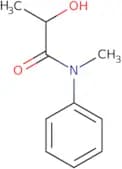
CAS:<p>5-Methyl-5-propylimidazolidine-2,4-dione is an antimicrobial agent that inhibits the growth of bacteria. It has been shown to inhibit the growth of Staphylococcus aureus and other bacteria on cellulose surfaces. This drug also reacts with epoxides in cell walls and is effective against Gram-positive and Gram-negative bacteria. The reaction solution for 5-Methyl-5-propylimidazolidine-2,4-dione was prepared by dissolving the drug in a mixture of methylene chloride and methanol. The stability tests were conducted over a long period at room temperature or at 4°C. The results showed that this drug maintained its potency for extended periods of time when stored at these temperatures.</p>Formula:C7H12N2O2Purity:Min. 95%Molecular weight:156.18 g/mol2-Hydroxy-N-methyl-N-phenylpropanamide
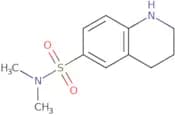
CAS:<p>Versatile small molecule scaffold</p>Formula:C10H13NO2Purity:Min. 95%Molecular weight:179.22 g/molN,N-Dimethyl-1,2,3,4-tetrahydroquinoline-6-sulfonamide
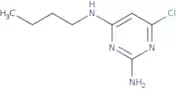
CAS:<p>Versatile small molecule scaffold</p>Formula:C11H16N2O2SPurity:Min. 95%Molecular weight:240.32 g/mol4-N-Butyl-6-chloropyrimidine-2,4-diamine
CAS:<p>Versatile small molecule scaffold</p>Formula:C8H13ClN4Purity:Min. 95%Molecular weight:200.67 g/mol3-[(2-Hydroxyethyl)amino]propanoic acid
CAS:<p>3-[(2-Hydroxyethyl)amino]propanoic acid is a primary alcohol that has hydrogens, a propanoic acid, and propanoic. It is an amino compound.</p>Formula:C5H11NO3Purity:Min. 95%Molecular weight:133.15 g/molN-Butyl cyanoacetate
CAS:N-Butyl cyanoacetate is a colorless liquid that has a strong, unpleasant odor. It is used in the production of industrial chemicals and as an active methylene reagent in organic synthesis. It can be used to make diazonium salts and c1-c4 haloalkyl compounds. N-Butyl cyanoacetate is known to cause allergic reactions and has been shown to have an effect on the central nervous system, causing low energy levels and receptor activity.Formula:C7H11NO2Purity:Min. 95%Molecular weight:141.17 g/mol4-Methoxycyclohexan-1-amine hydrochloride
CAS:Versatile small molecule scaffoldFormula:C7H16ClNOPurity:Min. 95%Molecular weight:165.66 g/mol3,4-Dimethoxyiodobenzene
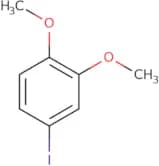
CAS:<p>3,4-Dimethoxyiodobenzene is a synthetic compound that is used in the synthesis of isoalantolactone. It is an aromatic halide with two methoxy groups attached to the terminal alkyne groups. 3,4-Dimethoxyiodobenzene can be prepared by reacting iodine and hydrochloric acid. The reaction rate for this reaction is dependent on the concentration of iodine and hydrochloric acid. This compound can also be obtained by reacting chloroform with ethylene oxide in the presence of sodium hydroxide. The yield of 3,4-dimethoxyiodobenzene from this reaction is very high, but it requires a long period of time to complete.</p>Formula:C8H9IO2Purity:Min. 95%Molecular weight:264.06 g/mol4-Chloro-3-methylbenzene-1-sulfonamide
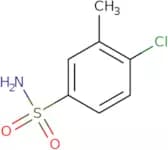
CAS:<p>Versatile small molecule scaffold</p>Formula:C7H8ClNO2SPurity:Min. 95%Molecular weight:205.66 g/mol6-Chloro-9-ethyl-9H-purine
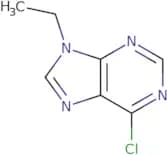
CAS:6-Chloro-9-ethyl-9H-purine (6C9E) is a deaminated nucleoside that can be synthesized from the purine nucleosides, 6-chloropurine and 9-ethyladenine. The terminal alkynes of 6C9E are able to react with azides to form triazoles. This reaction is an example of nucleophilic substitution and has been shown to be reversible. 6C9E has potential as a fluorescent marker in organic synthesis due to its ability to fluoresce under UV light. It also reacts with carbon tetrachloride leading to the formation of chloroform and hydrogen chloride gas, which can be detected by smell or by luminescence.Formula:C7H7ClN4Purity:Min. 95%Molecular weight:182.61 g/mol6-Bromo-2-oxo-1,2-dihydroquinoline-4-carboxylic acid
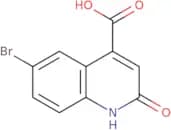
CAS:6-Bromo-2-oxo-1,2-dihydroquinoline-4-carboxylic acid is a corrosion inhibitor with potentiodynamic polarization. It is a potent inhibitor of chloride ion transport in electrochemical systems. 6-Bromo-2-oxo-1,2-dihydroquinoline-4-carboxylic acid has been shown to inhibit the corrosion of steel in hydrochloric acid solutions and to have an efficiency that is greater than that of other known inhibitors. The inhibition efficiency of 6BQCA can be modeled using impedance spectroscopy, which is a functional theory for the study of diffusion of current through electrolytic solutions.Formula:C10H6BrNO3Purity:Min. 95%Molecular weight:268.06 g/mol4,7-Dimethyl-1,3-dihydro-2-benzofuran-1,3-dione
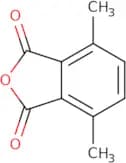
CAS:<p>4,7-Dimethyl-1,3-dihydro-2-benzofuran-1,3-dione is a functional theory that stabilizes the molecule by preventing the formation of an intermediate. It can be used to prevent the generation of reactive radicals and other undesirable side reactions. 4,7-Dimethyl-1,3-dihydro-2-benzofuran-1,3-dione is uncatalyzed and reacts with water to form a cyclic compound that has a section of two functional groups that are bifunctional in nature. The parameters for this reaction include acid as a catalyst and proton as an acceptor. In catalysis, hydrogen bond forms between hydrogen fluoride and one of the hydroxyl groups on the 4,7 dimethyl benzofuran ring. This bond breaks down during dehydration when hydrogen fluoride leaves the molecule to form water.</p>Formula:C10H8O3Purity:Min. 95%Molecular weight:176.17 g/molPiperidin-1-ylbutanoic acid hydrochloride
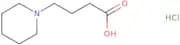
CAS:Versatile small molecule scaffoldFormula:C9H18ClNO2Purity:Min. 95%Molecular weight:207.7 g/mol

![3-[(2-Hydroxyethyl)amino]propanoic acid](/_next/image/?url=https%3A%2Fstatic.cymitquimica.com%2Fproducts%2F3D%2Fthumb-webp%2FFAA45899.webp&w=3840&q=75)