Building Blocks
This section contains fundamental products for the synthesis of organic and biological compounds. Building blocks are the essential starting materials used to construct complex molecules through various chemical reactions. They play a critical role in drug discovery, material science, and chemical research. At CymitQuimica, we offer a diverse range of high-quality building blocks to support your innovative research and industrial projects, ensuring you have the essential components for successful synthesis.
Subcategories of "Building Blocks"
- Boronic Acids & Boronic Acid Derivatives(5,778 products)
- Chiral Building Blocks(1,242 products)
- Hydrocarbon Building Blocks(6,098 products)
- Organic Building Blocks(61,092 products)
Found 199297 products of "Building Blocks"
Sort by
Purity (%)
0
100
|
0
|
50
|
90
|
95
|
100
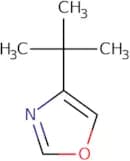
4-tert-Butyl-1,3-oxazole
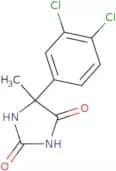
CAS:<p>4-tert-Butyl-1,3-oxazole is an organic molecule that contains a trifluoromethyl group and a phenyliodine group. It has been used as a substrate in the intramolecular cyclization of enamines. This reaction is catalyzed by copper(II) acetate as a catalyst, which facilitates the formation of an imine bond between the 1,3-oxazole ring and the amine group of the enamine. The reaction produces a 1,2-diketone and is reversible under acidic conditions.</p>Formula:C7H11NOPurity:Min. 95%Molecular weight:125.17 g/mol5-(3,4-Dichlorophenyl)-5-methylimidazolidine-2,4-dione
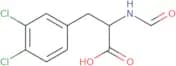
CAS:<p>Versatile small molecule scaffold</p>Formula:C10H8Cl2N2O2Purity:Min. 95%Molecular weight:259.09 g/mol3-(3,4-Dichlorophenyl)-2-formamidopropanoic acid
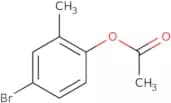
CAS:<p>Versatile small molecule scaffold</p>Formula:C10H9Cl2NO3Purity:Min. 95%Molecular weight:262.09 g/mol4-Bromo-2-methylphenyl acetate
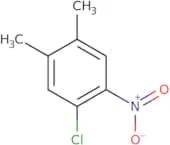
CAS:<p>Versatile small molecule scaffold</p>Formula:C9H9BrO2Purity:Min. 95%Molecular weight:229.07 g/mol1-Chloro-4,5-dimethyl-2-nitrobenzene
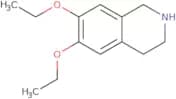
CAS:<p>Versatile small molecule scaffold</p>Formula:C8H8ClNO2Purity:Min. 95%Molecular weight:185.61 g/mol6,7-Diethoxy-1,2,3,4-tetrahydroisoquinoline
CAS:<p>Versatile small molecule scaffold</p>Formula:C13H19NO2Purity:Min. 95%Molecular weight:221.29 g/mol7,8-Dimethoxy-1,2,3,4-tetrahydroisoquinoline
CAS:7,8-Dimethoxy-1,2,3,4-tetrahydroisoquinoline is a nonphenolic compound that is synthesized from methylheliamine. It has been identified as a natural product in the plant genus Webera and can be isolated in crystallized form. 7,8-Dimethoxy-1,2,3,4-tetrahydroisoquinoline is used in medicinal products and has been found to have antimicrobial properties. 7,8-Dimethoxy-1,2,3,4-tetrahydroisoquinoline inhibits bacterial growth by binding to DNA gyrase and topoisomerase IV enzymes. This prevents the bacteria from dividing and leads to cell death.Formula:C11H15NO2Purity:Min. 95%Molecular weight:193.24 g/mol4-(4H-1,2,4-Triazol-4-yl)aniline
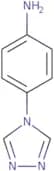
CAS:<p>4-(4H-1,2,4-Triazol-4-yl)aniline is a fluorescent dye that is used to study DNA and RNA. It has been used in single-crystal x-ray diffraction analysis to investigate the interconnection of water molecules. 4-(4H-1,2,4-Triazol-4-yl)aniline has also been used in x-ray diffraction analysis for determining the crystallographic structure of a molecule. This compound emits light when excited by an electron beam or other type of radiation. The emission spectrum can be used to identify the presence and concentration of this compound in solution. 4-(4H-1,2,4-Triazol-4-yl)aniline is usually prepared by a hydrothermal reaction between 2,6 diaminopyridine and 3 nitrobenzene.</p>Formula:C8H8N4Purity:Min. 95%Molecular weight:160.18 g/mol4-(1H-Pyrrol-1-yl)aniline
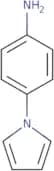
CAS:<p>4-(1H-Pyrrol-1-yl)aniline is a compound that belongs to the class of quinoline derivatives. It has been experimentally shown to have an antibacterial activity against Escherichia coli and Staphylococcus aureus. 4-(1H-Pyrrol-1-yl)aniline is obtained from the reaction of nitric acid with diazonium salts. This compound can be used as a coating for medical devices, such as catheters, which may reduce bacterial colonisation.</p>Formula:C10H10N2Purity:Min. 95%Molecular weight:158.2 g/mol2-Amino-3-hydroxyhexanoic acid
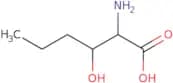
CAS:<p>2-Amino-3-hydroxyhexanoic acid is a quantifiable amino acid that is found in biological samples. It can be detected by gas liquid chromatography, which uses a calibration curve to quantify the amount of 2-amino-3-hydroxyhexanoic acid present in a sample. This amino acid is found in the tissue homogenates and hydrazones of acetaldehyde and threonine, which are metabolites of alcohol consumption. The detection limit for 2-amino-3-hydroxyhexanoic acid is 0.1 mg/dL.</p>Formula:C6H13NO3Purity:Min. 95%Molecular weight:147.17 g/mol(2,2-Dimethyl-1,3-dioxan-5-yl)methanamine
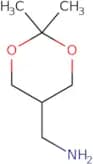
CAS:Versatile small molecule scaffoldFormula:C7H15NO2Purity:Min. 95%Molecular weight:145.2 g/mol2-[4-(Trifluoromethyl)phenyl]cyclohexan-1-one
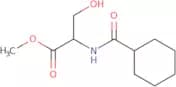
CAS:Versatile small molecule scaffoldFormula:C13H13F3OPurity:Min. 95%Molecular weight:242.24 g/molMethyl 2-(cyclohexylformamido)-3-hydroxypropanoate
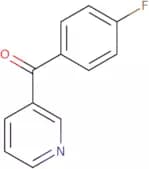
CAS:Versatile small molecule scaffoldFormula:C11H19NO4Purity:Min. 95%Molecular weight:229.27 g/mol3-(4-Fluorobenzoyl)pyridine
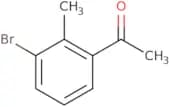
CAS:<p>Versatile small molecule scaffold</p>Formula:C12H8FNOPurity:Min. 95%Molecular weight:201.2 g/mol3'-bromo-2'-methylacetophenone
CAS:<p>Versatile small molecule scaffold</p>Formula:C9H9BrOPurity:Min. 95%Molecular weight:213.07 g/mol5-Chlorobenzene-1,3-diol
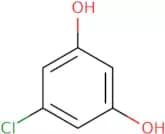
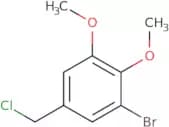
CAS:<p>5-Chlorobenzene-1,3-diol is an isomer of benzonitrile. It is a colorless liquid with a strong odor. 5-Chlorobenzene-1,3-diol is used as a solvent and can be used in the production of sulfur, aldehydes, piperazine, resorcinol, chlorine, silicone and polysulfide. It has been shown to have functional groups that are reactive to sulfide and natural products. 5-Chlorobenzene-1,3-diol has been shown to react with formaldehyde or acetaldehyde in the presence of light to produce formylation products.</p>Formula:C6H5ClO2Purity:Min. 95%Molecular weight:144.55 g/mol1-Bromo-5-(chloromethyl)-2,3-dimethoxybenzene
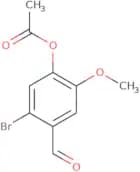
CAS:Versatile small molecule scaffoldFormula:C9H10BrClO2Purity:Min. 95%Molecular weight:265.53 g/mol4-Acetoxy-2-bromo-5-methoxybenzaldehyde
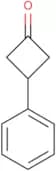
CAS:<p>Versatile small molecule scaffold</p>Formula:C10H9BrO4Purity:Min. 95%Molecular weight:273.08 g/mol3-Phenylcyclobutanone
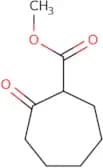
CAS:<p>3-Phenylcyclobutanone is a hydrogen peroxide that is used as an oxidizing agent in organic synthesis. It has been shown to be a more powerful oxidant than benzoyl peroxide and can be used to produce the ring-opening of cyclobutanones. This compound has been shown to have antimicrobial properties against microbial strains such as Escherichia coli, Bacillus subtilis, and Streptococcus pneumoniae. 3-Phenylcyclobutanone may also be reduced by sodium borohydride to form cyclobutanone, which is chiral with a molecular ion mass of 162.</p>Formula:C10H10OPurity:Min. 95%Molecular weight:146.19 g/molMethyl 2-oxo-1-cycloheptanecarboxylate
CAS:<p>Methyl 2-oxo-1-cycloheptanecarboxylate is a quinoline derivative that inhibits the activity of sirtuin 2 enzyme. It has been shown to inhibit cancer cells in vitro and in vivo, as well as to induce apoptosis. This drug also inhibits the growth of human leukemia cells by inhibiting protein synthesis, which may be due to its ability to activate hydroxy groups in proteins. Methyl 2-oxo-1-cycloheptanecarboxylate is an activated form that can be synthesized from cyclohexanol and transfer reactions with amidines or alkoxycarbonyls. The carbonyl group on this compound is metabolized into carbon dioxide, water, and energy via oxidative reactions with glutathione peroxidase.</p>Formula:C9H14O3Purity:Min. 95%Molecular weight:170.21 g/mol

![2-[4-(Trifluoromethyl)phenyl]cyclohexan-1-one](/_next/image/?url=https%3A%2Fstatic.cymitquimica.com%2Fproducts%2F3D%2Fthumb-webp%2FCCA77613.webp&w=3840&q=75)