Building Blocks
This section contains fundamental products for the synthesis of organic and biological compounds. Building blocks are the essential starting materials used to construct complex molecules through various chemical reactions. They play a critical role in drug discovery, material science, and chemical research. At CymitQuimica, we offer a diverse range of high-quality building blocks to support your innovative research and industrial projects, ensuring you have the essential components for successful synthesis.
Subcategories of "Building Blocks"
- Boronic Acids & Boronic Acid Derivatives(5,778 products)
- Chiral Building Blocks(1,242 products)
- Hydrocarbon Building Blocks(6,098 products)
- Organic Building Blocks(61,092 products)
Found 199296 products of "Building Blocks"
Sort by
Purity (%)
0
100
|
0
|
50
|
90
|
95
|
100
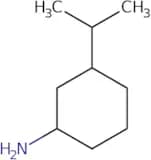
3-(Propan-2-yl)cyclohexan-1-amine
CAS:<p>Versatile small molecule scaffold</p>Formula:C9H19NPurity:Min. 95%Molecular weight:141.25 g/mol2-Propylcyclohexan-1-amine
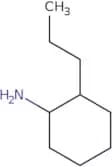
CAS:<p>2-Propylcyclohexan-1-amine is a hydrogenation reaction intermediate that is produced by the thermodynamic equilibrium of cyclohexanone. It is a colorless liquid that has an amine odor. 2-Propylcyclohexan-1-amine can be used as a solvent and as a reactant in industrial processes. The phosphide ion, P, in this compound can be oxidized to form phosphoric acid with heat or light. This reaction has an activation energy (Ea) of 78 kJ/mol and produces hydrogen gas and the corresponding acid from 2-propyclohexanone. The bond cleavage reaction between phosphine and cyclohexane has an Ea of 54 kJ/mol and produces hydrogen gas, phosphate ions, and the corresponding alcohol.</p>Formula:C9H19NPurity:Min. 95%Molecular weight:141.25 g/mol1,5,5-Trimethylhydantoin
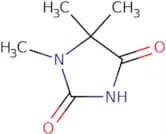
CAS:1,5,5-Trimethylhydantoin is an activated ring-opening compound that can be used as an inhibitor in the synthesis of amines. The reaction mechanism of 1,5,5-Trimethylhydantoin is a ring-opening reaction with the help of amines to form a phosphazene. To synthesize amines from 1,5,5-Trimethylhydantoin and amine monomers in the reaction mixture, it is necessary to have a cocatalyst such as chloride or silver trifluoromethanesulfonate. The crystalline structure of 1,5,5-Trimethylhydantoin is dependent on temperature and pH; at room temperature it has a monoclinic crystal structure and at higher temperatures it has a rhombic crystal structure. It was found that 1,5,5-Trimethylhydantoin also inhibits the metabolism of urinary creatinine and increases its level inFormula:C6H10N2O2Purity:Min. 95%Molecular weight:142.16 g/molEthyl 4-hydroxy-1,6-naphthyridine-3-carboxylate
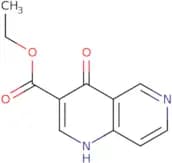
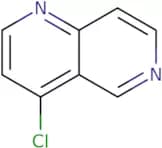
CAS:<p>Versatile small molecule scaffold</p>Formula:C11H10N2O3Purity:Min. 95%Molecular weight:218.21 g/mol4-Chloro-1,6-naphthyridine
CAS:<p>4-Chloro-1,6-naphthyridine is a chlorinated derivative of 1,6-naphthyridine. It is synthesized by catalytic hydrogenation. Catalytic hydrogenation of 4-chloro-1,6-naphthyridine yields two isomeric products: 4-chloronicotinamide and 4-chlorobenzamide. The industrial process for the synthesis of 4-chloro-1,6-naphthyridine involves condensation with ethyl acetate to form the N-(4'-chlorophenyl)ethane sulfonate salt followed by reaction with potassium chloride in alcoholic solution.</p>Formula:C8H5ClN2Purity:Min. 95%Molecular weight:164.6 g/mol3-Chloropyrazine 1-oxide
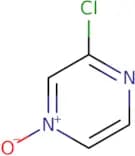
CAS:<p>3-Chloropyrazine 1-oxide is a colorless solid that is soluble in chloroform, acetonitrile, and ethyl acetate. It has a molecular weight of 171.44 and a melting point of -8°C. 3-Chloropyrazine 1-oxide is used as an intermediate in the preparation of quinoxalines using the cross-coupling reaction with palladium complexes. This product can be used to synthesize unsymmetrical compounds that contain nitrogen atoms by reacting with pyridine ring, which will result in a frequency shift. The chloride ion in this compound is minuscule and does not participate in any reactions. 3-Chloropyrazine 1-oxide reacts with phosphine to form chlorobenzene, which is then oxidized to form n-oxide.</p>Formula:C4H3ClN2OPurity:Min. 95%Molecular weight:130.53 g/mol3-Methyl-N,N-bis(propan-2-yl)aniline
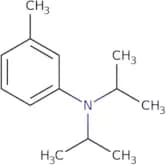
CAS:<p>Versatile small molecule scaffold</p>Formula:C13H21NPurity:Min. 95%Molecular weight:191.31 g/mol4H,5H,7H-Thiopyrano[3,4-b]furan-4-one
CAS:<p>Versatile small molecule scaffold</p>Formula:C7H6O2SPurity:Min. 95%Molecular weight:154.19 g/mol(5,6,7,8-Tetrahydronaphthalen-2-yl)methanol
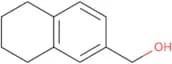
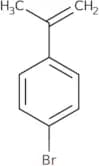
CAS:<p>(5,6,7,8-Tetrahydronaphthalen-2-yl)methanol is a hexacyclic molecule that is used as an intermediate in the production of drugs. It can also be used as a precursor for the synthesis of various nitrogen compounds. This compound has potent inducers of cytochrome P450 and hydroxylase enzymes. This product is also considered to be carcinogenic and has been shown to cause tumors in rats when given orally.</p>Formula:C11H14OPurity:Min. 95%Molecular weight:162.23 g/mol1-Bromo-4-(1-propen-2-yl)benzene
CAS:<p>Versatile small molecule scaffold</p>Formula:C9H9BrPurity:Min. 95%Molecular weight:197.08 g/mol{[3-(Trifluoromethyl)phenyl]carbamoyl}formic acid
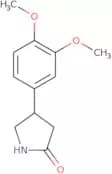
CAS:Versatile small molecule scaffoldFormula:C9H6F3NO3Purity:Min. 95%Molecular weight:233.14 g/mol4-(3,4-Dimethoxyphenyl)-2-pyrrolidinone
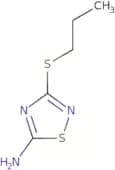
CAS:<p>Versatile small molecule scaffold</p>Formula:C12H15NO3Purity:Min. 95%Molecular weight:221.25 g/mol3-(Propylsulfanyl)-1,2,4-thiadiazol-5-amine
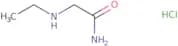
CAS:<p>Versatile small molecule scaffold</p>Formula:C5H9N3S2Purity:Min. 95%Molecular weight:175.3 g/mol2-(Ethylamino)acetamide hydrochloride
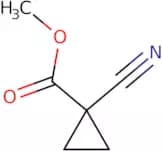
CAS:<p>Versatile small molecule scaffold</p>Formula:C4H11ClN2OPurity:Min. 95%Molecular weight:138.59 g/molMethyl 1-cyanocyclopropanecarboxylate
CAS:<p>Versatile small molecule scaffold</p>Formula:C6H7NO2Purity:Min. 95%Molecular weight:125.13 g/mol2-(4-Hydroxy-phenyl)-benzo[de]isoquinoline-1,3-dione
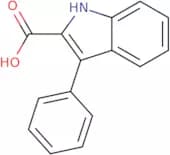
CAS:<p>Versatile small molecule scaffold</p>Formula:C18H11NO3Purity:Min. 95%Molecular weight:289.3 g/mol3-Phenyl-1H-indole-2-carboxylic Acid
CAS:<p>3-Phenyl-1H-indole-2-carboxylic acid is a chemical compound that has an acidic property. It is used in the analysis of hormones, such as testosterone and estradiol. 3-Phenyl-1H-indole-2-carboxylic acid is used to analyze the biotic and abiotic properties of a sample by liquid chromatography. It can be used for the profiling of steroids, such as cortisol and cortisone, and sex hormones. This chemical is also used to highlight the presence of acetonitrile in a sample.</p>Formula:C15H11NO2Purity:Min. 95%Molecular weight:237.25 g/molN-Methoxy-N-methylbenzamide
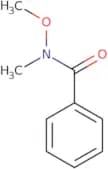
CAS:<p>N-Methoxy-N-methylbenzamide is an amide that has been synthesized and characterized. It is a hydrogen bonding compound with the ability to form stable complexes with boron trifluoride etherate. This complex can be used as a reagent for the synthesis of quinoxalines from carbocations, which are formed by the reaction of trifluoroacetic acid with amides. The synthesis of N-Methoxy-N-methylbenzamide has been shown to be an efficient method for the production of quinoxalines. N-Methoxy-N-methylbenzamide has also been found to have anticancer activity, which may be due to its absorption in the UV region.</p>Formula:C9H11NO2Purity:Min. 95%Molecular weight:165.19 g/mol1-Azidonaphthalene
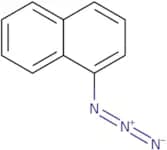
CAS:<p>1-Azidonaphthalene is a chemical species that has an absorption band at around 280 nm. It is used in the optical and vibrational spectroscopy of silver trifluoromethanesulfonate, which is a reactive, azide-forming species. The compound can be obtained by reacting 1-naphthol with sodium azide in the presence of cellulose acetate to form a peroxide and an aromatic acid. 1-Azidonaphthalene is unstable due to its intramolecular hydrogen and reacts with oxygen or ozone to generate other chemical species such as nitrosobenzene and nitrobenzene.</p>Formula:C10H7N3Purity:Min. 95%Molecular weight:169.18 g/mol1-(4-Cyclopropylphenyl)ethanone
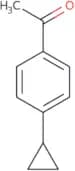
CAS:<p>Versatile small molecule scaffold</p>Formula:C11H12OPurity:Min. 95%Molecular weight:160.22 g/mol

![4H,5H,7H-Thiopyrano[3,4-b]furan-4-one](/_next/image/?url=https%3A%2Fstatic.cymitquimica.com%2Fproducts%2F3D%2Fthumb-webp%2FGAA88151.webp&w=3840&q=75)
![{[3-(Trifluoromethyl)phenyl]carbamoyl}formic acid](/_next/image/?url=https%3A%2Fstatic.cymitquimica.com%2Fproducts%2F3D%2Fthumb-webp%2FGAA89083.webp&w=3840&q=75)
![2-(4-Hydroxy-phenyl)-benzo[de]isoquinoline-1,3-dione](/_next/image/?url=https%3A%2Fstatic.cymitquimica.com%2Fproducts%2F3D%2Fthumb-webp%2FGAA91499.webp&w=3840&q=75)