Building Blocks
This section contains fundamental products for the synthesis of organic and biological compounds. Building blocks are the essential starting materials used to construct complex molecules through various chemical reactions. They play a critical role in drug discovery, material science, and chemical research. At CymitQuimica, we offer a diverse range of high-quality building blocks to support your innovative research and industrial projects, ensuring you have the essential components for successful synthesis.
Subcategories of "Building Blocks"
- Boronic Acids & Boronic Acid Derivatives(5,778 products)
- Chiral Building Blocks(1,242 products)
- Hydrocarbon Building Blocks(6,098 products)
- Organic Building Blocks(61,084 products)
Found 198714 products of "Building Blocks"
Sort by
Purity (%)
0
100
|
0
|
50
|
90
|
95
|
100
(1s,3s)-3-[2-(tert-butoxy)-2-oxoethyl]cyclobutane-1-carboxylic acid, cis
CAS:<p>Versatile small molecule scaffold</p>Formula:C11H18O4Purity:Min. 95%Molecular weight:214.3 g/mol4-(1-Azepanyl)-2-methylaniline
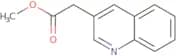
CAS:<p>Versatile small molecule scaffold</p>Formula:C13H20N2Purity:Min. 95%Molecular weight:204.3 g/molMethyl 2-(quinolin-3-yl)acetate
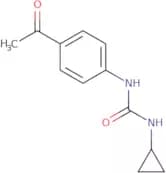
CAS:<p>Versatile small molecule scaffold</p>Formula:C12H11NO2Purity:Min. 95%Molecular weight:201.22 g/mol1-(4-Acetylphenyl)-3-cyclopropylurea
CAS:<p>Versatile small molecule scaffold</p>Formula:C12H14N2O2Purity:Min. 95%Molecular weight:218.25 g/moltert-butyl N-{[(prop-2-yn-1-yl)carbamoyl]methyl}carbamate
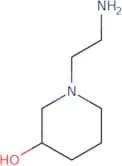
CAS:<p>Versatile small molecule scaffold</p>Formula:C10H16N2O3Purity:Min. 95%Molecular weight:212.24 g/mol1-(2-Aminoethyl)piperidin-3-ol
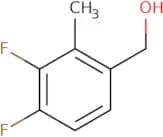
CAS:<p>Versatile small molecule scaffold</p>Formula:C7H16N2OPurity:Min. 95%Molecular weight:144.22 g/mol(3,4-Difluoro-2-methyl-phenyl)methanol
CAS:<p>Versatile small molecule scaffold</p>Formula:C8H8F2OPurity:Min. 95%Molecular weight:158.14 g/molPropyl[2-(thiophen-2-yl)ethyl]amine
CAS:Versatile small molecule scaffoldFormula:C9H15NSPurity:Min. 95%Molecular weight:169.29 g/mol2-Iodo-5-methyl-1,3-thiazole
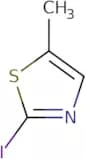
CAS:<p>Versatile small molecule scaffold</p>Formula:C4H4NSIPurity:Min. 95%Molecular weight:225.05 g/mol2-[3-(4H-1,2,4-Triazol-4-yl)phenoxy]acetic acid
CAS:<p>Versatile small molecule scaffold</p>Formula:C10H9N3O3Purity:Min. 95%Molecular weight:219.2 g/moltert-Butyl N-[3-(aminooxy)propyl]carbamate
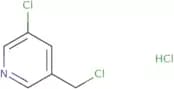
CAS:<p>Versatile small molecule scaffold</p>Formula:C8H18N2O3Purity:Min. 95%Molecular weight:190.24 g/mol3-Chloro-5-(chloromethyl)pyridine hydrochloride
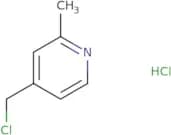
CAS:<p>Versatile small molecule scaffold</p>Formula:C6H5Cl2N·HClPurity:Min. 95%Molecular weight:198.48 g/mol4-(Chloromethyl)-2-methylpyridine hydrochloride
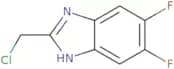
CAS:<p>Versatile small molecule scaffold</p>Formula:C7H9Cl2NPurity:Min. 95%Molecular weight:178.06 g/mol2-Chloromethyl-5,6-difluoro-1H-benzoimidazole
CAS:<p>Versatile small molecule scaffold</p>Formula:C8H5ClF2N2Purity:Min. 95%Molecular weight:202.59 g/mol2-Chloro-5-[(ethoxycarbonyl)amino]benzoic acid
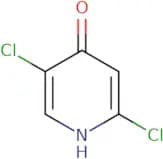
CAS:<p>Versatile small molecule scaffold</p>Formula:C10H10ClNO4Purity:Min. 95%Molecular weight:243.64 g/mol2,5-Dichloro-4-hydroxypyridine
CAS:<p>2,5-Dichloro-4-hydroxypyridine is a strong oxidizing agent that can be used for the efficient synthesis of esters and peroxy esters. It can also be used to produce hydrogen peroxide from hydroxylamine and 2,5-dichloro-4-hydroxypyridine. The hydroxylation of alcohols with 2,5-dichloro-4-hydroxypyridine produces the corresponding n-oxides or peroxides in high yield. This reaction is regioselective, meaning it will only occur at one position on the molecule.</p>Formula:C5H3Cl2NOPurity:Min. 95%Molecular weight:163.99 g/mol1,3-Bis[(2,2-dimethyl-1,3-dioxan-5-yl)oxy]-2-propanol
CAS:<p>Versatile small molecule scaffold</p>Formula:C15H28O7Purity:Min. 95%Molecular weight:320.38 g/mol[1-(2-Fluoro-phenyl)-2-hydroxy-ethyl]-carbamic acid tert-butyl ester
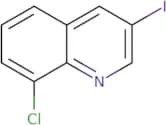
CAS:<p>Versatile small molecule scaffold</p>Formula:C13H18FNO3Purity:Min. 95%Molecular weight:255.28 g/mol8-Chloro-3-iodoquinoline
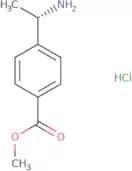
CAS:<p>8-Chloro-3-iodoquinoline is a functionalized aromatic ring that is used in coupling reactions with aryl halides, such as bromides and iodides. Palladium-catalyzed coupling reactions are often more selective than those catalyzed by copper. 8-Chloro-3-iodoquinoline has been shown to be selectively coupled to bromide, which can be used for the synthesis of aryl bromides.</p>Formula:C9H5ClINPurity:Min. 95%Molecular weight:289.5 g/mol(S)-Methyl 4-(1-aminoethyl)benzoate hydrochloride
CAS:<p>Versatile small molecule scaffold</p>Formula:C10H13NO2·HClPurity:Min. 95%Molecular weight:215.68 g/mol
![(1s,3s)-3-[2-(tert-butoxy)-2-oxoethyl]cyclobutane-1-carboxylic acid, cis](/_next/image/?url=https%3A%2Fstatic.cymitquimica.com%2Fproducts%2F3D%2Fthumb-webp%2FXIB41652.webp&w=3840&q=75)


![tert-butyl N-{[(prop-2-yn-1-yl)carbamoyl]methyl}carbamate](/_next/image/?url=https%3A%2Fstatic.cymitquimica.com%2Fproducts%2F3D%2Fthumb-webp%2FXIB49049.webp&w=3840&q=75)
![Propyl[2-(thiophen-2-yl)ethyl]amine](/_next/image/?url=https%3A%2Fstatic.cymitquimica.com%2Fproducts%2F3D%2Fthumb-webp%2FXIB54496.webp&w=3840&q=75)
![2-[3-(4H-1,2,4-Triazol-4-yl)phenoxy]acetic acid](/_next/image/?url=https%3A%2Fstatic.cymitquimica.com%2Fproducts%2F3D%2Fthumb-webp%2FXIB60679.webp&w=3840&q=75)
![tert-Butyl N-[3-(aminooxy)propyl]carbamate](/_next/image/?url=https%3A%2Fstatic.cymitquimica.com%2Fproducts%2F3D%2Fthumb-webp%2FXIB60999.webp&w=3840&q=75)
![2-Chloro-5-[(ethoxycarbonyl)amino]benzoic acid](/_next/image/?url=https%3A%2Fstatic.cymitquimica.com%2Fproducts%2F3D%2Fthumb-webp%2FXIB61707.webp&w=3840&q=75)
![1,3-Bis[(2,2-dimethyl-1,3-dioxan-5-yl)oxy]-2-propanol](/_next/image/?url=https%3A%2Fstatic.cymitquimica.com%2Fproducts%2F3D%2Fthumb-webp%2FXIB68200.webp&w=3840&q=75)
![[1-(2-Fluoro-phenyl)-2-hydroxy-ethyl]-carbamic acid tert-butyl ester](/_next/image/?url=https%3A%2Fstatic.cymitquimica.com%2Fproducts%2F3D%2Fthumb-webp%2FXIB68672.webp&w=3840&q=75)