Building Blocks
Subcategories of "Building Blocks"
- Boronic Acids & Boronic Acid Derivatives(5,778 products)
- Chiral Building Blocks(1,243 products)
- Hydrocarbon Building Blocks(6,098 products)
- Organic Building Blocks(61,036 products)
Found 205240 products of "Building Blocks"
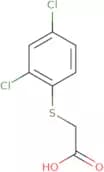
(2,4-Dichloro-phenylsulfanyl)-acetic acid
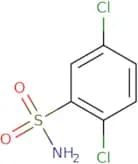
CAS:Versatile small molecule scaffoldFormula:C8H6Cl2O2SPurity:Min. 95%Molecular weight:237.1 g/mol2,5-Dichlorobenzene-1-sulfonamide
CAS:2,5-Dichlorobenzene-1-sulfonamide is a sulfonamide herbicide that inhibits the growth of plants by inhibiting the photosynthetic electron transport chain. It has been shown to have a high thermal stability and crystallizes from water solutions. 2,5-Dichlorobenzene-1-sulfonamide has been used for weed control and as an antioxidant for rubber products and paints. This compound has been shown to inhibit the production of reactive oxygen species in cells and thus reduce oxidative stress. 2,5-Dichlorobenzene-1-sulfonamide has also been found to be cytotoxic to human cells in culture at higher concentrations (10 μM).Formula:C6H5Cl2NO2SPurity:Min. 95%Molecular weight:226.08 g/mol3-tert-Butyl-1H-pyrrole
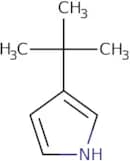
CAS:3-tert-Butyl-1H-pyrrole is an organic compound that belongs to the group of primary amines. It can be synthesized by reacting 3-bromopyrrole with tert-butanol in the presence of a base catalyst. The cyclic voltammetry shows that this compound has a high oxidation potential, which makes it suitable for use as an electrochemical oxidation agent. The transfer rate constants are high, making this compound suitable for use in dehydrogenation reactions. 3-tert-Butyl-1H-pyrrole has been shown to have a high yield when reacted with amines in the presence of acetic acid and water.
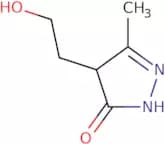
Formula:C8H13NPurity:Min. 95%Molecular weight:123.2 g/mol4-(2-Hydroxyethyl)-3-methyl-4,5-dihydro-1H-pyrazol-5-one
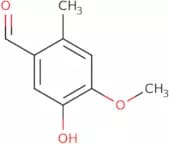
CAS:Versatile small molecule scaffoldFormula:C6H10N2O2Purity:Min. 95%Molecular weight:142.16 g/mol5-Hydroxy-4-methoxy-2-methylbenzaldehyde
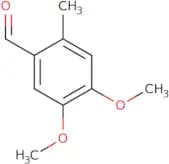
CAS:Versatile small molecule scaffoldFormula:C9H10O3Purity:Min. 95%Molecular weight:166.17 g/mol4,5-Dimethoxy-2-methylbenzaldehyde
CAS:4,5-Dimethoxy-2-methylbenzaldehyde is a reagent that can be used to synthesize esters, isopropyl groups, and guanidine hydrochloride. It is also used in the synthesis of codeine, an opioid drug. This product has been shown to be an effective virulent agent against large-scale bacterial cultures of Escherichia coli and Pseudomonas aeruginosa. 4,5-Dimethoxy-2-methylbenzaldehyde is also a component of oxazolinones, which are a class of antibiotics.
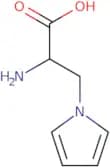
Formula:C10H12O3Purity:Min. 95%Molecular weight:180.21 g/mol2-Amino-3-(1H-pyrrol-1-yl)propanoic acid
CAS:Versatile small molecule scaffold
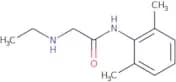
Formula:C7H10N2O2Purity:Min. 95%Molecular weight:154.17 g/molMonoethylglycinexylidine
CAS:Monoethylglycinexylidine (MEGX) is a drug that has been shown to be effective in the treatment of chronic viral hepatitis. It has an activity index of 0.6-2.0 and can be used as a diagnostic tool for hepatic impairment. MEGX has also been found to be more effective in patients with primary sclerosing cholangitis than in those with non-primary sclerosing cholangitis. MEGX inhibits the P450 enzyme, which is involved in the metabolism of xenobiotics and endogenous compounds, and also inhibits Lidocaine-induced bronchoconstriction. The structural analysis of MEGX showed that it forms a stable complex with the active site of P450 enzymes, but does not form stable complexes with other enzymes such as cytochrome P450 reductase or epoxide hydrolase. In vivo experiments have shown that MEGX inhibits liver regeneration in mice by inhibiting hepatocyte
Formula:C12H18N2OPurity:Min. 95%Molecular weight:206.28 g/mol2-(Thiazol-4-yl)ethanamine
CAS:2-(Thiazol-4-yl)ethanamine is a histamine H1 receptor agonist that is used in tumor models to study the activation of histamine receptors. It has been shown to be an orally active ligand for the histamine H1 receptor. 2-(Thiazol-4-yl)ethanamine binds to the benzyl group, which is present in both histamine and the h1 receptor, and interacts with the imidazole ring of histamine and phenyl ring of the h1 receptor. This drug has physicochemical properties that are similar to those of histamine.
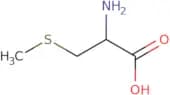
Formula:C5H8N2SPurity:Min. 95%Molecular weight:128.2 g/mol2-Amino-3-(methylsulfanyl)propanoic acid
CAS:2-Amino-3-(methylsulfanyl)propanoic acid is a fatty acid that belongs to the group of selenium compounds. It has been shown to inhibit mitochondrial membrane potential and the redox cycle, which are important in plant physiology. 2-Amino-3-(methylsulfanyl)propanoic acid also has dose-dependent effects on physiological processes, such as protocatechuic acid synthesis and fatty acid synthesis. 2-Amino-3-(methylsulfanyl)propanoic acid may be found in food compositions that contain creatine kinase or asymmetric synthesis.Formula:C4H9NO2SPurity:Min. 95%Molecular weight:135.19 g/mol5-Thiazoleethanamine Dihydrochloride
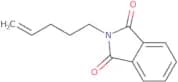
CAS:Versatile small molecule scaffoldFormula:C5H8N2SPurity:Min. 95%Molecular weight:128.2 g/mol2-(Pent-4-en-1-yl)-2,3-dihydro-1H-isoindole-1,3-dione
CAS:Versatile small molecule scaffold
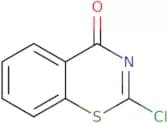
Formula:C13H13NO2Purity:Min. 95%Molecular weight:215.25 g/mol2-Chloro-4H-1,3-benzothiazin-4-one
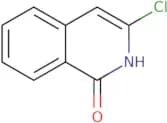
CAS:Versatile small molecule scaffoldFormula:C8H4ClNOSPurity:Min. 95%Molecular weight:197.64 g/mol3-Chloro-1,2-dihydroisoquinolin-1-one
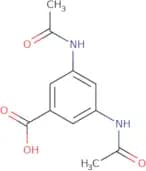
CAS:3-Chloro-1,2-dihydroisoquinolin-1-one is a chemical compound that belongs to the group of ginsenoside compounds. It is a fluorescent and cyclopentyl skeleton that has been proven to be chemically stable in vitro studies. 3-Chloro-1,2-dihydroisoquinolin-1-one has also been shown to have anti-aging properties and can be used for treatments that involve temperatures of up to 45°C. This compound is insoluble in water but soluble in organic solvents. The structure of this molecule has been sequenced and is present in the form of ginsenoside rg1, which is found in Panax ginseng roots.Formula:C9H6ClNOPurity:Min. 95%Molecular weight:179.6 g/mol3,5-bis(acetylamino)benzoic acid
CAS:3,5-bis(acetylamino)benzoic acid is an activated form of 3,5-diamino benzoic acid. It is a biodegradable agent that has been shown to be effective against inflammation and pain. 3,5-Bis(acetylamino)benzoic acid can be used to treat inflammatory diseases such as rheumatoid arthritis (RA), colitis, and psoriasis. The drug is also used in the treatment of periodontal diseases and in dental care. 3,5-Bis(acetylamino)benzoic acid is made by electrochemical methods from glycol chitosan nanoparticles at high concentrations with a mineralization envisaged at mammalian cells wastewater treatment plants. This compound has been shown to have potential for wastewater treatment as it can bind to both amines and carboxylic acids found in wastewater.
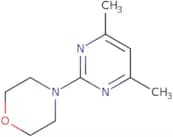
Formula:C11H12N2O4Purity:Min. 95%Molecular weight:236.23 g/mol4-(4,6-Dimethylpyrimidin-2-yl)morpholine
CAS:Versatile small molecule scaffold
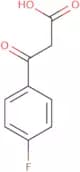
Formula:C10H15N3OPurity:Min. 95%Molecular weight:193.25 g/mol3-(4-Fluorophenyl)-2-oxopropanoic acid
CAS:Versatile small molecule scaffold
Formula:C9H7FO3Purity:Min. 95%Molecular weight:182.15 g/molN,N'-Thiodiphthalimide
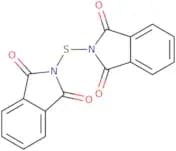
CAS:N,N'-Thiodiphthalimide (TDPA) is a molecule that has the chemical formula C6H11NOS. TDPA is an amine with a catalytic effect and sulfur transfer activity. TDPA can be used in the synthesis of thianthrene. The reaction of TDPA with sulfur trioxide yields sulfhydryl groups on the ring, which are important for TDPA's catalytic properties. The addition of x-rays to TDPA causes absorption spectroscopy, which can be used to identify functional groups and interactions with other molecules. TDPA also has a solvent effect on reactions involving hydroxyl compounds such as phenols, alcohols, and ethers. This chemical is thermodynamically stable at room temperature and pressure.Formula:C16H8N2O4SPurity:Min. 95%Molecular weight:324.31 g/molN-(4-Methoxyphenyl)prop-2-enamide
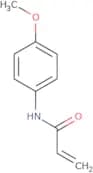
CAS:Versatile small molecule scaffoldFormula:C10H11NO2Purity:Min. 95%Molecular weight:177.2 g/molN-(4-Nitrophenyl)prop-2-enamide
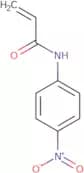
CAS:4-Nitrophenylprop-2-enamide (NPPEA) is a chloride ionophore that can be used to measure the uptake of chloride ions. By adding NPPEA to a solution containing an organic solvent, such as acetonitrile, and metal ions, such as copper or zinc, it is possible to form a complex with the metal ions and measure its uptake by measuring the change in absorbance at 550 nm. This technique is used to measure the uptake of chloride ion by cells in culture. NPPEA has been shown to have anticancer activity in vitro and in vivo. It inhibits DNA synthesis by inhibiting hydroxylase activity and methylation reactions. The functional theory suggests that this inhibition may be due to binding of NPPEA to guanine molecules at sites on the DNA where they are susceptible to attack by reactive oxygen species generated during metabolism.Formula:C9H8N2O3Purity:Min. 95%Molecular weight:192.17 g/mol