Building Blocks
This section contains fundamental products for the synthesis of organic and biological compounds. Building blocks are the essential starting materials used to construct complex molecules through various chemical reactions. They play a critical role in drug discovery, material science, and chemical research. At CymitQuimica, we offer a diverse range of high-quality building blocks to support your innovative research and industrial projects, ensuring you have the essential components for successful synthesis.
Subcategories of "Building Blocks"
- Boronic Acids & Boronic Acid Derivatives(5,778 products)
- Chiral Building Blocks(1,243 products)
- Hydrocarbon Building Blocks(6,099 products)
- Organic Building Blocks(61,038 products)
Found 205373 products of "Building Blocks"
Sort by
Purity (%)
0
100
|
0
|
50
|
90
|
95
|
100
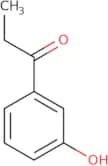
1-(3-Hydroxyphenyl)-1-propanone
CAS:1-(3-Hydroxyphenyl)-1-propanone is a monocyclic compound that has been shown to have antioxidative activity, which may be due to its ability to inhibit the formation of reactive oxygen species. It has been shown to be effective against E. coli cells and benzene degradation, as well as other dehydrogenases such as butyrophenone and trifluoroacetophenone. 1-(3-Hydroxyphenyl)-1-propanone also inhibits e. coli growth by acting on the propiophenone pathway (involving conversion of phenylalanine into propiophenone). The escherichia bacterium can convert 1-(3-hydroxyphenyl)-1-propanone into the vicinal diol, 2,2-diphenyldi(3H)oxazole.Formula:C9H10O2Purity:Min. 95%Molecular weight:150.17 g/mol4-Chloro-3,3-dimethylbutan-2-one
CAS:Versatile small molecule scaffold
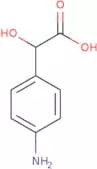
Formula:C6H11ClOPurity:Min. 95%Molecular weight:134.6 g/mol2-(4-Aminophenyl)-2-hydroxyacetic acid
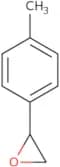
CAS:Versatile small molecule scaffoldFormula:C8H9NO3Purity:Min. 95%Molecular weight:167.16 g/mol2-(4-Methylphenyl)oxirane
CAS:2-(4-Methylphenyl)oxirane (2MPO) is an epoxide that belongs to the group of reactive compounds. It has been shown to react with nucleic acids, forming a covalent linkage with guanosine. 2MPO also reacts with styrene, forming a covalent bond and producing reactive metabolites. The reaction products are hydroxylated by hydroxyl groups on the ring structure, which catalyzes the reaction. Additives can be used to alter the rate of this reaction. 2MPO is also known to react with pluronic F127, forming a covalently linked adduct. This bond is cleaved by hydrolysis in water and exposure to light, releasing 2MPO and regenerating pluronic F127.Formula:C9H10OPurity:Min. 95%Molecular weight:134.17 g/mol2-(3-Methyl-4H-1,2,4-triazol-4-yl)aniline
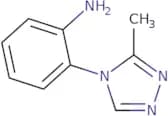
CAS:Versatile small molecule scaffoldFormula:C9H10N4Purity:Min. 95%Molecular weight:174.2 g/mol(2S)-2-Hydroxy-2-phenylpropanoic acid
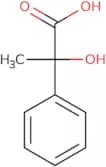
CAS:(2S)-2-Hydroxy-2-phenylpropanoic acid is a chiral compound that can be synthesized from the corresponding racemic mixture. The structure of (2S)-2-hydroxy-2-phenylpropanoic acid was elucidated by x-ray crystallography, revealing an asymmetric dimaleate. The molecule shows anti-inflammatory and analgesic effects in rats, which are likely due to its inhibition of prostaglandin synthesis.Formula:C9H10O3Purity:Min. 95%Molecular weight:166.17 g/mol(Pyridin-3-yl)urea
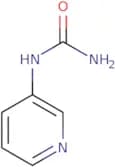
CAS:(Pyridin-3-yl)urea is a coordination compound that has a molecular formula of C5H5N. It has the ability to form hydrogen bonds with other molecules. The compound belongs to the class of supramolecular compounds, which are made up of more than one type of molecule. (Pyridin-3-yl)urea can form hydrogen bonds with sulfate salts and assemble into a supramolecular complex with water molecules. This complex is able to encapsulate sulfate ions, forming tripodal structures. These tripodal structures can be used as an alternative to standard methods for the removal of sulfates from wastewater.Formula:C6H7N3OPurity:Min. 95%Molecular weight:137.14 g/molN-(2,3-Dimethylphenyl)urea
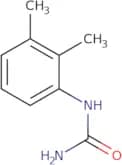
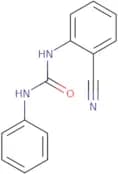
CAS:Versatile small molecule scaffoldFormula:C9H12N2OPurity:Min. 95%Molecular weight:164.2 g/molN-(2-Cyanophenyl)-nprime-phenylurea
CAS:Versatile small molecule scaffoldFormula:C14H11N3OPurity:Min. 95%Molecular weight:237.26 g/molEthyl 2-oxo-3-(quinolin-2-yl)propanoate
CAS:Versatile small molecule scaffold
Formula:C14H13NO3Purity:Min. 95%Molecular weight:243.26 g/molEthyl 2,3-dicyano-3-methylpropanoate
CAS:Versatile small molecule scaffoldFormula:C8H10N2O2Purity:Min. 95%Molecular weight:166.18 g/mol1-(3,4-Dichlorophenyl)-3-methyl-4,5-dihydro-1H-pyrazol-5-one
CAS:Versatile small molecule scaffoldFormula:C10H8Cl2N2OPurity:Min. 95%Molecular weight:243.09 g/mol3-Methoxy-1-phenylpropan-1-ol
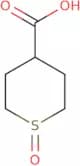
CAS:3-Methoxy-1-phenylpropan-1-ol is a colorless liquid with a fruity odor. It is used in the synthesis of organic compounds and as an intermediate for other organic syntheses. 3-Methoxy-1-phenylpropan-1-ol is a precursor to methoxyphenols, which are used in the manufacture of pesticides, pharmaceuticals and dyes. Methoxyphenols are also precursors to phenolic resins, which are used as binders for paints and coatings. 3-Methoxypropane can be prepared by electrolysis of methanol or by carbonate hydrolysis of methyl acetate in the presence of sodium methoxide. The methanol reacts with sodium methoxide to form methyl acetate and methanolic hydrochloric acid.Formula:C10H14O2Purity:Min. 95%Molecular weight:166.22 g/mol3-Thietanecarboxylicacid,1,1-dioxide
CAS:Versatile small molecule scaffold
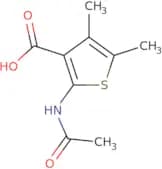
Formula:C4H6O4SPurity:Min. 95%Molecular weight:150.15 g/mol2-(Acetylamino)-4,5-dimethylthiophene-3-carboxylic acid
CAS:Versatile small molecule scaffoldFormula:C9H11NO3SPurity:Min. 95%Molecular weight:213.25 g/mol5-Methyl-4-oxa-8-thia-6-azatricyclo[7.4.0.0,2,7]trideca-1(9),2(7),5-trien-3-one
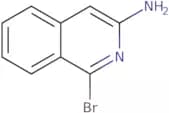
CAS:Versatile small molecule scaffoldFormula:C11H11NO2SPurity:Min. 95%Molecular weight:221.28 g/mol1-Bromoisoquinolin-3-amine
CAS:1-Bromoisoquinolin-3-amine is a naphthyridine that can be synthesized by the reaction of 1-chloroisonicotinic acid with sodium azide and bromine. This compound has the potential to be used for the synthesis of other compounds, such as thiazolopyrimidines and benzothiazoles. Irradiation of 1-Bromoisoquinolin-3-amine in a nitrogen atmosphere yields an isomer with a phosphite group at C2. The tricycle structure of this isomer makes it reactive towards nucleophilic substitution reactions, making it useful for synthetic purposes.Formula:C9H7BrN2Purity:Min. 95%Molecular weight:223.07 g/molN-Phenylpyrazin-2-amine
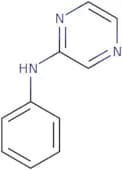
CAS:N-Phenylpyrazin-2-amine is a tetrazole that has been shown to have an axial configuration. It is also a polymorph of the molecule, which means it can exist in different crystalline structures. N-Phenylpyrazin-2-amine has been shown to form hydrogen bonds with chlorine and hydrogen bonds with benzotriazole. The nitrogen atom in this compound is bonded to two phenyltetrazole rings and one carbon atom. This chain crystal structure was found to be monoclinic in nature.
Formula:C10H9N3Purity:Min. 95%Molecular weight:171.2 g/molMethyl 3-hydroxybenzo[b]thiophene-2-carboxylate
CAS:Methyl 3-hydroxybenzo[b]thiophene-2-carboxylate is an intermediate in the synthesis of nitrobenzene. It is also a synthon for benzothiophene esters and functionalized derivatives.
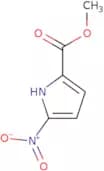
Formula:C10H8O3SPurity:Min. 95%Molecular weight:208.23 g/molMethyl 5-nitro-1H-pyrrole-2-carboxylate
CAS:Versatile small molecule scaffoldFormula:C6H6N2O4Purity:Min. 95%Molecular weight:170.12 g/mol




![5-Methyl-4-oxa-8-thia-6-azatricyclo[7.4.0.0,2,7]trideca-1(9),2(7),5-trien-3-one](/_next/image/?url=https%3A%2Fstatic.cymitquimica.com%2Fproducts%2F3D%2Fthumb-webp%2FNAA13047.webp&w=3840&q=75)
![Methyl 3-hydroxybenzo[b]thiophene-2-carboxylate](/_next/image/?url=https%3A%2Fstatic.cymitquimica.com%2Fproducts%2F3D%2Fthumb-webp%2FNAA13476.webp&w=3840&q=75)