Building Blocks
This section contains fundamental products for the synthesis of organic and biological compounds. Building blocks are the essential starting materials used to construct complex molecules through various chemical reactions. They play a critical role in drug discovery, material science, and chemical research. At CymitQuimica, we offer a diverse range of high-quality building blocks to support your innovative research and industrial projects, ensuring you have the essential components for successful synthesis.
Subcategories of "Building Blocks"
- Boronic Acids & Boronic Acid Derivatives(5,778 products)
- Chiral Building Blocks(1,242 products)
- Hydrocarbon Building Blocks(6,098 products)
- Organic Building Blocks(61,092 products)
Found 199297 products of "Building Blocks"
Sort by
Purity (%)
0
100
|
0
|
50
|
90
|
95
|
100
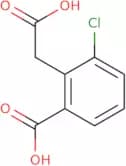
2-(Carboxymethyl)-3-chlorobenzoic acid
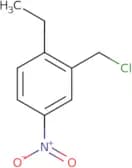
CAS:Versatile small molecule scaffoldFormula:C9H7ClO4Purity:Min. 95%Molecular weight:214.6 g/mol2-(Chloromethyl)-1-ethyl-4-nitrobenzene
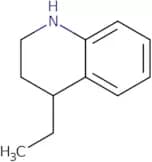
CAS:Versatile small molecule scaffoldFormula:C9H10ClNO2Purity:Min. 95%Molecular weight:199.63 g/mol4-Ethyl-1,2,3,4-tetrahydroquinoline
CAS:<p>Versatile small molecule scaffold</p>Formula:C11H15NPurity:Min. 95%Molecular weight:161.24 g/mol(3-Bromopropoxy)cyclohexane
CAS:<p>Versatile small molecule scaffold</p>Formula:C9H17BrOPurity:Min. 95%Molecular weight:221.13 g/mol4-Difluoromethoxy-benzoic acid methyl ester
CAS:<p>Versatile small molecule scaffold</p>Formula:C9H8F2O3Purity:Min. 95%Molecular weight:202.16 g/molMethyl 2,4-bis(difluoromethoxy)benzoate
CAS:<p>Versatile small molecule scaffold</p>Formula:C10H8F4O4Purity:Min. 95%Molecular weight:268.16 g/mol2,4-Bis(difluoromethoxy)benzoic acid
CAS:<p>Versatile small molecule scaffold</p>Formula:C9H6F4O4Purity:Min. 95%Molecular weight:254.13 g/molChlorsulfaquinoxaline
CAS:<p>Chlorsulfaquinoxaline is a chiral sulfonamide that inhibits the activity of cyclooxygenase-2 (COX-2) and 5-lipoxygenase. It has been shown to inhibit tumor growth in animal models of metastatic colorectal cancer as well as bowel disease. In addition, Chlorsulfaquinoxaline has been shown to have clinical relevance for inflammatory bowel disease and primary sclerosing cholangitis.<br>Chlorsulfaquinoxaline is an inhibitor of the COX-2 and 5-lipoxygenase enzymes, which are key enzymes in prostaglandin synthesis. It has been shown to inhibit tumor growth in animal models of metastatic colorectal cancer as well as bowel disease. In addition, Chlorsulfaquinoxaline has been shown to have clinical relevance for inflammatory bowel disease and primary sclerosing cholangitis.</p>Formula:C14H11ClN4O2SPurity:Min. 95%Molecular weight:334.8 g/mol4-(Trifluoromethyl)isatoic anhydride
CAS:<p>Versatile small molecule scaffold</p>Formula:C9H4F3NO3Purity:Min. 95%Molecular weight:231.13 g/molMethyl 9H-carbazole-3-carboxylate
CAS:<p>Methyl 9H-carbazole-3-carboxylate is a copper compound that reacts with boronic acids in the presence of a catalyst to form cross-coupling products. It can also be used for the synthesis of carbazoles, which are important for their ability to bind to copper. The reaction is highly selective and does not require harsh conditions or catalysts. Methyl 9H-carbazole-3-carboxylate has been shown to react with uracil, forming an arylation product in vivo at physiological temperature and pH. This reaction has been shown to have potential as a treatment for cervical cancer.</p>Formula:C14H11NO2Purity:Min. 95%Molecular weight:225.24 g/mol1,1-Dimethyl 2-methylcyclopropane-1,1-dicarboxylate
CAS:<p>Versatile small molecule scaffold</p>Formula:C8H12O4Purity:Min. 95%Molecular weight:172.18 g/mol3-bromo-2-methylpyridin-4-amine
CAS:<p>Versatile small molecule scaffold</p>Formula:C6H7BrN2Purity:Min. 95%Molecular weight:187 g/mol5-Chloro-2-methylpyridin-4-amine
CAS:<p>Versatile small molecule scaffold</p>Formula:C6H7ClN2Purity:Min. 95%Molecular weight:142.59 g/mol2-Chloro-5-methyl-4-nitropyridine
CAS:<p>2-Chloro-5-methyl-4-nitropyridine is a compound that has an intense yellow color. It has the chemical formula of C6H3ClN2O2. This molecule belongs to the group of heterocyclic compounds and contains a nitrogen atom with two substituents, one chloro, and one methyl group. The energy levels for this molecule are determined by its transition energies, which vary depending on the substitution patterns and electronic spectra. For example, if it has substituents at the 2 position, then its uv spectrum will have a maximum in the region of 230 nm. The electronic spectra for this molecule is characterized by transitions from the singlet state to the triplet state. In addition to these properties, 2-chloro-5-methyl-4-nitropyridine possesses n-oxides as well as an electron spin resonance (ESR) spectrum that contains peaks at g = 3/2 and g</p>Formula:C6H5ClN2O2Purity:Min. 95%Molecular weight:172.57 g/mol2-(Difluoromethoxy)-1-fluoro-4-nitro-benzene
CAS:<p>Versatile small molecule scaffold</p>Formula:C7H4F3NO3Purity:Min. 95%Molecular weight:207.11 g/mol3-(Difluoromethoxy)-4-methoxyaniline
CAS:<p>Versatile small molecule scaffold</p>Formula:C8H9F2NO2Purity:Min. 95%Molecular weight:189.16 g/mol2-(2-Cyclohexyl-1H-1,3-benzodiazol-1-yl)acetic acid
CAS:<p>Versatile small molecule scaffold</p>Formula:C15H18N2O2Purity:Min. 95%Molecular weight:258.32 g/molN,6-Dimethylpyridin-2-amine
CAS:<p>Versatile small molecule scaffold</p>Formula:C7H10N2Purity:Min. 95%Molecular weight:122.17 g/molDiethyl (1-amino-2,2,2-trifluoroethyl)phosphonate hydrochloride
CAS:<p>Versatile small molecule scaffold</p>Formula:C6H14ClF3NO3PPurity:Min. 95%Molecular weight:271.6 g/mol1-(5-Amino-2,3-dihydro-1H-isoindol-2-yl)ethan-1-one
CAS:<p>Versatile small molecule scaffold</p>Formula:C10H12N2OPurity:Min. 95%Molecular weight:176.21 g/mol