Building Blocks
This section contains fundamental products for the synthesis of organic and biological compounds. Building blocks are the essential starting materials used to construct complex molecules through various chemical reactions. They play a critical role in drug discovery, material science, and chemical research. At CymitQuimica, we offer a diverse range of high-quality building blocks to support your innovative research and industrial projects, ensuring you have the essential components for successful synthesis.
Subcategories of "Building Blocks"
- Boronic Acids & Boronic Acid Derivatives(5,778 products)
- Chiral Building Blocks(1,242 products)
- Hydrocarbon Building Blocks(6,098 products)
- Organic Building Blocks(61,092 products)
Found 199296 products of "Building Blocks"
Sort by
Purity (%)
0
100
|
0
|
50
|
90
|
95
|
100
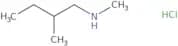
Methyl(2-methylbutyl)amine hydrochloride
CAS:Versatile small molecule scaffoldFormula:C6H16ClNPurity:Min. 95%Molecular weight:137.65 g/molMethyl(pentan-2-yl)amine hydrochloride
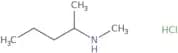
CAS:<p>Versatile small molecule scaffold</p>Formula:C6H16ClNPurity:Min. 95%Molecular weight:137.65 g/mol(1-Ethylpropyl)methylamine hydrochloride
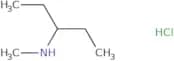
CAS:Versatile small molecule scaffoldFormula:C6H16ClNPurity:Min. 95%Molecular weight:137.65 g/mol2,6-Dimethylheptan-4-amine hydrochloride
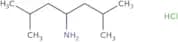
CAS:<p>Versatile small molecule scaffold</p>Formula:C9H22ClNPurity:Min. 95%Molecular weight:179.73 g/mol[2-(Dimethylamino)ethyl][(3-methylphenyl)methyl]amine
CAS:Versatile small molecule scaffoldFormula:C12H20N2Purity:Min. 95%Molecular weight:192.3 g/mol[2-(Dimethylamino)ethyl]({[4-(trifluoromethyl)phenyl]methyl})amine
CAS:<p>Versatile small molecule scaffold</p>Formula:C12H17F3N2Purity:Min. 95%Molecular weight:246.27 g/molHydroxypropanedial
CAS:<p>Hydroxypropanedial is a hydroxy group-containing compound that is not found in natural sources. It has antioxidative properties, which may be due to its ability to scavenge reactive oxygen species or donate hydrogen atoms to free radicals. The compound also has cyclohexane ring and carbonyl groups, which are responsible for the hydroxyl and carboxylic acid functionalities respectively. This substance is used as a chromatographic reagent to measure second-order rate constants of reactions involving hydroxyl radicals. Hydroxypropanedial absorbs light strongly at wavelengths shorter than 300 nm, which is the most effective wavelength range for uv absorption in biological systems.</p>Formula:C3H4O3Purity:Min. 95%Color and Shape:Off-White To Light (Or Pale) Brown SolidMolecular weight:88.06 g/mol2-Iodo-1H-imidazole
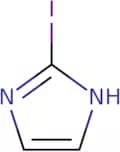
CAS:<p>2-Iodo-1H-imidazole is an asymmetric molecule that is synthesized by a Suzuki coupling reaction between malonic acid and tautomers of 2-iodo-1H-imidazole. This molecule inhibits the activity of inhibitor molecules, such as nitrogen atoms, which are used in pesticide production. It also has pesticidal activity and can be used to treat cancer or autoimmune diseases. 2-Iodo-1H-imidazole is metabolized through a number of metabolic transformations, including hydrolysis by esterases or glucuronidases, oxidation by cytochrome P450 enzymes, reduction by glutathione reductase, or conjugation with glucuronic acid.</p>Formula:C3H3IN2Purity:Min. 95%Color and Shape:White PowderMolecular weight:193.97 g/mol4-Iodo-1-tritylimidazole
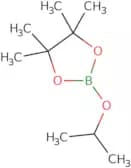
CAS:<p>4-Iodo-1-tritylimidazole is an organic molecule that has a chemical stability comparable to that of a nucleophile. It is a molecule with a heterocycle and accepts electrons from carbinol compounds, halides, and other functional groups. 4-Iodo-1-tritylimidazole can be synthesized by the palladium-catalyzed coupling reaction between organometallic reagents and histidine. This compound has been shown to have properties that are similar to those of biomimetic molecules, such as cross-coupling.</p>Formula:C22H17IN2Purity:Min. 95%Color and Shape:PowderMolecular weight:436.29 g/mol2-Isopropoxy-4,4,5,5-tetramethyl-1,3,2-dioxaborolane
CAS:<p>2-Isopropoxy-4,4,5,5-tetramethyl-1,3,2-dioxaborolane is a synthetic chemical that has been shown to have antiviral activity against influenza virus and inhibit the synthesis of proteins in cancer cells. It inhibits the influenza virus from replicating by binding to the viral RNA polymerase and preventing it from transcribing viral RNA into proteins. 2-Isopropoxy-4,4,5,5-tetramethyl-1,3,2-dioxaborolane also binds to the boronic ester group of enzymes that are involved in plant metabolism and can be used as an herbicide. This chemical is synthesized by reacting boric acid with trimethoxysilane in an acidified water solution. The reaction produces hydrochloric acid which reacts with trimethoxysilane to form silanols. The silanols react with boric acid to produce 2</p>Formula:C9H19BO3Purity:Min. 95%Color and Shape:Colourless LiquidMolecular weight:186.06 g/molImidazole
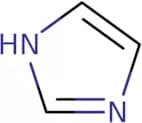
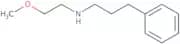
CAS:<p>Imidazole is a highly polar aromatic compound with two annular nitrogen atoms. Imidazole is widely used in the affinity purification of proteins with polyhistidine tags (His-Tag). In the protein purification process, imidazole is used for the elution of His-Tag-fused recombinant proteins from a metal-immobilised resins. In the elution buffers, imidazole is typically used in the 50 â 500 mM concentration range (Bornhorst and Falke, 2000).</p>Formula:C3H4N2Purity:Min 99%Color and Shape:White Off-White PowderMolecular weight:68.08 g/mol(2-Methoxyethyl)(3-phenylpropyl)amine
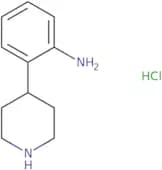
CAS:<p>Versatile small molecule scaffold</p>Formula:C12H19NOPurity:Min. 95%Molecular weight:193.28 g/mol2-(Piperidin-4-yl)aniline
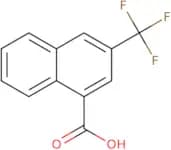
CAS:<p>Versatile small molecule scaffold</p>Formula:C11H17ClN2Purity:Min. 95%Molecular weight:212.72 g/mol3-(Trifluoromethyl)naphthalene-1-carboxylic acid
CAS:<p>Versatile small molecule scaffold</p>Formula:C12H7F3O2Purity:Min. 95%Molecular weight:240.18 g/mol6-Bromo-4-methyl-1H-benzo[d]imidazole
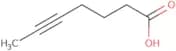
CAS:Versatile small molecule scaffoldFormula:C8H7BrN2Purity:Min. 95%Molecular weight:211.06 g/molHept-5-ynoic acid
CAS:<p>Hept-5-ynoic acid is an organometallic compound that is a perimeter. It has been used in the stereoselective synthesis of epilachnene and macrocyclic compounds, as well as in the preparation of cyclopentenones. Hept-5-ynoic acid also reacts with oxygen to form peroxide, which can be used for the oxidation of alcohols. This compound has been found to be a potent inhibitor of prostaglandin synthesis in lung diseases such as asthma, bronchitis, and emphysema. Hept-5-ynoic acid is an organic compound that contains both amido and carboxyl functionalities.</p>Formula:C7H10O2Purity:Min. 95%Molecular weight:126.15 g/mol7-Amino-2-methylpyrazolo[1,5-a]pyrimidine-6-carbonitrile
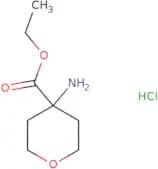
CAS:Versatile small molecule scaffoldFormula:C8H7N5Purity:Min. 95%Molecular weight:173.18 g/molethyl 4-aminotetrahydro-2h-pyran-4-carboxylate hcl
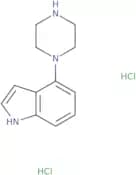
CAS:Versatile small molecule scaffoldFormula:C8H16ClNO3Purity:Min. 95%Molecular weight:209.67 g/mol1H-Indole-4-(1-piperazinyl)dihydrochloride
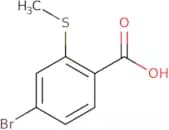
CAS:<p>Versatile small molecule scaffold</p>Formula:C12H17Cl2N3Purity:Min. 95%Molecular weight:274.19 g/mol4-Bromo-2-(methylsulfanyl)benzoic acid
CAS:<p>Versatile small molecule scaffold</p>Formula:C8H7BrO2SPurity:Min. 95%Molecular weight:247.11 g/mol

![[2-(Dimethylamino)ethyl][(3-methylphenyl)methyl]amine](/_next/image/?url=https%3A%2Fstatic.cymitquimica.com%2Fproducts%2F3D%2Fthumb-webp%2FFFB00806.webp&w=3840&q=75)
phenyl]methyl})amine](/_next/image/?url=https%3A%2Fstatic.cymitquimica.com%2Fproducts%2F3D%2Fthumb-webp%2FFFB02122.webp&w=3840&q=75)


![6-Bromo-4-methyl-1H-benzo[d]imidazole](/_next/image/?url=https%3A%2Fstatic.cymitquimica.com%2Fproducts%2F3D%2Fthumb-webp%2FFKA06410.webp&w=3840&q=75)
![7-Amino-2-methylpyrazolo[1,5-a]pyrimidine-6-carbonitrile](/_next/image/?url=https%3A%2Fstatic.cymitquimica.com%2Fproducts%2F3D%2Fthumb-webp%2FFKA38959.webp&w=3840&q=75)