Building Blocks
This section contains fundamental products for the synthesis of organic and biological compounds. Building blocks are the essential starting materials used to construct complex molecules through various chemical reactions. They play a critical role in drug discovery, material science, and chemical research. At CymitQuimica, we offer a diverse range of high-quality building blocks to support your innovative research and industrial projects, ensuring you have the essential components for successful synthesis.
Subcategories of "Building Blocks"
- Boronic Acids & Boronic Acid Derivatives(5,778 products)
- Chiral Building Blocks(1,242 products)
- Hydrocarbon Building Blocks(6,098 products)
- Organic Building Blocks(61,059 products)
Found 199580 products of "Building Blocks"
Sort by
Purity (%)
0
100
|
0
|
50
|
90
|
95
|
100
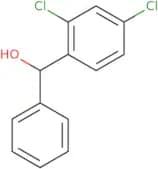
(2,4-Dichlorophenyl)(phenyl)methanol
CAS:<p>Versatile small molecule scaffold</p>Formula:C13H10Cl2OPurity:Min. 95%Molecular weight:253.12 g/mol2-[(Difluoromethyl)sulfanyl]aniline hydrochloride
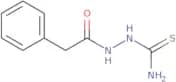
CAS:Versatile small molecule scaffoldFormula:C7H8ClF2NSPurity:Min. 95%Molecular weight:211.66 g/molN-(Carbamothioylamino)-2-phenylacetamide
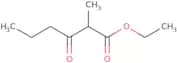
CAS:<p>Versatile small molecule scaffold</p>Formula:C9H11N3OSPurity:Min. 95%Molecular weight:209.27 g/molEthyl 2-methyl-3-oxohexanoate
CAS:<p>Ethyl 2-methyl-3-oxohexanoate is an ester with a chemical formula of C8H14O2. It is an acyclic compound and a member of the ethers family. It has the molecular weight of 132.17 g/mol and a density of 0.965 g/mL at 25°C. The melting point for this compound is -78°C and it has a boiling point of 164°F (73°C). Ethyl 2-methyl-3-oxohexanoate has been found to have high levels in Delphinium species, which are plants that contain alkaloids such as methyllycaconitine, which are analogues to the more well known morphine. This ester can be synthesized from the reaction between ethyl acetate and benzaldehyde.</p>Formula:C9H16O3Purity:Min. 95%Molecular weight:172.22 g/mol4H,5H,6H,7H-Pyrazolo[1,5-a]pyrimidin-5-one
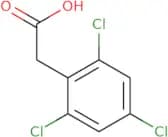
CAS:Versatile small molecule scaffoldFormula:C6H7N3OPurity:Min. 95%Molecular weight:137.14 g/mol2-(2,4,6-Trichlorophenyl)acetic acid
CAS:<p>Versatile small molecule scaffold</p>Formula:C8H5Cl3O2Purity:Min. 95%Molecular weight:239.5 g/mol5-Methylpyrazolo[1,5-a]pyrimidin-7(4H)-one
CAS:Versatile small molecule scaffoldFormula:C7H7N3OPurity:Min. 95%Molecular weight:149.15 g/molEthyl 7-oxo-4,7-dihydropyrazolo[1,5-a]pyrimidine-6-carboxylate
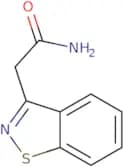
CAS:Versatile small molecule scaffoldFormula:C9H9N3O3Purity:Min. 95%Molecular weight:207.19 g/mol2-(1,2-Benzisothiazol-3-yl)acetamide
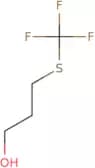
CAS:Versatile small molecule scaffoldFormula:C9H8N2OSPurity:Min. 95%Molecular weight:192.24 g/mol3-((Trifluoromethyl)thio)propan-1-ol
CAS:<p>Versatile small molecule scaffold</p>Formula:C4H7F3OSPurity:Min. 95%Molecular weight:160.16 g/molMethyl 3-[(trifluoromethyl)sulfanyl]propanoate
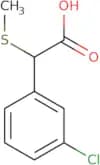
CAS:<p>Versatile small molecule scaffold</p>Formula:C5H7F3O2SPurity:Min. 95%Molecular weight:188.17 g/mol2-(3-Chlorophenyl)-2-(methylsulfanyl)acetic acid
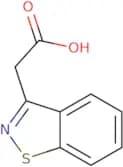
CAS:<p>Versatile small molecule scaffold</p>Formula:C9H9ClO2SPurity:Min. 95%Molecular weight:216.68 g/mol2-(1,2-Benzothiazol-3-yl)acetic acid
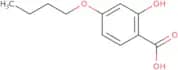
CAS:<p>2-(1,2-Benzothiazol-3-yl)acetic acid is a plant hormone that is found in the indole-3-acetic acid family of plant hormones. It is one of the auxins and it has been shown to promote germination and root growth. Auxins have also been shown to be involved in the development of vascular tissue and other aspects of plant growth. 2-(1,2-Benzothiazol-3-yl)acetic acid has been isolated from Pisum sativum L., Lycopersicon esculentum, and Esculentum.</p>Formula:C9H7NO2SPurity:Min. 95%Molecular weight:193.22 g/mol4-Butoxy-2-hydroxybenzoic acid
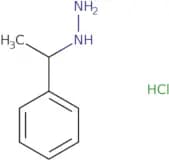
CAS:<p>Versatile small molecule scaffold</p>Formula:C11H14O4Purity:Min. 95%Molecular weight:210.23 g/mol(1-Phenylethyl)hydrazine hydrochloride
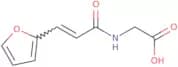
CAS:<p>Versatile small molecule scaffold</p>Formula:C8H13ClN2Purity:Min. 95%Molecular weight:172.65 g/molFa-Gly-OH
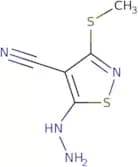
CAS:Fa-Gly-OH is a molecule that is used to study the kinetics of drug metabolism and the metabolism of drugs. It can be synthesized from glycerol and furfural, which are both readily available chemicals. Fa-Gly-OH has been shown to have a magnetic resonance profile that is similar to that of other fatty acids. The metabolic profile of this molecule was determined in groups of mice, with doses ranging from 10 mg/kg to 500 mg/kg. Fa-Gly-OH was found to be metabolized in the liver, with no detectable levels in the urine or faeces. Fa-Gly-OH is eventually converted into conjugates, such as methylglyoxal, which are excreted in the urine and faeces.Formula:C9H9NO4Purity:Min. 95%Molecular weight:195.17 g/mol5-Hydrazino-3-(methylthio)isothiazole-4-carbonitrile
CAS:Versatile small molecule scaffoldFormula:C5H6N4S2Purity:Min. 95%Molecular weight:186.3 g/mol(2S)-2-{[(2S)-5-Oxopyrrolidin-2-yl]formamido}pentanedioic acid
CAS:(2S)-2-{[(2S)-5-Oxopyrrolidin-2-yl]formamido}pentanedioic acid is an optically active glutamic acid amide, which is a natural product. It has a bitter taste and may be found in soybeans and zinc salts. The salt form of this compound is used as a mouthwash to reduce the sensation of bitterness. This compound has been reported to have anti-inflammatory activities and has been shown to inhibit the growth of Aspergillus flavus and other fungi.Formula:C10H14N2O6Purity:Min. 95%Molecular weight:258.23 g/molBicyclo[2.2.2]octane-2-carboxylic acid
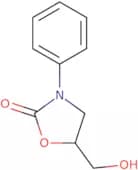
CAS:Versatile small molecule scaffoldFormula:C9H14O2Purity:Min. 95%Molecular weight:154.21 g/mol5-(Hydroxymethyl)-3-phenyl-1,3-oxazolidin-2-one
CAS:<p>Versatile small molecule scaffold</p>Formula:C10H11NO3Purity:Min. 95%Molecular weight:193.2 g/mol

![2-[(Difluoromethyl)sulfanyl]aniline hydrochloride](/_next/image/?url=https%3A%2Fstatic.cymitquimica.com%2Fproducts%2F3D%2Fthumb-webp%2FEBA33007.webp&w=3840&q=75)
![4H,5H,6H,7H-Pyrazolo[1,5-a]pyrimidin-5-one](/_next/image/?url=https%3A%2Fstatic.cymitquimica.com%2Fproducts%2F3D%2Fthumb-webp%2FEBA30321.webp&w=3840&q=75)
![5-Methylpyrazolo[1,5-a]pyrimidin-7(4H)-one](/_next/image/?url=https%3A%2Fstatic.cymitquimica.com%2Fproducts%2F3D%2Fthumb-webp%2FEBA27435.webp&w=3840&q=75)
![Ethyl 7-oxo-4,7-dihydropyrazolo[1,5-a]pyrimidine-6-carboxylate](/_next/image/?url=https%3A%2Fstatic.cymitquimica.com%2Fproducts%2F3D%2Fthumb-webp%2FEBA27418.webp&w=3840&q=75)
![Methyl 3-[(trifluoromethyl)sulfanyl]propanoate](/_next/image/?url=https%3A%2Fstatic.cymitquimica.com%2Fproducts%2F3D%2Fthumb-webp%2FEBA27131.webp&w=3840&q=75)
![(2S)-2-{[(2S)-5-Oxopyrrolidin-2-yl]formamido}pentanedioic acid](/_next/image/?url=https%3A%2Fstatic.cymitquimica.com%2Fproducts%2F3D%2Fthumb-webp%2FEBA22792.webp&w=3840&q=75)
![Bicyclo[2.2.2]octane-2-carboxylic acid](/_next/image/?url=https%3A%2Fstatic.cymitquimica.com%2Fproducts%2F3D%2Fthumb-webp%2FEBA22125.webp&w=3840&q=75)