


Building Blocks
This section contains fundamental products for the synthesis of organic and biological compounds. Building blocks are the essential starting materials used to construct complex molecules through various chemical reactions. They play a critical role in drug discovery, material science, and chemical research. At CymitQuimica, we offer a diverse range of high-quality building blocks to support your innovative research and industrial projects, ensuring you have the essential components for successful synthesis.
Subcategories of "Building Blocks"
- Boronic Acids & Boronic Acid Derivatives(5,778 products)
- Chiral Building Blocks(1,242 products)
- Hydrocarbon Building Blocks(6,098 products)
- Organic Building Blocks(61,084 products)
Found 198714 products of "Building Blocks"
Sort by
Purity (%)
0
100
|
0
|
50
|
90
|
95
|
100
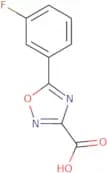
5-(3-Fluorophenyl)-1,2,4-oxadiazole-3-carboxylic acid
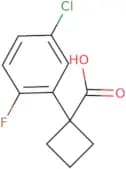
CAS:<p>Versatile small molecule scaffold</p>Formula:C9H5FN2O3Purity:Min. 95%Molecular weight:208.15 g/mol1-(5-Chloro-2-fluorophenyl)cyclobutane-1-carboxylic acid
CAS:Versatile small molecule scaffoldFormula:C11H10ClFO2Purity:Min. 95%Molecular weight:228.65 g/mol2-Methyl-2-[4-(trifluoromethoxy)phenyl]propanenitrile
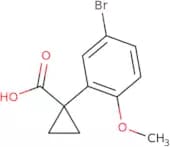
CAS:<p>Versatile small molecule scaffold</p>Formula:C11H10F3NOPurity:Min. 95%Molecular weight:229.2 g/mol1-(5-Bromo-2-methoxyphenyl)cyclopropane-1-carboxylic acid
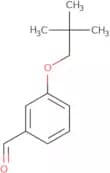
CAS:Versatile small molecule scaffoldFormula:C11H11BrO3Purity:Min. 95%Molecular weight:271.11 g/mol3-(2,2-Dimethylpropoxy)benzaldehyde
CAS:<p>Versatile small molecule scaffold</p>Formula:C12H16O2Purity:Min. 95%Molecular weight:192.25 g/mol5-(4-Bromophenyl)-1H-imidazol-2-amine
CAS:<p>Versatile small molecule scaffold</p>Formula:C9H8BrN3Purity:Min. 95%Molecular weight:238.08 g/mol4-(4-Nitrophenyl)-1H-imidazol-2-amine
CAS:Versatile small molecule scaffoldFormula:C9H8N4O2Purity:Min. 95%Molecular weight:204.19 g/mol[2-(Methylsulfanyl)phenyl]hydrazine hydrochloride
CAS:<p>Versatile small molecule scaffold</p>Formula:C7H11ClN2SPurity:Min. 95%Molecular weight:190.69 g/mol(3-Ethyl-phenyl)-hydrazine hydrochloride
CAS:<p>Versatile small molecule scaffold</p>Formula:C8H13ClN2Purity:Min. 95%Molecular weight:172.66 g/mol2-Acetamido-4-phenylbutanoic acid
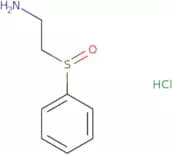
CAS:<p>Versatile small molecule scaffold</p>Formula:C12H15NO3Purity:Min. 95%Molecular weight:221.25 g/mol2-(Benzenesulfinyl)ethan-1-amine hydrochloride
CAS:<p>Versatile small molecule scaffold</p>Formula:C8H12ClNOSPurity:Min. 95%Molecular weight:205.71 g/mol2-Chloro-5-nitronicotinamide
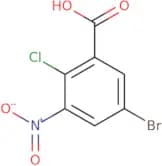
CAS:<p>2-Chloro-5-nitronicotinamide is a synthetic drug that has been used as an antileprosy, antimycobacterial, and chemotherapeutic agent. It is a dithiocarbamate that inhibits the synthesis of mycolic acids in mycobacteria. The interaction between 2-chloro-5-nitronicotinamide and mycolic acid is synergistic. This drug can be used to investigate the role of mycolic acids in the pathogenesis of leprosy and tuberculosis. 2-Chloro-5-nitronicotinamide is also active against footpad infections caused by erythromycin resistant strains of Mycobacterium smegmatis. It has been shown to be effective in mice when applied topically as an antimicrobial agent or when injected intravenously as an antimicrobial chemotherapy agent.</p>Formula:C6H4ClN3O3Purity:Min. 95%Molecular weight:201.57 g/mol5-Bromo-2-chloro-3-nitrobenzoic acid
CAS:<p>Versatile small molecule scaffold</p>Formula:C7H3BrClNO4Purity:Min. 95%Molecular weight:280.46 g/mol3-(Methylamino)-4-phenylbutanoic acid hydrochloride
CAS:<p>Versatile small molecule scaffold</p>Formula:C11H16ClNO2Purity:Min. 95%Molecular weight:229.7 g/mol4-(Benzyloxy)-5-methoxy-2-nitrobenzoic acid
CAS:4-(Benzyloxy)-5-methoxy-2-nitrobenzoic acid (BMN) is a linker that has been shown to have anticancer activity. It has been found that BMN enhances the effect of a tumor suppressor gene and blocks the growth of tumor cells. In addition, BMN can be used as a linker to introduce drugs into proteins. This compound has also been shown to inhibit platelet-derived growth factor receptor (PDGFR), which is linked to atherosclerosis and cancer cell proliferation.Formula:C15H13NO6Purity:Min. 95%Molecular weight:303.27 g/mol6,7-Dimethoxy-2-(piperazin-1-yl)quinazolin-4-amine dihydrochloride
CAS:<p>6,7-Dimethoxy-2-(piperazin-1-yl)quinazolin-4-amine dihydrochloride (DMPQ) is a piperazine derivative that is a potent and selective inhibitor of phosphodiesterase type 5 (PDE5). This drug has been shown to be useful in the treatment of the symptoms of benign prostatic hyperplasia. DMPQ inhibits the hydrolysis of cyclic adenosine monophosphate (cAMP), which leads to an increase in intracellular levels of cAMP. This drug also exhibits antihypertensive effects, as it inhibits the activity of nitric oxide synthase.</p>Formula:C14H21Cl2N5O2Purity:Min. 95%Molecular weight:362.3 g/mol2,2-Dimethyloxane-4-carbonitrile
CAS:<p>Versatile small molecule scaffold</p>Formula:C8H13NOPurity:Min. 95%Molecular weight:139.19 g/mol3-Methyl-2-[(trimethylsilyl)oxy]but-3-enenitrile
CAS:Versatile small molecule scaffoldFormula:C8H15NOSiPurity:Min. 95%Molecular weight:169.3 g/mol2-(5-Oxooxolan-2-yl)acetic acid
CAS:<p>2-(5-Oxooxolan-2-yl)acetic acid is a fluorophore that emits light upon excitation. It binds to the kappa opioid receptor and has been shown to inhibit leukocyte chemotaxis in vivo. 2-(5-Oxooxolan-2-yl)acetic acid has also been shown to function as an acetylcholinesterase inhibitor, which is important for maintaining the stability of the neurotransmitter dopamine. The fluorescence intensity of 2-(5-Oxooxolan-2-yl)acetic acid increases when it is reacted with amines or other functional groups.</p>Formula:C6H8O4Purity:Min. 95%Molecular weight:144.12 g/molMethyl 2-(2-pyrimidyl)acetate
CAS:<p>Versatile small molecule scaffold</p>Formula:C7H8N2O2Purity:Min. 95%Molecular weight:152.15 g/mol

![2-Methyl-2-[4-(trifluoromethoxy)phenyl]propanenitrile](/_next/image/?url=https%3A%2Fstatic.cymitquimica.com%2Fproducts%2F3D%2Fthumb-webp%2FKAC79894.webp&w=3840&q=75)


![[2-(Methylsulfanyl)phenyl]hydrazine hydrochloride](/_next/image/?url=https%3A%2Fstatic.cymitquimica.com%2Fproducts%2F3D%2Fthumb-webp%2FKCA48133.webp&w=3840&q=75)





![3-Methyl-2-[(trimethylsilyl)oxy]but-3-enenitrile](/_next/image/?url=https%3A%2Fstatic.cymitquimica.com%2Fproducts%2F3D%2Fthumb-webp%2FKCA55034.webp&w=3840&q=75)

