Building Blocks
This section contains fundamental products for the synthesis of organic and biological compounds. Building blocks are the essential starting materials used to construct complex molecules through various chemical reactions. They play a critical role in drug discovery, material science, and chemical research. At CymitQuimica, we offer a diverse range of high-quality building blocks to support your innovative research and industrial projects, ensuring you have the essential components for successful synthesis.
Subcategories of "Building Blocks"
- Boronic Acids & Boronic Acid Derivatives(5,778 products)
- Chiral Building Blocks(1,242 products)
- Hydrocarbon Building Blocks(6,098 products)
- Organic Building Blocks(61,084 products)
Found 198714 products of "Building Blocks"
Sort by
Purity (%)
0
100
|
0
|
50
|
90
|
95
|
100
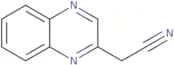
2-(Quinoxalin-2-yl)acetonitrile
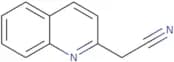
CAS:<p>Versatile small molecule scaffold</p>Formula:C10H7N3Purity:Min. 95%Molecular weight:169.18 g/mol2-(Quinolin-2-yl)acetonitrile
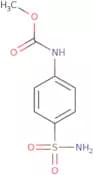
CAS:<p>2-(Quinolin-2-yl)acetonitrile is an acceptor molecule in the nitrobenzene oxidation scheme. It has a nitro group, which is converted to a chiral chromophore by diethyl etherate. This compound also has oxygen atoms that can act as nucleophiles and activated malonate anions. 2-(Quinolin-2-yl)acetonitrile is an alkylating agent that is used for the synthesis of chiral compounds.</p>Formula:C11H8N2Purity:Min. 95%Molecular weight:168.19 g/molMethyl N-(4-sulfamoylphenyl)carbamate
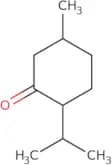
CAS:Versatile small molecule scaffoldFormula:C8H10N2O4SPurity:Min. 95%Molecular weight:230.24 g/mol(-)-Menthone
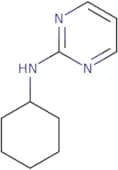
CAS:<p>(-)-Menthone is a plant metabolite that is found in peppermint and other mint oils. It can be synthesized by the action of caffeic acid esterase on menthol, which is also present in peppermint oil. (-)-Menthone has been shown to inhibit the enzyme activities of human pathogens such as Salmonella typhimurium, Escherichia coli, and Shigella sonnei. (-)-Menthone also has genotoxic activity and has been shown to cause chromosome breaks in human lymphocytes. The reaction mechanism of (-)-menthone involves an intramolecular hydrogen transfer from one carbon atom to another. X-ray diffraction data from (-)-menthone crystals show a phase transition temperature of approximately -5°C for the molecule.</p>Formula:C10H18OPurity:Min. 95%Molecular weight:154.25 g/molN-Cyclohexylpyrimidin-2-amine
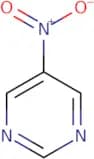
CAS:<p>Versatile small molecule scaffold</p>Formula:C10H15N3Purity:Min. 95%Molecular weight:177.25 g/mol5-Nitropyrimidine
CAS:<p>5-Nitropyrimidine is a chemical with antiviral properties. It inhibits the synthesis of new viruses by reacting with malonic acid, which is an intermediate in the virus's life cycle. 5-Nitropyrimidine has also been shown to have anti-malarial and anti-parasitic properties. This compound binds to amines and inhibits their production, which may be due to its ability to react with dialkylamino groups in proteins. 5-Nitropyrimidine has been found in humans and animals, but not plants or fungi.</p>Formula:C4H3N3O2Purity:Min. 95%Molecular weight:125.09 g/molThieno[2,3-d]pyrimidine-4-thiol
CAS:<p>Versatile small molecule scaffold</p>Formula:C6H4N2S2Purity:Min. 95%Molecular weight:168.2 g/mol4-Aminothieno[2,3-d]pyrimidine
CAS:<p>4-Aminothieno[2,3-d]pyrimidine is a potent inhibitor of the P-glycoprotein multidrug transporter. It has been shown to inhibit chloride transport in the kidney and gastrointestinal tract. 4-Aminothieno[2,3-d]pyrimidine also inhibits the function of amine oxidase, which is involved in the metabolism of endogenous compounds such as catecholamines and serotonin. This drug may also be effective against cancer cells. The mechanism of action for this drug is not well understood but it has been shown to have an effect on DNA replication and repair by inhibiting phosphorous acid and formamidines. 4-Aminothieno[2,3-d]pyrimidine can produce crosslinking between DNA strands that leads to chain termination or intramolecular hydrogen transfer with formamidines. This process produces formaldehyde, which can react with other molecules to produce crosslinks between</p>Formula:C6H5N3SPurity:Min. 95%Molecular weight:151.19 g/mol4-Hydrazinothieno[2,3-d]pyrimidine
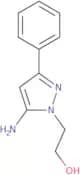
CAS:<p>4-Hydrazinothieno[2,3-d]pyrimidine is an anti-cancer drug that is activated by xylene. It is used in the treatment of bowel disease and cancer. 4-Hydrazinothieno[2,3-d]pyrimidine has been shown to have antibacterial properties against Gram-positive bacteria and may be effective as a topical agent for skin infections. This drug also has platelet activating properties, which are mediated through the p2y12 receptor. This receptor is involved in inflammatory bowel disease, as well as other tissues such as the brain and heart. 4-Hydrazinothieno[2,3-d]pyrimidine may be useful in treating cancer because it inhibits the production of TNF-α (tumour necrosis factor alpha) which leads to tumor growth inhibition.</p>Formula:C6H6N4SPurity:Min. 95%Molecular weight:166.2 g/mol2-(5-Amino-3-phenylpyrazol-1-yl)ethanol
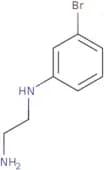
CAS:2-(5-Amino-3-phenylpyrazol-1-yl)ethanol is a chemical compound that is used in the preparation of mezlocillin, an antibiotic medicine. It is also used as a raw material for the production of ampicillin sodium by crystallization with sodium hydroxide. 2-(5-Amino-3-phenylpyrazol-1-yl)ethanol has been shown to inhibit bacterial growth by binding to penicillin binding proteins, which prevents the formation of an antibiotic inhibitor complex with enzymes involved in cell wall synthesis, inhibiting protein synthesis and cell division.Formula:C11H13N3OPurity:Min. 95%Molecular weight:203.25 g/molN-(2-Aminoethyl)-3-bromoaniline
CAS:Versatile small molecule scaffoldFormula:C8H11BrN2Purity:Min. 95%Molecular weight:215.09 g/mol1-[3-(Trifluoromethyl)phenyl]imidazolidin-2-one
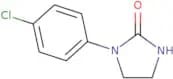
CAS:<p>Versatile small molecule scaffold</p>Formula:C10H9F3N2OPurity:Min. 95%Molecular weight:230.19 g/mol1-(4-chlorophenyl)imidazolidin-2-one
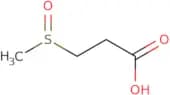
CAS:<p>Versatile small molecule scaffold</p>Formula:C9H9N2OClPurity:Min. 95%Molecular weight:196.63 g/mol3-Methanesulfinylpropanoic acid
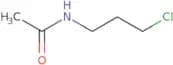
CAS:<p>Versatile small molecule scaffold</p>Formula:C4H8O3SPurity:Min. 95%Molecular weight:136.17 g/molN-(3-Chloropropyl)acetamide
CAS:<p>Versatile small molecule scaffold</p>Formula:C5H10ClNOPurity:Min. 95%Molecular weight:135.59 g/mol2-Methylbenzyl mercaptan
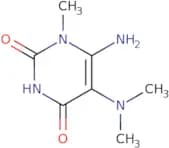
CAS:<p>2-Methylbenzyl mercaptan is a heterocyclic compound that is found in the sulfoxides and azides classes. It can be synthesized by treating 2-methylbenzaldehyde with trifluoromethanesulfonic acid or trifluoroacetic acid. The chloride yields are high and the reaction is catalysed by aluminum chloride, triethylamine, or zinc chloride. This compound can be converted to a bioconjugate through ring-opening reactions with carboxyamide groups, which are present on proteins in mammalian cells. The bioconjugate can then be used as a fluorescent probe to detect the presence of specific proteins in living cells.</p>Formula:C8H10SPurity:Min. 95%Molecular weight:138.23 g/mol6-Amino-5-(dimethylamino)-1-methyl-1,2,3,4-tetrahydropyrimidine-2,4-dione
CAS:<p>Versatile small molecule scaffold</p>Formula:C7H12N4O2Purity:Min. 95%Molecular weight:184.2 g/mol1,3-Diphenylpropan-1-ol
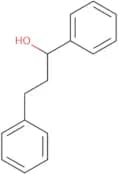
CAS:1,3-Diphenylpropan-1-ol is a benzyl alcohol derivative. It is a white solid that can be used as a dehydrogenation agent for the synthesis of chalcone derivatives. It has been used as an intermediate in the synthesis of other organic compounds and has been detected in the reaction solution by thin layer chromatography. 1,3-Diphenylpropan-1-ol is also involved in the catalytic transfer of acetylacetonate to benzaldehyde or benzoic acid. The resulting anion can be neutralized with hydrochloric acid to produce benzyl alcohol or reacted with sodium hydroxide to produce dihydrochalcone.Formula:C15H16OPurity:Min. 95%Molecular weight:212.29 g/mol2-Methyl-1,2,3,4-tetrahydroisoquinolin-6-amine
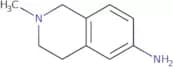
CAS:<p>Versatile small molecule scaffold</p>Formula:C10H14N2Purity:Min. 95%Molecular weight:162.23 g/mol2-Methyl-1,2,3,4-tetrahydroisoquinolin-7-amine
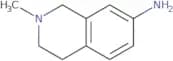
CAS:<p>Versatile small molecule scaffold</p>Formula:C10H14N2Purity:Min. 95%Molecular weight:162.23 g/mol

![Thieno[2,3-d]pyrimidine-4-thiol](/_next/image/?url=https%3A%2Fstatic.cymitquimica.com%2Fproducts%2F3D%2Fthumb-webp%2FPAA08055.webp&w=3840&q=75)
![4-Aminothieno[2,3-d]pyrimidine](/_next/image/?url=https%3A%2Fstatic.cymitquimica.com%2Fproducts%2F3D%2Fthumb-webp%2FPAA08056.webp&w=3840&q=75)
![4-Hydrazinothieno[2,3-d]pyrimidine](/_next/image/?url=https%3A%2Fstatic.cymitquimica.com%2Fproducts%2F3D%2Fthumb-webp%2FPAA08058.webp&w=3840&q=75)
![1-[3-(Trifluoromethyl)phenyl]imidazolidin-2-one](/_next/image/?url=https%3A%2Fstatic.cymitquimica.com%2Fproducts%2F3D%2Fthumb-webp%2FPAA08895.webp&w=3840&q=75)