Building Blocks
This section contains fundamental products for the synthesis of organic and biological compounds. Building blocks are the essential starting materials used to construct complex molecules through various chemical reactions. They play a critical role in drug discovery, material science, and chemical research. At CymitQuimica, we offer a diverse range of high-quality building blocks to support your innovative research and industrial projects, ensuring you have the essential components for successful synthesis.
Subcategories of "Building Blocks"
- Boronic Acids & Boronic Acid Derivatives(5,756 products)
- Chiral Building Blocks(1,242 products)
- Hydrocarbon Building Blocks(6,095 products)
- Organic Building Blocks(61,051 products)
Found 199813 products of "Building Blocks"
Sort by
Purity (%)
0
100
|
0
|
50
|
90
|
95
|
100
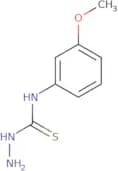
3-Amino-1-(3-methoxyphenyl)thiourea
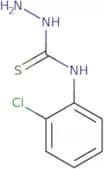
CAS:<p>Versatile small molecule scaffold</p>Formula:C8H11N3OSPurity:Min. 95%Molecular weight:197.26 g/mol3-amino-1-(2-chlorophenyl)thiourea
CAS:<p>3-Amino-1-(2-chlorophenyl)thiourea is a hematological agent that has no effect on serum albumin or human serum transferrin. It has an affinity for the residue of lysine and arginine and can be used in the titration of these amino acids. 3-Amino-1-(2-chlorophenyl)thiourea also has a conformational property, which is responsible for its fluorescence. 3-Amino-1-(2-chlorophenyl)thiourea has been shown to have a constant molecular weight of 514.</p>Formula:C7H8ClN3SPurity:Min. 95%Molecular weight:201.67 g/mol4-(3-Chlorophenyl)-3-thiosemicarbazide
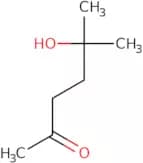
CAS:<p>4-(3-Chlorophenyl)-3-thiosemicarbazide is a hydrazone that has been shown to have antibacterial and anticancer activities. This compound binds to DNA, which leads to the inhibition of bacterial growth and cancer cell proliferation. 4-(3-Chlorophenyl)-3-thiosemicarbazide has been shown to inhibit the growth of P. aeruginosa in vitro by binding to the DNA gyrase and topoisomerase IV enzymes, preventing them from maintaining the integrity of bacterial DNA. Molecular modeling studies have shown that this compound binds preferentially to human astrocytes rather than cancer cells. It is also an anhydrous potassium carbonate salt that is soluble in water, alcohols, ethers, and acetones.</p>Formula:C7H8ClN3SPurity:Min. 95%Molecular weight:201.68 g/mol5-Hydroxy-5-methylhexan-2-one
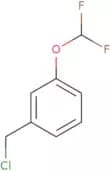
CAS:<p>Versatile small molecule scaffold</p>Formula:C7H14O2Purity:Min. 95%Molecular weight:130.18 g/mol1-(Chloromethyl)-3-(difluoromethoxy)benzene
CAS:<p>Versatile small molecule scaffold</p>Formula:C8H7ClF2OPurity:Min. 95%Molecular weight:192.59 g/mol2-Chloroethyl Propyl Ether
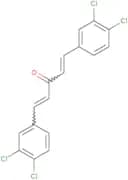
CAS:<p>2-Chloroethyl propyl ether is a chlorinated hydrocarbon that is used in the production of propionate. It reacts with hydrochloric acid and propionic acid to form 2-chloroethyl propionate. 2-Chloroethyl propyl ether can also be used as a solvent and has been shown to work well in wastewater treatment. This chemical has an acidic reaction with chloride and has been shown to be effective at treating wastewater, although it has not been studied for its effects on bacterial strains.</p>Formula:C5H11ClOPurity:Min. 95%Molecular weight:122.59 g/mol1,5-Bis(3,4-dichlorophenyl)penta-1,4-dien-3-one
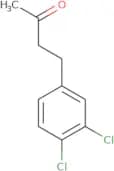
CAS:<p>Versatile small molecule scaffold</p>Formula:C17H10Cl4OPurity:Min. 95%Molecular weight:372.1 g/mol4-(3,4-dichlorophenyl)butan-2-one
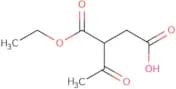
CAS:<p>Versatile small molecule scaffold</p>Formula:C10H10OCl2Purity:Min. 95%Molecular weight:217.09 g/mol3-(Ethoxycarbonyl)-4-oxopentanoic acid
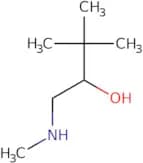
CAS:<p>Versatile small molecule scaffold</p>Formula:C8H12O5Purity:Min. 95%Molecular weight:188.18 g/mol3,3-Dimethyl-1-(methylamino)butan-2-ol
CAS:<p>Versatile small molecule scaffold</p>Formula:C7H17NOPurity:Min. 95%Molecular weight:131.2 g/molN-(1-Aminopropan-2-yl)aniline
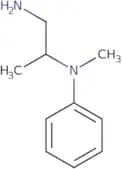
CAS:<p>Versatile small molecule scaffold</p>Formula:C9H14N2Purity:Min. 95%Molecular weight:150.22 g/molN-(1-Aminopropan-2-yl)-N-methylaniline
CAS:<p>Versatile small molecule scaffold</p>Formula:C10H16N2Purity:Min. 95%Molecular weight:164.25 g/mol2-hydroxy-2-(3-nitrophenyl)acetic acid
CAS:<p>Versatile small molecule scaffold</p>Formula:C8H7NO5Purity:Min. 95%Molecular weight:197.1 g/molBicyclo[2.2.2]octan-2-amine hydrochloride
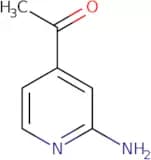
CAS:Versatile small molecule scaffoldFormula:C8H16ClNPurity:Min. 95%Molecular weight:161.67 g/mol1-(2-aminopyridin-4-yl)ethanone
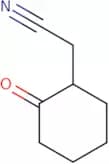
CAS:<p>Versatile small molecule scaffold</p>Formula:C7H8N2OPurity:Min. 95%Molecular weight:136.15 g/mol(2-Oxocyclohexyl)acetonitrile
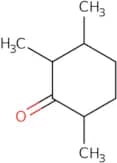
CAS:<p>2-Oxocyclohexyl)acetonitrile is an indole that has been shown to catalyze the reaction of a metal compound and hydrogen. It also has been shown to inhibit the production of skatole, a toxic metabolite of tryptophan found in feces. 2-Oxocyclohexyl)acetonitrile binds to indoles through hydrogen bonding, which can be reduced by metal catalysts.</p>Formula:C8H11NOPurity:Min. 95%Molecular weight:137.18 g/mol2,3,6-Trimethylcyclohexan-1-one
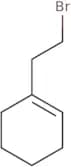
CAS:<p>Versatile small molecule scaffold</p>Formula:C9H16OPurity:Min. 95%Molecular weight:140.22 g/mol1-(2-Bromoethyl)cyclohex-1-ene
CAS:<p>Versatile small molecule scaffold</p>Formula:C8H13BrPurity:Min. 95%Molecular weight:189.09 g/mol1-Cyclopropylhex-5-en-1-one
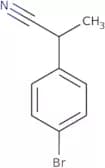
CAS:<p>Versatile small molecule scaffold</p>Formula:C9H14OPurity:Min. 95%Molecular weight:138.2 g/mol2-(4-Bromophenyl)propanenitrile
CAS:<p>Versatile small molecule scaffold</p>Formula:C9H8BrNPurity:Min. 95%Molecular weight:210.07 g/mol



![Bicyclo[2.2.2]octan-2-amine hydrochloride](/_next/image/?url=https%3A%2Fstatic.cymitquimica.com%2Fproducts%2F3D%2Fthumb-webp%2FSBA16664.webp&w=3840&q=75)