


Building Blocks
Subcategories of "Building Blocks"
- Boronic Acids & Boronic Acid Derivatives(5,805 products)
- Chiral Building Blocks(1,248 products)
- Hydrocarbon Building Blocks(6,118 products)
- Organic Building Blocks(61,447 products)
Found 208423 products of "Building Blocks"
3-Methyl-1-azabicyclo[2.2.2]octan-3-amine dihydrochloride
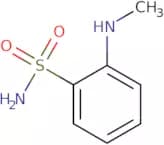
CAS:Versatile small molecule scaffoldFormula:C8H18Cl2N2Purity:Min. 95%Molecular weight:213.15 g/mol2-(Methylamino)benzene-1-sulfonamide
CAS:Versatile small molecule scaffold
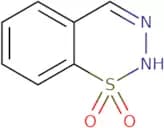
Formula:C7H10N2O2SPurity:Min. 95%Molecular weight:186.23 g/mol2H-1,2,3-Benzothiadiazine 1,1-dioxide
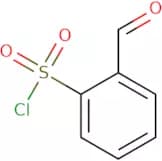
CAS:2H-1,2,3-Benzothiadiazine 1,1-dioxide is a molecule that binds to and inhibits the activity of the glutamatergic N-methyl-D-aspartate (NMDA) receptor. It is a stereoselective agent that binds to the receptor in a specific orientation. 2H-1,2,3-Benzothiadiazine 1,1-dioxide is an allosteric modulator that has been shown to attenuate glutamate excitotoxicity in vitro and in vivo. In animal studies it has been shown to reverse cognitive deficits induced by NMDA antagonists and potentiates the effects of aniracetam. 2H-1,2,3-Benzothiadiazine 1,1-dioxide is also a competitive inhibitor of cholinesterase with IC50 values of 4.5 µM and 3 µM for acetylcholinesterase and butFormula:C7H6N2O2SPurity:Min. 95%Molecular weight:182.2 g/mol2-Formylbenzene-1-sulfonyl chloride
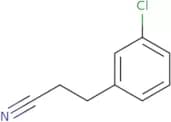
CAS:2-Formylbenzene-1-sulfonyl chloride is a molecule that contains sulfur. It is used as an intermediate in the synthesis of other molecules. 2-Formylbenzene-1-sulfonyl chloride has been shown to be able to react with primary amines and chlorides, sulfuryl chloride, or alcohols to form azides, imidazoles, and sulfonates respectively. This reaction was studied using spectroscopic techniques.Formula:C7H5ClO3SPurity:Min. 95%Molecular weight:204.63 g/mol3-(3-Chlorophenyl)propionitrile
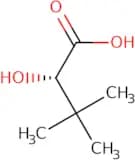
CAS:Versatile small molecule scaffoldFormula:C9H8ClNPurity:Min. 95%Molecular weight:165.62 g/mol(S)-(-)-2-Hydroxy-3,3-dimethylbutyric acid
CAS:Versatile small molecule scaffoldFormula:C6H12O3Purity:Min. 95%Molecular weight:132.16 g/mol[1-(2,3-Dihydro-1-benzofuran-2-yl)ethyl](methyl)amine hydrochloride
CAS:Versatile small molecule scaffoldFormula:C11H16ClNOPurity:Min. 95%Molecular weight:213.7 g/mol2,2-Dimethyl-3-[(4-methylbenzenesulfonyl)oxy]propan-1-ol
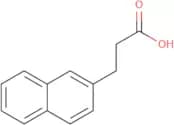
CAS:Versatile small molecule scaffoldFormula:C12H18O4SPurity:Min. 95%Molecular weight:258.34 g/mol3-(Naphthalen-2-yl)propanoic acid
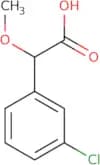
CAS:3-(Naphthalen-2-yl)propanoic acid is a phenolic compound that has been shown to inhibit the activity of tyrosinase. Tyrosinase is an enzyme that catalyzes the first step in melanin synthesis and is known to play a role in skin pigmentation. 3-(Naphthalen-2-yl)propanoic acid inhibits tyrosinase by binding to its active site, thereby blocking it from catalyzing the conversion of tyrosine to dopaquinone. The compound also has inhibitory effects on melanoma cells, which may be due to its ability to decrease the production of melanin. 3-(Naphthalen-2-yl)propanoic acid is structurally similar to hydroquinone, but lacks hydroxyl groups on its aromatic ring.Formula:C13H12O2Purity:Min. 95%Molecular weight:200.24 g/mol2-(3-Chlorophenyl)-2-methoxyacetic acid
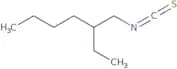
CAS:Versatile small molecule scaffoldFormula:C9H9ClO3Purity:Min. 95%Molecular weight:200.62 g/mol3-(Isothiocyanatomethyl)heptane
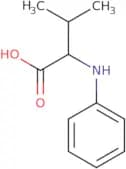
CAS:Versatile small molecule scaffoldFormula:C9H17NSPurity:Min. 95%Molecular weight:171.31 g/mol(2S)-3-Methyl-2-(phenylamino)butanoic acid
CAS:(2S)-3-Methyl-2-(phenylamino)butanoic acid is a chemical that belongs to the group of aminobutanoic acids. It is used in the production of pharmaceuticals, agrochemicals, and plastics. (2S)-3-Methyl-2-(phenylamino)butanoic acid has been shown to be reactive with aryl halides, including benzene exposure, which may lead to oxidative stress. The compound has been used as a ligand for metal ions such as copper(II) and zinc(II). The ligand can be detected by gas chromatography/mass spectrometry. The stereoselectivity of (2S)-3-Methyl-2-(phenylamino)butanoic acid is determined by the position of the hydrophobic group on the molecule. This compound's hydrophobic group is positioned on one side of the molecule due to itsFormula:C11H15NO2Purity:Min. 95%Molecular weight:193.24 g/mol2-{[(4-Chlorophenyl)methyl]sulfanyl}acetonitrile
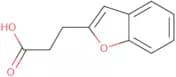
CAS:Versatile small molecule scaffoldFormula:C9H8ClNSPurity:Min. 95%Molecular weight:197.69 g/mol3-(1-benzofuran-2-yl)propanoic acid
CAS:Versatile small molecule scaffold
Formula:C11H10O3Purity:Min. 95%Molecular weight:190.2 g/molD-Phenylalanine methyl ester
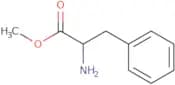
CAS:D-Phenylalanine methyl ester is an analogue of the amino acid phenylalanine. It inhibits fatty acid synthesis by competitively binding to the enzyme acyl carrier protein, which regulates the incorporation of fatty acids into phospholipids. This inhibition prevents the production of cell membrane lipids and leads to cell death. D-Phenylalanine methyl ester has been used as a diagnostic agent for cancer because it can be detected in urine samples. It has also been shown to have growth factor activity, which may be responsible for its anticancer properties.
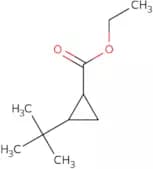
Formula:C10H13NO2Purity:Min. 95%Color and Shape:PowderMolecular weight:179.22 g/molEthyl 2-tert-butylcyclopropane-1-carboxylate
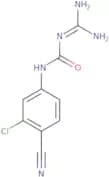
CAS:Versatile small molecule scaffoldFormula:C10H18O2Purity:Min. 95%Molecular weight:170.25 g/mol3-Carbamimidoyl-1-(3-chloro-4-cyanophenyl)urea
CAS:3-Carbamimidoyl-1-(3-chloro-4-cyanophenyl)urea is a drug that has been shown to have an inhibitory effect on the growth of malaria parasites in vitro. It has also been shown to be effective against other organisms such as bacteria and fungi, including methicillin resistant Staphylococcus aureus (MRSA). 3-Carbamimidoyl-1-(3-chloro-4-cyanophenyl)urea is typically used with a diluent, which can be either water or ethanol. The drug is insoluble in water but soluble in ethanol, so it must be reconstituted before injection. This drug is targeted to the circumferential region of the parasite by an alkyl substituent that attaches to the erythrocyte membrane surface. 3-Carbamimidoyl-1-(3-chloro-4-
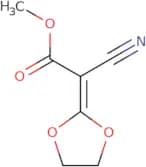
Formula:C9H8ClN5OPurity:Min. 95%Molecular weight:237.64 g/molMethyl 2-cyano-2-(1,3-dioxolan-2-ylidene)acetate
CAS:Versatile small molecule scaffoldFormula:C7H7NO4Purity:Min. 95%Molecular weight:169.13 g/molS-Methyl-S-(2-methylphenyl) NH-sulfoximine
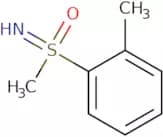
CAS:Versatile small molecule scaffold
Formula:C8H11NOSPurity:Min. 95%Molecular weight:169.25 g/mol(1S,2R,4R)-Bicyclo[2.2.1]heptan-2-amine hydrochloride
CAS:Versatile small molecule scaffoldFormula:C7H14ClNPurity:Min. 95%Molecular weight:147.64 g/mol
![3-Methyl-1-azabicyclo[2.2.2]octan-3-amine dihydrochloride](/_next/image/?url=https%3A%2Fstatic.cymitquimica.com%2Fproducts%2F3D%2Fthumb-webp%2FWAA63814.webp&w=3840&q=75)

amine hydrochloride](/_next/image/?url=https%3A%2Fstatic.cymitquimica.com%2Fproducts%2F3D%2Fthumb-webp%2FWAA64593.webp&w=3840&q=75)
![2,2-Dimethyl-3-[(4-methylbenzenesulfonyl)oxy]propan-1-ol](/_next/image/?url=https%3A%2Fstatic.cymitquimica.com%2Fproducts%2F3D%2Fthumb-webp%2FWAA65104.webp&w=3840&q=75)
![2-{[(4-Chlorophenyl)methyl]sulfanyl}acetonitrile](/_next/image/?url=https%3A%2Fstatic.cymitquimica.com%2Fproducts%2F3D%2Fthumb-webp%2FWAA68187.webp&w=3840&q=75)
![(1S,2R,4R)-Bicyclo[2.2.1]heptan-2-amine hydrochloride](/_next/image/?url=https%3A%2Fstatic.cymitquimica.com%2Fproducts%2F3D%2Fthumb-webp%2FWEA05508.webp&w=3840&q=75)