Building Blocks
Subcategories of "Building Blocks"
- Boronic Acids & Boronic Acid Derivatives(5,780 products)
- Chiral Building Blocks(1,241 products)
- Hydrocarbon Building Blocks(6,100 products)
- Organic Building Blocks(61,023 products)
Found 205289 products of "Building Blocks"
4-Chloro-3-[(1,5-dimethyl-3-oxo-2-phenyl-2,3-dihydro-1H-pyrazol-4-yl)sulfamoyl]benzoic acid
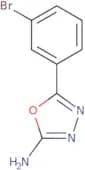
CAS:Versatile small molecule scaffoldFormula:C18H16ClN3O5SPurity:Min. 95%Molecular weight:421.9 g/mol5-(3-Bromophenyl)-1,3,4-oxadiazol-2-amine
CAS:Versatile small molecule scaffoldFormula:C8H6BrN3OPurity:Min. 95%Molecular weight:240.06 g/mol(5S)-5-[(5-Hydroxy-1H-indol-3-yl)methyl]imidazolidine-2,4-dione
CAS:Versatile small molecule scaffold
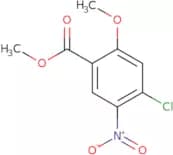
Formula:C12H11N3O3Purity:Min. 95%Molecular weight:245.23 g/molMethyl 4-chloro-2-methoxy-5-nitrobenzoate
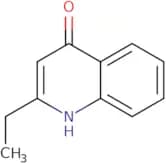
CAS:Versatile small molecule scaffoldFormula:C9H8ClNO5Purity:Min. 95%Molecular weight:245.62 g/mol2-Ethyl-1,4-dihydroquinolin-4-one
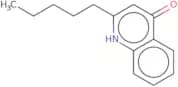
CAS:Versatile small molecule scaffoldFormula:C11H11NOPurity:Min. 95%Molecular weight:173.21 g/mol2-Pentyl-1,4-dihydroquinolin-4-one
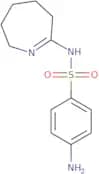
CAS:Versatile small molecule scaffoldFormula:C14H17NOPurity:Min. 95%Molecular weight:215.3 g/mol4-Amino-N-(4,5,6,7-tetrahydro-3H-azepin-2-yl)-benzenesulfonamide
CAS:Controlled Product4-Amino-N-(4,5,6,7-tetrahydro-3H-azepin-2-yl)-benzenesulfonamide is a competitive inhibitor of the antibody binding site on the human IgE receptor. It is used as a research tool and as a cell biology reagent to study the function of some ion channels and receptors. 4-Amino-N-(4,5,6,7-tetrahydro-3H-azepin-2-yl)-benzenesulfonamide binds to an allosteric site on the human IgE receptor. This ligand has been shown to activate the receptor in some systems.
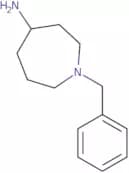
Formula:C12H17N3O2SPurity:Min. 95%Molecular weight:267.35 g/mol1-Benzylazepan-4-amine hydrochloride
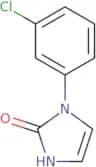
CAS:Versatile small molecule scaffoldFormula:C13H20N2Purity:Min. 95%Molecular weight:204.31 g/mol1-(3-Chlorophenyl)-2,3-dihydro-1H-imidazol-2-one
CAS:Versatile small molecule scaffoldFormula:C9H7ClN2OPurity:Min. 95%Molecular weight:194.62 g/mol1-Ffluoro-4-[S-(trifluoromethyl)sulfonimidoyl]-benzene
CAS:Versatile small molecule scaffold
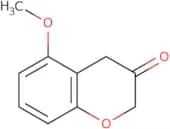
Formula:C7H5F4NOSPurity:Min. 95%Molecular weight:227.18 g/mol5-Methoxy-4H-chromen-3-one
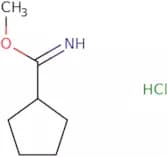
CAS:5-Methoxy-4H-chromen-3-one is an organic compound that belongs to the group of organocopper compounds. It has been extracted from plants and animals, such as leaves and fruit. This chemical can be used in the production of ethyl esters, which are a type of organic compound. 5-Methoxy-4H-chromen-3-one can also be used in the synthesis of trackable acid ethyl esters, which are used in the detection and identification of drugs.Formula:C10H10O3Purity:Min. 95%Molecular weight:178.18 g/molMethyl cyclopentanecarboximidate hydrochloride
CAS:Versatile small molecule scaffold
Formula:C7H14ClNOPurity:Min. 95%Molecular weight:163.64 g/molN7-Benzylpyrimido[4,5-d]pyrimidine-2,4,7-triamine
CAS:Versatile small molecule scaffoldFormula:C13H13N7Purity:Min. 95%Molecular weight:267.29 g/mol3-{5,6-Dimethyl-4-oxo-1H,4H-thieno[2,3-d]pyrimidin-2-yl}propanoic acid
CAS:Controlled Product3-{5,6-Dimethyl-4-oxo-1H,4H-thieno[2,3-d]pyrimidin-2-yl}propanoic acid is an antibody that blocks the activity of ion channels and has a high purity. It is used in cell biology research and as a pharmacological research tool. 3DMPPA is a receptor antagonist and can be used to inhibit or activate the function of peptides or ligands. 3DMPPA binds to receptors on cells, blocking the binding of other compounds and preventing them from activating the receptor. This compound can also be used as an inhibitor or activator of ion channels. 3DMPPA has been shown to have antiinflammatory effects on animal models, which may be due to its inhibition of prostaglandin synthesis by inhibiting cyclooxygenase 1 (COX1) and cyclooxygenase 2 (COX2).Formula:C11H12N2O3SPurity:Min. 95%Molecular weight:252.29 g/mol3-{3-Oxo-8-thia-4,6-diazatricyclo[7.4.0.0,2,7]trideca-1(9),2(7),4-trien-5-yl}propanoic acid
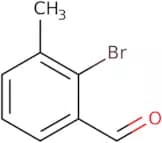
CAS:Versatile small molecule scaffoldFormula:C13H14N2O3SPurity:Min. 95%Molecular weight:278.33 g/mol2-bromo-3-methylbenzaldehyde
CAS:2-Bromo-3-methylbenzaldehyde is an enantiomerically pure stereogenic aldehyde that can be used in the synthesis of quinoline derivatives. This compound has been shown to interact with biomolecules and induce chiral effects. It is also a photochromic molecule that reacts with ultraviolet light to change color, which can be used in the design of cyclic and dihedral molecules. The selective reaction of 2-bromo-3-methylbenzaldehyde with alkyl halides leads to diastereoselective or stereoselective reactions. This compound has been shown to have high yields for these reactions.
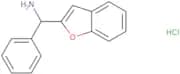
Formula:C8H7BrOPurity:Min. 95%Molecular weight:199 g/mol1-Benzofuran-2-yl(phenyl)methanamine hydrochloride
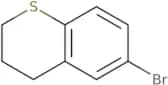
CAS:Versatile small molecule scaffoldFormula:C15H14ClNOPurity:Min. 95%Molecular weight:259.73 g/mol6-Bromo-3,4-dihydro-2H-1-benzothiopyran
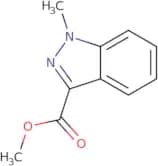
CAS:Versatile small molecule scaffoldFormula:C9H9BrSPurity:Min. 95%Molecular weight:229.14 g/molMethyl-d3 1-Methyl-d3-1H-indazole-3-carboxylate
CAS:Controlled ProductMethyl-d3 1-Methyl-d3-1H-indazole-3-carboxylate (MDI) is a reagent used in the synthesis of organic compounds. It is formed by the reaction of lithium aluminum hydride and methyl acetate, which produces a lithiated carboxylic acid. This compound can be reacted with amines to form amides or with thionyl chloride to form sulfonyl chlorides. The reactions are reversible, so it can be regenerated when needed.
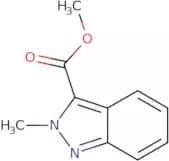
Formula:C10H4D6N2O2Purity:Min. 95%Molecular weight:196.24 g/molMethyl 2-methyl-2H-indazole-3-carboxylate
CAS:Controlled ProductVersatile small molecule scaffoldFormula:C10H10N2O2Purity:Min. 95%Molecular weight:190.2 g/mol
![4-Chloro-3-[(1,5-dimethyl-3-oxo-2-phenyl-2,3-dihydro-1H-pyrazol-4-yl)sulfamoyl]benzoic acid](/_next/image/?url=https%3A%2Fstatic.cymitquimica.com%2Fproducts%2F3D%2Fthumb-webp%2FJEA03005.webp&w=3840&q=75)

![(5S)-5-[(5-Hydroxy-1H-indol-3-yl)methyl]imidazolidine-2,4-dione](/_next/image/?url=https%3A%2Fstatic.cymitquimica.com%2Fproducts%2F3D%2Fthumb-webp%2FJEA06348.webp&w=3840&q=75)
![1-Ffluoro-4-[S-(trifluoromethyl)sulfonimidoyl]-benzene](/_next/image/?url=https%3A%2Fstatic.cymitquimica.com%2Fproducts%2F3D%2Fthumb-webp%2FJEA13920.webp&w=3840&q=75)
![N7-Benzylpyrimido[4,5-d]pyrimidine-2,4,7-triamine](/_next/image/?url=https%3A%2Fstatic.cymitquimica.com%2Fproducts%2F3D%2Fthumb-webp%2FJEA16046.webp&w=3840&q=75)
![3-{5,6-Dimethyl-4-oxo-1H,4H-thieno[2,3-d]pyrimidin-2-yl}propanoic acid](/_next/image/?url=https%3A%2Fstatic.cymitquimica.com%2Fproducts%2F3D%2Fthumb-webp%2FJEA16446.webp&w=3840&q=75)
![3-{3-Oxo-8-thia-4,6-diazatricyclo[7.4.0.0,2,7]trideca-1(9),2(7),4-trien-5-yl}propanoic acid](/_next/image/?url=https%3A%2Fstatic.cymitquimica.com%2Fproducts%2F3D%2Fthumb-webp%2FJEA16447.webp&w=3840&q=75)