Building Blocks
This section contains fundamental products for the synthesis of organic and biological compounds. Building blocks are the essential starting materials used to construct complex molecules through various chemical reactions. They play a critical role in drug discovery, material science, and chemical research. At CymitQuimica, we offer a diverse range of high-quality building blocks to support your innovative research and industrial projects, ensuring you have the essential components for successful synthesis.
Subcategories of "Building Blocks"
- Boronic Acids & Boronic Acid Derivatives(5,756 products)
- Chiral Building Blocks(1,242 products)
- Hydrocarbon Building Blocks(6,095 products)
- Organic Building Blocks(61,038 products)
Found 196817 products of "Building Blocks"
Sort by
Purity (%)
0
100
|
0
|
50
|
90
|
95
|
100
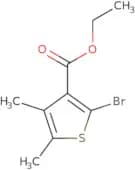
Ethyl 2-bromo-4,5-dimethylthiophene-3-carboxylate
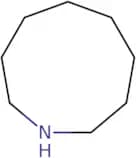
CAS:<p>Versatile small molecule scaffold</p>Formula:C9H11BrO2SPurity:Min. 95%Molecular weight:263.15 g/molOctamethyleneimine
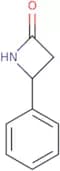
CAS:<p>Octamethyleneimine (ODA) is a heterocyclic compound that has been shown to have antiviral properties against the avian influenza virus. The virus binds to the ODA and is inactivated by reacting with the metal surface of the virus, thereby inhibiting its ability to infect cells. Octamethyleneimine also interacts with glucose-6-phosphate dehydrogenase, an enzyme involved in glycolysis, to inhibit growth factor activity. It has been shown that octamethyleneimine inhibits kinases by blocking their active site and preventing them from binding to phosphorylated protein substrates. This leads to a decrease in fatty acid synthesis and a reduction in skin inflammation due to acne vulgaris.</p>Formula:C8H17NPurity:Min. 95%Molecular weight:127.23 g/mol4-Phenylazetidin-2-one
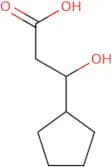
CAS:<p>4-Phenylazetidin-2-one is a potent antitumor agent that inhibits serine protease and has been shown to have anticancer activity. It is also an enzyme inhibitor that can be used as a reagent for the preparation of enzyme preparations and assays. 4-Phenylazetidin-2-one has been shown to inhibit the serine proteases chymotrypsin and trypsin, which are involved in protein digestion. It also inhibits β-amino acid aminopeptidase, which is involved in protein synthesis. 4-Phenylazetidin-2-one is useful as a reagent for the isolation of β-amino acid peptides from natural sources such as plants or animals. This compound has been shown to be effective against cancer cells due to its ability to inhibit β-amino acid aminopeptidase, which prevents the production of proteins vital for cell</p>Formula:C9H9NOPurity:Min. 95%Molecular weight:147.17 g/mol3-Cyclopentyl-3-hydroxypropanoic acid
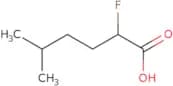
CAS:<p>Versatile small molecule scaffold</p>Formula:C8H14O3Purity:Min. 95%Molecular weight:158.19 g/mol2-Fluoro-5-methylhexanoic acid
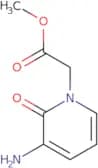
CAS:<p>Versatile small molecule scaffold</p>Formula:C7H13FO2Purity:Min. 95%Molecular weight:148.18 g/molMethyl 2-(3-amino-2-oxo-1,2-dihydropyridin-1-yl)acetate
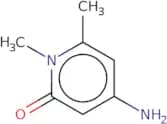
CAS:<p>Versatile small molecule scaffold</p>Formula:C8H10N2O3Purity:Min. 95%Molecular weight:182.18 g/mol4-Amino-1,6-dimethyl-1,2-dihydropyridin-2-one
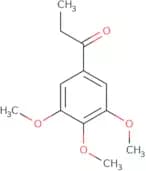
CAS:<p>Versatile small molecule scaffold</p>Formula:C7H10N2OPurity:Min. 95%Molecular weight:138.2 g/mol1-(3,4,5-Trimethoxyphenyl)propan-1-one
CAS:<p>Versatile small molecule scaffold</p>Formula:C12H16O4Purity:Min. 95%Molecular weight:224.25 g/mol{[(2-Methylprop-2-en-1-yl)oxy]methyl}benzene
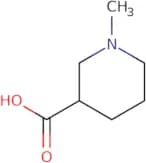
CAS:<p>Versatile small molecule scaffold</p>Formula:C11H14OPurity:Min. 95%Molecular weight:162.23 g/mol1-Methylpiperidine-3-carboxylic acid
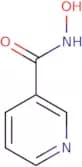
CAS:<p>1-Methylpiperidine-3-carboxylic acid (1MP) is a neurotoxic compound that can be synthesized in vivo by the oxidation of choline. It has been shown to have a natriuretic and diuretic effect on the kidney, as well as stimulating the release of atrial natriuretic peptide. 1MP also has an agonistic effect on the dopamine receptors, and is a competitive antagonist for the binding of betaines to skin cells. Betaines are substances that are found in many foods, including wheat germ and spinach, which have been linked to nerve cell death in rats.<br>END>></p>Formula:C7H13NO2Purity:Min. 95%Molecular weight:143.19 g/molN-Hydroxypyridine-3-carboxamide
CAS:<p>N-Hydroxypyridine-3-carboxamide is a hydroxylated metabolite of nicotinic acid that has been shown to have skin conditioning properties. The optimum pH for this product is 3.5 and its biological properties include an inhibitory effect on viral replication and a galacturonic acid complex. N-Hydroxypyridine-3-carboxamide also exhibits a high degree of hemolytic activity, which may be due to the methyl nicotinate moiety or the carbonyl oxygens present in this compound.</p>Formula:C6H6N2O2Purity:Min. 95%Molecular weight:138.12 g/mol1H,3H-Furo[3,4-c]pyridin-3-one
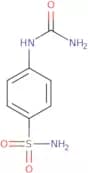
CAS:<p>1H,3H-Furo[3,4-c]pyridin-3-one is a colorless crystalline compound. It has a pyridine ring with substituents on the nitrogen atom and the six-membered benzyl group. The molecule is chiral because of its two isomers. One isomer has a hydroxyl group bonded to the nitrogen atom and the other has a methyl group bonded to the nitrogen atom. 1H,3H-Furo[3,4-c]pyridin-3-one can be used as a recording material for infrared spectroscopy due to its high sensitivity and low background noise. Isomers of this compound are not coplanar.</p>Formula:C7H5NO2Purity:Min. 95%Molecular weight:135.12 g/mol(4-Sulfamoylphenyl)urea
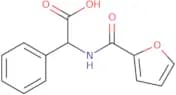
CAS:<p>4-Sulfamoylphenyl urea is a molecule that is used in the treatment of cancer. It has been shown to inhibit the growth of pancreatic and colon cancer cells by interfering with their ability to use glucose, which is a major source of energy for these cells. 4-Sulfamoylphenyl urea also inhibits the production of carbonic anhydrase enzymes, which are needed for cellular respiration and lead to cell death. This drug has been shown to have anti-metastatic effects in vivo and in vitro, which may be due to its ability to inhibit protein synthesis.</p>Formula:C7H9N3O3SPurity:Min. 95%Molecular weight:215.23 g/mol2-(Furan-2-ylformamido)-2-phenylacetic acid
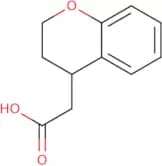
CAS:<p>Versatile small molecule scaffold</p>Formula:C13H11NO4Purity:Min. 95%Molecular weight:245.23 g/mol2-(Chroman-4-yl)acetic acid
CAS:<p>Versatile small molecule scaffold</p>Formula:C11H12O3Purity:Min. 95%Molecular weight:192.21 g/mol2,3-Dihydro-1H-pyrrolo[3,4-c]pyridin-1-one
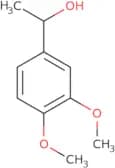
CAS:<p>2,3-Dihydro-1H-pyrrolo[3,4-c]pyridin-1-one is a kinase inhibitor that binds to the ATP site of the enzyme. Abnormal cell growth, cancer and other disorders are associated with abnormal cell proliferation. Kinases are enzymes that regulate cellular processes by adding phosphate groups to proteins. Thus, 2,3-dihydro-1H-pyrrolo[3,4-c]pyridin-1-one is used in the treatment of diseases such as leukemia and lymphoma. 2,3-Dihydro-1H-pyrrolo[3,4--c]pyridin-1--one inhibits abnormal cell growth by blocking signal transduction pathways in cancer cells. It also inhibits protein synthesis and has been shown to inhibit the proliferation of human myeloid leukemia cells in culture.</p>Formula:C7H6N2OPurity:Min. 95%Molecular weight:134.13 g/mol1-(3,4-Dimethoxyphenyl)ethanol
CAS:<p>1-(3,4-Dimethoxyphenyl)ethanol (1DMPE) is a phenolic compound that is used in the production of dyes. It has strong redox potential and can be easily oxidized to form 1,2-dihydroxybenzene. This compound is susceptible to environmental pollution and also has the potential to react with other chemicals to form toxic products. 1DMPE can undergo acidolysis with trifluoroacetic acid or hydroxylation reactions with hydrogen peroxide or sodium perborate in the presence of a metal catalyst. These reactions produce carbonyl groups as reaction products and are kinetically controlled by activation energies. The mechanisms of these reactions have not been well studied, but they are thought to be due to kinetic effects.</p>Formula:C10H14O3Purity:Min. 95%Molecular weight:182.22 g/mol3-Phenylamino-propionic acid
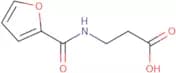
CAS:<p>3-Phenylamino-propionic acid is a hydroxylamine that has been synthesized by reacting anilines with phthalic acid and 2-hydroxyethyl methacrylate. 3-Phenylamino-propionic acid has been shown to be an antifungal agent, but it is not active against bacteria. The reaction time for the synthesis of this compound is constant, with yields of about 70%. This compound can be reused after purification. A hydroxamic group at the R1 position makes this compound reactive towards lipases.</p>Formula:C9H11NO2Purity:Min. 95%Molecular weight:165.19 g/mol3-(Furan-2-carboxamido)propanoic acid
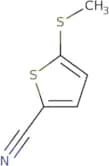
CAS:<p>Versatile small molecule scaffold</p>Formula:C8H9NO4Purity:Min. 95%Molecular weight:183.16 g/mol5-(Methylthio)thiophene-2-carbonitrile
CAS:<p>Versatile small molecule scaffold</p>Formula:C6H5NS2Purity:Min. 95%Molecular weight:155.2 g/mol

![{[(2-Methylprop-2-en-1-yl)oxy]methyl}benzene](/_next/image/?url=https%3A%2Fstatic.cymitquimica.com%2Fproducts%2F3D%2Fthumb-webp%2FFAA65846.webp&w=3840&q=75)
![1H,3H-Furo[3,4-c]pyridin-3-one](/_next/image/?url=https%3A%2Fstatic.cymitquimica.com%2Fproducts%2F3D%2Fthumb-webp%2FFAA65752.webp&w=3840&q=75)
![2,3-Dihydro-1H-pyrrolo[3,4-c]pyridin-1-one](/_next/image/?url=https%3A%2Fstatic.cymitquimica.com%2Fproducts%2F3D%2Fthumb-webp%2FFAA65500.webp&w=3840&q=75)