Building Blocks
This section contains fundamental products for the synthesis of organic and biological compounds. Building blocks are the essential starting materials used to construct complex molecules through various chemical reactions. They play a critical role in drug discovery, material science, and chemical research. At CymitQuimica, we offer a diverse range of high-quality building blocks to support your innovative research and industrial projects, ensuring you have the essential components for successful synthesis.
Subcategories of "Building Blocks"
- Boronic Acids & Boronic Acid Derivatives(5,756 products)
- Chiral Building Blocks(1,242 products)
- Hydrocarbon Building Blocks(6,095 products)
- Organic Building Blocks(61,038 products)
Found 196817 products of "Building Blocks"
Sort by
Purity (%)
0
100
|
0
|
50
|
90
|
95
|
100
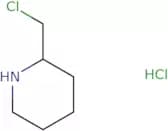
2-Chloromethyl-piperidine hydrochloride
CAS:<p>Versatile small molecule scaffold</p>Formula:C6H13Cl2NPurity:Min. 95%Molecular weight:170.08 g/mol7-Hydroxy-4-methyl-3-phenyl-2H-chromen-2-one
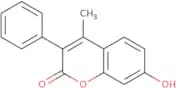
CAS:<p>7-Hydroxy-4-methyl-3-phenyl-2H-chromen-2-one is a disubstituted coumarin nucleus and a potent anti-HIV agent. It has been synthesised as a lead compound to inhibit HIV reverse transcriptase by binding to its active site, which is the enzyme responsible for DNA synthesis. The probe exhibits dose dependent inhibition of HIV replication, with an IC50 of 0.5 μM. This compound also inhibits cysteine proteases, such as cathepsin B, and reverses the effects of certain chemotherapeutic agents on cancer cells. 7-Hydroxy-4-methyl-3-phenyl-2H-chromen-2-one is fluorescent in solution and this property can be used for detection purposes.</p>Formula:C16H12O3Purity:Min. 95%Molecular weight:252.26 g/molN-Methylcaprolactam
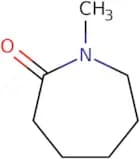
CAS:<p>N-Methylcaprolactam is a white, crystalline compound with a melting point of 28.5°C. It is soluble in water and insoluble in organic solvents. N-Methylcaprolactam has a molecular weight of 152.2 g/mol and its chemical formula is C8H14N2O2. The divalent hydrocarbon has an aromatic hydrocarbon ring with two protonated nitrogen atoms bonded to this ring, which are responsible for the molecule's polarizability. N-Methylcaprolactam has been shown to activate rat liver microsomes, which may be due to its ability to bind to the enzyme adenylate cyclase and inhibit protein synthesis. This drug also causes a decrease in the level of water vapor and chloride ions in the environment and can be found as an environmental pollutant from metal hydroxides or water molecules reacting with aliphatic hydrocarbons such as methane or ethane. Struct</p>Formula:C7H13NOPurity:Min. 95%Molecular weight:127.18 g/mol4-(1H-benzo[d]imidazol-2-yl)-N,N-dimethylaniline
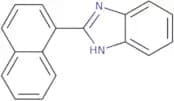
CAS:<p>4-(1H-benzo[d]imidazol-2-yl)-N,N-dimethylaniline is a molecule with the chemical formula C8H6N2. It has an optimised vibrational profile that can be used to identify it. The functional theory of molecular orbitals predicts that 4-(1H-benzo[d]imidazol-2-yl)-N,N-dimethylaniline will have a molecular electrostatic potential (MEP) of -0.13 kcal/mol and a shift of 0.04 cm(-1). The MEP and shift are calculated by using a single crystal x-ray diffraction experiment. This molecule has conformational parameters that can be calculated by using optimised atomic orbital parameters, which will give the conformational probability for each conformation as well as the total energy for each conformation. The conformations are then plotted on a graph in order to find the most probable con</p>Formula:C15H15N3Purity:Min. 95%Molecular weight:237.31 g/mol2-(Naphthalen-1-yl)-1H-1,3-benzodiazole
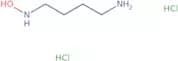
CAS:<p>Versatile small molecule scaffold</p>Formula:C17H12N2Purity:Min. 95%Molecular weight:244.29 g/molN-(4-Aminobutyl)hydroxylamine dihydrochloride
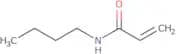
CAS:<p>Versatile small molecule scaffold</p>Formula:C4H14Cl2N2OPurity:Min. 95%Molecular weight:177.07 g/molN-Butylacrylamide
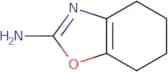
CAS:<p>N-Butylacrylamide is a monomer that is used in the production of polymers. It is a colorless, oily liquid that is soluble in organic solvents but not water. N-Butylacrylamide has been shown to inhibit microbial growth by binding to phosphonates and organic solvents, which are found on the surface of bacteria. These interactions lead to cell death by preventing the uptake of nutrients and causing leakage of cellular contents. The phase transition temperature for N-butyl acrylamide is below room temperature, making it an ideal candidate for use as an anti-infective agent.</p>Formula:C7H13NOPurity:Min. 95%Molecular weight:127.18 g/mol4,5,6,7-Tetrahydro-1,3-benzoxazol-2-amine
CAS:<p>Versatile small molecule scaffold</p>Formula:C7H10N2OPurity:Min. 95%Molecular weight:138.17 g/mol2-[(2-Methoxyphenyl)amino]ethan-1-ol
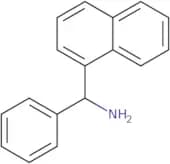
CAS:<p>Versatile small molecule scaffold</p>Formula:C9H13NO2Purity:Min. 95%Molecular weight:167.2 g/molα-(1-Naphthyl)benzylamine
CAS:<p>Versatile small molecule scaffold</p>Formula:C17H15NPurity:Min. 95%Molecular weight:233.31 g/mol[(2-Aminoethyl)sulfanyl]sulfonic acid
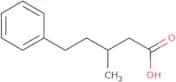
CAS:<p>[(2-Aminoethyl)sulfanyl]sulfonic acid is an inorganic compound and a corrosion inhibitor. It is the ammonium salt of sulfonic acid, with a pK of 3.75. The molecule has two nitrogen atoms and one sulfur atom, which are unreactive with other compounds and do not form bonds. It is soluble in water, alcohols, ethers, chloroform, and carbon tetrachloride. [(2-Aminoethyl)sulfanyl]sulfonic acid can be used as a corrosion inhibitor for metals such as iron or copper because it does not corrode the metal like some other substances containing sulfur or nitrogen would. This compound also has an acidic nature because it can act as a proton donor to cleave bonds that are second-order rate constants. [(2-Aminoethyl)sulfanyl]sulfonic acid also reacts with aziridine in simulated gas phase reactions to form sulf</p>Formula:C2H7NO3S2Purity:Min. 95%Molecular weight:157.22 g/mol3-Methyl-5-phenylpentanoic acid
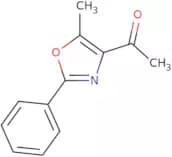
CAS:<p>Versatile small molecule scaffold</p>Formula:C12H16O2Purity:Min. 95%Molecular weight:192.25 g/mol1-(5-Methyl-2-phenyl-1,3-oxazol-4-yl)ethan-1-one
CAS:<p>Versatile small molecule scaffold</p>Formula:C12H11NO2Purity:Min. 95%Molecular weight:201.22 g/mol2-(4-Chlorophenyl)-5-methyl-1,3-oxazole-4-carboxylic acid
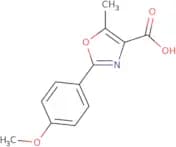
CAS:<p>Versatile small molecule scaffold</p>Formula:C11H8ClNO3Purity:Min. 95%Molecular weight:237.64 g/mol2-(4-Methoxyphenyl)-5-methyl-1,3-oxazole-4-carboxylic acid
CAS:<p>Versatile small molecule scaffold</p>Formula:C12H11NO4Purity:Min. 95%Molecular weight:233.22 g/mol1-(1-Bromopropyl)-4-chlorobenzene
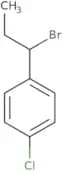
CAS:<p>Versatile small molecule scaffold</p>Formula:C9H10BrClPurity:Min. 95%Molecular weight:233.53 g/mol3-(2-Chloroethyl)-3,4-dihydroquinazolin-4-one
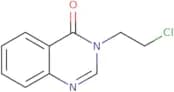
CAS:<p>Versatile small molecule scaffold</p>Formula:C10H9ClN2OPurity:Min. 95%Molecular weight:208.64 g/mol2-Methyl-5-nitrobenzo[d]thiazole
CAS:<p>Versatile small molecule scaffold</p>Formula:C8H6N2O2SPurity:Min. 95%Molecular weight:194.21 g/mol5-Methoxy-1,3-benzothiazole
CAS:<p>5-Methoxy-1,3-benzothiazole is a cyclic heterocycle that has an optical yield of 2.5%. It is soluble in nonpolar solvents and has a reactive nature. The compound can be used to create benzothiazoles, styryl dyes, and other heterocycles. 5-Methoxy-1,3-benzothiazole is also used as a reagent to make quinazolinones and nonionic surfactants. The compound's optical properties are affected by the methylene group, which can be substituted with other groups to alter the properties of the molecule.</p>Formula:C8H7NOSPurity:Min. 95%Molecular weight:165.21 g/mol6-Methyl-1,3-benzothiazole
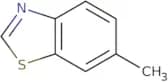
CAS:<p>6-Methyl-1,3-benzothiazole is a chemical compound that belongs to the class of sulfur. It has been patented for use in the treatment of hepatitis C. 6-Methyl-1,3-benzothiazole is a substituent that can be found in pharmaceutical chemicals. The chemical formula for this compound is C6H4S.</p>Formula:C8H7NSPurity:Min. 95%Molecular weight:149.21 g/mol

![4-(1H-benzo[d]imidazol-2-yl)-N,N-dimethylaniline](/_next/image/?url=https%3A%2Fstatic.cymitquimica.com%2Fproducts%2F3D%2Fthumb-webp%2FCAA56271.webp&w=3840&q=75)
![2-[(2-Methoxyphenyl)amino]ethan-1-ol](/_next/image/?url=https%3A%2Fstatic.cymitquimica.com%2Fproducts%2F3D%2Fthumb-webp%2FCAA93375.webp&w=3840&q=75)
![[(2-Aminoethyl)sulfanyl]sulfonic acid](/_next/image/?url=https%3A%2Fstatic.cymitquimica.com%2Fproducts%2F3D%2Fthumb-webp%2FCAA93753.webp&w=3840&q=75)
![2-Methyl-5-nitrobenzo[d]thiazole](/_next/image/?url=https%3A%2Fstatic.cymitquimica.com%2Fproducts%2F3D%2Fthumb-webp%2FCAA94166.webp&w=3840&q=75)