Building Blocks
This section contains fundamental products for the synthesis of organic and biological compounds. Building blocks are the essential starting materials used to construct complex molecules through various chemical reactions. They play a critical role in drug discovery, material science, and chemical research. At CymitQuimica, we offer a diverse range of high-quality building blocks to support your innovative research and industrial projects, ensuring you have the essential components for successful synthesis.
Subcategories of "Building Blocks"
- Boronic Acids & Boronic Acid Derivatives(5,756 products)
- Chiral Building Blocks(1,242 products)
- Hydrocarbon Building Blocks(6,095 products)
- Organic Building Blocks(61,038 products)
Found 196817 products of "Building Blocks"
Sort by
Purity (%)
0
100
|
0
|
50
|
90
|
95
|
100
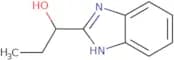
1-(1H-1,3-Benzodiazol-2-yl)propan-1-ol
CAS:<p>Versatile small molecule scaffold</p>Formula:C10H12N2OPurity:Min. 95%Molecular weight:176.21 g/mol5-{[(4-Chlorophenyl)methyl]sulfanyl}-1,3,4-thiadiazole-2-thiol
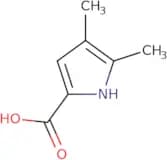
CAS:<p>Versatile small molecule scaffold</p>Formula:C9H7ClN2S3Purity:Min. 95%Molecular weight:274.8 g/mol4,5-Dimethylpyrrole-2-carboxylic Acid
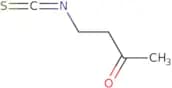
CAS:<p>4,5-Dimethylpyrrole-2-carboxylic Acid is a naturally occurring compound that is found in the marine algae species Ostreococcus tauri. This compound has been shown to have antioxidant properties and to induce apoptosis in cancer cells. 4,5-Dimethylpyrrole-2-carboxylic Acid inhibits the growth of other bacteria by binding to their ribosomes, which prevents protein synthesis and cell division. It also has been shown to be effective against human tumor cells in vitro. 4,5-Dimethylpyrrole-2-carboxylic Acid is a natural antioxidant that can be used as an alternative to synthetic antioxidants such as chlorobenzene.</p>Formula:C7H9NO2Purity:Min. 95%Molecular weight:139.15 g/mol4-Isothiocyanatobutan-2-one
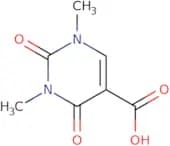
CAS:<p>4-Isothiocyanatobutan-2-one is an antibacterial agent that has been shown to inhibit the growth of bacteria. This compound interacts with bacterial DNA, causing a change in the DNA structure and inhibiting protein synthesis. 4-Isothiocyanatobutan-2-one also inhibits the production of heterocyclic amines and phenothiazine, which are chemicals that are known to cause cancer in laboratory mice. The safety profile of this drug is good, with no ulceration or β-unsaturated ketones found in animal studies.</p>Formula:C5H7NOSPurity:Min. 95%Molecular weight:129.18 g/mol1,3-Dimethyl-2,4-dioxo-1,2,3,4-tetrahydropyrimidine-5-carboxylic acid
CAS:<p>Versatile small molecule scaffold</p>Formula:C7H8N2O4Purity:Min. 95%Molecular weight:184.15 g/mol2-[(2-Nitrophenyl)thio]acetic Acid Hydrazide
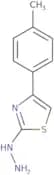
CAS:<p>Versatile small molecule scaffold</p>Formula:C8H9N3O3SPurity:Min. 95%Molecular weight:227.24 g/mol(4-p-Tolyl-thiazol-2-yl)-hydrazine
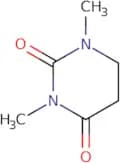
CAS:<p>Versatile small molecule scaffold</p>Formula:C10H11N3SPurity:Min. 95%Molecular weight:205.28 g/mol1,3-Dimethyl-1,3-diazinane-2,4-dione
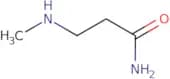
CAS:<p>1,3-Dimethyl-1,3-diazinane-2,4-dione (CDD) is an analog of ribulose that has been shown to inhibit the synthesis of both human immunodeficiency virus (HIV) and hepatitis B virus. CDD inhibits the activity of viral reverse transcriptase and protease enzymes. CDD was found to be a potent inhibitor in vitro for HIV and hepatitis B virus. CDD also has pharmacokinetic properties that make it a good candidate for drug development.</p>Formula:C6H10N2O2Purity:Min. 95%Molecular weight:142.16 g/mol3-(Methylamino)propanamide
CAS:<p>Versatile small molecule scaffold</p>Formula:C4H10N2OPurity:Min. 95%Molecular weight:138.6 g/mol4-(4-Chlorophenyl)-4,5,6,7-tetrahydro-3H-imidazo[4,5-c]pyridine
CAS:<p>Versatile small molecule scaffold</p>Formula:C12H12ClN3Purity:Min. 95%Molecular weight:233.7 g/mol4-(4-Methylphenyl)-4,5,6,7-tetrahydro-3H-imidazo[4,5-c]pyridine
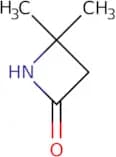
CAS:<p>Versatile small molecule scaffold</p>Formula:C13H15N3Purity:Min. 95%Molecular weight:213.28 g/mol4,4-Dimethylazetidin-2-one
CAS:<p>Versatile small molecule scaffold</p>Formula:C5H9NOPurity:Min. 95%Molecular weight:99.13 g/mol2-Nitrocyclohexanone
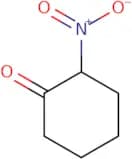
CAS:<p>2-Nitrocyclohexanone (2NCH) is a clinical drug that is used in the synthesis of pharmaceuticals. It can be synthesized by dinitrogen tetroxide, hydrochloric acid and magnesium oxide. 2NCH reacts with amines to form lactams. The reaction is catalyzed by organocatalysts such as copper chromite or 5-ht2c. The kinetic of this reaction has been studied extensively and it has been found that the addition of inorganic acids, such as HCl or HNO3, may increase the rate of the reaction.<br>The molecular formula for 2NCH is C8H8O3N2 and its structural formula is shown below:</p>Formula:C6H9NO3Purity:Min. 95%Molecular weight:143.14 g/mol2-Cyclopentylcyclopentanone
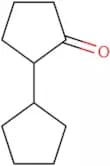
CAS:<p>2-Cyclopentylcyclopentanone (2-CPC) is a cyclopentenone that is produced by the oxidation of 2-cyclohexenylcyclopentanone. 2-CPC has been shown to be genotoxic and can cause damage to DNA, proteins, or cell membranes. This chemical is used in the manufacture of insecticides and herbicides. It also has used as a solvent for polymers, plastics, and coatings. 2-CPC has been found to be toxic at high doses and should not be handled without proper protection.</p>Formula:C10H16OPurity:Min. 95%Molecular weight:152.24 g/molBis(methylsulfanyl)-1,2-thiazole-4-carboxylic acid
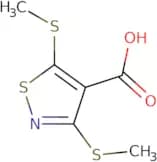
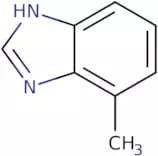
CAS:<p>Versatile small molecule scaffold</p>Formula:C6H7NO2S3Purity:Min. 95%Molecular weight:221.3 g/mol4-Methylbenzimidazole
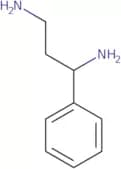
CAS:<p>4-Methylbenzimidazole is a non-polar molecule that is found in nature and is related to the flavonoid rutin. 4-Methylbenzimidazole has been shown to inhibit DNA replication and synthesis, as well as protein synthesis. It binds to the polymerase, which prevents it from forming the complementary strand of DNA. This inhibition leads to thermal denaturation of DNA, which prevents the polymerase from binding with the dna template. The low affinity of 4-methylbenzimidazole for dna makes it a potential candidate for anti-HIV drugs.</p>Formula:C8H8N2Purity:Min. 95%Molecular weight:132.17 g/mol1-Phenylpropane-1,3-diamine
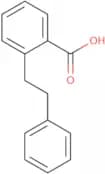
CAS:<p>Versatile small molecule scaffold</p>Formula:C9H14N2Purity:Min. 95%Molecular weight:150.22 g/mol2-Bibenzylcarboxylic acid
CAS:<p>2-Bibenzylcarboxylic acid is a synthetic retinoid that has been shown to have potent antagonistic effects against the activity of various pro-inflammatory enzymes. It blocks the integrin receptor, which prevents leukocyte adhesion and migration. 2-Bibenzylcarboxylic acid also inhibits protease activity by binding to the active site of the enzyme and preventing substrate binding, as well as dextran sulfate-induced inflammation. 2-Bibenzylcarboxylic acid has been shown to be effective in reducing disease activity in animal models of inflammatory diseases such as rheumatoid arthritis.</p>Formula:C15H14O2Purity:Min. 95%Molecular weight:226.27 g/molDispiro[3.1.3.1]decane-5,10-dione
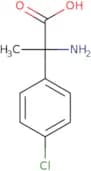
CAS:<p>Dispiro[3.1.3.1]decane-5,10-dione is a compound that has not yet been synthesized and its chemical structure is unknown. This product is not available in any catalogues or databases.</p>Formula:C10H12O2Purity:Min. 95%Molecular weight:164.2 g/mol2-Amino-2-(4-chlorophenyl)propanoic acid
CAS:<p>Versatile small molecule scaffold</p>Formula:C9H10ClNO2Purity:Min. 95%Molecular weight:199.63 g/mol

![5-{[(4-Chlorophenyl)methyl]sulfanyl}-1,3,4-thiadiazole-2-thiol](/_next/image/?url=https%3A%2Fstatic.cymitquimica.com%2Fproducts%2F3D%2Fthumb-webp%2FEAA85838.webp&w=3840&q=75)
![2-[(2-Nitrophenyl)thio]acetic Acid Hydrazide](/_next/image/?url=https%3A%2Fstatic.cymitquimica.com%2Fproducts%2F3D%2Fthumb-webp%2FEAA87140.webp&w=3840&q=75)
![4-(4-Chlorophenyl)-4,5,6,7-tetrahydro-3H-imidazo[4,5-c]pyridine](/_next/image/?url=https%3A%2Fstatic.cymitquimica.com%2Fproducts%2F3D%2Fthumb-webp%2FEAA87541.webp&w=3840&q=75)
![4-(4-Methylphenyl)-4,5,6,7-tetrahydro-3H-imidazo[4,5-c]pyridine](/_next/image/?url=https%3A%2Fstatic.cymitquimica.com%2Fproducts%2F3D%2Fthumb-webp%2FEAA87543.webp&w=3840&q=75)
![Dispiro[3.1.3.1]decane-5,10-dione](/_next/image/?url=https%3A%2Fstatic.cymitquimica.com%2Fproducts%2F3D%2Fthumb-webp%2FEAA89300.webp&w=3840&q=75)