Building Blocks
This section contains fundamental products for the synthesis of organic and biological compounds. Building blocks are the essential starting materials used to construct complex molecules through various chemical reactions. They play a critical role in drug discovery, material science, and chemical research. At CymitQuimica, we offer a diverse range of high-quality building blocks to support your innovative research and industrial projects, ensuring you have the essential components for successful synthesis.
Subcategories of "Building Blocks"
- Boronic Acids & Boronic Acid Derivatives(5,756 products)
- Chiral Building Blocks(1,242 products)
- Hydrocarbon Building Blocks(6,095 products)
- Organic Building Blocks(61,055 products)
Found 199650 products of "Building Blocks"
Sort by
Purity (%)
0
100
|
0
|
50
|
90
|
95
|
100
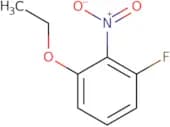
1-Ethoxy-3-fluoro-2-nitrobenzene
CAS:<p>Versatile small molecule scaffold</p>Formula:C8H8NO3FPurity:Min. 95%Molecular weight:185.15 g/mol(2R)-1-(2,3-Dihydro-1,4-benzodioxin-6-yl)propan-2-amine hydrochloride
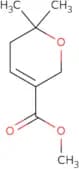
CAS:Controlled ProductVersatile small molecule scaffoldFormula:C11H16ClNO2Purity:Min. 95%Molecular weight:229.7 g/molMethyl 6,6-dimethyl-5,6-dihydro-2H-pyran-3-carboxylate
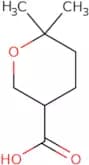
CAS:<p>Versatile small molecule scaffold</p>Formula:C9H14O3Purity:Min. 95%Molecular weight:170.2 g/mol6,6-Dimethyloxane-3-carboxylic acid
CAS:<p>Versatile small molecule scaffold</p>Formula:C8H14O3Purity:Min. 95%Molecular weight:158.19 g/mol3-Bromo-5-methyl-1H-pyrazolo[3,4-b]pyridine
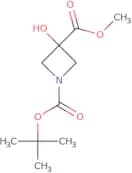
CAS:<p>Versatile small molecule scaffold</p>Formula:C7H6BrN3Purity:Min. 95%Molecular weight:212.05 g/molMethyl 1-boc-3-hydroxyazetidine-3-carboxylate
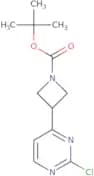
CAS:<p>Versatile small molecule scaffold</p>Formula:C10H17NO5Purity:Min. 95%Molecular weight:231.25 g/moltert-Butyl 3-(2-chloropyrimidin-4-yl)azetidine-1-carboxylate
CAS:<p>Versatile small molecule scaffold</p>Formula:C12H16ClN3O2Purity:Min. 95%Molecular weight:269.73 g/molMethyl 3-Hydroxyazetidine-3-carboxylate Hydrochloride
CAS:<p>Versatile small molecule scaffold</p>Formula:C5H10ClNO3Purity:Min. 95%Molecular weight:167.59 g/mol3-(1-Methylcyclopropyl)-1H-pyrazol-5-amine
CAS:<p>Versatile small molecule scaffold</p>Formula:C7H11N3Purity:Min. 95%Molecular weight:137.18 g/molNI 42
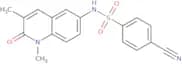
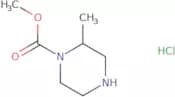
CAS:<p>NI 42 is a strain of bacteria that was first isolated from carbon nanotubes. It has been shown to be resistant to organic solvents and oxidation. This strain is also able to transport molecules through its nanotube-like structures. The transport properties of NI 42 are dependent on the nanotube length, diameter, and shape of the tube. These properties can be changed by changing the chemical composition of the tube surface. In addition, NI 42 has been shown to have high thermal expansion coefficient, which may make it suitable for use in industrial chemicals applications such as insulation and coatings.</p>Formula:C18H15N3O3SPurity:Min. 95%Molecular weight:353.39 g/molMethyl (2S)-2-methylpiperazine-1-carboxylate hydrochloride
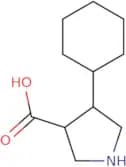
CAS:<p>Versatile small molecule scaffold</p>Formula:C7H15ClN2O2Purity:Min. 95%Molecular weight:194.66 g/molrac-(3R,4R)-4-Cyclohexylpyrrolidine-3-carboxylic acid
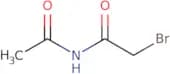
CAS:<p>Versatile small molecule scaffold</p>Formula:C11H19NO2Purity:Min. 95%Molecular weight:197.3 g/molN-(2-Bromoacetyl)acetamide
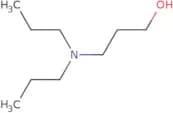
CAS:<p>Versatile small molecule scaffold</p>Formula:C4H6BrNO2Purity:Min. 95%Molecular weight:180 g/mol3-(Dipropylamino)propan-1-ol
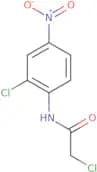
CAS:<p>Versatile small molecule scaffold</p>Formula:C9H21NOPurity:Min. 95%Molecular weight:159.27 g/mol2-Chloro-N-(2-chloro-4-nitrophenyl)acetamide
CAS:Versatile small molecule scaffoldFormula:C8H6Cl2N2O3Purity:Min. 95%Molecular weight:249.05 g/mol4-Methyl-5-(methylsulfanyl)-1,3-thiazol-2-amine
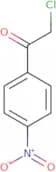
CAS:<p>Versatile small molecule scaffold</p>Formula:C5H8N2S2Purity:Min. 95%Molecular weight:160.3 g/mol2-Chloro-1-(4-nitrophenyl)ethan-1-one
CAS:<p>2-Chloro-1-(4-nitrophenyl)ethan-1-one is a precursor to the phosphonate herbicide, 2,2-dichloroethyl dimethyl phosphate. This compound reacts with halogenated compounds to produce various reaction products. It has been detected in rainwater samples as an intermediate in the production of hydrogen chloride and chloride gas.</p>Formula:C8H6ClNO3Purity:Min. 95%Molecular weight:199.59 g/mol3-(Ethylsulfonyl)prop-1-ene
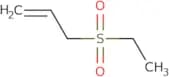
CAS:<p>3-(Ethylsulfonyl)prop-1-ene is a fluorinated organic compound that is used for the synthesis of phosphazenes. It has been found to be an excellent source of fluorine, which is often hard to isolate due to its reactivity. The molecule has two functional groups: one allyl group and one radical chain, which can be used in different ways. 3-(Ethylsulfonyl)prop-1-ene has a particle diameter of 200 nm and an average particle size of 145 nm, with a lamellar structure. It is soluble in organic solvents and reacts with lithium metal to form lithium ion complexes.</p>Formula:C5H10O2SPurity:Min. 95%Molecular weight:134.2 g/mol1-(5-tert-Butyl-1,3,4-thiadiazol-2-yl)-1-ethyl-3-methylurea
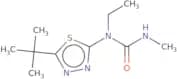
CAS:<p>Versatile small molecule scaffold</p>Formula:C10H18N4OSPurity:Min. 95%Molecular weight:242.3 g/mol1-BCP
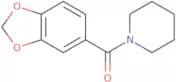
CAS:<p>1-BCP is an inorganic compound of formula BF4. It has been shown to have potentiation effects on glutamate induced excitotoxicity in hippocampal neurons and also enhances the activity of aniracetam, a nootropic drug. 1-BCP is effective at nanomolar concentrations and may be a potential treatment for neuronal disorders.</p>Formula:C13H15NO3Purity:Min. 95%Molecular weight:233.26 g/mol

![3-Bromo-5-methyl-1H-pyrazolo[3,4-b]pyridine](/_next/image/?url=https%3A%2Fstatic.cymitquimica.com%2Fproducts%2F3D%2Fthumb-webp%2FJAD27572.webp&w=3840&q=75)