Building Blocks
This section contains fundamental products for the synthesis of organic and biological compounds. Building blocks are the essential starting materials used to construct complex molecules through various chemical reactions. They play a critical role in drug discovery, material science, and chemical research. At CymitQuimica, we offer a diverse range of high-quality building blocks to support your innovative research and industrial projects, ensuring you have the essential components for successful synthesis.
Subcategories of "Building Blocks"
- Boronic Acids & Boronic Acid Derivatives(5,756 products)
- Chiral Building Blocks(1,242 products)
- Hydrocarbon Building Blocks(6,095 products)
- Organic Building Blocks(61,038 products)
Found 196817 products of "Building Blocks"
Sort by
Purity (%)
0
100
|
0
|
50
|
90
|
95
|
100
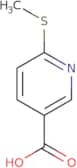
6-Methylsulfanylpyridine-3-carboxylic acid
CAS:<p>Versatile small molecule scaffold</p>Formula:C7H7NO2SPurity:Min. 95%Molecular weight:169.2 g/mol6-(Methylsulfanyl)pyridine-2-carboxylic acid
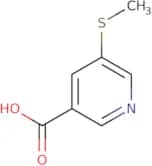
CAS:<p>Versatile small molecule scaffold</p>Formula:C7H7NO2SPurity:Min. 95%Molecular weight:169.2 g/mol5-(Methylsulfanyl)pyridine-3-carboxylic acid
CAS:<p>Versatile small molecule scaffold</p>Formula:C7H7NO2SPurity:Min. 95%Molecular weight:169.2 g/molMethyl 2-sulfanylidene-1,2-dihydropyridine-3-carboxylate
CAS:<p>Methyl 2-sulfanylidene-1,2-dihydropyridine-3-carboxylate is an alkene that can be hydrogenated to form a thiol. This compound also has the ability to catalyze many reactions. Methyl 2-sulfanylidene-1,2-dihydropyridine-3-carboxylate is used in some research studies because of its ability to catalyze reactions and act as a catalyst in itself. It has been shown to react with thiones and sulfoxides to form new compounds, such as α,β unsaturated aldehydes and methyl esters. The molecular structure of this compound consists of four pyridine rings connected by two carbon bridges. Thallium is used in the synthesis of methyl 2-sulfanylidene 1,2 dihydropyridine 3 carboxylate but it is not present in the final product.</p>Formula:C7H7NO2SPurity:Min. 95%Molecular weight:169.2 g/molBenzyl azepane-1-carboxylate
CAS:<p>Versatile small molecule scaffold</p>Formula:C14H19NO2Purity:Min. 95%Molecular weight:233.3 g/mol1-(2-Methoxyethyl)-1H-pyrazole-4-carboxylic Acid
CAS:<p>Versatile small molecule scaffold</p>Formula:C7H10N2O3Purity:Min. 95%Molecular weight:170.17 g/molMethyl 1-benzyl-3-(trifluoromethyl)pyrrolidine-3-carboxylate
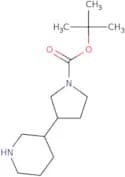
CAS:<p>Versatile small molecule scaffold</p>Formula:C14H16F3NO2Purity:Min. 95%Molecular weight:287.28 g/moltert-Butyl 3-(piperidin-3-yl)pyrrolidine-1-carboxylate
CAS:<p>Versatile small molecule scaffold</p>Formula:C14H26N2O2Purity:Min. 95%Molecular weight:254.37 g/molPyridine-2-sulfinate lithium
CAS:<p>Versatile small molecule scaffold</p>Formula:C5H4LiNO2SPurity:Min. 95%Molecular weight:149.1 g/mol6,6-Difluoro-6,7,8,9-tetrahydro-5H-benzo[7]annulen-5-one
CAS:<p>Versatile small molecule scaffold</p>Formula:C11H10F2OPurity:Min. 95%Molecular weight:196.19 g/mol2-(4-Bromo-2-chlorophenyl)ethan-1-amine
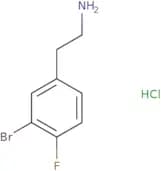
CAS:Controlled Product<p>Versatile small molecule scaffold</p>Formula:C8H9BrClNPurity:Min. 95%Molecular weight:234.52 g/mol2-(3-Bromo-4-fluorophenyl)ethan-1-amine hydrochloride
CAS:Controlled Product<p>Versatile small molecule scaffold</p>Formula:C8H10BrClFNPurity:Min. 95%Molecular weight:254.53 g/mol2-(2-Chloro-3-fluorophenyl)acetonitrile
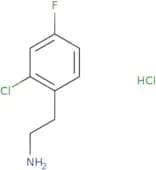
CAS:<p>Versatile small molecule scaffold</p>Formula:C8H5ClFNPurity:Min. 95%Molecular weight:169.58 g/mol2-(2-Chloro-4-fluorophenyl)ethan-1-amine hydrochloride
CAS:Controlled Product<p>Versatile small molecule scaffold</p>Formula:C8H10Cl2FNPurity:Min. 95%Molecular weight:210.07 g/mol(S)-1-Methylpyrrolidin-3-amine dihydrochloride
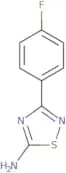
CAS:<p>Versatile small molecule scaffold</p>Formula:C5H12N2·2HClPurity:Min. 95%Molecular weight:173.09 g/mol3-(4-Fluorophenyl)-1,2,4-thiadiazol-5-amine
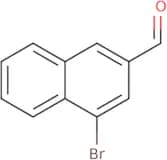
CAS:<p>Versatile small molecule scaffold</p>Formula:C8H6FN3SPurity:Min. 95%Molecular weight:195.22 g/mol4-bromonaphthalene-2-carbaldehyde
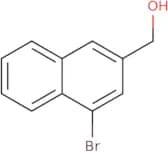
CAS:<p>Versatile small molecule scaffold</p>Formula:C11H7BrOPurity:Min. 95%Molecular weight:235.1 g/mol(4-Bromonaphthalen-2-yl)methanol
CAS:<p>(4-Bromonaphthalen-2-yl)methanol is a versatile compound that exhibits various characteristics and applications. It is commonly used in the synthesis of picolinic acids, which are important intermediates in pharmaceutical and agrochemical industries. Additionally, this compound has been studied for its cytotoxic properties, making it a potential candidate for anticancer drugs. It also possesses antinociceptive properties, indicating its potential use as an analgesic agent.</p>Formula:C11H9BrOPurity:Min. 95%Molecular weight:237.09 g/molMethyl 6-azaspiro[2.5]octane-1-carboxylate hydrochloride
CAS:<p>Versatile small molecule scaffold</p>Formula:C9H16ClNO2Purity:Min. 95%Molecular weight:205.68 g/molEthyl 4-ethyl-4-piperidinecarboxylate hydrochloride
CAS:Controlled Product<p>Versatile small molecule scaffold</p>Formula:C10H19NO2·HClPurity:Min. 95%Molecular weight:221.73 g/mol




![6,6-Difluoro-6,7,8,9-tetrahydro-5H-benzo[7]annulen-5-one](/_next/image/?url=https%3A%2Fstatic.cymitquimica.com%2Fproducts%2F3D%2Fthumb-webp%2FZJB27988.webp&w=3840&q=75)
![Methyl 6-azaspiro[2.5]octane-1-carboxylate hydrochloride](/_next/image/?url=https%3A%2Fstatic.cymitquimica.com%2Fproducts%2F3D%2Fthumb-webp%2FZJB36530.webp&w=3840&q=75)