Building Blocks
This section contains fundamental products for the synthesis of organic and biological compounds. Building blocks are the essential starting materials used to construct complex molecules through various chemical reactions. They play a critical role in drug discovery, material science, and chemical research. At CymitQuimica, we offer a diverse range of high-quality building blocks to support your innovative research and industrial projects, ensuring you have the essential components for successful synthesis.
Subcategories of "Building Blocks"
- Boronic Acids & Boronic Acid Derivatives(5,781 products)
- Chiral Building Blocks(1,242 products)
- Hydrocarbon Building Blocks(6,101 products)
- Organic Building Blocks(61,033 products)
Found 205320 products of "Building Blocks"
Sort by
Purity (%)
0
100
|
0
|
50
|
90
|
95
|
100
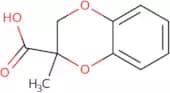
2-Methyl-2,3-dihydro-1,4-benzodioxine-2-carboxylic acid
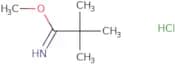
CAS:Versatile small molecule scaffoldFormula:C10H10O4Purity:Min. 95%Molecular weight:194.18 g/molMethyl 2,2-dimethylpropanecarboximidate hydrochloride
CAS:Methyl 2,2-dimethylpropanecarboximidate hydrochloride is a synthetic chemical that has been used as a reagent in organic synthesis. It was first developed in the early 1940s and was found to have hypotensive properties. The drug is a competitive inhibitor of fibroblast growth factor receptor (FGFR) tyrosine kinase. Methyl 2,2-dimethylpropanecarboximidate hydrochloride is structurally related to benzimidazole derivatives and thiones. It has an aromatic heterocyclic structure with two nonpolar groups at opposite ends of the molecule.Formula:C6H14ClNOPurity:Min. 95%Molecular weight:151.63 g/mol4-tert-Butylbenzenecarboximidamide Hydrochloride
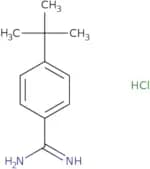
CAS:Versatile small molecule scaffoldFormula:C11H16N2·HClPurity:Min. 95%Molecular weight:212.71 g/molCyclopentanecarboximidamide hydrochloride
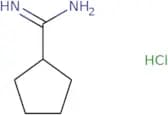
CAS:Cyclopentanecarboximidamide hydrochloride is a prodrug that is metabolized to its active form, pyridoxamine. The active form inhibits the enzyme histone deacetylase, which plays a role in viral infections. Cyclopentanecarboximidamide hydrochloride has been shown to be effective against chronic liver disease and other diseases of the central nervous system. The drug also has anti-inflammatory properties and may have antiviral effects. It also inhibits the production of inflammatory mediators such as nitric oxide and prostaglandin E2 by inhibiting cyclooxygenase activity.Formula:C6H13ClN2Purity:Min. 95%Molecular weight:148.63 g/mol(1S)-1-(2-Chlorophenyl)ethan-1-amine
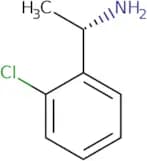
CAS:Versatile small molecule scaffoldFormula:C8H10ClNPurity:Min. 95%Molecular weight:155.62 g/molHexahydro-1H-pyrrolizine-7a-carbonitrile
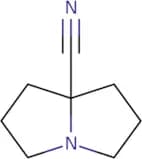
CAS:Hexahydro-1H-pyrrolizine-7a-carbonitrile is an experimental drug that belongs to the class of medicines. It has a six-membered ring and is stable, with a molecular weight of 204. Hexahydro-1H-pyrrolizine-7a-carbonitrile has been shown to have antihistamine or anticholinergic properties, which may be due to its ability to inhibit the release of histamine from mast cells or block acetylcholine receptors in nerve endings. The mechanism for this action is unknown, but it may be related to the equilibrium between two diastereomers: one with an electron withdrawing group on nitrogen and another with electron donating groups on nitrogen. This equilibrium can be controlled by changes in temperature or pH levels.Formula:C8H12N2Purity:Min. 95%Molecular weight:136.19 g/mol4-N,4-N,6-Trimethylpyrimidine-2,4-diamine
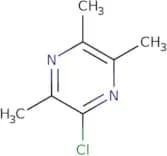
CAS:4-N,4-N,6-Trimethylpyrimidine-2,4-diamine is a solvate of 4-N,4-N,6-trimethylpyrimidine and dimethyl sulfoxide. It has been characterized by X-ray diffraction analysis and the cocrystal structure with dimethyl sulfoxide. The crystal belongs to space group P2 1 2 1 2 1 2 1 . The chains are linked by hydrogen bonds. There are two hydroxy groups on the solvate molecule, as well as two cyano groups.Formula:C7H12N4Purity:Min. 95%Molecular weight:152.2 g/mol2-Chloro-3,5,6-trimethylpyrazine
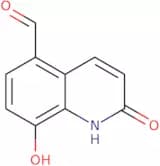
CAS:Versatile small molecule scaffoldFormula:C7H9ClN2Purity:Min. 95%Molecular weight:156.61 g/mol8-Hydroxy-2-oxo-1,2-dihydroquinoline-5-carbaldehyde
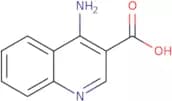
CAS:8-Hydroxy-2-oxo-1,2-dihydroquinoline-5-carbaldehyde is a cyclic compound that has been identified as a metabolite of quinolones such as ciprofloxacin. It is also found in human urine and faeces. The structure of 8-hydroxy-2-oxo-1,2-dihydroquinoline 5'-carbaldehyde can be determined by spectrometric methods. This compound is the product of metabolism of ciprofloxacin and other quinolones. Ciprofloxacin is a fluoroquinolone antibiotic that inhibits bacterial DNA gyrase, leading to inhibition of RNA synthesis and protein synthesis. Quinolones are also metabolized to 8-hydroxy 2 -oxo 1,2 -dihydroquinoline 5'-carbaldehyde by glucuronic acid conjugation and hydrolysis. TheFormula:C10H7NO3Purity:Min. 95%Molecular weight:189.17 g/mol4-Aminoquinoline-3-carboxylic acid
CAS:4-Aminoquinoline-3-carboxylic acid is a linker that can be used to modify the structure of other molecules. It is used in the synthesis of dopamine conjugates, which are used as inhibitors for neurodegenerative diseases. 4-Aminoquinoline-3-carboxylic acid has been shown to inhibit dopamine uptake at nanomolar concentrations. These compounds have also been shown to inhibit the growth factor activity of nerve growth factor and brain derived neurotrophic factor.
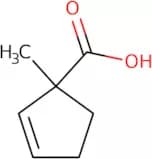
Formula:C10H8N2O2Purity:Min. 95%Molecular weight:188.19 g/mol1-Methylcyclopent-2-ene-1-carboxylic acid
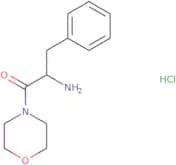
CAS:1-Methylcyclopent-2-ene-1-carboxylic acid is a biodegradable, neutral compound that inhibits the activity of enzymes. It is used as a preservative in cosmetics and pharmaceuticals. This product is also used to prevent the formation of hippuric acid, which can be synthesized by the enzyme methyl esterification. 1-Methylcyclopent-2-ene-1-carboxylic acid is often used in conjunction with other organic acids such as citric or lactic acid to make them more effective.Formula:C7H10O2Purity:Min. 95%Molecular weight:126.15 g/mol2-Amino-1-(4-morpholinyl)-3-phenyl-1-propanone hydrochloride
CAS:Versatile small molecule scaffoldFormula:C13H19ClN2O2Purity:Min. 95%Molecular weight:270.76 g/mol5-[(4-Nitrophenyl)methyl]imidazolidine-2,4-dione
CAS:Versatile small molecule scaffoldFormula:C10H9N3O4Purity:Min. 95%Molecular weight:235.2 g/mol5-Bromo-2-ethoxyaniline
CAS:Versatile small molecule scaffold
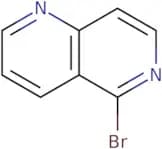
Formula:C8H10BrNOPurity:Min. 95%Molecular weight:216.07 g/mol5-Bromo-1,6-naphthyridine
CAS:Versatile small molecule scaffoldFormula:C8H5BrN2Purity:Min. 95%Molecular weight:209.04 g/mol(6,7-Dimethoxy-1,2,3,4-tetrahydro-isoquinolin-1-yl)-acetic acid
CAS:Versatile small molecule scaffoldFormula:C13H17NO4Purity:Min. 95%Molecular weight:251.28 g/mol2-{6-Methylimidazo[2,1-b][1,3]thiazol-3-yl}acetic acid
CAS:Versatile small molecule scaffoldFormula:C8H8N2O2SPurity:Min. 95%Molecular weight:196.23 g/mol2-{6-Phenylimidazo[2,1-b][1,3]thiazol-3-yl}acetic acid
CAS:Versatile small molecule scaffold
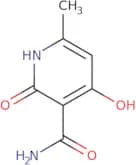
Formula:C13H10N2O2SPurity:Min. 95%Molecular weight:258.3 g/mol4-Hydroxy-6-methyl-2-oxo-1,2-dihydropyridine-3-carboxamide
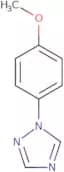
CAS:Versatile small molecule scaffoldFormula:C7H8N2O3Purity:Min. 95%Molecular weight:168.15 g/mol1-(4-Methoxyphenyl)-1H-1,2,4-triazole
CAS:Versatile small molecule scaffold
Formula:C9H9N3OPurity:Min. 95%Molecular weight:175.19 g/mol


![5-[(4-Nitrophenyl)methyl]imidazolidine-2,4-dione](/_next/image/?url=https%3A%2Fstatic.cymitquimica.com%2Fproducts%2F3D%2Fthumb-webp%2FTCA31944.webp&w=3840&q=75)


![2-{6-Methylimidazo[2,1-b][1,3]thiazol-3-yl}acetic acid](/_next/image/?url=https%3A%2Fstatic.cymitquimica.com%2Fproducts%2F3D%2Fthumb-webp%2FTCA34790.webp&w=3840&q=75)
![2-{6-Phenylimidazo[2,1-b][1,3]thiazol-3-yl}acetic acid](/_next/image/?url=https%3A%2Fstatic.cymitquimica.com%2Fproducts%2F3D%2Fthumb-webp%2FTCA34791.webp&w=3840&q=75)