


Building Blocks
Subcategories of "Building Blocks"
- Boronic Acids & Boronic Acid Derivatives(5,780 products)
- Chiral Building Blocks(1,241 products)
- Hydrocarbon Building Blocks(6,100 products)
- Organic Building Blocks(61,010 products)
Found 205258 products of "Building Blocks"
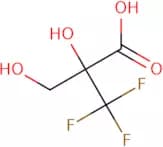
3,3,3-Trifluoro-2-hydroxy-2-(hydroxymethyl)propanoic acid
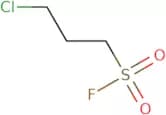
CAS:Versatile small molecule scaffoldFormula:C4H5F3O4Purity:Min. 95%Molecular weight:174.08 g/mol3-Chloropropane-1-sulfonyl fluoride
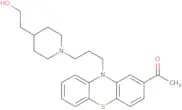
CAS:Versatile small molecule scaffoldFormula:C3H6ClFO2SPurity:Min. 95%Molecular weight:160.6 g/molPiperacetazine
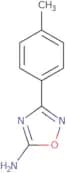
CAS:Controlled ProductPiperacetazine is a drug used to treat symptoms of depression and anxiety among the elderly. It has also been studied as a treatment for psychiatric patients who have not responded to other treatments. Piperacetazine belongs to the class of drugs known as CNS depressants, and is often prescribed by doctors in conjunction with other medications. Piperacetazine also has anti-inflammatory properties and can be used in the treatment of inflammatory diseases such as rheumatoid arthritis. The drug is not effective against viral infections, but it may be useful in treating some bacterial infections because it inhibits the growth of bacteria by binding to DNA-dependent RNA polymerase, thereby preventing transcription and replication. Piperacetazine is usually administered orally at doses between 10 mg and 50 mg per day, depending on the severity of symptoms.Formula:C24H30N2O2SPurity:Min. 95%Molecular weight:410.57 g/mol3-(4-Methylphenyl)-1,2,4-oxadiazol-5-amine
CAS:Versatile small molecule scaffold
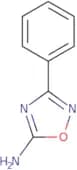
Formula:C9H9N3OPurity:Min. 95%Molecular weight:175.19 g/mol3-Phenyl-1,2,4-oxadiazol-5-amine
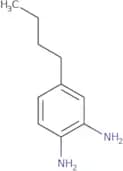
CAS:3-Phenyl-1,2,4-oxadiazol-5-amine is a synthetic compound that is used for the study of mechanistic and stereochemical aspects of organic reactions. It has been shown to be an effective nucleophile in many different reactions. 3-Phenyl-1,2,4-oxadiazol-5-amine can undergo rearrangements and is a good substrate for thioamides. This compound also reacts with thioureas and thiocarbamates, which are both reactive compounds that are commonly used in organic chemistry. 3-Phenyl-1,2,4-oxadiazol-5-amine reacts with thiols to form photochemically active organosulfur compounds. The photoinduced reaction can be carried out by irradiating the compound with ultraviolet light or visible light.Formula:C8H7N3OPurity:Min. 95%Molecular weight:161.16 g/mol4-Butylbenzene-1,2-diamine
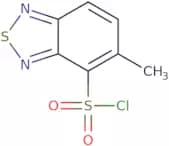
CAS:4-Butylbenzene-1,2-diamine is an organic compound that is synthesized by the reaction of acetyl chloride and 4-butylbenzene. This chemical is a colorless solid with a melting point of 45°C and a boiling point of 184°C. It has a distinctive unpleasant odor. 4-Butylbenzene-1,2-diamine is used as a reagent in the synthesis of hydrosulfite, sodium thiosulfate, and sodium sulfide. 4-Butylbenzene-1,2-diamine reacts with hydroxide solution to form acetone and sodium sulfate. When this chemical is heated with sodium sulfide it produces hydrogen sulfide gas. 4-Butylbenzene-1,2-diamine also reacts with cyanamide to produce carbamic acid ethylamide and nitrous oxide gas (N 2 O). This chemical can alsoFormula:C10H16N2Purity:Min. 95%Molecular weight:164.25 g/mol5-Methyl-2,1,3-benzothiadiazole-4-sulfonyl chloride
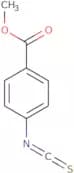
CAS:Versatile small molecule scaffoldFormula:C7H5ClN2O2S2Purity:Min. 95%Molecular weight:248.71 g/mol4-Methoxycarbonylphenyl isothiocyanate
CAS:4-Methoxycarbonylphenyl isothiocyanate is a metabolic disorder that is detectable by the use of stable isotope labeled 4-Methoxycarbonylphenyl isothiocyanate, which can be used to screen for and diagnose metabolic disorders. This compound is synthesized from phenyl isothiocyanate, which is converted to the 4-methoxycarbonyl derivative under acidic conditions. The 4-methoxycarbonylphenyl derivative can be derivatized with bromine in methanol to produce a label that can be detected using an ionization mass spectrometer. The ionization mass spectrometer can also be used to analyze the matrix effect on linearity of the derivatized metabolite. Liquid chromatography coupled with electrospray ionization has been shown to be a sensitive method for detecting this compound in human urine.
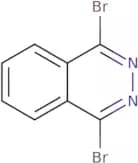
Formula:C9H7NO2SPurity:Min. 95%Molecular weight:193.22 g/mol1,4-Dibromophthalazine
CAS:1,4-Dibromophthalazine is a protonated nitrogen heterocycle. It is a ligand that binds to an iron catalyst and inhibits the fluxional activity of organic acids. 1,4-Dibromophthalazine has been shown to inhibit the proliferation of cancer cells in vitro at concentrations as low as 0.1 mM. The anti-proliferative activities of 1,4-dibromophthalazine are due to its ability to bind to the DNA in cancer cells, which prevents DNA replication and transcription, leading to cell death.
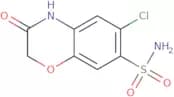
Formula:C8H4Br2N2Purity:Min. 95%Molecular weight:287.94 g/mol6-Chloro-3-oxo-3,4-dihydro-2H-1,4-benzoxazine-7-sulfonamide
CAS:Versatile small molecule scaffoldFormula:C8H7ClN2O4SPurity:Min. 95%Molecular weight:262.67 g/molImidazo[1,2-a]pyridin-6-amine dihydrochloride
CAS:Versatile small molecule scaffoldFormula:C7H7N3·2HClPurity:Min. 95%Molecular weight:206.08 g/mol1H,2H,3H,4H,5H,6H,7H-Pyrazolo[3,4-b]pyridin-3-one
CAS:Versatile small molecule scaffoldFormula:C6H9N3OPurity:Min. 95%Molecular weight:139.16 g/mol5,6,7,8-Tetrahydropyrido[2,3-D]Pyrimidin-4(3H)-One
CAS:Tetrahydropyrido[2,3-D]pyrimidin-4(3H)-one is a heterocyclic compound that has been synthesized with high diastereoselectivity and good yields. The reaction process is carried out with the use of a solid acid catalyst at room temperature to give the desired product in high yield. Tetrahydropyrido[2,3-D]pyrimidin-4(3H)-one can be used as an antineoplastic agent for the treatment of cancer. It inhibits cell proliferation by arresting cells in the G1 phase of the cell cycle.
Formula:C7H9N3OPurity:Min. 95%Molecular weight:151.17 g/mol7-Methoxy-2,3,4,5-tetrahydro-benzo[c]azepin-1-one
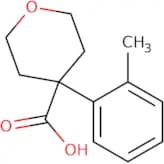
CAS:Versatile small molecule scaffoldFormula:C11H13NO2Purity:Min. 95%Molecular weight:191.23 g/mol4-(2-Methylphenyl)oxane-4-carboxylic acid
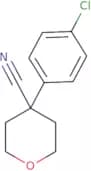
CAS:Versatile small molecule scaffoldFormula:C13H16O3Purity:Min. 95%Molecular weight:220.26 g/mol4-(4-Chlorophenyl)tetrahydro-2H-pyran-4-carbonitrile
CAS:Versatile small molecule scaffold
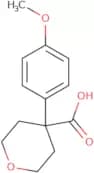
Formula:C12H12ClNOPurity:Min. 95%Molecular weight:221.69 g/mol4-(4-Methoxy-phenyl)-tetrahydro-pyran-4-carboxylic acid
CAS:4-(4-Methoxy-phenyl)-tetrahydro-pyran-4-carboxylic acid is a substituted benzoic acid that is used in the production of p-aminobenzoic acid. This product is made by acylation of 4-(4-methoxyphenyl)tetrahydro-2H-pyran-4 carboxylic acid with amines, chlorides, and chloride. Alternatively, it can be prepared by hydrolysis of 4-(4-methoxyphenyl) tetrahydropyran.Formula:C13H16O4Purity:Min. 95%Molecular weight:236.26 g/mol4-(4-Chloro-phenyl)-tetrahydro-pyran-4-carboxylic acid
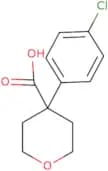
CAS:Versatile small molecule scaffold
Formula:C12H13ClO3Purity:Min. 95%Molecular weight:240.68 g/mol3-{Methyl[(oxiran-2-yl)methyl]amino}propanenitrile
CAS:Versatile small molecule scaffoldFormula:C7H12N2OPurity:Min. 95%Molecular weight:140.18 g/mol1-[2-(Dimethylamino)ethyl]piperazine
CAS:1-[2-(Dimethylamino)ethyl]piperazine (DAP) is a chemical species that encompasses a number of different structures. DAP can have hydrophobic effects, and it binds to the neurokinin-1 receptor, which has been shown to be involved in the transmission of pain signals. DAP has also shown anticholinesterase activity, which is due to its reaction with acetylcholine esterase. DAP reacts with polyols, forming reactive cross-linkages. It is also a molecule that can form aldimines and trimerization reactions with other molecules. DAP has been used as a cross-linking agent in polyurethane production.Formula:C8H19N3Purity:Min. 95%Molecular weight:157.26 g/mol

![Imidazo[1,2-a]pyridin-6-amine dihydrochloride](/_next/image/?url=https%3A%2Fstatic.cymitquimica.com%2Fproducts%2F3D%2Fthumb-webp%2FDAA64947.webp&w=3840&q=75)
![1H,2H,3H,4H,5H,6H,7H-Pyrazolo[3,4-b]pyridin-3-one](/_next/image/?url=https%3A%2Fstatic.cymitquimica.com%2Fproducts%2F3D%2Fthumb-webp%2FDAA64944.webp&w=3840&q=75)
![5,6,7,8-Tetrahydropyrido[2,3-D]Pyrimidin-4(3H)-One](/_next/image/?url=https%3A%2Fstatic.cymitquimica.com%2Fproducts%2F3D%2Fthumb-webp%2FDAA64942.webp&w=3840&q=75)
![7-Methoxy-2,3,4,5-tetrahydro-benzo[c]azepin-1-one](/_next/image/?url=https%3A%2Fstatic.cymitquimica.com%2Fproducts%2F3D%2Fthumb-webp%2FDAA64886.webp&w=3840&q=75)
![3-{Methyl[(oxiran-2-yl)methyl]amino}propanenitrile](/_next/image/?url=https%3A%2Fstatic.cymitquimica.com%2Fproducts%2F3D%2Fthumb-webp%2FDAA64735.webp&w=3840&q=75)
![1-[2-(Dimethylamino)ethyl]piperazine](/_next/image/?url=https%3A%2Fstatic.cymitquimica.com%2Fproducts%2F3D%2Fthumb-webp%2FDAA64418.webp&w=3840&q=75)