Building Blocks
This section contains fundamental products for the synthesis of organic and biological compounds. Building blocks are the essential starting materials used to construct complex molecules through various chemical reactions. They play a critical role in drug discovery, material science, and chemical research. At CymitQuimica, we offer a diverse range of high-quality building blocks to support your innovative research and industrial projects, ensuring you have the essential components for successful synthesis.
Subcategories of "Building Blocks"
- Boronic Acids & Boronic Acid Derivatives(5,756 products)
- Chiral Building Blocks(1,242 products)
- Hydrocarbon Building Blocks(6,093 products)
- Organic Building Blocks(60,522 products)
Found 195533 products of "Building Blocks"
Sort by
Purity (%)
0
100
|
0
|
50
|
90
|
95
|
100
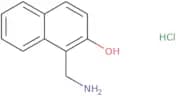
1-(Aminomethyl)naphthalen-2-ol hydrochloride
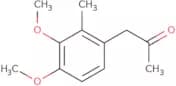
CAS:<p>Versatile small molecule scaffold</p>Formula:C11H12ClNOPurity:Min. 95%Molecular weight:209.67 g/mol1-(3,4-Dimethoxy-2-methylphenyl)propan-2-one
CAS:<p>Versatile small molecule scaffold</p>Formula:C12H16O3Purity:Min. 95%Molecular weight:208.25 g/mol3-Allyldihydro-2,5-furandione
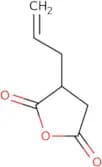
CAS:<p>3-Allyldihydro-2,5-furandione is a compound with a carbonyl group. It has been shown to be biocompatible and chemically stable in the presence of air and water. The chemical stability of the 3-allyldihydro-2,5-furandione is dependent on the linkage between its carbonyl group and the rest of its molecular structure. The ester linkages are more stable than ether or hydroxyl linkages. This compound has been shown to be an excellent candidate for use as a solvent in detergent compositions. 3-Allyldihydro-2,5-furandione can be synthesized by reacting phenol with 2,5-dihydroxybenzaldehyde and furan in an air entrainment reaction at an activation energy of 75 kJ/mol.</p>Formula:C7H8O3Purity:Min. 95%Molecular weight:140.14 g/moltert-Butyl N,N-dimethylcarbamate
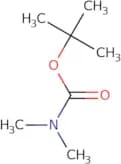
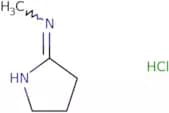
CAS:<p>Tert-butyl N,N-dimethylcarbamate is a surfactant that is used as an amine. It is also an intercalator, which means it has the ability to bind to DNA. Tert-butyl N,N-dimethylcarbamate binds to DNA and disrupts replication by inhibiting the enzyme DNA polymerase. It can be used in validation of regulatory section and long-chain sequences.</p>Formula:C7H15NO2Purity:Min. 95%Molecular weight:145.2 g/mol1-Methylpyrrolidin-2-imine hydrochloride
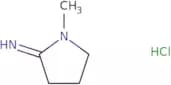
CAS:<p>Versatile small molecule scaffold</p>Formula:C5H11ClN2Purity:Min. 95%Molecular weight:134.61 g/molN-Methyl-3,4-dihydro-2H-pyrrol-5-amine hydrochloride
CAS:<p>Versatile small molecule scaffold</p>Formula:C5H11ClN2Purity:Min. 95%Molecular weight:134.61 g/mol4-(Benzylamino)butanenitrile hydrochloride
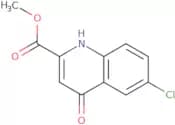
CAS:<p>Versatile small molecule scaffold</p>Formula:C11H15ClN2Purity:Min. 95%Molecular weight:210.7 g/molethyl 6-chloro-4-oxo-1,4-dihydroquinoline-2-carboxylate
CAS:<p>Versatile small molecule scaffold</p>Formula:C12H10ClNO3Purity:Min. 95%Molecular weight:251.67 g/mol1,2,3,4,5,6-Hexahydroazepino[4,5-b]indole
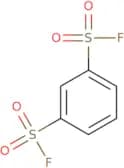
CAS:<p>1,2,3,4,5,6-Hexahydroazepino[4,5-b]indole is a synthetic opioid that binds to the κ opioid receptor. It is an inorganic compound and has two asymmetric carbon atoms. The two enantiomers of 1,2,3,4,5,6-Hexahydroazepino[4,5-b]indole have different affinities for the κ opioid receptor. The (R) enantiomer binds more tightly than the (S) enantiomer. This drug has been shown to stimulate dopamine d3 receptors and serotonin transporter activity. It also inhibits serotonin reuptake by binding to serotonin transporters in the presynaptic neuron. This action increases extracellular levels of serotonin that can activate postsynaptic receptors and produce antidepressant effects.</p>Formula:C12H14N2Purity:Min. 95%Molecular weight:186.25 g/molBenzene-1,3-disulfonyl fluoride
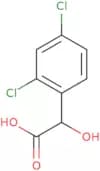
CAS:<p>Benzene-1,3-disulfonyl fluoride is a reagent that can be used in organic synthesis. It can be used to synthesize carboxylic acids and amides from carboxylic acid chlorides and amines. This agent yields high yields of functional groups with little or no steric hindrance. Benzene-1,3-disulfonyl fluoride is also a strong nucleophile that can react with amine to form an intermediate which reacts with another molecule of benzene-1,3-disulfonyl fluoride to form the desired product. As a nucleophile, it is reactive toward biological molecules such as proteins and DNA.</p>Formula:C6H4F2O4S2Purity:Min. 95%Molecular weight:242.22 g/mol2-(2,4-Dichlorophenyl)-2-hydroxyacetic acid
CAS:<p>2-(2,4-Dichlorophenyl)-2-hydroxyacetic acid (dichlophos) is a metabolite of the herbicide 2,4-dichlorophenoxyacetic acid. It is spontaneously generated in the cytosol and eliminated in the urine as its conjugate with glutathione. Dichlophos has been shown to inhibit the activity of glutathione transferase, which may be due to its ability to demethylate phospholipids and glutathione. Dichlophos has also been found to have an inhibitory effect on alkenyl and ketone metabolism, which may be due to its ability to block hydrogen phosphate synthesis. This compound has been shown to be metabolized by uronic acid oxidase in rats and humans, leading to the production of 2-keto-gluconic acid and hydrogen peroxide.</p>Formula:C8H6Cl2O3Purity:Min. 95%Molecular weight:221.03 g/mol2-[(2,4-Dichlorobenzoyl)amino]acetic acid
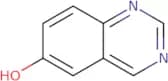
CAS:<p>Versatile small molecule scaffold</p>Formula:C9H7Cl2NO3Purity:Min. 95%Molecular weight:248.06 g/molQuinazolin-6-ol
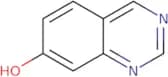
CAS:<p>Quinazolin-6-ol is a quinone that is synthesized by the reaction of anilines and phthalic acid. Quinazolin-6-ol inhibits NF-κB transcriptional activity in vitro, which may be due to its ability to bind to the heme moiety of the protein. This compound has been shown to have antibacterial activity against Gram-negative bacteria such as Phytophthora, but not Gram-positive bacteria such as Staphylococcus aureus or Bacillus cereus.</p>Formula:C8H6N2OPurity:Min. 95%Molecular weight:146.15 g/molQuinazolin-7-ol
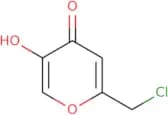
CAS:<p>Quinazolin-7-ol is a cancer drug that inhibits the growth of tumor cells by blocking the activity of epidermal growth factor receptors. It has been shown to inhibit tumor growth in vivo and to have an antitumor activity. Quinazolin-7-ol also inhibits the activation of epidermal growth factor receptor and tyrosine kinase, which are factors that activate the cell cycle and promote tumor cell proliferation. As an antineoplastic drug, it has shown an inhibitory effect on lung cancer cells and other types of cancer cells in vitro. Quinazolin-7-ol can be used as a chemotherapeutic agent for drug resistant tumors.</p>Formula:C8H6N2OPurity:Min. 95%Molecular weight:146.15 g/mol2-(Chloromethyl)-5-hydroxy-4H-pyran-4-one
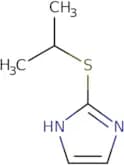
CAS:<p>2-(Chloromethyl)-5-hydroxy-4H-pyran-4-one (2CHP) is a nucleophilic compound that has been shown to be effective against colorectal adenocarcinoma cells. 2CHP is synthesized from the reaction of 2,5-dichloro-4H-pyran with hydroxylamine and HCl in water. It is also used for the treatment of infectious diseases such as malaria and tuberculosis. This compound induces tyrosinase activity through an intramolecular hydrogen bond with the hydroxyl group, which causes the hydroxyl group to become nucleophilic and react with a chlorine atom in order to form an acid conjugate.</p>Formula:C6H5ClO3Purity:Min. 95%Molecular weight:160.56 g/mol2-(Propan-2-ylsulfanyl)-1H-imidazole
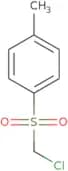
CAS:<p>Versatile small molecule scaffold</p>Formula:C6H10N2SPurity:Min. 95%Molecular weight:142.22 g/molp-Toluenesulfonylmethyl Chloride
CAS:<p>p-Toluenesulfonylmethyl Chloride is a reactive compound that can be used as an alkylating agent. It has a carbonyl group, which reacts with nucleophiles and can be used to form carbon-carbon bonds. p-Toluenesulfonylmethyl Chloride is also able to react with aldehydes and sulfoxides, forming anions and pyridazine. This chemical is used in the synthesis of organic compounds, including acetaldehyde. In addition, it can be used in magnetic resonance spectroscopy (MRS) experiments to identify the structure of aldehydes.</p>Formula:C8H9ClO2SPurity:Min. 95%Molecular weight:204.67 g/mol2-(5-Chloro-2-methoxyphenyl)ethan-1-ol
CAS:<p>Versatile small molecule scaffold</p>Formula:C9H11ClO2Purity:Min. 95%Molecular weight:186.63 g/mol2-(5-Chloro-2-methoxyphenyl)ethan-1-amine hydrochloride
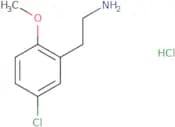
CAS:Controlled Product<p>Versatile small molecule scaffold</p>Formula:C9H13Cl2NOPurity:Min. 95%Molecular weight:222.11 g/mol2-(2-Methylphenyl)propan-2-ol
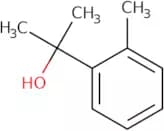
CAS:<p>2-(2-Methylphenyl)propan-2-ol is an abiotic chemical that is used as a solvent for ethanol. It has been shown to be toxic to microalgae and fatty acids, by inhibiting the conversion of nitrate into nitrogen gas. 2-(2-Methylphenyl)propan-2-ol has also been shown to inhibit denitrification in the presence of nitrate and carbon sources. The mechanism of inhibition is unknown, but it may be due to the formation of an unidentified aromatic hydrocarbon that prevents nitrite reduction.</p>Formula:C10H14OPurity:Min. 95%Molecular weight:150.22 g/mol


![1,2,3,4,5,6-Hexahydroazepino[4,5-b]indole](/_next/image/?url=https%3A%2Fstatic.cymitquimica.com%2Fproducts%2F3D%2Fthumb-webp%2FHAA54678.webp&w=3840&q=75)
![2-[(2,4-Dichlorobenzoyl)amino]acetic acid](/_next/image/?url=https%3A%2Fstatic.cymitquimica.com%2Fproducts%2F3D%2Fthumb-webp%2FHAA55479.webp&w=3840&q=75)