Building Blocks
This section contains fundamental products for the synthesis of organic and biological compounds. Building blocks are the essential starting materials used to construct complex molecules through various chemical reactions. They play a critical role in drug discovery, material science, and chemical research. At CymitQuimica, we offer a diverse range of high-quality building blocks to support your innovative research and industrial projects, ensuring you have the essential components for successful synthesis.
Subcategories of "Building Blocks"
- Boronic Acids & Boronic Acid Derivatives(5,756 products)
- Chiral Building Blocks(1,242 products)
- Hydrocarbon Building Blocks(6,095 products)
- Organic Building Blocks(61,037 products)
Found 196200 products of "Building Blocks"
Sort by
Purity (%)
0
100
|
0
|
50
|
90
|
95
|
100
2-(Imidazo[1,2-a]pyridin-2-yl)ethanamine dihydrochloride
CAS:<p>Versatile small molecule scaffold</p>Formula:C9H13Cl2N3Purity:Min. 95%Molecular weight:234.13 g/mol2-{5H,6H,7H,8H-Imidazo[1,2-a]pyridin-2-yl}ethan-1-amine
CAS:<p>Versatile small molecule scaffold</p>Formula:C9H15N3Purity:Min. 95%Molecular weight:165.24 g/mol2-Chloro-1-{imidazo[1,5-a]pyridin-1-yl}ethan-1-one
CAS:<p>Versatile small molecule scaffold</p>Formula:C9H7ClN2OPurity:Min. 95%Molecular weight:194.62 g/mol1-[2-(Morpholin-4-yl)ethyl]piperidin-4-one
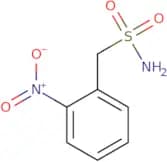
CAS:<p>Versatile small molecule scaffold</p>Formula:C11H20N2O2Purity:Min. 95%Molecular weight:212.29 g/mol(2-Nitrophenyl)methanesulfonamide
CAS:<p>Versatile small molecule scaffold</p>Formula:C7H8N2O4SPurity:Min. 95%Molecular weight:216.22 g/mol1,3-Diazaspiro[4.5]decane-2,4,8-trione
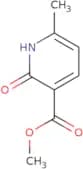
CAS:<p>Versatile small molecule scaffold</p>Formula:C8H10N2O3Purity:Min. 95%Molecular weight:182.18 g/mol6-Methyl-2-oxo-1,2-dihydro-pyridine-3-carboxylic acid methyl ester
CAS:<p>6-Methyl-2-oxo-1,2-dihydro-pyridine-3-carboxylic acid methyl ester is a molecule that is emitted by the combustion of coal and oil. It has a protonated nitrogen atom, which can be transferred to an electron in an excited state. This transfer is accomplished through fluorescence or n-hexane. The hydroxyl group on the 6-methyl group can be measured as well as the constant and transfer rates. Molecular properties include a tautomeric form, pyridine nitrogen protonation, and n-hexane solvation.</p>Formula:C8H9NO3Purity:Min. 95%Molecular weight:167.16 g/mol5-Methylnaphthalen-1-ol
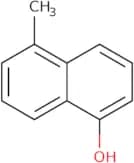
CAS:<p>Versatile small molecule scaffold</p>Formula:C11H10OPurity:Min. 95%Molecular weight:158.2 g/mol(1S)-1-(3-Methylphenyl)ethan-1-ol
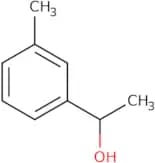
CAS:<p>Versatile small molecule scaffold</p>Formula:C9H12OPurity:Min. 95%Molecular weight:136.19 g/mol(1S)-1-(4-Methylphenyl)ethan-1-ol
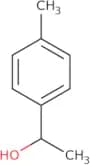
CAS:<p>Versatile small molecule scaffold</p>Formula:C9H12OPurity:Min. 95%Molecular weight:136.19 g/mol1-Isocyanato-2-methylcyclohexanes
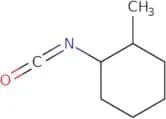
CAS:<p>1-Isocyanato-2-methylcyclohexanes is an organic compound with a molecular weight of 210.1 g/mol. It is a colorless liquid that has an odor similar to that of acetone. 1-Isocyanato-2-methylcyclohexanes has been shown to inhibit mitochondrial protein synthesis, which may be due to its ability to introduce mutations in the mitochondrial genome. 1-Isocyanato-2-methylcyclohexanes also interacts with human neurodegenerative diseases such as Parkinson's disease and Alzheimer's disease, and may have therapeutic effects against these diseases. The oral bioavailability of this drug is low, but it has been shown to be effective in the treatment of Parkinson's disease and Alzheimer's disease when administered intravenously. This drug has not yet been approved for use by the FDA and is still undergoing clinical trials for safety and efficacy</p>Formula:C8H13NOPurity:Min. 95%Molecular weight:139.2 g/mol1-Isocyanato-3-methylcyclohexane
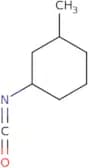
CAS:<p>Versatile small molecule scaffold</p>Formula:C8H13NOPurity:Min. 95%Molecular weight:139.19 g/molCyclohexanemethyl isocyanate
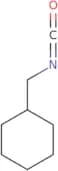
CAS:<p>Cyclohexanemethyl isocyanate is a reactive carboxylate. It is used as a polymerization initiator for polyurethane coatings, binders, and adhesives. It reacts with primary amino groups in the presence of an alkali metal to form ureas and amines. Cyclohexanemethyl isocyanate also reacts with hydroxyl groups to form esters or ethers. This compound has functional groups that include a primary amino group, a hydroxyl group, and a zirconium oxide group.</p>Formula:C8H13NOPurity:Min. 95%Molecular weight:139.2 g/mol2-[(6-Methylpyrimidin-4-yl)amino]acetic acid
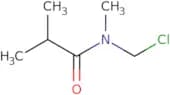
CAS:<p>Versatile small molecule scaffold</p>Formula:C7H9N3O2Purity:Min. 95%Molecular weight:167.17 g/molN-(Chloromethyl)-N-methylisobutyramide
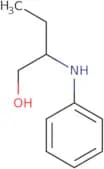
CAS:<p>Versatile small molecule scaffold</p>Formula:C6H12ClNOPurity:Min. 95%Molecular weight:149.62 g/mol2-(Phenylamino)butan-1-ol
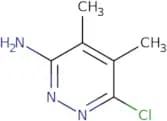
CAS:<p>Versatile small molecule scaffold</p>Formula:C10H15NOPurity:Min. 95%Molecular weight:165.23 g/mol3-Amino-6-chloro-4,5-dimethylpyridazine
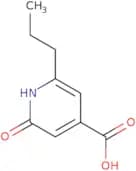
CAS:<p>Versatile small molecule scaffold</p>Formula:C6H8ClN3Purity:Min. 95%Molecular weight:157.6 g/mol2-Oxo-6-propyl-1,2-dihydropyridine-4-carboxylic acid
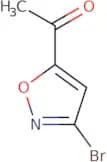
CAS:<p>Versatile small molecule scaffold</p>Formula:C9H11NO3Purity:Min. 95%Molecular weight:181.19 g/mol1-(3-Bromo-1,2-oxazol-5-yl)ethan-1-one
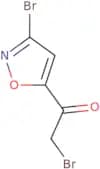
CAS:<p>Versatile small molecule scaffold</p>Formula:C5H4BrNO2Purity:Min. 95%Molecular weight:189.99 g/mol2-Bromo-1-(3-bromo-1,2-oxazol-5-yl)ethan-1-one
CAS:<p>Versatile small molecule scaffold</p>Formula:C5H3Br2NO2Purity:Min. 95%Molecular weight:268.89 g/mol
![2-(Imidazo[1,2-a]pyridin-2-yl)ethanamine dihydrochloride](/_next/image/?url=https%3A%2Fstatic.cymitquimica.com%2Fproducts%2F3D%2Fthumb-webp%2FBCA13202.webp&w=3840&q=75)

![2-{5H,6H,7H,8H-Imidazo[1,2-a]pyridin-2-yl}ethan-1-amine](/_next/image/?url=https%3A%2Fstatic.cymitquimica.com%2Fproducts%2F3D%2Fthumb-webp%2FBCA13204.webp&w=3840&q=75)
![2-Chloro-1-{imidazo[1,5-a]pyridin-1-yl}ethan-1-one](/_next/image/?url=https%3A%2Fstatic.cymitquimica.com%2Fproducts%2F3D%2Fthumb-webp%2FBCA13206.webp&w=3840&q=75)
![1-[2-(Morpholin-4-yl)ethyl]piperidin-4-one](/_next/image/?url=https%3A%2Fstatic.cymitquimica.com%2Fproducts%2F3D%2Fthumb-webp%2FBCA13777.webp&w=3840&q=75)
![1,3-Diazaspiro[4.5]decane-2,4,8-trione](/_next/image/?url=https%3A%2Fstatic.cymitquimica.com%2Fproducts%2F3D%2Fthumb-webp%2FBCA14574.webp&w=3840&q=75)
![2-[(6-Methylpyrimidin-4-yl)amino]acetic acid](/_next/image/?url=https%3A%2Fstatic.cymitquimica.com%2Fproducts%2F3D%2Fthumb-webp%2FBCA16363.webp&w=3840&q=75)