Building Blocks
This section contains fundamental products for the synthesis of organic and biological compounds. Building blocks are the essential starting materials used to construct complex molecules through various chemical reactions. They play a critical role in drug discovery, material science, and chemical research. At CymitQuimica, we offer a diverse range of high-quality building blocks to support your innovative research and industrial projects, ensuring you have the essential components for successful synthesis.
Subcategories of "Building Blocks"
- Boronic Acids & Boronic Acid Derivatives(5,756 products)
- Chiral Building Blocks(1,242 products)
- Hydrocarbon Building Blocks(6,095 products)
- Organic Building Blocks(61,055 products)
Found 199650 products of "Building Blocks"
Sort by
Purity (%)
0
100
|
0
|
50
|
90
|
95
|
100
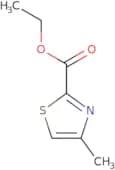
Ethyl 4-Methyl-1,3-thiazole-2-carboxylate
CAS:<p>Versatile small molecule scaffold</p>Formula:C7H9NO2SPurity:Min. 95%Molecular weight:171.21 g/mol1-[(Chloromethyl)sulfanyl]-4-methoxybenzene
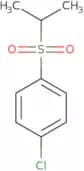
CAS:<p>Versatile small molecule scaffold</p>Formula:C8H9ClOSPurity:Min. 95%Molecular weight:188.67 g/mol1-Chloro-4-(propane-2-sulfonyl)benzene
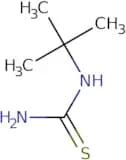
CAS:<p>Versatile small molecule scaffold</p>Formula:C9H11ClO2SPurity:Min. 95%Molecular weight:218.7 g/mol1-tert-Butyl-2-thiourea
CAS:<p>1-tert-Butyl-2-thiourea is an organosulfur compound that belongs to the group of organic solvents. It can be used in reactions with hydrochloric acid and heat energy, and has a reaction yield of 98%. 1-tert-Butyl-2-thiourea is also used as a mitochondrial inhibitor. It inhibits proton transport through the mitochondrial membrane by reacting with amino groups on the enzyme complex. This prevents the transport of protons across the membrane, which inhibits ATP production, leading to cell death.</p>Formula:C5H12N2SPurity:Min. 95%Molecular weight:132.23 g/mol1,2-Dihydrospiro[indole-3,3'-pyrrolidine]
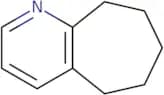
CAS:<p>Versatile small molecule scaffold</p>Formula:C11H14N2Purity:Min. 95%Molecular weight:174.24 g/mol2,3-Cycloheptenopyridine
CAS:<p>2,3-Cycloheptenopyridine is a molybdenum metal complex with chloroform. It belongs to the class of nucleophilic complexes. The reaction product of cycloheptenopyridine n-oxide and formaldehyde, it has a spectrum that shows peaks at 521 nm and 609 nm. This complex can be prepared by reacting 2,3-cycloheptenopyridine with hydrogen peroxide in dimethylformamide as a reagent.<br>2,3-Cycloheptenopyridine is an example of an n-oxide because it contains both oxygen atoms in the same molecule. The two isomers are cis and trans, but only the cis form is known to exist naturally on Earth. The trans isomer can be synthesized through the use of peroxides or trioxides; however, this synthetic form is only stable at temperatures above 300°C.</p>Formula:C10H13NPurity:Min. 95%Molecular weight:147.22 g/mol5-chloro-2-hydroxy-3-nitrobenzoic acid
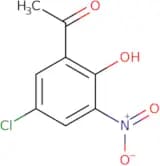
CAS:<p>5-Chloro-2-hydroxy-3-nitrobenzoic acid (5CHNBA) is a potent inhibitor of the HIV integrase. 5CHNBA inhibits the activity of integrase by binding to the enzyme and preventing it from adding new DNA sequences to the viral genome. It has been shown to be effective against HIV integrase in vitro and in vivo, with inhibitory activities against both wild type and drug resistant HIV integrases. 5CHNBA is not an amide or saponified compound, but it does contain a nitrobenzoic group that reacts with chlorine atoms to form chlorination products, such as dichloro 5-chloro-2-hydroxy-3-nitrobenzoic acid.</p>Formula:C7H4ClNO5Purity:Min. 95%Molecular weight:217.6 g/mol1-N-[(2-Methylphenyl)methyl]benzene-1,2-diamine
CAS:<p>Versatile small molecule scaffold</p>Formula:C14H16N2Purity:Min. 95%Molecular weight:212.29 g/mol6-Chloro-3-phenyl[1,2,4]triazolo[4,3-b]pyridazine
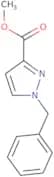
CAS:Versatile small molecule scaffoldFormula:C11H7ClN4Purity:Min. 95%Molecular weight:230.66 g/molMethyl 1-benzyl-1H-pyrazole-3-carboxylate
CAS:Versatile small molecule scaffoldFormula:C12H12N2O2Purity:Min. 95%Molecular weight:216.24 g/mol{1-[(4-Chlorophenyl)methyl]-1H-1,3-benzodiazol-2-yl}methanol
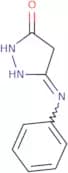
CAS:Controlled Product<p>Versatile small molecule scaffold</p>Formula:C15H13ClN2OPurity:Min. 95%Molecular weight:272.73 g/mol3-(Phenylamino)-4,5-dihydro-1H-pyrazol-5-one
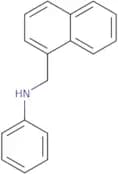
CAS:<p>Versatile small molecule scaffold</p>Formula:C9H9N3OPurity:Min. 95%Molecular weight:175.19 g/molN-(Naphthalen-1-ylmethyl)aniline
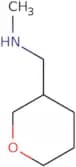
CAS:<p>Versatile small molecule scaffold</p>Formula:C17H15NPurity:Min. 95%Molecular weight:233.31 g/mol3-(Methylaminomethyl)tetrahydropyran
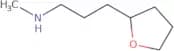
CAS:<p>Versatile small molecule scaffold</p>Formula:C7H15NOPurity:Min. 95%Molecular weight:129.2 g/molN-Methyl-3-(tetrahydrofuran-2-yl)propan-1-amine
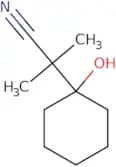
CAS:<p>Versatile small molecule scaffold</p>Formula:C8H17NOPurity:Min. 95%Molecular weight:143.23 g/mol2-(1-Hydroxycyclohexyl)-2-methylpropanenitrile
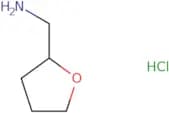
CAS:<p>Versatile small molecule scaffold</p>Formula:C10H17NOPurity:Min. 95%Molecular weight:167.25 g/mol(2R)-Tetrahydro-2-furanmethanamine hydrochloride
CAS:<p>Versatile small molecule scaffold</p>Formula:C5H12ClNOPurity:Min. 95%Molecular weight:137.61 g/mol(3-Aminopropyl)(octyl)amine
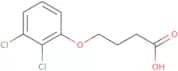
CAS:<p>Versatile small molecule scaffold</p>Formula:C11H26N2Purity:Min. 95%Molecular weight:186.34 g/mol4-(2,3-Dichlorophenoxy)butanoic acid
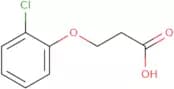
CAS:Controlled Product<p>Versatile small molecule scaffold</p>Formula:C10H10Cl2O3Purity:Min. 95%Molecular weight:249.09 g/mol3-(2-Chlorophenoxy)propionic acid
CAS:<p>Versatile small molecule scaffold</p>Formula:C9H9ClO3Purity:Min. 95%Molecular weight:200.62 g/mol

![1-[(Chloromethyl)sulfanyl]-4-methoxybenzene](/_next/image/?url=https%3A%2Fstatic.cymitquimica.com%2Fproducts%2F3D%2Fthumb-webp%2FHAA20589.webp&w=3840&q=75)
![1,2-Dihydrospiro[indole-3,3'-pyrrolidine]](/_next/image/?url=https%3A%2Fstatic.cymitquimica.com%2Fproducts%2F3D%2Fthumb-webp%2FHAA19872.webp&w=3840&q=75)
![1-N-[(2-Methylphenyl)methyl]benzene-1,2-diamine](/_next/image/?url=https%3A%2Fstatic.cymitquimica.com%2Fproducts%2F3D%2Fthumb-webp%2FHAA19192.webp&w=3840&q=75)
![6-Chloro-3-phenyl[1,2,4]triazolo[4,3-b]pyridazine](/_next/image/?url=https%3A%2Fstatic.cymitquimica.com%2Fproducts%2F3D%2Fthumb-webp%2FHAA19080.webp&w=3840&q=75)
![{1-[(4-Chlorophenyl)methyl]-1H-1,3-benzodiazol-2-yl}methanol](/_next/image/?url=https%3A%2Fstatic.cymitquimica.com%2Fproducts%2F3D%2Fthumb-webp%2FHAA18731.webp&w=3840&q=75)