Building Blocks
This section contains fundamental products for the synthesis of organic and biological compounds. Building blocks are the essential starting materials used to construct complex molecules through various chemical reactions. They play a critical role in drug discovery, material science, and chemical research. At CymitQuimica, we offer a diverse range of high-quality building blocks to support your innovative research and industrial projects, ensuring you have the essential components for successful synthesis.
Subcategories of "Building Blocks"
- Boronic Acids & Boronic Acid Derivatives(5,778 products)
- Chiral Building Blocks(1,242 products)
- Hydrocarbon Building Blocks(6,098 products)
- Organic Building Blocks(61,092 products)
Found 199297 products of "Building Blocks"
Sort by
Purity (%)
0
100
|
0
|
50
|
90
|
95
|
100
[1-(2-bromophenyl)cyclobutyl]methanamine hydrochloride
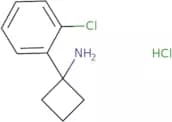
CAS:Versatile small molecule scaffoldFormula:C11H15BrClNPurity:Min. 95%Molecular weight:276.6 g/mol1-(2-Chlorophenyl)cyclobutan-1-amine hydrochloride
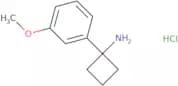
CAS:<p>Versatile small molecule scaffold</p>Formula:C10H13Cl2NPurity:Min. 95%Molecular weight:218.12 g/mol1-(3-Methoxyphenyl)cyclobutan-1-amine hydrochloride
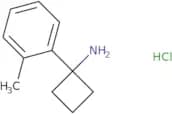
CAS:Versatile small molecule scaffoldFormula:C11H16ClNOPurity:Min. 95%Molecular weight:213.7 g/mol1-(2-Methylphenyl)cyclobutan-1-amine hydrochloride
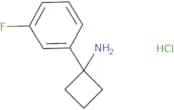
CAS:<p>Versatile small molecule scaffold</p>Formula:C11H16ClNPurity:Min. 95%Molecular weight:197.7 g/mol1-(3-Fluorophenyl)cyclobutan-1-amine hydrochloride
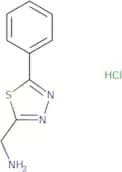
CAS:<p>Versatile small molecule scaffold</p>Formula:C10H13ClFNPurity:Min. 95%Molecular weight:201.67 g/mol(5-Phenyl-1,3,4-thiadiazol-2-yl)methanamine hydrochloride
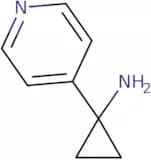
CAS:<p>Versatile small molecule scaffold</p>Formula:C9H10ClN3SPurity:Min. 95%Molecular weight:227.71 g/molCyclopropanamine, 1-(4-pyridinyl)-, hydrochloride (1:2)
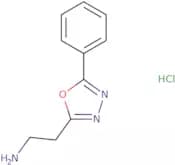
CAS:Versatile small molecule scaffoldFormula:C8H12Cl2N2Purity:Min. 95%Molecular weight:207.1 g/mol2-(5-Phenyl-1,3,4-oxadiazol-2-yl)ethan-1-amine hydrochloride
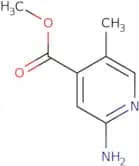
CAS:<p>Versatile small molecule scaffold</p>Formula:C10H12ClN3OPurity:Min. 95%Molecular weight:225.67 g/molMethyl 2-amino-5-methylpyridine-4-carboxylate
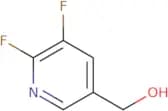
CAS:Versatile small molecule scaffoldFormula:C8H10N2O2Purity:Min. 95%Molecular weight:166.18 g/mol(5,6-Difluoropyridin-3-yl)methanol
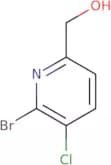
CAS:<p>Versatile small molecule scaffold</p>Formula:C6H5F2NOPurity:Min. 95%Molecular weight:145.11 g/mol(6-Bromo-5-chloropyridin-2-yl)methanol
CAS:<p>Versatile small molecule scaffold</p>Formula:C6H5BrClNOPurity:Min. 95%Molecular weight:222.47 g/molrac-(1R,2S)-2-(Pyridin-3-yl)cyclopropan-1-amine dihydrochloride
CAS:<p>Versatile small molecule scaffold</p>Formula:C8H12Cl2N2Purity:Min. 95%Molecular weight:207.1 g/mol[1-(Pyridin-4-yl)cyclobutyl]methanamine
CAS:<p>Versatile small molecule scaffold</p>Formula:C10H14N2Purity:Min. 95%Molecular weight:162.2 g/mol[1-(Pyridin-2-yl)cyclobutyl]methanamine
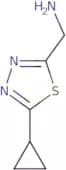
CAS:<p>Versatile small molecule scaffold</p>Formula:C10H14N2Purity:Min. 95%Molecular weight:162.23 g/mol(5-Cyclopropyl-1,3,4-thiadiazol-2-yl)methanamine
CAS:<p>Versatile small molecule scaffold</p>Formula:C6H9N3SPurity:Min. 95%Molecular weight:155.22 g/mol4-Fluoro-3-[(2,2,2-trifluoroethyl)amino]phenol
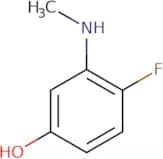
CAS:<p>Versatile small molecule scaffold</p>Formula:C8H7F4NOPurity:Min. 95%Molecular weight:209.14 g/mol4-Fluoro-3-(methylamino)phenol
CAS:<p>Versatile small molecule scaffold</p>Formula:C7H8FNOPurity:Min. 95%Molecular weight:141.14 g/molBenzyl azocane-1-carboxylate
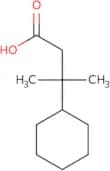
CAS:Versatile small molecule scaffoldFormula:C15H21NO2Purity:Min. 95%Molecular weight:247.3 g/mol3-Cyclohexyl-3-methylbutanoic acid
CAS:<p>Versatile small molecule scaffold</p>Formula:C11H20O2Purity:Min. 95%Molecular weight:184.27 g/mol2-(Propan-2-yl)thiophene
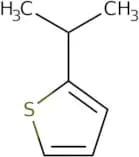
CAS:<p>2-(Propan-2-yl)thiophene is a cyclopropylamine that reacts with ruthenium to form a ruthenium complex. This complex is thermodynamically stable, and can absorb light in the visible region of the spectrum. The addition of ligands such as phenanthroline or isopropyl groups enhances its photophysical properties, and can be used to catalyze alkylation reactions. 2-(Propan-2-yl)thiophene has an electron-withdrawing group on the phenyl ring, which makes it susceptible to nucleophilic attack by electrophiles. This property is useful for kinetic studies of alkylation reactions, because it allows for observation of the rate at which an alkylating agent approaches a given substrate.</p>Formula:C7H10SPurity:Min. 95%Molecular weight:126.22 g/mol
![[1-(2-bromophenyl)cyclobutyl]methanamine hydrochloride](/_next/image/?url=https%3A%2Fstatic.cymitquimica.com%2Fproducts%2F3D%2Fthumb-webp%2FDZB87939.webp&w=3840&q=75)

![[1-(Pyridin-4-yl)cyclobutyl]methanamine](/_next/image/?url=https%3A%2Fstatic.cymitquimica.com%2Fproducts%2F3D%2Fthumb-webp%2FDZB99471.webp&w=3840&q=75)
![[1-(Pyridin-2-yl)cyclobutyl]methanamine](/_next/image/?url=https%3A%2Fstatic.cymitquimica.com%2Fproducts%2F3D%2Fthumb-webp%2FDZB99477.webp&w=3840&q=75)
![4-Fluoro-3-[(2,2,2-trifluoroethyl)amino]phenol](/_next/image/?url=https%3A%2Fstatic.cymitquimica.com%2Fproducts%2F3D%2Fthumb-webp%2FDZB99651.webp&w=3840&q=75)