


Building Blocks
This section contains fundamental products for the synthesis of organic and biological compounds. Building blocks are the essential starting materials used to construct complex molecules through various chemical reactions. They play a critical role in drug discovery, material science, and chemical research. At CymitQuimica, we offer a diverse range of high-quality building blocks to support your innovative research and industrial projects, ensuring you have the essential components for successful synthesis.
Subcategories of "Building Blocks"
- Boronic Acids & Boronic Acid Derivatives(5,756 products)
- Chiral Building Blocks(1,242 products)
- Hydrocarbon Building Blocks(6,095 products)
- Organic Building Blocks(61,051 products)
Found 199813 products of "Building Blocks"
Sort by
Purity (%)
0
100
|
0
|
50
|
90
|
95
|
100
3-Chloro-±-methylbenzyl Alcohol
CAS:<p>3-Chloro-±-methylbenzyl Alcohol is an alcohol that can be used as a biocatalyst. It is chiral and has been shown to be an efficient catalyst for the asymmetric synthesis of (R)-2,3-butanediol in the presence of saccharomyces cerevisiae. This compound has also been shown to be an effective optical resolution agent, with a high optical purity and excellent stability in organic solvents. 3-Chloro-±-methylbenzyl Alcohol is useful in the catalyzed conversion of glucose into ethanol, which is a dry weight procedure that does not require water or addition of cosubstrate.</p>Formula:C8H9ClOPurity:Min. 95%Molecular weight:156.61 g/mol2-[2,2-Bis-(1H-indol-3-yl)-ethyl]-phenylamine
CAS:<p>2-[2,2-Bis-(1H-indol-3-yl)-ethyl]-phenylamine is a drug that inhibits the growth of cancer cells by interfering with the epidermal growth factor receptor, which is a protein involved in cell proliferation. This drug has been shown to be effective against leukemia and breast cancer cells. 2-[2,2-Bis-(1H-indol-3-yl)-ethyl]-phenylamine has also been shown to synergistically interact with light emission and preventative therapies, such as radiation therapy and chemotherapy. The compound has been shown to have an effect on body fat mass and also transport properties for certain drugs.</p>Formula:C24H21N3Purity:Min. 95%Molecular weight:351.4 g/mol1-Phenyl-1,2,4-triazolidine-3,5-dione
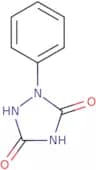
CAS:<p>1-Phenyl-1,2,4-triazolidine-3,5-dione is a molecule that can be used for biological purposes. It has the chemical formula of C6H4N2O3 and a molecular weight of 180.14 g/mol. The hydrogen bonds between the hydroxyl group and the skeleton are strong enough to keep the molecule in shape. The molecule is thermally developable; it can be developed after exposure to heat or light. 1-Phenyl-1,2,4-triazolidine-3,5-dione has been shown to react with silver ions and metal surfaces such as aluminum and titanium oxide. This compound may also be useful for coatings that are reactive to light or heat because it will form a film when exposed to either one.</p>Formula:C8H7N3O2Purity:Min. 95%Molecular weight:177.16 g/mol2-Hydroxyethyl 2-methylpropanoate
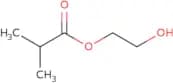
CAS:<p>2-Hydroxyethyl 2-methylpropanoate is a fatty acid ester that has been used as a chemical intermediate in the synthesis of other chemicals. It can be synthesized by reacting a carboxylate with an alcohol, followed by hydrolysis. The reaction is exothermic, and the product has a lipophilic nature. This compound is often used in clinical applications because it is hydrophobic and can form polymers easily.</p>Formula:C6H12O3Purity:Min. 95%Molecular weight:132.16 g/mol5-(3-Bromo-phenyl)-5-methyl-imidazolidine-2,4-dione
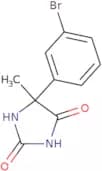
CAS:<p>Versatile small molecule scaffold</p>Formula:C10H9BrN2O2Purity:Min. 95%Molecular weight:269.1 g/mol2-Bromo-allylamine
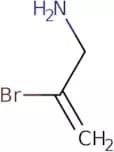
CAS:<p>2-Bromo-allylamine is an inorganic compound that can be used as a synthetic intermediate for organic synthesis. It has been used to synthesize a variety of compounds, such as pharmaceuticals and agrochemicals. The bromide group is attached to the amine group through an ether bond. Bromoallylation is a chemoenzymatic reaction system that uses 2-bromo-allylamine as an intermediate.<br>2-Bromo-allylamine can also be synthesized by reacting allyl chloride with bromine or chlorodibromomethane in the presence of catalysts such as copper(II) acetate and sodium methoxide. This reaction has been shown to be able to produce 2-bromo-allylamine in high yield without any side reactions.</p>Formula:C3H6BrNPurity:Min. 95%Molecular weight:135.99 g/molN-(3-Bromo-4-methoxyphenyl)acetamide
CAS:<p>Versatile small molecule scaffold</p>Formula:C9H10BrNO2Purity:Min. 95%Molecular weight:244.08 g/mol1-(3-Bromopropyl)-3-methoxybenzene
CAS:<p>Versatile small molecule scaffold</p>Formula:C10H13OBrPurity:Min. 95%Molecular weight:229.11 g/molPropanedithioamide
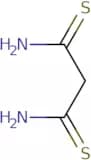
CAS:<p>Propanedithioamide is an organic compound that shows surfactant properties. It has a hydrophobic character and can be used as a coating or stabilizer. Propanedithioamide reacts with metal ions in the environment, such as chloride ions, to form metal-dithiocarbamate complexes that are soluble in organic solvents. The ligand is also able to react with hydroxyl groups on surfaces, which leads to bond cleavage and a new coating. The chemical reactions of propanedithioamide are often used as catalysts for other reactions.</p>Formula:C3H6N2S2Purity:Min. 95%Molecular weight:134.23 g/mol5-Methoxyorotic acid
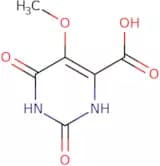
CAS:Versatile small molecule scaffoldFormula:C6H6N2O5Purity:Min. 95%Molecular weight:186.12 g/mol4-(4-Aminophenyl)-4-oxobutanoic acid
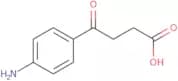
CAS:<p>Versatile small molecule scaffold</p>Formula:C10H11NO3Purity:Min. 95%Molecular weight:193.2 g/mol2-Aminocyclohexanone hydrochloride
CAS:<p>2-Aminocyclohexanone hydrochloride is a hydroxy nitro compound that has shown inhibitory effects on nicotinic acetylcholine receptors of the crth2 type. It is an aromatic hydrocarbon, which contains a fluorine atom and a nitro group. 2-Aminocyclohexanone hydrochloride is structurally related to pyridine compounds and reacts with chlorine in the presence of acid catalysts. The geometric isomers are designated by the prefixes "cis-" or "trans-" and can be differentiated by their physical properties.</p>Formula:C6H12ClNOPurity:Min. 95%Molecular weight:149.62 g/mol3-Acetamido-4-methylbenzoic acid
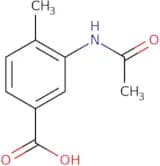
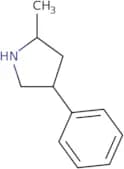
CAS:<p>3-Acetamido-4-methylbenzoic acid is a product of organic synthesis. It is an amide compound and is synthesized by the condensation reaction of cyanamide and aniline. 3-Acetamido-4-methylbenzoic acid has been used in the synthesis of medicines such as nilotinib, which is a tyrosine kinase inhibitor that blocks cancer cell growth.</p>Formula:C10H11NO3Purity:Min. 95%Molecular weight:193.2 g/mol2-Methyl-4-phenylpyrrolidine
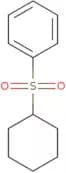
CAS:<p>2-Methyl-4-phenylpyrrolidine is an aryl group that is assembled with a sequence of cyclic, stereoselective, substituent, and organic chemistry. It is reductively alkene and chiral in nature. 2-Methyl-4-phenylpyrrolidine has efficient functional group properties.</p>Formula:C11H15NPurity:Min. 95%Molecular weight:161.24 g/mol(Cyclohexanesulfonyl)benzene
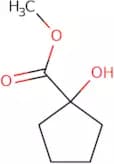
CAS:<p>Cyclohexanesulfonyl)benzene is a chemical compound that can be synthesized by reacting nitrobenzene with benzyl halides in the presence of copper(II) salt. Cyclohexanesulfonyl)benzene can be used for the synthesis of epoxides and anion, which are important intermediates in organic chemistry. Cyclohexanesulfonyl)benzene is also known to have a respiratory disease-preventing effect. It has been shown to prevent radiation-induced damage to the lungs in animals. This effect may be due to its ability to inhibit cyclic nucleotide phosphodiesterase, an enzyme that breaks down cyclic nucleotides and is responsible for bronchoconstriction.</p>Formula:C12H16O2SPurity:Min. 95%Molecular weight:224.32 g/molMethyl 1-hydroxycyclopentane-1-carboxylate
CAS:<p>Versatile small molecule scaffold</p>Formula:C7H12O3Purity:Min. 95%Molecular weight:144.17 g/mol1-[(Methoxycarbonyl)amino]cyclopentane-1-carboxylic acid
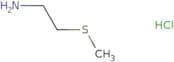
CAS:Versatile small molecule scaffoldFormula:C8H13NO4Purity:Min. 95%Molecular weight:187.19 g/mol2-(Methylthio)ethanamine HCl
CAS:<p>2-Methylthioethanamine HCl is an insecticide that belongs to the group of sulfide compounds. It has been shown to have high insecticidal activity against plutella xylostella at temperatures below 20 degrees Celsius. The bioassay results suggest that 2-Methylthioethanamine HCl is a non-systemic, contact and stomach poison, with no significant toxicity to mammals. This compound has been shown to be photostable and can be used as a stabilizer for perovskite solar cells. 2-Methylthioethanamine HCl inhibits the larval development of Plutella xylostella by interacting with the electron transport chain and blocking ATP synthesis.</p>Formula:C3H10ClNSPurity:Min. 95%Molecular weight:127.64 g/mol[2-(Methylsulfanyl)ethyl]urea
CAS:<p>Versatile small molecule scaffold</p>Formula:C4H10N2OSPurity:Min. 95%Molecular weight:134.2 g/mol3-[(Pyridin-2-ylmethyl)amino]propan-1-ol
CAS:<p>3-[(Pyridin-2-ylmethyl)amino]propan-1-ol is an industrial chemical that is used in the production of peroxy compounds. It is a byproduct of hydrogenation and aluminium production processes, and can be produced using transition metal ions such as copper or nickel. 3-[(Pyridin-2-ylmethyl)amino]propan-1-ol has a low molecular weight, which allows it to be used in a variety of applications. This compound has been shown to interact with adsorption equilibrium and kinetic techniques, as well as being suitable for sustainable development.</p>Formula:C9H14N2OPurity:Min. 95%Molecular weight:166.22 g/mol


![2-[2,2-Bis-(1H-indol-3-yl)-ethyl]-phenylamine](/_next/image/?url=https%3A%2Fstatic.cymitquimica.com%2Fproducts%2F3D%2Fthumb-webp%2FGAA94173.webp&w=3840&q=75)



![1-[(Methoxycarbonyl)amino]cyclopentane-1-carboxylic acid](/_next/image/?url=https%3A%2Fstatic.cymitquimica.com%2Fproducts%2F3D%2Fthumb-webp%2FGAA94976.webp&w=3840&q=75)
![[2-(Methylsulfanyl)ethyl]urea](/_next/image/?url=https%3A%2Fstatic.cymitquimica.com%2Fproducts%2F3D%2Fthumb-webp%2FGAA95055.webp&w=3840&q=75)
![3-[(Pyridin-2-ylmethyl)amino]propan-1-ol](/_next/image/?url=https%3A%2Fstatic.cymitquimica.com%2Fproducts%2F3D%2Fthumb-webp%2FGAA95099.webp&w=3840&q=75)