


Building Blocks
This section contains fundamental products for the synthesis of organic and biological compounds. Building blocks are the essential starting materials used to construct complex molecules through various chemical reactions. They play a critical role in drug discovery, material science, and chemical research. At CymitQuimica, we offer a diverse range of high-quality building blocks to support your innovative research and industrial projects, ensuring you have the essential components for successful synthesis.
Subcategories of "Building Blocks"
- Boronic Acids & Boronic Acid Derivatives(5,756 products)
- Chiral Building Blocks(1,242 products)
- Hydrocarbon Building Blocks(6,095 products)
- Organic Building Blocks(61,055 products)
Found 199650 products of "Building Blocks"
Sort by
Purity (%)
0
100
|
0
|
50
|
90
|
95
|
100
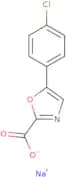
Sodium 5-(4-chlorophenyl)-1,3-oxazole-2-carboxylate
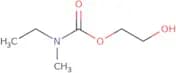
CAS:<p>Versatile small molecule scaffold</p>Formula:C10H5ClNNaO3Purity:Min. 95%Molecular weight:245.59 g/mol2-Hydroxyethyl N-ethyl-N-methylcarbamate
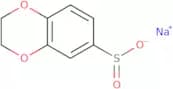
CAS:<p>Versatile small molecule scaffold</p>Formula:C6H13NO3Purity:Min. 95%Molecular weight:147.2 g/molSodium 2,3-dihydro-1,4-benzodioxine-6-sulfinate
CAS:<p>Versatile small molecule scaffold</p>Formula:C8H7NaO4SPurity:Min. 95%Molecular weight:222.2 g/mol2-({[(9H-Fluoren-9-ylmethoxy)carbonyl]amino}methyl)pyridine-4-carboxylic acid
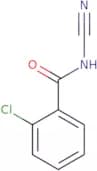
CAS:<p>Versatile small molecule scaffold</p>Formula:C22H18N2O4Purity:Min. 95%Molecular weight:374.4 g/mol2-Chloro-N-cyanobenzamide
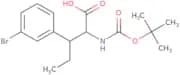
CAS:<p>Versatile small molecule scaffold</p>Formula:C8H5ClN2OPurity:Min. 95%Molecular weight:180.59 g/mol3-(3-Bromophenyl)-2-((tert-butoxycarbonyl)amino)pentanoic acid
CAS:<p>Versatile small molecule scaffold</p>Formula:C16H22BrNO4Purity:Min. 95%Molecular weight:372.25 g/moltert-Butyl 4-hydroxy-9-oxa-2-azaspiro[5.5]undecane-2-carboxylate
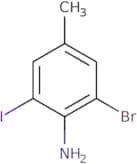
CAS:<p>Versatile small molecule scaffold</p>Formula:C14H25NO4Purity:Min. 95%Molecular weight:271.4 g/mol2-Bromo-6-iodo-4-methylaniline
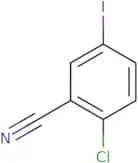
CAS:<p>2-Bromo-6-iodo-4-methylaniline (BIOM) is an inorganic compound that has absorption spectroscopy properties. BIOM has a strong absorption band at 450 nm and a weak absorption band at 700 nm, which is indicative of the shift from the lower energy state to the higher energy state. This process, known as photochemical shift, is caused by the benzannulation of BIOM. The functional theory explains how this process occurs when BIOM absorbs light energy. The phenanthridinyl framework of BIOM ensures that it can be used as a ligand for transition metal complexes. This ligand also exhibits chiral properties. When BIOM absorbs light energy, it undergoes a red shift to its ground state because it is chiral and there are two possible pathways for the electron transfer. These pathways have different energies and produce different products.</p>Formula:C7H7BrINPurity:Min. 95%Molecular weight:311.95 g/mol2-Chloro-5-iodobenzonitrile
CAS:<p>Versatile small molecule scaffold</p>Formula:C7H3ClINPurity:Min. 95%Molecular weight:263.46 g/mol4-[(5-chloropyridin-2-yl)oxy]benzoic acid
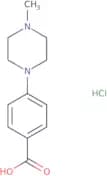
CAS:Versatile small molecule scaffoldFormula:C12H8ClNO3Purity:Min. 95%Molecular weight:249.65 g/mol4-(4-Methylpiperazin-1-yl)benzoic acid HCl
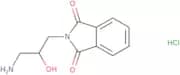
CAS:<p>Versatile small molecule scaffold</p>Formula:C12H16N2O2·HClPurity:Min. 95%Molecular weight:256.73 g/mol2-(3-Amino-2-hydroxypropyl)-2,3-dihydro-1H-isoindole-1,3-dione hydrochloride
CAS:<p>Versatile small molecule scaffold</p>Formula:C11H13ClN2O3Purity:Min. 95%Molecular weight:256.68 g/molN-[4-(Benzylsulfamoyl)phenyl]acetamide
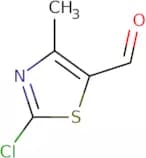
CAS:<p>4-Benzylsulfamoylphenacetamide is a chemical compound with the molecular formula CHNO that contains a benzene ring, two-dimensional hydrogen bonding, an amide group, and a torsion angle. This chemical has been researched for its possible use as an antibiotic. 4-Benzylsulfamoylphenacetamide is a conformationally restricted molecule with coplanar bonds. It has been shown to have dihedral angles of 0° and 180°.</p>Formula:C15H16N2O3SPurity:Min. 95%Molecular weight:304.4 g/mol2-Chloro-4-methylthiazole-5-carbaldehyde
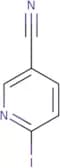
CAS:Versatile small molecule scaffoldFormula:C5H4ClNOSPurity:Min. 95%Molecular weight:161.61 g/mol6-Iodonicotinonitrile
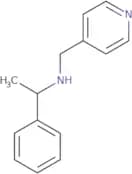
CAS:<p>Iodonicotinonitrile is a versatile and efficient regioselective coupling catalyst for the synthesis of substituted heteroaryl bromides. Iodonicotinonitrile converts potassium iodide to an iodonium salt with copper(I) chloride, which in turn reacts with aryl or heteroaryl bromides to give the desired products in high yields. The use of iodonicotinonitrile as a coupling agent provides advantages over other methods such as the addition of iodine to an aryl halide. The use of iodonicotinonitrile is advantageous because it can be used in both acidic and basic conditions and is also more efficient than other methods.</p>Formula:C6H3IN2Purity:Min. 95%Molecular weight:230 g/mol(1-Phenyl-ethyl)-pyridin-4-ylmethyl-amine
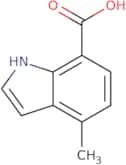
CAS:<p>Versatile small molecule scaffold</p>Formula:C14H16N2Purity:Min. 95%Molecular weight:212.29 g/mol4-Methyl-1H-indole-7-carboxylic acid
CAS:<p>Versatile small molecule scaffold</p>Formula:C10H9NO2Purity:Min. 95%Molecular weight:175.18 g/mol2-Aminopyrimidine-5-sulfonyl chloride
CAS:<p>Versatile small molecule scaffold</p>Formula:C4H4ClN3O2SPurity:Min. 95%Molecular weight:193.61 g/mol[2-(1H-Indol-3-yl)ethyl][(1-methyl-1H-pyrrol-2-yl)methyl]amine
CAS:<p>Versatile small molecule scaffold</p>Formula:C16H19N3Purity:Min. 95%Molecular weight:253.34 g/mol9-Benzyl-9-azabicyclo[3.3.1]nonan-3-ol
CAS:<p>Versatile small molecule scaffold</p>Formula:C15H21NOPurity:Min. 95%Molecular weight:231.33 g/mol

![2-({[(9H-Fluoren-9-ylmethoxy)carbonyl]amino}methyl)pyridine-4-carboxylic acid](/_next/image/?url=https%3A%2Fstatic.cymitquimica.com%2Fproducts%2F3D%2Fthumb-webp%2FPKC97742.webp&w=3840&q=75)
![tert-Butyl 4-hydroxy-9-oxa-2-azaspiro[5.5]undecane-2-carboxylate](/_next/image/?url=https%3A%2Fstatic.cymitquimica.com%2Fproducts%2F3D%2Fthumb-webp%2FPKD86557.webp&w=3840&q=75)
![4-[(5-chloropyridin-2-yl)oxy]benzoic acid](/_next/image/?url=https%3A%2Fstatic.cymitquimica.com%2Fproducts%2F3D%2Fthumb-webp%2FPLA04448.webp&w=3840&q=75)
![N-[4-(Benzylsulfamoyl)phenyl]acetamide](/_next/image/?url=https%3A%2Fstatic.cymitquimica.com%2Fproducts%2F3D%2Fthumb-webp%2FPLA06113.webp&w=3840&q=75)

![[2-(1H-Indol-3-yl)ethyl][(1-methyl-1H-pyrrol-2-yl)methyl]amine](/_next/image/?url=https%3A%2Fstatic.cymitquimica.com%2Fproducts%2F3D%2Fthumb-webp%2FPLA48779.webp&w=3840&q=75)
![9-Benzyl-9-azabicyclo[3.3.1]nonan-3-ol](/_next/image/?url=https%3A%2Fstatic.cymitquimica.com%2Fproducts%2F3D%2Fthumb-webp%2FPLA48786.webp&w=3840&q=75)