Building Blocks
This section contains fundamental products for the synthesis of organic and biological compounds. Building blocks are the essential starting materials used to construct complex molecules through various chemical reactions. They play a critical role in drug discovery, material science, and chemical research. At CymitQuimica, we offer a diverse range of high-quality building blocks to support your innovative research and industrial projects, ensuring you have the essential components for successful synthesis.
Subcategories of "Building Blocks"
- Boronic Acids & Boronic Acid Derivatives(5,756 products)
- Chiral Building Blocks(1,242 products)
- Hydrocarbon Building Blocks(6,095 products)
- Organic Building Blocks(61,055 products)
Found 199650 products of "Building Blocks"
Sort by
Purity (%)
0
100
|
0
|
50
|
90
|
95
|
100
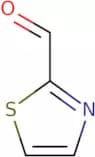
2-Thiazole carboxaldehyde
CAS:<p>2-Thiazolecarboxaldehyde is a reactive compound that has been synthesized in an asymmetric synthesis. It has shown to have biological properties and structural analysis, as well as being used in analytical chemistry. 2-Thiazolecarboxaldehyde is a heterocycle that has been used in the production of fluorescence probes for the detection of amines and thiols. 2-Thiazolecarboxaldehyde also has antiinflammatory activity, with its activity being reversible due to its covalent nature. It has been shown to have some efficacy in autoimmune diseases, although it is not as potent as other drugs such as prednisolone.</p>Formula:C4H3NOSPurity:Min. 95%Color and Shape:Colorless Clear LiquidMolecular weight:113.14 g/mol5,6,7,8-Tetrahydronaphthalene-1-carbaldehyde
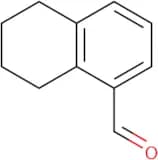
CAS:<p>Please enquire for more information about 5,6,7,8-Tetrahydronaphthalene-1-carbaldehyde including the price, delivery time and more detailed product information at the technical inquiry form on this page</p>Formula:C11H12OPurity:Min. 95%Color and Shape:Clear LiquidMolecular weight:160.21 g/molp-Toluenesulfonic acid monohydrate
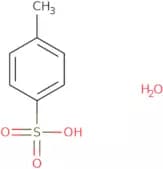
CAS:<p>p-Toluenesulfonic acid monohydrate is a white, crystalline solid that is soluble in water. It is used as a catalyst for the synthesis of various organic compounds and pharmaceuticals. p-Toluenesulfonic acid monohydrate has been shown to have an effect on the thermal expansion of certain polymers and to be useful for preparation of medicinal preparations with high uptake. This compound can also be used as a carbon source for the production of various organic compounds.</p>Formula:CH3C6H4SO3H·H2OColor and Shape:PowderMolecular weight:190.22 g/molTripropylphosphine
CAS:<p>Tripropylphosphine is a fatty acid that can be synthesized by reacting tripropyl alcohol with phosphorus trichloride. Tripropylphosphine is soluble in organic solvents, and has an optical rotation of +58°. It has been shown to have cancer-inhibiting properties, as well as the ability to inhibit tumor growth and induce apoptosis in cancer cells. This compound may also be used as a growth regulator, since it inhibits the synthesis of certain proteins and enzymes.</p>Formula:C9H21PPurity:Min. 95%Molecular weight:160.24 g/mol1,2,3,4-Tetrahydro-2,6-naphthyridine
CAS:<p>1,2,3,4-Tetrahydro-2,6-naphthyridine is a metalated naphthyridine. It is an inhibitor of the transporter and reuptake transporter of histamine and serotonin. The compound has been shown to bind to the transporter site of neurotransmitters such as serotonin and histamine. This binding blocks the uptake and release of neurotransmitters from nerve cells, preventing the transmission of nerve impulses.</p>Formula:C8H10N2Purity:Min. 95%Molecular weight:134.18 g/mol2,3,5-Trichloropyridine
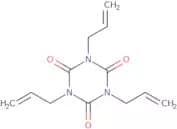
CAS:<p>2,3,5-Trichloropyridine is a chemical compound that reacts with chlorine and hydroxide to form hydrogen chloride and sodium hydroxide. It is used in the wastewater treatment process as an oxidizing agent for the removal of organic compounds from water. 2,3,5-Trichloropyridine is also used as a chlorinating agent for various purposes such as the production of acrylonitrile or the destruction of hazardous wastes. The reaction products are hydrochloric acid and sodium carbonate. This substance may react with nucleophiles to form more reactive species such as nitronium ions.</p>Formula:C5H2Cl3NPurity:Min. 95%Molecular weight:180.92528Triallyl Isocyanurate
CAS:<p>Increases crosslinking efficiency in manufacture of polymers and rubbers</p>Formula:C12H15N3O3Purity:Min. 95%Molecular weight:249.27 g/moltrans-4,5-Epoxy-2(E)-decenal
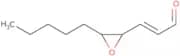
CAS:<p>Trans-4,5-Epoxy-2(E)-Decenal is a polyunsaturated molecule that can react with amines to form nitrosamines. This compound is found in fried foods and has been shown to inhibit the activity of detoxification enzymes. Trans-4,5-Epoxy-2(E)-Decenal reacts with reactive oxygen species and forms DNA adducts, which are mutagenic and carcinogenic. It also is able to induce the production of malondialdehyde, a marker for lipid peroxidation. The effect of this compound on cancer cells was assessed using CD1 mouse skin cells in vitro and in vivo. In vitro studies showed that trans-4,5-epoxy-2(E)-decenal inhibited transcriptional regulation by downregulating fatty acid synthase expression and upregulating p21 protein expression. In vivo studies demonstrated that trans-4,5-epoxy-2(E)-decenal</p>Formula:C10H16O2Purity:Min. 95%Molecular weight:168.23 g/molTetrahydrodicyclopentadiene
CAS:Please enquire for more information about Tetrahydrodicyclopentadiene including the price, delivery time and more detailed product information at the technical inquiry form on this pageFormula:C10H16Purity:Min. 95%Molecular weight:136.23 g/mol(+)-α-Tocopherol-d6
CAS:Controlled Product<p>Please enquire for more information about (+)-α-Tocopherol-d6 including the price, delivery time and more detailed product information at the technical inquiry form on this page</p>Formula:C29H44D6O2Purity:Min. 95%Molecular weight:436.74 g/molTrisodium 7-hydroxynaphthalene-1,3,6-trisulphonate
CAS:<p>Please enquire for more information about Trisodium 7-hydroxynaphthalene-1,3,6-trisulphonate including the price, delivery time and more detailed product information at the technical inquiry form on this page</p>Formula:C10H8O10S3•Na3Purity:Min. 95%Molecular weight:453.33 g/mol3-Tolperisone hydrochloride
CAS:<p>Please enquire for more information about 3-Tolperisone hydrochloride including the price, delivery time and more detailed product information at the technical inquiry form on this page</p>Formula:C16H23NO•HClPurity:Min. 95%Molecular weight:281.82 g/molTazarotenic acid methyl ester
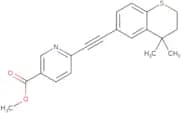
CAS:<p>Please enquire for more information about Tazarotenic acid methyl ester including the price, delivery time and more detailed product information at the technical inquiry form on this page</p>Formula:C20H19NO2SPurity:Min. 95%Molecular weight:337.44 g/mol6,7,8,9-Tetrahydro carvedilol
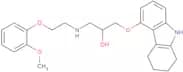
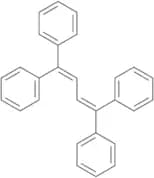
CAS:<p>Please enquire for more information about 6,7,8,9-Tetrahydro carvedilol including the price, delivery time and more detailed product information at the technical inquiry form on this page</p>Formula:C24H30N2O4Purity:Min. 95%Molecular weight:410.51 g/mol1,1,4,4-Tetraphenyl-1,3-butadiene
CAS:<p>1,1,4,4-Tetraphenyl-1,3-butadiene is a chemical compound that is stable in air and water. It has been shown to be active against pluripotent cells which are the precursor of all cells in the body. 1,1,4,4-Tetraphenyl-1,3-butadiene has been used for a number of biochemical research studies and has been shown to have electrochemical properties as an electrode material. This compound also has high values for toxicological studies. It can be found in the atmosphere at low levels but can also be released into the environment from industrial sources such as electric arc furnaces or coal burning plants.</p>Formula:C28H22Purity:Min. 99.0%Color and Shape:White PowderMolecular weight:358.47 g/molTriisopropylsilyl trifluoromethanesulphonate
CAS:<p>Triisopropylsilyl trifluoromethanesulphonate (TIPS) is a naturally occurring compound that inhibits the enzyme dipeptidyl peptidase IV (DPP-IV). It has been shown to be active against alopecia areata in a mouse model and may have therapeutic potential for other autoimmune diseases. TIPS also has an inhibitory effect on sodium-dependent glucose transport, which may be useful in the treatment of hypertension. The reactive group of TIPS is hydroxyl, which can form a covalent bond with serine proteases and inhibit their activity. This reaction mechanism provides a new way to treat disorders such as metabolic diseases and infectious diseases. TIPS also has an inhibitory effect on ns3 protease, which is involved in the replication of human immunodeficiency virus type 1 (HIV-1) and other retroviruses.</p>Formula:C10H21F3O3SSiPurity:Min. 95%Color and Shape:Colourless Clear LiquidMolecular weight:306.42 g/mol1,4,7-Triazacyclononane trihydrochloride
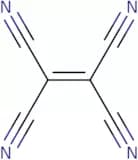
CAS:<p>1,4,7-Triazacyclononane trihydrochloride is a coordination compound that belongs to the class of ligands. It is a chelate ring with six phosphate groups and six nitrogen atoms. It has been shown to behave as an irreversible oxidation catalyst for carboxylate and amine molecules. This molecule also has redox potentials in the range of -0.35 to -0.5 volts and can reversibly oxidize inorganic acids with strong electron-donating properties such as phosphoric acid, nitric acid, and sulfuric acid. 1,4,7-Triazacyclononane trihydrochloride has been shown to be effective as a hydrogen bonding agent in x-ray crystal structures.</p>Formula:C6H15N3·3HClPurity:Min. 95%Color and Shape:Off-White PowderMolecular weight:238.59 g/molTetracyanoethylene
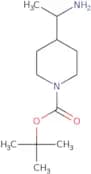
CAS:<p>Used for post-functional addition to polyphenylacetylene derivatives</p>Formula:C6N4Color and Shape:White PowderMolecular weight:128.09 g/moltert-Butyl 4-(1-aminoethyl)piperidine-1-carboxylate
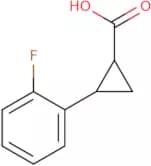
CAS:<p>Versatile small molecule scaffold</p>Formula:C12H24N2O2Purity:Min. 95%Molecular weight:228.33 g/mol2-(2-Fluorophenyl)cyclopropanecarboxylic acid
CAS:<p>Versatile small molecule scaffold</p>Formula:C10H9FO2Purity:Min. 95%Molecular weight:180.18 g/mol