Building Blocks
This section contains fundamental products for the synthesis of organic and biological compounds. Building blocks are the essential starting materials used to construct complex molecules through various chemical reactions. They play a critical role in drug discovery, material science, and chemical research. At CymitQuimica, we offer a diverse range of high-quality building blocks to support your innovative research and industrial projects, ensuring you have the essential components for successful synthesis.
Subcategories of "Building Blocks"
- Boronic Acids & Boronic Acid Derivatives(5,778 products)
- Chiral Building Blocks(1,242 products)
- Hydrocarbon Building Blocks(6,098 products)
- Organic Building Blocks(61,084 products)
Found 198714 products of "Building Blocks"
Sort by
Purity (%)
0
100
|
0
|
50
|
90
|
95
|
100
(2S)-3-Carbamoyl-2-[5-(dimethylamino)naphthalene-1-sulfonamido]propanoic acid
CAS:(2S)-3-Carbamoyl-2-[5-(dimethylamino)naphthalene-1-sulfonamido]propanoic acid is a fluorescent probe that binds to human serum albumin. It has been used as an inhibitor of the enzyme α1-acid glycoprotein, which is involved in the degradation of fatty acids and glycopeptides. The binding constants have been determined by fluorescence titration and are site specific. (2S)-3-Carbamoyl-2-[5-(dimethylamino)naphthalene-1-sulfonamido]propanoic acid is a molecule that can be used for metal chelation, which has been demonstrated by its ability to inhibit the activity of enzymes such as α1-acid glycoprotein. This compound also has a role in endogenous substances such as fatty acids and tryptophan fluorescence.Formula:C16H19N3O5SPurity:Min. 95%Molecular weight:365.4 g/molBenzyl(1-phenylpropan-2-yl)amine
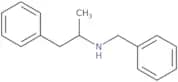
CAS:Controlled Product<p>Benzyl(1-phenylpropan-2-yl)amine is a piperidine derivative that acts as an inhibitor of cytochrome P450 enzymes. It binds to the CYP2D6 enzyme and has been shown to have an inhibitory effect on the activity of this enzyme in rat liver microsomes. The binding constants for benzyl(1-phenylpropan-2-yl)amine with the CYP2D6 enzyme were determined by competitive inhibition studies and it was found that this compound has a high binding affinity with the CYP2D6 enzyme. Studies also demonstrated that benzyl(1-phenylpropan-2-yl)amine inhibits the activity of CYP3A4 and CYP3A5 enzymes. This drug may be useful in treating some individuals who are taking drugs metabolized by these two enzymes, but will not be effective in people who are not taking any drugs metabolized by these two enzymes.</p>Formula:C16H19NPurity:Min. 95%Molecular weight:225.33 g/mol(4-Aminophenyl)phosphonic Acid
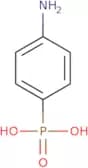
CAS:4-Aminophenylphosphonic acid (4AP) is an organic compound that is used as a building block for the synthesis of other chemicals. It reacts optimally with chlorhexidine, a human receptor binding agent, to form 4-aminophenylchlorohexidinium chloride. 4AP has been shown to have antimicrobial properties and is used in topical applications. It also has an inhibitory effect on the growth of bacteria such as Pseudomonas aeruginosa, which can cause serious infections in humans. 4AP inhibits bacterial growth by interfering with the synthesis of proteins and nucleic acids. This inhibition occurs because 4AP binds to phosphatases and hydrolyzes them into phosphate and amine groups. The amine group will bind to the DNA or RNA molecule and inhibit its function.Formula:C6H8NO3PPurity:Min. 95%Molecular weight:173.11 g/mol3-(Methylsulfonyl)benzenesulfonyl Chloride
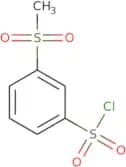
CAS:Versatile small molecule scaffoldFormula:C7H7ClO4S2Purity:Min. 95%Molecular weight:254.71 g/mol1-Methyl-1H-pyrazolo[3,4-d]pyrimidin-4(7H)-one
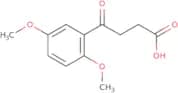
CAS:Versatile small molecule scaffoldFormula:C6H6N4OPurity:Min. 95%Molecular weight:150.14 g/mol3-(2′,5′-Dimethoxybenzoyl)propionic acid
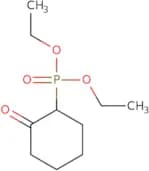
CAS:Versatile small molecule scaffoldFormula:C12H14O5Purity:Min. 95%Molecular weight:238.24 g/molDiethyl (2-oxocyclohexyl)phosphonate
CAS:<p>Versatile small molecule scaffold</p>Formula:C10H19O4PPurity:Min. 95%Molecular weight:234.23 g/molN,1-Dimethyl-1H-pyrazolo[3,4-d]pyrimidin-4-amine
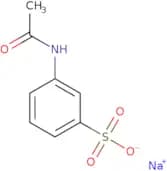
CAS:<p>N,1-Dimethyl-1H-pyrazolo[3,4-d]pyrimidin-4-amine is an isomer of pyrazolopyrimidine. It has been shown to be a strong inhibitor of uracil incorporation in DNA and RNA syntheses. The autoassociation kinetics of this compound are dependent on the concentration of its methyl derivatives. The equilibrium constants for the N,1-dimethyl derivative are different from those for the N,2-dimethyl derivative. The parameters and constants used in the simulation were obtained from thermodynamic calculations and from experimental data for other molecules with similar properties. The equilibrium constant for tautomeric interaction was determined by calculating the ratio of concentrations at equilibrium for two competing tautomers.</p>Formula:C7H9N5Purity:Min. 95%Molecular weight:163.18 g/molSodium 3-acetamidobenzene-1-sulfonate
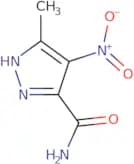
CAS:Versatile small molecule scaffoldFormula:C8H8NNaO4SPurity:Min. 95%Molecular weight:237.21 g/mol5-Methyl-4-nitro-1H-pyrazole-3-carboxamide
CAS:<p>Versatile small molecule scaffold</p>Formula:C5H6N4O3Purity:Min. 95%Molecular weight:170.13 g/mol3-Azaspiro[5.6]dodecane-2,4-dione
CAS:<p>Versatile small molecule scaffold</p>Formula:C11H17NO2Purity:Min. 95%Molecular weight:195.26 g/mol6-Chloro-1-methyl-1H-pyrazolo[3,4-d]pyrimidin-4(7H)-one
CAS:<p>Versatile small molecule scaffold</p>Formula:C6H5ClN4OPurity:Min. 95%Molecular weight:184.58 g/mol4-(3,4-dimethoxyphenyl)-4-oxobutanoic acid
CAS:<p>4-(3,4-dimethoxyphenyl)-4-oxobutanoic acid is an acylation reaction product. It can be made by the acylation of succinic anhydride with nitrobenzene. Optimizing the parameters for this reaction will yield the most desirable product. The optimum conditions for this reaction are 30 minutes at 60 degrees Celsius in a solvent of propionic acid. 4-(3,4-dimethoxyphenyl)-4-oxobutanoic acid can also be made by the Friedel-Crafts acylation reaction between veratrole and succinic anhydride. This reaction takes place over a period of 20 hours at room temperature in a solvent of ethylene glycol dimethyl ether.</p>Formula:C12H14O5Purity:Min. 95%Molecular weight:238.24 g/mol4-Methylcyclohex-1-ene-1-carboxylic acid
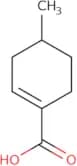
CAS:<p>Versatile small molecule scaffold</p>Formula:C8H12O2Purity:Min. 95%Molecular weight:140.18 g/mol3-Bromo-2,4,6-trimethylbenzoic acid
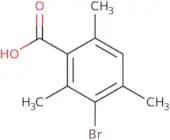
CAS:<p>Versatile small molecule scaffold</p>Formula:C10H11BrO2Purity:Min. 95%Molecular weight:243.1 g/mol2-(3-Nitrophenoxymethyl)oxirane
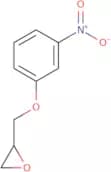
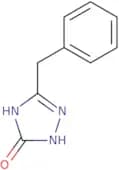
CAS:<p>Versatile small molecule scaffold</p>Formula:C9H9NO4Purity:Min. 95%Molecular weight:195.17 g/mol3-benzyl-4,5-dihydro-1H-1,2,4-triazol-5-one
CAS:<p>Versatile small molecule scaffold</p>Formula:C9H9N3OPurity:Min. 95%Molecular weight:175.19 g/mol1-Phenylpentane-1,3-dione
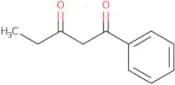
CAS:<p>1-Phenylpentane-1,3-dione is an organic compound that is a colorless liquid at room temperature. It belongs to the class of aliphatic hydrocarbons and can be used as an organic solution or as an alcohol group in organic solvents. This compound has a hydroxyl group and a hydroxy group, which gives it the ability to react with other compounds. 1-Phenylpentane-1,3-dione has been shown to be a good solvent for many organic reactions. It reacts with metals such as iron to form metal chelate complexes. 1-Phenylpentane-1,3-dione is also used in radiation treatments because it blocks the formation of new abnormal cells. The average particle diameter of this compound is 6 nm and its particle size ranges from 0.01 μm to 10 μm.</p>Formula:C11H12O2Purity:Min. 95%Molecular weight:176.21 g/mol2-(Thiophen-2-yl)propan-2-ol
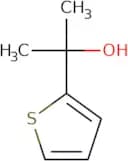
CAS:<p>Versatile small molecule scaffold</p>Formula:C7H10OSPurity:Min. 95%Molecular weight:142.22 g/mol6-Methoxyquinaldine
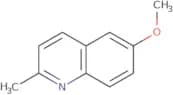
CAS:<p>6-Methoxyquinaldine is a fluorescent chemical that is used to study the structural changes of proteins. 6-Methoxyquinaldine is oxidized by various reagents, such as anilines and sulphates, to produce fluorescent products. The fluorescence intensity of the product can be quantified using fluorimetric analysis or microscopy techniques. The fluorescent products can be visualized using UV irradiation (365 nm) or by fluorescence microscopy. 6-Methoxyquinaldine can also be used in calibrating imaging techniques, such as confocal laser scanning microscopy.</p>Formula:C11H11NOPurity:Min. 95%Molecular weight:173.21 g/mol
![(2S)-3-Carbamoyl-2-[5-(dimethylamino)naphthalene-1-sulfonamido]propanoic acid](/_next/image/?url=https%3A%2Fstatic.cymitquimica.com%2Fproducts%2F3D%2Fthumb-webp%2FBAA10023.webp&w=3840&q=75)

![1-Methyl-1H-pyrazolo[3,4-d]pyrimidin-4(7H)-one](/_next/image/?url=https%3A%2Fstatic.cymitquimica.com%2Fproducts%2F3D%2Fthumb-webp%2FFAA33456.webp&w=3840&q=75)
![N,1-Dimethyl-1H-pyrazolo[3,4-d]pyrimidin-4-amine](/_next/image/?url=https%3A%2Fstatic.cymitquimica.com%2Fproducts%2F3D%2Fthumb-webp%2FFAA33449.webp&w=3840&q=75)
![3-Azaspiro[5.6]dodecane-2,4-dione](/_next/image/?url=https%3A%2Fstatic.cymitquimica.com%2Fproducts%2F3D%2Fthumb-webp%2FBAA07889.webp&w=3840&q=75)
![6-Chloro-1-methyl-1H-pyrazolo[3,4-d]pyrimidin-4(7H)-one](/_next/image/?url=https%3A%2Fstatic.cymitquimica.com%2Fproducts%2F3D%2Fthumb-webp%2FFAA33435.webp&w=3840&q=75)