Building Blocks
This section contains fundamental products for the synthesis of organic and biological compounds. Building blocks are the essential starting materials used to construct complex molecules through various chemical reactions. They play a critical role in drug discovery, material science, and chemical research. At CymitQuimica, we offer a diverse range of high-quality building blocks to support your innovative research and industrial projects, ensuring you have the essential components for successful synthesis.
Subcategories of "Building Blocks"
- Boronic Acids & Boronic Acid Derivatives(5,756 products)
- Chiral Building Blocks(1,242 products)
- Hydrocarbon Building Blocks(6,095 products)
- Organic Building Blocks(61,038 products)
Found 196817 products of "Building Blocks"
Sort by
Purity (%)
0
100
|
0
|
50
|
90
|
95
|
100
6-Bromo-5-methyl-1H-imidazo[4,5-b]pyridin-2-ol
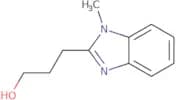
CAS:<p>Versatile small molecule scaffold</p>Formula:C7H6BrN3OPurity:Min. 95%Molecular weight:228.05 g/mol3-(1-Methyl-1H-benzoimidazol-2-yl)-propan-1-ol
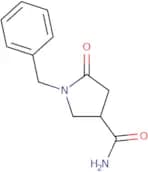
CAS:Controlled Product<p>Versatile small molecule scaffold</p>Formula:C11H14N2OPurity:Min. 95%Molecular weight:190.25 g/mol1-Benzyl-5-oxopyrrolidine-3-carboxamide
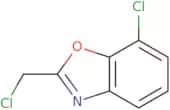
CAS:<p>Versatile small molecule scaffold</p>Formula:C12H14N2O2Purity:Min. 95%Molecular weight:218.26 g/mol7-Chloro-2-(chloromethyl)-1,3-benzoxazole
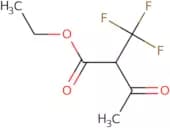
CAS:<p>Versatile small molecule scaffold</p>Formula:C8H5Cl2NOPurity:Min. 95%Molecular weight:202.03 g/molEthyl 3-oxo-2-(trifluoromethyl)butanoate
CAS:<p>Ethyl 3-oxo-2-(trifluoromethyl)butanoate is a reagent that can be used in the synthesis of pyrazoles, 1,3-dicarbonyl compounds and intermediates. This compound is also used as a trifluoromethylation agent in the synthesis of carboxamides. Ethyl 3-oxo-2-(trifluoromethyl)butanoate is synthesized by reacting ethyl 2-methylpropanoate with hydrazine and trifluoroacetic acid. The yields for this reaction are typically high, with the product being obtained in about 90% yield.</p>Formula:C7H9F3O3Purity:Min. 95%Molecular weight:198.14 g/molMethyl 8-oxo-5,6,7,8-tetrahydronaphthalene-2-carboxylate
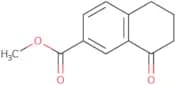
CAS:<p>Versatile small molecule scaffold</p>Formula:C12H12O3Purity:Min. 95%Molecular weight:204.22 g/mol4-(Ethoxycarbonyl)-1H-pyrrole-3-carboxylic acid
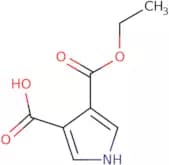
CAS:<p>Versatile small molecule scaffold</p>Formula:C8H9NO4Purity:Min. 95%Molecular weight:183.16 g/mol7-Chloro-2-methyl-[1,3]thiazolo[5,4-d]pyrimidine
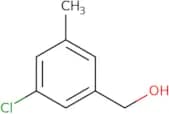
CAS:<p>Versatile small molecule scaffold</p>Formula:C6H4ClN3SPurity:Min. 95%Molecular weight:185.64 g/mol(3-Chloro-5-methylphenyl)methanol
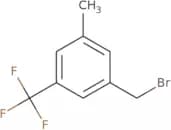
CAS:<p>Versatile small molecule scaffold</p>Formula:C8H9ClOPurity:Min. 95%Molecular weight:156.61 g/mol3-Methyl-5-(trifluoromethyl)benzyl bromide
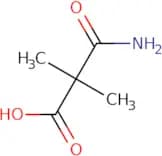
CAS:<p>Versatile small molecule scaffold</p>Formula:C9H8BrF3Purity:Min. 95%Molecular weight:253.06 g/mol2-Carbamoyl-2,2-dimethylacetic acid
CAS:<p>2-Carbamoyl-2,2-dimethylacetic acid (CDCA) is a modulator of peroxisomes that belongs to the class of peroxisome proliferators. It is a lipid soluble molecule with an ability to cross the cell membrane and interact with the peroxisome. CDCA has been shown to activate peroxisomal β-oxidation, which is responsible for removing fatty acids from cells. CDCA also inhibits fatty acid synthesis in liver cells, leading to increased levels of triglycerides in the blood. CDCA belongs to one of three major families of compounds that are used as peroxisome proliferators: phthalates and di(2-ethylhexyl)phthalate (DEHP), dibutylphthalate (DBP), and benzophenones.</p>Formula:C5H9NO3Purity:Min. 95%Molecular weight:131.13 g/mol7-Methyl-2,4-dioxo-1H,2H,3H,4H-pyrido[2,3-d]pyrimidine-5-carboxylic acid
CAS:<p>Versatile small molecule scaffold</p>Formula:C9H7N3O4Purity:Min. 95%Molecular weight:221.17 g/mol6-Bromo-2-methyloxazolo[5,4-b]pyridine
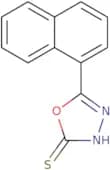
CAS:<p>Versatile small molecule scaffold</p>Formula:C7H5BrN2OPurity:Min. 95%Molecular weight:213.03 g/mol5-(Naphthalen-1-yl)-1,3,4-oxadiazole-2-thiol
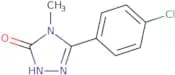
CAS:<p>Versatile small molecule scaffold</p>Formula:C12H8N2OSPurity:Min. 95%Molecular weight:228.27 g/mol3-(4-Chlorophenyl)-4-methyl-4,5-dihydro-1H-1,2,4-triazol-5-one
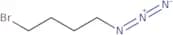
CAS:<p>Versatile small molecule scaffold</p>Formula:C9H8ClN3OPurity:Min. 95%Molecular weight:209.63 g/mol1-Azido-4-bromobutane
CAS:<p>1-Azido-4-bromobutane is a synthetic molecule that can be used to stabilize glycoconjugates. It has been shown to have the ability to inhibit cell proliferation in vitro and in vivo. 1-Azido-4-bromobutane has been shown to induce apoptosis and inhibit tumor growth. The compound also has a high affinity for DNA and can bind to intercalators, which are small molecules that bind to DNA base pairs within the double helix. This property can be used as a diagnostic marker for cancer cells or as an anticancer agent.</p>Formula:C4H8BrN3Purity:Min. 95%Molecular weight:178.03 g/mol1-Methyl 2-Boc-2-azabicyclo[2.1.1]hexane-1-carboxylate
CAS:<p>Versatile small molecule scaffold</p>Formula:C12H19NO4Purity:Min. 95%Molecular weight:241.28 g/mol(1S,3S)-3-{[(tert-Butoxy)carbonyl]amino}-3-(methoxycarbonyl)cyclobutane-1-carboxylic acid
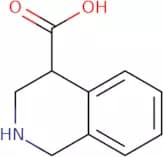
CAS:<p>Versatile small molecule scaffold</p>Formula:C12H19NO6Purity:Min. 95%Molecular weight:273.28 g/mol1,2,3,4-Tetrahydroisoquinoline-4-carboxylic acid
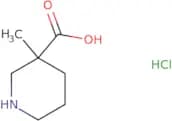
CAS:<p>Versatile small molecule scaffold</p>Formula:C10H11NO2Purity:Min. 95%Molecular weight:177.2 g/mol3-Methylpiperidine-3-carboxylic Acid Hydrochloride
CAS:<p>Versatile small molecule scaffold</p>Formula:C7H13NO2·HClPurity:Min. 95%Molecular weight:179.64 g/mol
![6-Bromo-5-methyl-1H-imidazo[4,5-b]pyridin-2-ol](/_next/image/?url=https%3A%2Fstatic.cymitquimica.com%2Fproducts%2F3D%2Fthumb-webp%2FREA03573.webp&w=3840&q=75)

![7-Chloro-2-methyl-[1,3]thiazolo[5,4-d]pyrimidine](/_next/image/?url=https%3A%2Fstatic.cymitquimica.com%2Fproducts%2F3D%2Fthumb-webp%2FREA05621.webp&w=3840&q=75)
![7-Methyl-2,4-dioxo-1H,2H,3H,4H-pyrido[2,3-d]pyrimidine-5-carboxylic acid](/_next/image/?url=https%3A%2Fstatic.cymitquimica.com%2Fproducts%2F3D%2Fthumb-webp%2FREA08101.webp&w=3840&q=75)
![6-Bromo-2-methyloxazolo[5,4-b]pyridine](/_next/image/?url=https%3A%2Fstatic.cymitquimica.com%2Fproducts%2F3D%2Fthumb-webp%2FREA08118.webp&w=3840&q=75)
![1-Methyl 2-Boc-2-azabicyclo[2.1.1]hexane-1-carboxylate](/_next/image/?url=https%3A%2Fstatic.cymitquimica.com%2Fproducts%2F3D%2Fthumb-webp%2FREA12901.webp&w=3840&q=75)
![(1S,3S)-3-{[(tert-Butoxy)carbonyl]amino}-3-(methoxycarbonyl)cyclobutane-1-carboxylic acid](/_next/image/?url=https%3A%2Fstatic.cymitquimica.com%2Fproducts%2F3D%2Fthumb-webp%2FREA12902.webp&w=3840&q=75)