Building Blocks
This section contains fundamental products for the synthesis of organic and biological compounds. Building blocks are the essential starting materials used to construct complex molecules through various chemical reactions. They play a critical role in drug discovery, material science, and chemical research. At CymitQuimica, we offer a diverse range of high-quality building blocks to support your innovative research and industrial projects, ensuring you have the essential components for successful synthesis.
Subcategories of "Building Blocks"
- Boronic Acids & Boronic Acid Derivatives(5,778 products)
- Chiral Building Blocks(1,242 products)
- Hydrocarbon Building Blocks(6,098 products)
- Organic Building Blocks(61,059 products)
Found 199579 products of "Building Blocks"
Sort by
Purity (%)
0
100
|
0
|
50
|
90
|
95
|
100
4-Amino-N-[2-(pyrrolidin-1-yl)ethyl]benzamide
CAS:Versatile small molecule scaffoldFormula:C13H19N3OPurity:Min. 95%Molecular weight:233.31 g/mol4-Amino-N-[2-(morpholin-4-yl)ethyl]benzamide
CAS:Versatile small molecule scaffoldFormula:C13H19N3O2Purity:Min. 95%Molecular weight:249.31 g/mol5-Ethyl-2-hydroxybenzoic acid
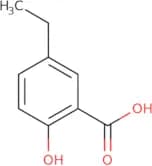
CAS:<p>5-Ethyl-2-hydroxybenzoic acid has the chemical nature of a phenol and is also known as salicylic acid. It is a monosubstituted aromatic carboxylic acid with a methoxy group. The hydroxyl group on this molecule interacts with the hydroxyl group on adjacent molecules to form hydrogen bonds, which gives it stability. Salicylic acid reacts with 4-methoxybenzoic acid to produce 2,4-dihydroxybenzoic acid and salicylic acid. Salicylic acid can also react with ascorbic acid to produce 2,5-dihydroxybenzoic acid and salicylic acid. Salicylic acid can also react with benzoic acids to produce 4-hydroxybenzoic and 2,4,6-trihydroxybenzoic acids.</p>Formula:C9H10O3Purity:Min. 95%Molecular weight:166.18 g/mol1-Phenylbiguanide hydrochloride
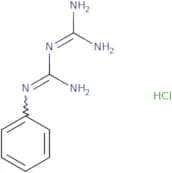
CAS:<p>1-Phenylbiguanide hydrochloride (1PBGH) is a potent inhibitor of the enzyme tyrosinase, which is involved in the synthesis of melanin. It inhibits the production of melanin, resulting in lightening skin coloration. 1PBGH has been shown to inhibit the growth of cancer cells by inhibiting energy metabolism and adenosine triphosphate (ATP) production. 1PBGH also reduces intracellular calcium levels in neuroblastoma cells and inhibits the proliferation of these cancer cells. This drug has been tested for its effectiveness against skin cancers.</p>Formula:C8H11N5·HClPurity:Min. 95%Molecular weight:213.67 g/molPhenylephrine
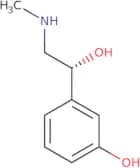
CAS:<p>Phenylephrine is a sympathomimetic drug that stimulates α-adrenergic receptors. It is used to relieve the symptoms of chronic cough and to reduce blood pressure in patients with high blood pressure. Phenylephrine has been shown to inhibit the activity of toll-like receptor 4 on human cells, leading to a reduction in proinflammatory cytokines. In addition, phenylephrine has been shown to inhibit the activity of TLR2 on human cells, which leads to an increase in intracellular calcium levels. The effects of phenylephrine are mediated by activation of non-selective cation channels and inhibition of phosphodiesterases. This drug is also used as a mydriatic and cycloplegic agent for eye disorders such as glaucoma or ocular hypertension.</p>Formula:C9H13NO2Purity:Min. 95%Molecular weight:167.21 g/mol5-Nitro-2-furonitrile
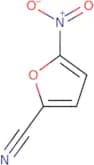
CAS:<p>5-Nitro-2-furonitrile is a nitro compound that is used in the synthesis of other organic compounds. 5-Nitro-2-furonitrile reacts with chloride ions, hydrogen chloride and acid to form nitro radicals, which have a kinetic energy of 5 kcal/mole. The resulting nitro radical can then react with an olefinic or alkoxy radical to form 3-chloroperoxybenzoic acid. This reaction releases the chloride ion and generates hydrochloric acid. 5-Nitro-2-furonitrile is also capable of reacting with azides such as phosphorus oxychloride, forming an azide radical that can be oxidized by 3-chloroperoxybenzoic acid to form a nitric oxide radical. Nitric oxide radicals react with oxygen molecules to produce ozone, thereby releasing the chloride ion and generating hydrochloric acid.<br>5-Nitro-2-furonitrile is used</p>Formula:C5H2N2O3Purity:Min. 95%Molecular weight:138.08 g/mol4-Aminoazobenzene
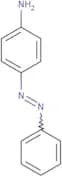
CAS:<p>4-Aminoazobenzene is an azole compound that is structurally similar to diazonium salts. It is an enzyme inducer, which means that it induces the activity of other enzymes. 4-Aminoazobenzene has been shown to increase the activity of DNA polymerase and RNA polymerase in vitro and also inhibits the growth of cultured human cancer cells. This drug has shown genotoxic effects in mice and rats, which may be due to its ability to bind to DNA or form cross-links with DNA. 4-Aminoazobenzene has been used as a chemical intermediate for dyes, photographic chemicals, and pharmaceuticals. It is chemically stable in aqueous solutions at low pH levels but decomposes at higher pH levels or under alkaline conditions. The nitrogen atoms in this compound are not essential for its chemical stability, but are important for binding with monoclonal antibodies such as anti-IgG antibody.</p>Formula:C6H5NNC6H4NH2Purity:Min. 95%Molecular weight:197.24 g/mol1-Methylindolin-2-one
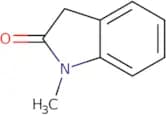
CAS:<p>1-Methylindolin-2-one is an enolate that is synthetically prepared from a methoxymethyl group. 1-Methylindolin-2-one has the ability to inhibit bacterial growth by inhibiting the synthesis of proteins and nucleic acids. It binds to the carbonyl group on the bacteria surface, which prevents the formation of reactive compounds which are necessary for cell division. The reactive form of 1-methylindolin-2-one also has antibacterial activity against a variety of bacteria such as Pseudomonas aeruginosa, Staphylococcus aureus, and Escherichia coli.</p>Formula:C9H9NOPurity:Min. 95%Molecular weight:147.18 g/molIodoaceticacid
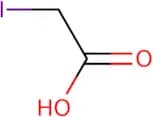
CAS:<p>Iodoacetic acid is a non-steroidal anti-inflammatory drug that is used to relieve pain and reduce inflammation. It reduces the production of prostaglandin E2, which is a chemical mediator of inflammation. Iodoacetic acid has been shown to have no significant effects on energy metabolism or response element activity in human polymorphonuclear leukocytes. Iodoacetic acid has shown to be an effective inhibitor of the enzyme form that converts dinucleotide phosphate (NAD) into NADH (NADase). This compound is stable in sephadex g-100, which allows for easy separation by high-performance liquid chromatography (HPLC). The analytical method for iodoacetic acid involves adding the compound to a buffer solution containing sephadex g-100 and measuring the decrease in light transmission at 236 nm over time.</p>Formula:C2H3IO2Purity:Min. 95%Molecular weight:185.95 g/molAcridine orange hydrochloride hydrate
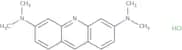
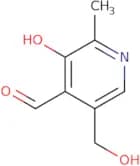
CAS:<p>Acridine orange hydrochloride hydrate is a fluorescent dye that is used as a nucleic acid stain. It can be used to detect the presence of dna in cells. Acridine orange hydrochloride hydrate binds to DNA, intercalates into the double helix, and changes its fluorescence properties. This dye was first synthesized in 1927 by German chemists, but it was not until 1953 that the biological applications became clear. Acridine orange hydrochloride hydrate has been shown to bind to the nuclear DNA of human HL-60 cells and inhibit the polymerase chain reaction (PCR). Acridine orange hydrochloride hydrate is also capable of inhibiting enzyme activities and reactions involving transfer reactions.</p>Formula:C17H20ClN3Purity:Min. 95%Molecular weight:301.8 g/mol3-Hydroxy-5-(hydroxymethyl)-2-methyl-pyridine-4-carbaldehyde
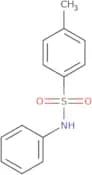
CAS:<p>3-Hydroxy-5-(hydroxymethyl)-2-methyl-pyridine-4-carbaldehyde (3HMPA) is a natural compound that has been shown to have tissue nonspecific effects on the bowel. It is structurally similar to pyridoxal, an amino acid present in food, and may have a role in the synthesis of proteins. 3HMPA has also been shown to be an effective treatment for infectious diseases such as HIV and tuberculosis. 3HMPA binds metal ions by chelation and inhibits the growth of bacteria by inhibiting glutamate production. This compound has also been shown to stimulate physiological responses in mice, including increased heart rate and blood pressure.</p>Formula:C8H9NO3Purity:Min. 95%Molecular weight:167.16 g/molp-Toluenesulfonanilide
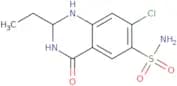
CAS:<p>p-Toluenesulfonanilide is a disinfectant that is used to control the growth of bacteria and fungi. It is effective against a variety of organisms, including Chaetoceros, Cladosporium, Alternaria, and Aspergillus. p-Toluenesulfonanilide has been shown to inhibit the growth of these organisms by interfering with their metabolism. The method for disinfecting water or other liquids is to add one part p-toluenesulfonanilide to at least 100 parts water. This method involves diluting the chemical in water and then adding it to a container containing the liquid that needs to be disinfected.</p>Formula:C13H13NO2SPurity:Min. 95%Molecular weight:247.32 g/molQuinethazone
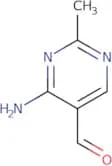
CAS:<p>Quinethazone is a drug that belongs to the class of angiotensin II receptor antagonists. It is used for the treatment of hypertension and congestive heart failure. Quinethazone inhibits angiotensin II, which causes vasoconstriction, increases blood pressure, and decreases sodium excretion. The drug is also an effective inhibitor of the cardiac enzyme carbonic anhydrase and has been shown to be useful in treating diabetic neuropathy. Quinethazone has been found to have inhibitory properties against complex enzymes involved in infectious diseases such as tuberculosis and hepatitis C. This drug also regulates cardiac tissue growth by inhibiting protein genes, thereby preventing the development of cardiac hypertrophy.</p>Formula:C10H12ClN3O3SPurity:Min. 95%Molecular weight:289.74 g/mol4-Amino-5-formyl-2-methylpyrimidine
CAS:<p>4-Amino-5-formyl-2-methylpyrimidine is an intermediate in the metabolism of pargyline and is able to inhibit oxidative enzymes. It has also been shown to be a potent inhibitor of the oxidation of aldehydes, ketones, and alcohols to their corresponding carboxylic acids. 4-Amino-5-formyl-2-methylpyrimidine is capable of inhibiting the oxidation of acetonitrile to nitrile with an IC50 value of 3.6 mM. This compound has not been shown to be an inhibitor of cytochrome P450 or monoamine oxidase, but it inhibits pyridoxal phosphate (a cofactor for tyrosine hydroxylase) and can therefore inhibit dopamine synthesis. The postulated mechanism is that 4-amino-5 formyl 2MMP binds to the active site on pyridoxal phosphate, thereby preventing its conversion into</p>Formula:C6H7N3OPurity:Min. 95%Molecular weight:137.14 g/mol2,2-Dichloropropanoic Acid
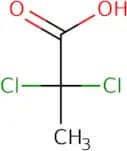
CAS:<p>2,2-Dichloropropanoic Acid is a metabolite of propionic acid that is used in the treatment of autoimmune diseases. It has been shown to inhibit the enzyme activities of calcium pantothenate, polymerase chain, and protease in vitro. 2,2-Dichloropropanoic Acid has also been shown to be effective against bacteria such as Escherichia coli and Klebsiella pneumoniae in animal studies. The optimum concentration for 2,2-dichloropropanoic acid is not yet determined but it has been shown to have no acute toxic effects in rats.</p>Formula:C3H4Cl2O2Purity:Min. 95%Color and Shape:Clear LiquidMolecular weight:142.97 g/mol3,3-Diethylpiperidine-2,4-dione
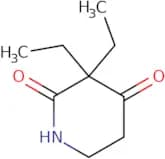
CAS:<p>3,3-Diethylpiperidine-2,4-dione is a film-forming polymer that has been shown to be effective in the treatment of infectious diseases. It is used in pharmaceutical preparations to treat symptoms of bowel disease, food composition to prevent inflammation, and as an analog to amphetamines. 3,3-Diethylpiperidine-2,4-dione binds to the hydroxyl group on human serum albumin, which prevents it from binding with sodium citrate and forming an insoluble salt. This prevents the release of calcium ions from the albumin and alleviates symptoms of infectious diseases.</p>Formula:C9H15NO2Purity:Min. 95%Molecular weight:169.22 g/mol1-Phenylcyclopentanecarbonitrile
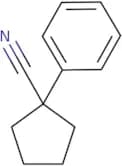
CAS:<p>1-Phenylcyclopentanecarbonitrile (PCN) is a chemical compound that has biological properties. It is used in the production of polyvinyl chloride, polyvinylidene chloride, and other plastics. PCN may also be used as an intermediate for the production of other chemicals such as diammonium cyanide, which is a raw material for the manufacture of fertilizers, and methoxyacetic acid, which is a precursor to pharmaceuticals. PCN has been shown to have neurotoxic effects on the nervous system in mice. It also causes atropine-like effects when administered to rats.</p>Formula:C12H13NPurity:Min. 95%Molecular weight:171.24 g/mol1,1,1-Tris(hydroxymethyl)propane
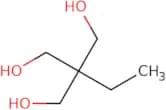
CAS:<p>Tris(hydroxymethyl)propane is a diphenyl ether that has been shown to have an electrochemical impedance spectroscopy (EIS) spectrum in the human serum that is similar to those of other known antioxidants. Tris(hydroxymethyl)propane has been shown to protect against light-induced damage in human skin cells, and it also has radiation protective effects. Tris(hydroxymethyl)propane has also been shown to interact with trimethylolpropane, which is another antioxidant, and this interaction may affect the effectiveness of each agent. Tris(hydroxymethyl)propane inhibits lipid peroxidation by inhibiting the oxidation of fatty acids and hydroxyl groups on proteins.</p>Formula:C6H14O3Purity:Min. 95%Molecular weight:134.17 g/mol3-Methylpentan-3-yl carbamate
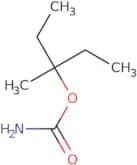
CAS:Controlled Product<p>3-Methylpentan-3-yl carbamate (MMPC) is a chemical compound that has been studied for its potential in the treatment of autoimmune and inflammatory diseases. It is an analog of 3-methylpentanoic acid, which has been shown to have anti-inflammatory activity. MMPC has also been shown to be effective against bowel disease, such as ulcerative colitis and Crohn's disease. MMPC acts by inhibiting the synthesis of proteins that are involved in inflammation and cell proliferation, such as cytokines and matrix metalloproteinases.</p>Formula:C7H15NO2Purity:Min. 95%Molecular weight:145.2 g/molTetrahydrolinalool
CAS:<p>Tetrahydrolinalool is a diphenyl ether that can be used to prepare a film-forming polymer. It is often used as a sample preparation agent for biological samples. Tetrahydrolinalool reacts with chlorine atoms in the presence of sodium carbonate and cationic surfactant to form a glycol ether, which then reacts with piperonal to form an ion channel. This reaction mechanism results in the formation of detergent compositions, which are often used to remove fatty acids and hydroxyl groups from biological samples.</p>Formula:C10H22OPurity:Min. 95%Molecular weight:158.29 g/mol
![4-Amino-N-[2-(pyrrolidin-1-yl)ethyl]benzamide](/_next/image/?url=https%3A%2Fstatic.cymitquimica.com%2Fproducts%2F3D%2Fthumb-webp%2FAAA05107.webp&w=3840&q=75)

![4-Amino-N-[2-(morpholin-4-yl)ethyl]benzamide](/_next/image/?url=https%3A%2Fstatic.cymitquimica.com%2Fproducts%2F3D%2Fthumb-webp%2FAAA05109.webp&w=3840&q=75)