


Building Blocks
This section contains fundamental products for the synthesis of organic and biological compounds. Building blocks are the essential starting materials used to construct complex molecules through various chemical reactions. They play a critical role in drug discovery, material science, and chemical research. At CymitQuimica, we offer a diverse range of high-quality building blocks to support your innovative research and industrial projects, ensuring you have the essential components for successful synthesis.
Subcategories of "Building Blocks"
- Boronic Acids & Boronic Acid Derivatives(5,756 products)
- Chiral Building Blocks(1,242 products)
- Hydrocarbon Building Blocks(6,095 products)
- Organic Building Blocks(61,038 products)
Found 196817 products of "Building Blocks"
Sort by
Purity (%)
0
100
|
0
|
50
|
90
|
95
|
100
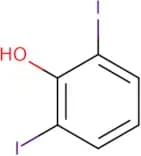
2,6-Diiodophenol
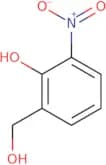
CAS:<p>2,6-Diiodophenol is a noncompetitive inhibitor that binds to the active site of carbonic anhydrase. It can be used as a pharmaceutical formulation or in sample preparation for gene sequence analysis. 2,6-Diiodophenol has been shown to have competitive inhibition against other inhibitors such as acetazolamide and dichlorphenamide. The marine sponge-derived enzyme carbonic anhydrase (CA) from the Gulf of Mexico was examined by chromatographic and spectroscopic methods. The CA activity was found to be inhibited by 2,6-diiodophenol in a concentration dependent manner with a KI value of 0.06 mM. 2,6-Diiodophenol also inhibits CA activity in rat liver microsomes at concentrations above 1 mM but does not inhibit peroxide production by the microsomal system at concentrations up to 10 mM. The crystal structure of 2,6-diiodophenol bound to CA has been determined using X</p>Formula:C6H4I2OPurity:Min. 95%Molecular weight:345.9 g/mol2-(Hydroxymethyl)-6-nitrophenol
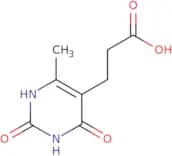
CAS:<p>Salicylaldehyde is a colorless liquid with a spicy odor. It is used in the manufacture of many organic compounds and is found naturally in some plants, such as euglena gracilis and benzaldehyde. Salicylaldehyde can be biotransformed to other types of aldehydes. These include cinnamaldehyde, vanillin, 2-cyanobenzaldehyde, and 2-(hydroxymethyl)-6-nitrophenol (2NHP). 2NHP is an intermediate product of salicylic acid biosynthesis. It is also used to synthesize phenacetin and acetanilide. Acetanilide was once widely used as an analgesic but was withdrawn from clinical use because it caused fatal methemoglobinemia (a disorder in which the body does not have enough oxygen)</p>Formula:C7H7NO4Purity:Min. 95%Molecular weight:169.13 g/mol3-(6-Methyl-2,4-dioxo-1,2,3,4-tetrahydropyrimidin-5-yl)propanoic acid
CAS:<p>Versatile small molecule scaffold</p>Formula:C8H10N2O4Purity:Min. 95%Molecular weight:198.18 g/mol4-Methyl-2-[(propan-2-yl)amino]benzonitrile
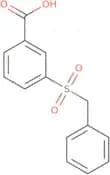
CAS:<p>Versatile small molecule scaffold</p>Formula:C11H14N2Purity:Min. 95%Molecular weight:174.24 g/mol3-Phenylmethanesulfonylbenzoic acid
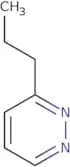
CAS:<p>Versatile small molecule scaffold</p>Formula:C14H12O4SPurity:Min. 95%Molecular weight:276.31 g/mol3-Propylpyridazine
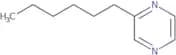
CAS:<p>Versatile small molecule scaffold</p>Formula:C7H10N2Purity:Min. 95%Molecular weight:122.17 g/mol2-Hexylpyrazine
CAS:<p>2-Hexylpyrazine is a heterocyclic organic compound that belongs to the group of alkynyl pyrazines. It is used as a solid catalyst in organic reactions, such as methylation, esterification, and alkylation. 2-Hexylpyrazine has been shown to be effective for bowel disease and inflammatory bowel disease. It has also been shown to inhibit cancer cell growth and is being studied for its potential use in the treatment of autoimmune diseases. 2-Hexylpyrazine is metabolized by bile acids and inflammatory cells into a reactive species which activates G protein coupled receptors on the surface of cells, leading to increased chloride ion concentrations within the cell. This leads to inhibition of dopamine D3 receptor signaling, which may have anti-inflammatory effects.</p>Formula:C10H16N2Purity:Min. 95%Molecular weight:164.25 g/mol6-Nitro-3,4-dihydro-2H-benzo[b][1,4]oxazine
CAS:<p>Versatile small molecule scaffold</p>Formula:C8H8N2O3Purity:Min. 95%Molecular weight:180.16 g/mol3-Chloro-N,N-diethylpropanamide
CAS:<p>Versatile small molecule scaffold</p>Formula:C7H14ClNOPurity:Min. 95%Molecular weight:163.64 g/molN-[Bis(4-methoxyphenyl)methyl]-2-chloroacetamide
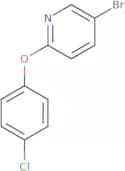
CAS:<p>Versatile small molecule scaffold</p>Formula:C17H18ClNO3Purity:Min. 95%Molecular weight:319.8 g/mol5-Bromo-2-(4-chlorophenoxy)pyridine
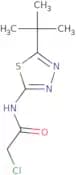
CAS:<p>Versatile small molecule scaffold</p>Formula:C11H7BrClNOPurity:Min. 95%Molecular weight:284.53 g/molN-(5-tert-Butyl-1,3,4-thiadiazol-2-yl)-2-chloroacetamide
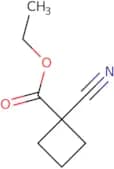
CAS:<p>Versatile small molecule scaffold</p>Formula:C8H12ClN3OSPurity:Min. 95%Molecular weight:233.72 g/molEthyl 1-cyanocyclobutanecarboxylate
CAS:<p>Ethyl 1-cyanocyclobutanecarboxylate is a cyclic molecule that belongs to the homologues of ethylene. This compound has been shown to react with carbanions in the presence of a base to form anionic initiator molecules. Ethyl 1-cyanocyclobutanecarboxylate can be used as an experimental monomer for ring-opening polymerization reactions, which are nonquantitative and may require temperatures as high as 110°C. The rate of these reactions is determined by the concentration of monomers, which should be made as monodisperse as possible.</p>Formula:C8H11NO2Purity:Min. 95%Molecular weight:153.18 g/molrac-[(1R,2R)-2-Aminocyclohexyl]methanol hydrochloride
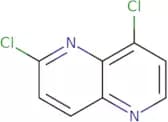
CAS:<p>Versatile small molecule scaffold</p>Formula:C7H16ClNOPurity:Min. 95%Molecular weight:165.66 g/mol2,8-dichloro-1,5-naphthyridine
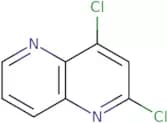
CAS:<p>Versatile small molecule scaffold</p>Formula:C8H4Cl2N2Purity:Min. 95%Molecular weight:199 g/mol2,4-dichloro-1,5-naphthyridine
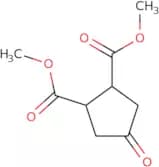
CAS:<p>2,4-Dichloro-1,5-naphthyridine is a methanolic solution of hydrogen chloride and chloroquine. It has been shown to be an effective antimalarial agent. 2,4-Dichloro-1,5-naphthyridine has been synthesized by the reaction of methanolic hydrogen chloride and sodium methoxide with 1,5-dichloronaphthalene in the presence of chloroform. The chemical name for this compound is 2-(2′,4′-dichlorophenyl)-1H-isoindole-1,3(2H)-dione. This chemical has not been studied extensively in humans but it is thought that it may have similar effects to primaquine.</p>Formula:C8H4Cl2N2Purity:Min. 95%Molecular weight:199 g/molrac-1,2-Dimethyl (1R,2S)-4-oxocyclopentane-1,2-dicarboxylate
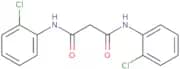
CAS:<p>Versatile small molecule scaffold</p>Formula:C9H12O5Purity:Min. 95%Molecular weight:200.19 g/molN,N'-Bis(2-chlorophenyl)propanediamide
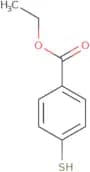
CAS:<p>Versatile small molecule scaffold</p>Formula:C15H12Cl2N2O2Purity:Min. 95%Molecular weight:323.2 g/molEthyl 4-sulfanylbenzoate
CAS:<p>Ethyl 4-sulfanylbenzoate is an inhibitor of thymidylate synthase. It has been shown to inhibit the production of thymidine and increase the level of l-glutamate in human cells. This compound may be useful in the treatment of certain diseases such as cancer or neurodegenerative disorders.</p>Formula:C9H10O2SPurity:Min. 95%Molecular weight:182.24 g/mol6-Bromo-5-methyl-1H-imidazo[4,5-b]pyridine
CAS:<p>6-Bromo-5-methyl-1H-imidazo[4,5-b]pyridine is a stabilizer that is used to protect polymers from degradation by light or heat. It can also be used to give plastics a yellow color.</p>Formula:C7H6BrN3Purity:Min. 95%Molecular weight:212.05 g/mol

![4-Methyl-2-[(propan-2-yl)amino]benzonitrile](/_next/image/?url=https%3A%2Fstatic.cymitquimica.com%2Fproducts%2F3D%2Fthumb-webp%2FDBA19500.webp&w=3840&q=75)
![6-Nitro-3,4-dihydro-2H-benzo[b][1,4]oxazine](/_next/image/?url=https%3A%2Fstatic.cymitquimica.com%2Fproducts%2F3D%2Fthumb-webp%2FDBA22622.webp&w=3840&q=75)
![N-[Bis(4-methoxyphenyl)methyl]-2-chloroacetamide](/_next/image/?url=https%3A%2Fstatic.cymitquimica.com%2Fproducts%2F3D%2Fthumb-webp%2FDBA23040.webp&w=3840&q=75)
![rac-[(1R,2R)-2-Aminocyclohexyl]methanol hydrochloride](/_next/image/?url=https%3A%2Fstatic.cymitquimica.com%2Fproducts%2F3D%2Fthumb-webp%2FDBA25045.webp&w=3840&q=75)
![6-Bromo-5-methyl-1H-imidazo[4,5-b]pyridine](/_next/image/?url=https%3A%2Fstatic.cymitquimica.com%2Fproducts%2F3D%2Fthumb-webp%2FDBA27941.webp&w=3840&q=75)