Building Blocks
This section contains fundamental products for the synthesis of organic and biological compounds. Building blocks are the essential starting materials used to construct complex molecules through various chemical reactions. They play a critical role in drug discovery, material science, and chemical research. At CymitQuimica, we offer a diverse range of high-quality building blocks to support your innovative research and industrial projects, ensuring you have the essential components for successful synthesis.
Subcategories of "Building Blocks"
- Boronic Acids & Boronic Acid Derivatives(5,756 products)
- Chiral Building Blocks(1,242 products)
- Hydrocarbon Building Blocks(6,095 products)
- Organic Building Blocks(61,055 products)
Found 199650 products of "Building Blocks"
Sort by
Purity (%)
0
100
|
0
|
50
|
90
|
95
|
100
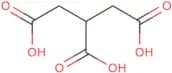
Tricarballylic acid
CAS:<p>Tricarballylic acid (TCA) is a carboxylate with a hydroxyl group on one side and an x-ray crystal structure. It is the most common carboxylate in the citric acid cycle. TCA has been shown to bind to the monoclonal antibody C3, which inhibits the production of various cytokines. This binding also inhibits T cell proliferation, leading to immunosuppression. TCA has been used as a structural probe for studying fatty acids and liver cells. In addition, it has been shown that TCA can be synthesized from protocatechuic acid, which is found in many plants such as grapes, strawberries, apples and pears. Tricarballylic acid also forms a disulfide bond with glutathione reductase in the cytochrome P450 system of mammals.</p>Formula:C6H8O6Purity:Min. 95%Molecular weight:176.12 g/mol3-Ethylbenzene-1-sulfonamide
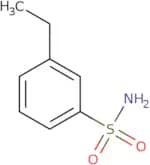
CAS:<p>Versatile small molecule scaffold</p>Formula:C8H11NO2SPurity:Min. 95%Molecular weight:185.25 g/molIsophthaloyl chloride
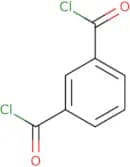
CAS:<p>Isophthaloyl chloride is a reactive and toxic chemical that is used in the production of polymers. It has a high resistance to water vapor, but is readily soluble in water. Isophthaloyl chloride is not stable at high temperatures and decomposes at about 150°C. Isophthaloyl chloride can be used as a model system for studying the transport properties of trifluoroacetic acid because it has similar chemical and physical properties.</p>Formula:C8H4Cl2O2Purity:Min. 95%Molecular weight:203.02 g/molValproic acid related compound A
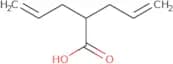
CAS:<p>Valproic acid related compound A is a polycarboxylic acid that can be polymerized to form polyolefins. Polyolefins are homogeneous catalysts for the production of various ester compounds, and are used in the industrial production of plasticizers, lubricants, and surfactants. Valproic acid related compound A is also a peroxide that can be used as a polymerization initiator in the polymerization of polycarboxylic acids. This chemical is also a functional group with an -OH group on one side and a formyl group on the other.</p>Formula:C8H12O2Purity:Min. 95%Color and Shape:Clear LiquidMolecular weight:140.18 g/mol4-sec-Butylphenol
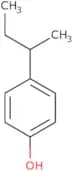
CAS:<p>4-sec-Butylphenol is a nonsteroidal anti-inflammatory drug that binds to the estrogen receptor. It has been shown to inhibit aromatase activity and its affinity constants are low. 4-sec-Butylphenol has been shown to inhibit mitochondrial membrane potential, which can lead to cell death. The molecule can be used as a chemical intermediate for the synthesis of other drugs such as 17β-estradiol, which is used in birth control pills. 4-sec-Butylphenol also has a redox potential and interacts with iron oxides, which may have an impact on biological function.</p>Formula:C10H14OPurity:Min. 95%Molecular weight:150.22 g/mol2-(4-Methylphenyl)propanal
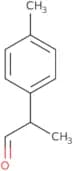
CAS:<p>2-(4-Methylphenyl)propanal is an organic compound that is used as a solvent and is homogeneous. It is a benzoate with alkylation activity, which can be used in kinetic and catalysis applications. 2-(4-Methylphenyl)propanal has also been shown to be effective in the synthesis of ethylbenzene derivatives, such as esters and acetonitrile. The reactions are carried out under pressure and at high temperatures. This chemical has been tested for its ability to catalyze reactions of glycols and solvents.</p>Formula:C10H12OPurity:Min. 95%Molecular weight:148.2 g/mol4-Ethylnitrobenzene
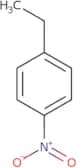
CAS:<p>4-Ethylnitrobenzene is an organic compound that has resonance mass at 289.14 g/mol. It is a colorless liquid with a boiling point of 213°C and a melting point of -7°C. The molecule has two geometric isomers, which are distinguished by the position of the methyl group on the benzene ring. 4-Ethylnitrobenzene can be produced by treating nitric acid with an alcohol in a hydrochloric acid solution or by heating sodium hydroxide and nitrobenzene in an organic solvent. The reaction rate for this reaction is controlled by the activation energy for hydrogen abstraction from the hydroxide ion to produce water and a positively charged nitronium ion (NO+) as well as the concentration of reactants. The reaction rate also depends on the type of metalloporphyrin used as catalyst and the pressure applied to it.</p>Formula:C8H9NO2Purity:Min. 95%Molecular weight:151.17 g/mol1,4-Diisopropylbenzene
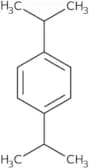
CAS:<p>1,4-Diisopropylbenzene is an aromatic hydrocarbon that can be used in the production of nylon. It is a reactive compound that reacts with hydrogen chloride to form 1,4-dichlorobenzene. It undergoes nucleophilic attack by the addition of hydrogen fluoride to produce a dihydrochloride salt. The reaction of 1,4-diisopropylbenzene with hydrochloric acid yields 1,2-dichlorobenzene and hydrogen chloride gas. The reaction mechanism for this chemical reaction is shown below:</p>Formula:C12H18Purity:Min. 95%Molecular weight:162.27 g/molN-Methylcyclohexanamine
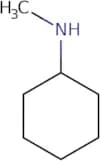
CAS:<p>Versatile small molecule scaffold</p>Formula:C7H15NPurity:Min. 95%Molecular weight:113.2 g/molPotassium Phenoxide
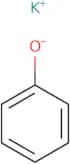
CAS:<p>Potassium phenoxide is a synthetic compound that has antiviral properties. It is an ester of p-hydroxybenzoic acid and diphenyl ether, which is synthesized from fatty acids. The synthesis of potassium phenoxide involves the reaction of sodium phenoxide with potassium hydroxide in a nonpolar solvent. This reaction yields the desired product and diphenyl ether as reaction products. The rate at which potassium phenoxide is formed in this reaction depends on the concentration of reactants, temperature, and pH. Potassium phenoxide has been shown to have antifungal and antiseptic properties, but its activity against bacteria has not been studied.</p>Formula:C6H5KOPurity:Min. 95%Molecular weight:132.2 g/molTriphenyl Phosphite
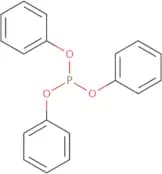
CAS:<p>Triphenyl phosphite is a colorless, oily liquid that is insoluble in water. It is a member of the group P2 and has three phenyl groups bonded to one phosphorus atom. Triphenyl Phosphite reacts with trifluoroacetic acid to form hydrogen bonds. The reaction of triphenyl phosphite with hydrochloric acid produces methyl ethyl chloride and hydroxide, which are both gases. The conversion of triphenyl phosphite to a fatty acid is accomplished by heating it under high pressure, followed by treatment with a base such as sodium methoxide. Triphenyl phosphite is used for the production of zirconium oxide and thermal expansion measurements.</p>Formula:C18H15O3PPurity:Min. 95%Molecular weight:310.28 g/molN,N-Dibenzylethanolamine
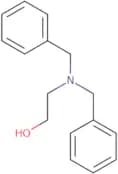
CAS:<p>Dibenzylethanolamine is a molecule with the molecular formula C17H26O2. It is a dibasic amine, meaning it has two hydroxyl groups. Dibenzylethanolamine has a specific chemical structure that consists of an alcohol group and two amine groups. The hydrogen atoms on the oxygen atoms in the hydroxyl group are replaced by methyl groups. This component is also used as a solvent for organic solutions, such as paints and varnishes.</p>Formula:C16H19NOPurity:Min. 95%Molecular weight:241.34 g/molN-Benzyl-N,N'-dimethylethylenediamine
CAS:<p>N-Benzyl-N,N'-dimethylethylenediamine is a catalytic agent that is used in the synthesis of organic compounds. It has been shown to have proton and electron densities and to be electron-rich. NBDME has also been shown to react with trichloroacetic acid or trifluoroacetic acid in the presence of riboflavin and oxygen atoms, forming flavoproteins such as isoalloxazine.</p>Formula:C11H18N2Purity:Min. 95%Molecular weight:178.28 g/mol1,3,5-Triethylbenzene
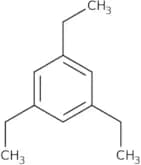
CAS:<p>1,3,5-Triethylbenzene is a glycogen synthase inhibitor that has been shown to inhibit the synthesis of glycogen by binding to the anomeric carbon on the type I glycans. A study showed that 1,3,5-triethylbenzene is an efficient method for inhibiting glycogen synthesis in liver cells. The compound binds to mannose residues on the type I glycan and prevents the formation of a glycosidic linkage between two glucose molecules. The binding constants for 1,3,5-triethylbenzene are high and it reacts with active oxygen to form reactive products. This product also forms supramolecular complexes with acid and coordination geometry.</p>Formula:C12H18Purity:Min. 95%Molecular weight:162.28 g/mol1,2-Diacetin-d5
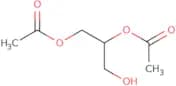
CAS:<p>1,2-Diacetin-d5 is a glycerol derivative that is used as a substrate in the study of mitochondrial and cytosolic calcium levels. It is also used to produce acetate extract, which has been shown to have anti-inflammatory effects in vitro. Acetate extract contains 1,2-diacetin-d5 and other substances that inhibit the activity of epidermal growth factor (EGF). EGF is an important protein for cellular proliferation and migration. 1,2-Diacetin-d5 can be used as a surface methodology for the analysis of proteins on surfaces.</p>Formula:C7H7D5O5Purity:Min. 95%Molecular weight:181.2 g/molTripropylamine
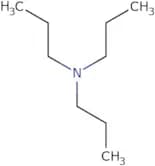
CAS:<p>Tripropylamine is an organic compound that belongs to the group of alkylamines. It has a phase transition temperature at -37 °C and can be used as a reagent in chemical synthesis, as well as an intermediate for the production of other compounds. Tripropylamine can be detected by electrochemical impedance spectroscopy (EIS) with a detection sensitivity of 0.5 ppm. Kinetic data for tripropylamine was obtained using methyl ethyl ketone and hydrogen fluoride, which yielded k(M) = 1.2 x 10^-3 and k(S) = 2.4 x 10^-2 M-1s-1 respectively. The reaction mechanism for tripropylamine involves the formation of picolinic acid from 3-hydroxypropionic acid and ammonia, followed by decarboxylation to form picolinic acid.</p>Formula:C9H21NPurity:Min. 95%Molecular weight:143.27 g/mol2-(Dibutylamino)ethanol
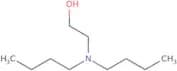
CAS:<p>2-(Dibutylamino)ethanol is a chemical compound that is used as an analytical reagent for the determination of the magnetic properties of magnetic particles. It can also be used to determine fatty acids in polyethylene glycols and glycol ethers. 2-(Dibutylamino)ethanol has been shown to have anticancer effects in vitro and in vivo, as well as anti-inflammatory properties. It is also used in the synthesis of other pharmaceuticals.</p>Formula:C10H23NOPurity:Min. 95%Molecular weight:173.3 g/mol3-(Dibutylamino)propylamine
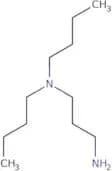
CAS:<p>3-(Dibutylamino)propylamine is a nitrogen-containing compound that can be used for the treatment of tumors. It has been shown to inhibit the growth of tumor cells in vitro and in vivo by binding to matrix metalloproteinase, a type of enzyme that plays a role in tumor invasion and metastasis. 3-(Dibutylamino)propylamine inhibits tumor cell proliferation by cationic polymerization, which leads to crosslinking between proteins, DNA, and other cellular components. The resulting irreversible damage causes cell death.</p>Formula:C11H26N2Purity:Min. 95%Molecular weight:186.34 g/mol3-Phenylpropionamide
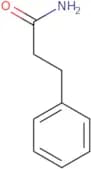
CAS:<p>3-Phenylpropionamide is a reactive compound that has been shown to have amine and amide functional groups. It is an inhibitor of the enzyme phospholipase A2, which is responsible for the release of arachidonic acid from membrane phospholipids. 3-Phenylpropionamide also blocks the interaction of κ subtype opioid receptors with their ligands and inhibits choroidal neovascularization in animal models. This drug has been shown to be toxic in animals, with adverse effects on metabolic disorders such as gamma-aminobutyric acid (GABA) levels.</p>Formula:C9H11NOPurity:Min. 95%Molecular weight:149.19 g/mol(2Z)-3-Phenylprop-2-enoic acid
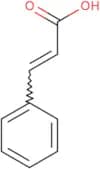
CAS:<p>Cinnamic acid is a phenylpropene carboxylic acid and is the parent compound of a group of compounds called cinnamates. It is found in small amounts in many plants, such as cinnamon, and has been used medicinally since ancient times. Cinnamic acid can be synthesized from benzoic acid by means of the Knoevenagel condensation reaction. Cinnamic acid has been shown to have potential anticancer activity, and it also inhibits the enzyme activities of influenza virus neuraminidase and HIV-1 protease. In addition, cinnamic acids are major contributors to the aroma of coffee beans.</p>Formula:C9H8O2Purity:Min. 95%Molecular weight:148.16 g/mol