Building Blocks
This section contains fundamental products for the synthesis of organic and biological compounds. Building blocks are the essential starting materials used to construct complex molecules through various chemical reactions. They play a critical role in drug discovery, material science, and chemical research. At CymitQuimica, we offer a diverse range of high-quality building blocks to support your innovative research and industrial projects, ensuring you have the essential components for successful synthesis.
Subcategories of "Building Blocks"
- Boronic Acids & Boronic Acid Derivatives(5,756 products)
- Chiral Building Blocks(1,242 products)
- Hydrocarbon Building Blocks(6,095 products)
- Organic Building Blocks(61,051 products)
Found 199813 products of "Building Blocks"
Sort by
Purity (%)
0
100
|
0
|
50
|
90
|
95
|
100
2-Aminoadamantane
CAS:<p>2-Aminoadamantane is a fluorescent derivative that can be used for the preparation of samples. It has an acyl chain with a hydroxyl group at the 2 position. 2-Aminoadamantane can inhibit bacterial growth by binding to lipopolysaccharides, which are cell wall components of Gram-negative bacteria. This drug also inhibits the production of nitric oxide and prostaglandins, which are important in inflammatory and immunological responses. 2-Aminoadamantane has been shown to have locomotor activity in mice and to decrease the number of seizures in rats. Synthetic cannabinoids such as WIN 55,212-2 and CP 55,940 have been shown to bind to cannabinoid receptors and inhibit neurotransmitter release in rat hippocampal neurons in vitro.</p>Formula:C10H17NPurity:Min. 95%Molecular weight:151.25 g/mol2-Ethylbut-2-enedioic acid
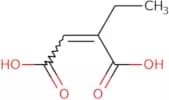
CAS:<p>2-Ethylbut-2-enedioic acid is an aliphatic hydrocarbon that has a particle size of about 1 micron. It is a monocarboxylic acid that is commonly used as a precursor to the synthesis of polycarboxylic acids. 2-Ethylbut-2-enedioic acid can be activated by reacting with tertiary amines or phosphines and subsequently reacting with alcohols or thiols. The latter reaction will produce esters or ethers, respectively. This compound has been shown to have antiinflammatory effects in models of autoimmune diseases, such as arthritis and colitis, which are due to its ability to inhibit the production of proinflammatory cytokines.</p>Formula:C6H8O4Purity:Min. 95%Molecular weight:144.12 g/mol1,2-Dibromo-3,4,5,6-tetrachlorobenzene
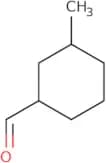
CAS:<p>Versatile small molecule scaffold</p>Formula:C6Br2Cl4Purity:Min. 95%Molecular weight:373.7 g/mol3-Methylcyclohexane-1-carbaldehyde
CAS:<p>Versatile small molecule scaffold</p>Formula:C8H14OPurity:Min. 95%Molecular weight:126.2 g/mol5-Anilino-1,2,3,4-thiatriazole
CAS:<p>5-Anilino-1,2,3,4-thiatriazole is a compound that is used in the study of microbial cultures. It has been shown to be effective against Actinomycetes and Basidiomycetes. 5-Anilino-1,2,3,4-thiatriazole is used in the microbiology lab to kill bacteria and fungi. 5-Anilino-1,2,3,4-thiatriazole can also be used to inhibit the growth of Aspergillus species by blocking the hydroxylation of tyrosine derivatives.</p>Formula:C7H6N4SPurity:Min. 95%Molecular weight:178.22 g/molHPi1
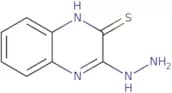
CAS:<p>HPi1 is a recombinant virus that inhibits the growth of mouse tumor cells by inhibiting basic proteins. This protein has been shown to inhibit the growth of tumor cells in vitro, which may be due to its ability to inhibit basic proteins that are involved in cell proliferation. HPi1 also binds to the pancreas and causes optical properties, which have been shown to be used for cancer diagnosis. The sequences for HPi1 can be found on NCBI Entrez Gene.</p>Formula:C8H8N4SPurity:Min. 95%Molecular weight:192.24 g/mol4-Chloro-2-cyclohexylphenol
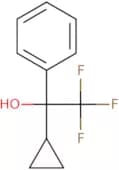
CAS:<p>4-Chloro-2-cyclohexylphenol is a chemical compound that is used in the production of surfactant. It is also found as an impurity in some batches of chlorinated phenols. Irradiation of 4-chloro-2-cyclohexylphenol with UV light produces a reactive radical species, which can alkylate other compounds. The hydrophobic effect and the hydrophilic effect are both important to the solubility of this product. The hydrophobic effect leads to micellar solubilization, while the hydrophilic effect leads to dissolution in water. 4-Chloro-2-cyclohexylphenol has been shown to be a potent mutagen and carcinogen in mouse skin cells, and has been associated with an increased risk for developing cancer in humans.</p>Formula:C12H15ClOPurity:Min. 95%Molecular weight:210.7 g/mol1-Cyclopropyl-2,2,2-trifluoro-1-phenylethan-1-ol
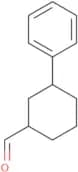
CAS:<p>Versatile small molecule scaffold</p>Formula:C11H11F3OPurity:Min. 95%Molecular weight:216.2 g/mol3-Phenylcyclohexanecarbaldehyde
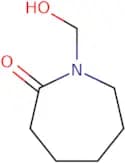
CAS:<p>Versatile small molecule scaffold</p>Formula:C13H16OPurity:Min. 95%Molecular weight:188.26 g/mol1-(Hydroxymethyl)azepan-2-one
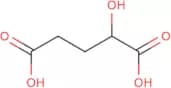
CAS:<p>1-(Hydroxymethyl)azepan-2-one is a lactam. It is a monomer that can be used in the production of polymers such as polystyrene and polyvinyl chloride. 1-(Hydroxymethyl)azepan-2-one is soluble in organic solvents and has a high viscosity, which makes it useful for its interaction with other chemicals. 1-(Hydroxymethyl)azepan-2-one reacts with ethylene to form styrene, which is a condensation product. It can also react with hydrochloric acid to form an acid catalyst. The reaction products of this chemical are styrene, phenolic compounds, and ammonium salts.</p>Formula:C7H13NO2Purity:Min. 95%Molecular weight:143.18 g/mol(2R)-2-Hydroxypentanedioic acid
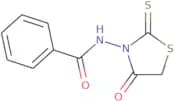
CAS:<p>(2R)-2-Hydroxypentanedioic acid is a metabolite of 2-hydroxyglutarate that is produced in the metabolism of glucose. This compound has been shown to be elevated in gliomas and may serve as a diagnostic marker for this type of cancer. A mutation in isocitrate dehydrogenase, an enzyme that catalyzes the conversion of isocitrate to alpha-ketoglurate, has been shown to be associated with gliomas. This mutation leads to accumulation of (2R)-2-hydroxypentanedioic acid and increases the risk for this type of cancer. The elevated levels of (2R)-2-hydroxypentanedioic acid can be used as a biomarker for disease activity and diagnosis.</p>Formula:C5H8O5Purity:Min. 95%Molecular weight:148.11 g/molN-(4-Oxo-2-thioxo-thiazolidin-3-yl)-benzamide
CAS:<p>Versatile small molecule scaffold</p>Formula:C10H8N2O2S2Purity:Min. 95%Molecular weight:252.3 g/molN-{[(2-Chlorophenyl)methylidene]amino}guanidine
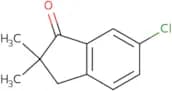
CAS:<p>Guanidine is a molecule that contains a guanidinium group. It has cytotoxic effects on cancer cells and the ability to inhibit influenza virus proliferation. Guanidine also inhibits protein phosphatase activity, which may be due to its ability to dephosphorylate proteins. This drug can cause neuronal death by dephosphorylating proteins in the endoplasmic reticulum, leading to increased levels of calcium ions in the cytosol.</p>Formula:C8H9ClN4Purity:Min. 95%Molecular weight:196.64 g/mol6-Chloro-2,2-dimethyl-2,3-dihydro-1H-inden-1-one
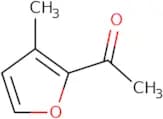
CAS:<p>Versatile small molecule scaffold</p>Formula:C11H11ClOPurity:Min. 95%Molecular weight:194.66 g/mol1-(3-Methylfuran-2-yl)ethan-1-one
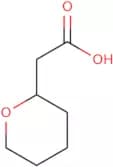
CAS:<p>1-(3-Methylfuran-2-yl)ethan-1-one is a heterocyclic compound that can be found in the leaves and tubercles of Bignoniaceae plants. It is structurally related to an oxygen heterocycle, which is a class of organic compounds with oxygen in their molecular structures. 1-(3-Methylfuran-2-yl)ethan-1-one has been isolated from the leaves of Blechnum pennaefolium and the tubers of Tuberculosa leontopodioides by alkaline hydrolysis. It has shown antimicrobial activity against Gram positive bacteria. The diacetate form was isolated from the leaves of Bignonia colemanii and shown to have antiviral properties. Formylation reactions are also possible with this compound, as it has been shown to react with sodium methoxide or dimethyl sulfoxide to produce formaldehyde and methanal respectively.</p>Formula:C7H8O2Purity:Min. 95%Molecular weight:124.14 g/mol(Tetrahydro-pyran-2-yl)-acetic acid
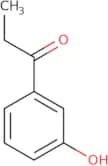
CAS:<p>Tetrahydro-pyran-2-yl)-acetic acid is an unsaturated acetic acid that can be synthesized by esters of tetrahydro-pyran-2-yl)acetic acid. Tetrahydro-pyran-2-yl)-acetic acid is produced by the catalyzed cyclization of ethyl acetoacetate and pivalic acid chloride. The heptahydrate form has been shown to undergo hydrolysis in aqueous solution to produce the monohydrated form, which is soluble in water. This compound has been shown to react with benzene, acetone, and ethyl acetoacetate in the presence of a Lewis acid catalyst to form substituted tetrahydropyrans.</p>Formula:C7H12O3Purity:Min. 95%Molecular weight:144.17 g/mol1-(3-Hydroxyphenyl)-1-propanone
CAS:<p>1-(3-Hydroxyphenyl)-1-propanone is a monocyclic compound that has been shown to have antioxidative activity, which may be due to its ability to inhibit the formation of reactive oxygen species. It has been shown to be effective against E. coli cells and benzene degradation, as well as other dehydrogenases such as butyrophenone and trifluoroacetophenone. 1-(3-Hydroxyphenyl)-1-propanone also inhibits e. coli growth by acting on the propiophenone pathway (involving conversion of phenylalanine into propiophenone). The escherichia bacterium can convert 1-(3-hydroxyphenyl)-1-propanone into the vicinal diol, 2,2-diphenyldi(3H)oxazole.</p>Formula:C9H10O2Purity:Min. 95%Molecular weight:150.17 g/mol4-Chloro-3,3-dimethylbutan-2-one
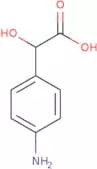
CAS:<p>Versatile small molecule scaffold</p>Formula:C6H11ClOPurity:Min. 95%Molecular weight:134.6 g/mol2-(4-Aminophenyl)-2-hydroxyacetic acid
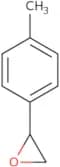
CAS:<p>Versatile small molecule scaffold</p>Formula:C8H9NO3Purity:Min. 95%Molecular weight:167.16 g/mol2-(4-Methylphenyl)oxirane
CAS:<p>2-(4-Methylphenyl)oxirane (2MPO) is an epoxide that belongs to the group of reactive compounds. It has been shown to react with nucleic acids, forming a covalent linkage with guanosine. 2MPO also reacts with styrene, forming a covalent bond and producing reactive metabolites. The reaction products are hydroxylated by hydroxyl groups on the ring structure, which catalyzes the reaction. Additives can be used to alter the rate of this reaction. 2MPO is also known to react with pluronic F127, forming a covalently linked adduct. This bond is cleaved by hydrolysis in water and exposure to light, releasing 2MPO and regenerating pluronic F127.</p>Formula:C9H10OPurity:Min. 95%Molecular weight:134.17 g/mol




![N-{[(2-Chlorophenyl)methylidene]amino}guanidine](/_next/image/?url=https%3A%2Fstatic.cymitquimica.com%2Fproducts%2F3D%2Fthumb-webp%2FNAA09873.webp&w=3840&q=75)