Building Blocks
This section contains fundamental products for the synthesis of organic and biological compounds. Building blocks are the essential starting materials used to construct complex molecules through various chemical reactions. They play a critical role in drug discovery, material science, and chemical research. At CymitQuimica, we offer a diverse range of high-quality building blocks to support your innovative research and industrial projects, ensuring you have the essential components for successful synthesis.
Subcategories of "Building Blocks"
- Boronic Acids & Boronic Acid Derivatives(5,756 products)
- Chiral Building Blocks(1,242 products)
- Hydrocarbon Building Blocks(6,093 products)
- Organic Building Blocks(60,522 products)
Found 195533 products of "Building Blocks"
Sort by
Purity (%)
0
100
|
0
|
50
|
90
|
95
|
100
2-N-(4-Bromophenyl)pyridine-2,3-diamine
CAS:<p>Versatile small molecule scaffold</p>Formula:C11H10BrN3Purity:Min. 95%Molecular weight:264.12 g/mol2-N-(Naphthalen-1-yl)pyridine-2,3-diamine
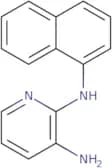
CAS:<p>Versatile small molecule scaffold</p>Formula:C15H13N3Purity:Min. 95%Molecular weight:235.28 g/mol5-Amino-1,2-dimethyl-1H-imidazole-4-carboxamide
CAS:<p>Versatile small molecule scaffold</p>Formula:C6H10N4OPurity:Min. 95%Molecular weight:154.17 g/mol5-fluoro-1H-benzo[d][1,3]oxazine-2,4-dione
CAS:<p>Versatile small molecule scaffold</p>Formula:C8H4NO3FPurity:Min. 95%Molecular weight:181.12 g/mol1h,2h,4h-Thieno[3,2-d][1,3]oxazine-2,4-dione
CAS:<p>Thieno[3,2-d][1,3]oxazin-2,4-dione is a bicyclic organic compound with the chemical formula C6H4N2O. It is an analog of oxazole and it has been shown to react in a nucleophilic fashion. This reactivity makes it useful for synthesizing other compounds. Thieno[3,2-d][1,3]oxazin-2,4-dione is commercially available as an optically pure powder or as a combinatorial library.</p>Formula:C6H3NO3SPurity:Min. 95%Molecular weight:169.16 g/mol7-Bromo-4-methyl-3,4-dihydro-1H-benzo[E][1,4]diazepine-2,5-dione
CAS:<p>Versatile small molecule scaffold</p>Formula:C10H9BrN2O2Purity:Min. 95%Molecular weight:269.09 g/mol8-Bromo-5,6-dihydro-5-methyl-6-oxo-4H-imidazo[1,5-a][1,4]benzodiazepine-3-carboxylic acid ethyl ester
CAS:<p>8-Bromo-5,6-dihydro-5-methyl-6-oxo-4H-imidazo[1,5a][1,4]benzodiazepine-3-carboxylic acid ethyl ester is a palladium catalyzed reaction that converts aryl bromides to bromides. The optimized yields and functionalized products are the result of optimizing the catalyst and reagents. This reaction can be used to produce triflates from bromides.</p>Formula:C15H14BrN3O3Purity:Min. 95%Molecular weight:364.19 g/mol4-Chloro-2,7-dimethyl-7H-pyrrolo[2,3-d]pyrimidine
CAS:<p>Versatile small molecule scaffold</p>Formula:C8H8ClN3Purity:Min. 95%Molecular weight:181.62 g/mol2-methyl-3,5-dinitrothiophene
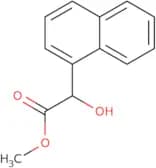
CAS:<p>2-methyl-3,5-dinitrothiophene is an organic solvent with a nonlinear optical response. It has been used as a monomer for the preparation of polymers. 2-Methyl-3,5-dinitrothiophene has shown thermal stability and hydroxy groups that can be used to solvate other molecules. This compound is also soluble in organic solvents such as acetone and chloroform. The chromophore present in 2-methyl-3,5-dinitrothiophene gives it a yellow color at low concentrations and a reddish color at high concentrations.</p>Formula:C5H4N2O4SPurity:Min. 95%Molecular weight:188.16 g/molMethyl 2-hydroxy-2-(naphthalen-1-yl)acetate
CAS:<p>Versatile small molecule scaffold</p>Formula:C13H12O3Purity:Min. 95%Molecular weight:216.23 g/mol5-Methyl-5-(naphthalen-2-yl)imidazolidine-2,4-dione
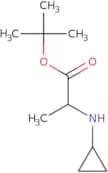
CAS:<p>Versatile small molecule scaffold</p>Formula:C14H12N2O2Purity:Min. 95%Molecular weight:240.26 g/moltert-Butyl 2-(cyclopropylamino)propanoate
CAS:<p>Versatile small molecule scaffold</p>Formula:C10H19NO2Purity:Min. 95%Molecular weight:185.26 g/mol3-Chloro-6-pyridin-3-ylpyridazine
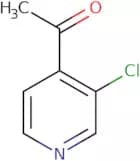
CAS:<p>Versatile small molecule scaffold</p>Formula:C9H6ClN3Purity:Min. 95%Molecular weight:191.62 g/mol1-(3-chloropyridin-4-yl)ethan-1-one
CAS:<p>Versatile small molecule scaffold</p>Formula:C7H6ClNOPurity:Min. 95%Molecular weight:155.58 g/mol2-Methoxy-3-phenylpropanoic acid
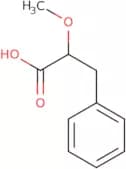
CAS:<p>2-Methoxy-3-phenylpropanoic acid is an ester with a carboxylic acid group at its end. It is a chiral molecule that has two enantiomers, which are mirror images of each other. The stereochemical conformations of these molecules can be determined by the weighting of their conformational energies. This compound is used in the synthesis of various pharmaceuticals and pesticides, such as carbamates and herbicides. The nmr spectroscopic data for this compound show that it has two conformers, A and B, which have different chemical shifts in their nmr spectra. The experimental data show that the equilibrium between these two conformers is weighted heavily to conformer A because it has a lower energy barrier than conformer B.</p>Formula:C10H12O3Purity:Min. 95%Molecular weight:180.2 g/mol2-Methoxy-4-methylpentanoic acid
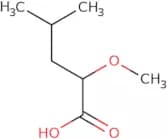
CAS:<p>Versatile small molecule scaffold</p>Formula:C7H14O3Purity:Min. 95%Molecular weight:146.18 g/mol(3-Methoxyphenyl)(pyridin-4-yl)methanol
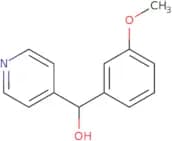
CAS:<p>Versatile small molecule scaffold</p>Formula:C13H13NO2Purity:Min. 95%Molecular weight:215.25 g/mol2-(tert-Butoxy)acetyl chloride
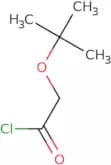
CAS:<p>Versatile small molecule scaffold</p>Formula:C6H11ClO2Purity:Min. 95%Molecular weight:150.6 g/mol4-(Benzylsulfanyl)benzaldehyde
CAS:<p>Benzylsulfanylbenzaldehyde is a benzyl derivative that has been studied for its optical properties and electronic structures. The sulfur atom in this molecule is replaced with an electron-donating group, which gives the molecule a positive charge. This change also makes the substituent more polar and thus increases its ability to interact with other molecules. Substituents are groups attached to benzene rings in order to modify their chemical or physical properties. Chromophores are groups of atoms that absorb light and can be used to identify substances by their color. Electron withdrawing groups cause the dipole moment of the molecule to increase, while electron donating groups have the opposite effect on the dipole moment.</p>Formula:C14H12OSPurity:Min. 95%Molecular weight:228.31 g/mol2-Chloro-6-(chloromethyl)pyridine
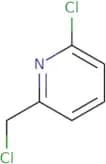
CAS:<p>2-Chloro-6-(chloromethyl)pyridine (2C6CP) is a chloride precursor that can be used for the synthesis of metal chlorides, such as copper chlorides. 2C6CP is synthesized by reacting thionyl chloride with the substituted pyridine under anhydrous conditions at -78°C. The resultant 2C6CP is then hydrolyzed to produce the desired chloride.<br>2C6CP has been shown to act as a ligand in coordination chemistry. It was first synthesized by reacting 3-chloropyridine with thionyl chloride and then hydrolyzing it to 2-chloropyridine. This method was later modified to use 4-chlorobenzoyl chloride instead of 3-chloropyridine, producing 2,4-dichloropyridine.</p>Formula:C6H5Cl2NPurity:Min. 95%Molecular weight:162.02 g/mol



![5-fluoro-1H-benzo[d][1,3]oxazine-2,4-dione](/_next/image/?url=https%3A%2Fstatic.cymitquimica.com%2Fproducts%2F3D%2Fthumb-webp%2FDDA75594.webp&w=3840&q=75)
![1h,2h,4h-Thieno[3,2-d][1,3]oxazine-2,4-dione](/_next/image/?url=https%3A%2Fstatic.cymitquimica.com%2Fproducts%2F3D%2Fthumb-webp%2FDDA75628.webp&w=3840&q=75)
![7-Bromo-4-methyl-3,4-dihydro-1H-benzo[E][1,4]diazepine-2,5-dione](/_next/image/?url=https%3A%2Fstatic.cymitquimica.com%2Fproducts%2F3D%2Fthumb-webp%2FDDA75636.webp&w=3840&q=75)
![8-Bromo-5,6-dihydro-5-methyl-6-oxo-4H-imidazo[1,5-a][1,4]benzodiazepine-3-carboxylic acid ethyl es…](/_next/image/?url=https%3A%2Fstatic.cymitquimica.com%2Fproducts%2F3D%2Fthumb-webp%2FDDA75637.webp&w=3840&q=75)
![4-Chloro-2,7-dimethyl-7H-pyrrolo[2,3-d]pyrimidine](/_next/image/?url=https%3A%2Fstatic.cymitquimica.com%2Fproducts%2F3D%2Fthumb-webp%2FDDA75680.webp&w=3840&q=75)