Building Blocks
This section contains fundamental products for the synthesis of organic and biological compounds. Building blocks are the essential starting materials used to construct complex molecules through various chemical reactions. They play a critical role in drug discovery, material science, and chemical research. At CymitQuimica, we offer a diverse range of high-quality building blocks to support your innovative research and industrial projects, ensuring you have the essential components for successful synthesis.
Subcategories of "Building Blocks"
- Boronic Acids & Boronic Acid Derivatives(5,756 products)
- Chiral Building Blocks(1,242 products)
- Hydrocarbon Building Blocks(6,095 products)
- Organic Building Blocks(61,037 products)
Found 196200 products of "Building Blocks"
Sort by
Purity (%)
0
100
|
0
|
50
|
90
|
95
|
100
4-[(4-Chlorophenyl)sulfanyl]butanoic acid
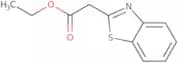
CAS:<p>Versatile small molecule scaffold</p>Formula:C10H11ClO2SPurity:Min. 95%Molecular weight:230.71 g/molEthyl 1,3-benzothiazol-2-ylacetate
CAS:<p>Ethyl 1,3-benzothiazol-2-ylacetate is a coumarin derivative that has been shown to be active against tuberculosis. It inhibits bacterial growth by binding to the gyrase enzyme and preventing the formation of a new DNA strand. The synthesis of ethyl 1,3-benzothiazol-2-ylacetate starts with the condensation of 2 molecules of acetoacetic ester in the presence of an acid catalyst. This reaction takes place in vivo in animal tissues and is catalyzed by enzymes such as gyrase or topoisomerase IV. The reaction time for this synthesis is typically 3 hours. Ethyl 1,3-benzothiazol-2-ylacetate emits fluorescent emissions at a wavelength of 330 nanometers.</p>Formula:C11H11NO2SPurity:Min. 95%Molecular weight:221.28 g/mol3-Formylfuran-2-carboxylic acid
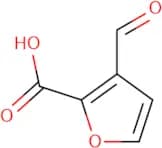
CAS:<p>3-Formylfuran-2-carboxylic acid is a furanic sugar derivative that is used as a sweetener. It can be obtained by the reaction of glycerol with formaldehyde and catalytic acid. 3-Formylfuran-2-carboxylic acid has a particle size of less than 2 microns, which means it can be used in chewing gum and other food products. This product has been shown to have antioxidant activity due to its ability to scavenge free radicals and inhibit oxidation, making it suitable for use as a preservative.</p>Formula:C6H4O4Purity:Min. 95%Molecular weight:140.09 g/mol(5-Chloro-2-oxo-benzooxazol-3-yl)-acetic acid
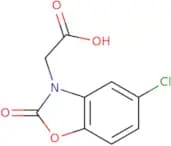
CAS:<p>Versatile small molecule scaffold</p>Formula:C9H6ClNO4Purity:Min. 95%Molecular weight:227.6 g/mol3-Bromobenzothiophene-2-carboxylic acid
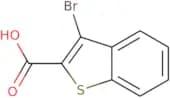
CAS:<p>3-Bromobenzothiophene-2-carboxylic acid is an organic compound that is used in the synthesis of pharmaceuticals, including anticancer agents. It inhibits the growth of cancer cells by binding to a specific site on their DNA and preventing the formation of terminal alkynes. 3-Bromobenzothiophene-2-carboxylic acid has been shown to be a potent inhibitor of lactamase, which is an enzyme that breaks down lactams and other esters. This effect leads to decreased cell proliferation in some cancer cells. 3-Bromobenzothiophene-2-carboxylic acid also has a fluorescent property, which can be used for research purposes.</p>Formula:C9H5BrO2SPurity:Min. 95%Molecular weight:257.1 g/molMethyl 4-acetyl-5-methyl-2-furoate
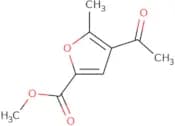
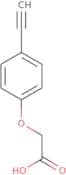
CAS:<p>Versatile small molecule scaffold</p>Formula:C9H10O4Purity:Min. 95%Molecular weight:182.17 g/mol2-(4-Ethynylphenoxy)acetic acid
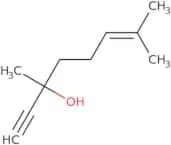
CAS:<p>Versatile small molecule scaffold</p>Formula:C10H8O3Purity:Min. 95%Molecular weight:176.17 g/mol3,7-Dimethyl-6-octen-1-yn-3-ol
CAS:<p>3,7-Dimethyl-6-octen-1-yn-3-ol (linalool) is a naturally occurring chemical in plants. It has been shown to inhibit the growth of hepatitis C virus and is used as a chemical intermediate. Linalool is hydrogenated by using a catalyst, such as phosphotungstic acid. The process of hydrogenation can be optimized through kinetic studies. This compound is also used in the synthesis of ethylene diamine, which is used in particle activation energies for pleural fluid.</p>Formula:C10H16OPurity:Min. 95%Molecular weight:152.23 g/mol1-Azabicyclo[3.3.1]nonan-3-one
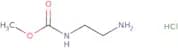
CAS:<p>Versatile small molecule scaffold</p>Formula:C8H13NOPurity:Min. 95%Molecular weight:139.19 g/molMethyl N-(2-aminoethyl)carbamate hydrochloride
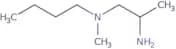
CAS:<p>Versatile small molecule scaffold</p>Formula:C4H11ClN2O2Purity:Min. 95%Molecular weight:154.59 g/mol(2-Aminopropyl)(butyl)methylamine
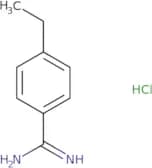
CAS:<p>Versatile small molecule scaffold</p>Formula:C8H20N2Purity:Min. 95%Molecular weight:144.26 g/mol4-Ethylbenzene-1-carboximidamide hydrochloride
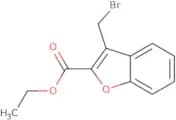
CAS:<p>Versatile small molecule scaffold</p>Formula:C9H13ClN2Purity:Min. 95%Molecular weight:184.66 g/molEthyl 3-(bromomethyl)-1-benzofuran-2-carboxylate
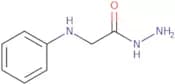
CAS:<p>Ethyl 3-(bromomethyl)-1-benzofuran-2-carboxylate (BMC) is a potent anticancer agent that inhibits cancer cell growth by inhibiting the activity of regulatory proteins. BMC selectively interacts with the regulatory domain of these proteins, which causes them to become inactive and inhibits tumor growth. BMC also induces necroptosis, which is an alternative form of programmed cell death that can be induced by multiple stimuli. This process results in the release of proinflammatory cytokines such as IL-1β and IL-18, which may contribute to its anti-cancer effects. BMC has been shown to inhibit murine lung tumor growth in vivo and inhibit tumor growth in vitro.</p>Formula:C12H11BrO3Purity:Min. 95%Molecular weight:283.12 g/mol2-(Phenylamino)acetohydrazide
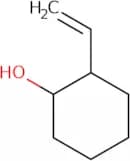
CAS:<p>2-(Phenylamino)acetohydrazide is a non-steroidal antibacterial agent that binds to the active site of bacterial ribosomes and inhibits protein synthesis. The molecule is stabilized by electron-withdrawing groups, which are favorable for binding to metal ions. 2-(Phenylamino)acetohydrazide has been shown to be effective against a wide range of bacteria, including E. coli, Pseudomonas aeruginosa, Candida neoformans, and Staphylococcus epidermidis. It also has a strong inhibitory effect on S. epidermidis and Escherichia coli.</p>Formula:C8H11N3OPurity:Min. 95%Molecular weight:165.19 g/mol2-Ethenylcyclohexan-1-ol
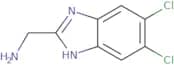
CAS:<p>Versatile small molecule scaffold</p>Formula:C8H14OPurity:Min. 95%Molecular weight:126.2 g/mol1-(5,6-Dichloro-1H-1,3-benzodiazol-2-yl)methanamine
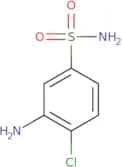
CAS:<p>Versatile small molecule scaffold</p>Formula:C8H7Cl2N3Purity:Min. 95%Molecular weight:216.06 g/mol3-Amino-4-chloro-benzenesulfonamide
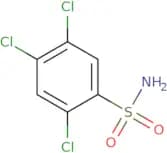
CAS:<p>Versatile small molecule scaffold</p>Formula:C6H7ClN2O2SPurity:Min. 95%Molecular weight:206.65 g/mol2,4,5-Trichlorobenzenesulphonamide
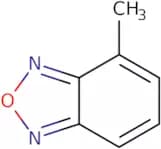
CAS:<p>Versatile small molecule scaffold</p>Formula:C6H4Cl3NO2SPurity:Min. 95%Molecular weight:260.53 g/mol4-Methyl-2,1,3-benzoxadiazole
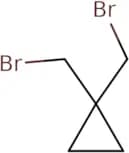
CAS:<p>4-Methyl-2,1,3-benzoxadiazole is a hexamethylenetetramine derivative that is used as an excipient in pharmaceuticals. It has been shown to have high yield and good solubility properties. 4-Methyl-2,1,3-benzoxadiazole can be hydrolyzed by acidolysis to form the corresponding carboxylic acid. The optimal reaction time for this process is between 5 and 10 minutes at room temperature. The product of this reaction can be purified by boiling with water or cooled with ether. 4-Methyl-2,1,3-benzoxadiazole can react with bromosuccinimide to form the corresponding bromohydrin derivative in a peroxide reaction. The optimal reaction time for this process is between 2 and 3 hours at room temperature. Hydrolysis of the bromohydrin yields the corresponding alcohol. This product can</p>Formula:C7H6N2OPurity:Min. 95%Molecular weight:134.14 g/mol1,1-Bis(bromomethyl)cyclopropane
CAS:<p>1,1-Bis(bromomethyl)cyclopropane (1,1-BMC) is a brominated derivative of the cyclopropane molecule that has been used as a tracer to investigate atmospheric reactions. 1,1-BMC can be used as an anion indicator in electrochemical experiments because it is sensitive to the charge on the electrode surface. Kinetic studies have shown that 1,1-BMC reacts with ozone at low concentrations and with hydrogen peroxide at high concentrations. This reactivity is consistent with the sensitivity of 1,1-BMC to anions. The sensitivity of 1,1-BMC may be due to its ability to form enamines or imines when exposed to ozone or hydrogen peroxide. As a result of these reactions, 1,1-BMC becomes oxidized and forms positive charges that are detected by voltmeters. This electrochemical analysis technique has been applied to air samples from the troposphere</p>Formula:C5H8Br2Purity:Min. 95%Molecular weight:227.94 g/mol
![4-[(4-Chlorophenyl)sulfanyl]butanoic acid](/_next/image/?url=https%3A%2Fstatic.cymitquimica.com%2Fproducts%2F3D%2Fthumb-webp%2FEBA19363.webp&w=3840&q=75)

![1-Azabicyclo[3.3.1]nonan-3-one](/_next/image/?url=https%3A%2Fstatic.cymitquimica.com%2Fproducts%2F3D%2Fthumb-webp%2FEBA17080.webp&w=3840&q=75)