Building Blocks
Subcategories of "Building Blocks"
- Boronic Acids & Boronic Acid Derivatives(5,780 products)
- Chiral Building Blocks(1,241 products)
- Hydrocarbon Building Blocks(6,100 products)
- Organic Building Blocks(61,029 products)
Found 205306 products of "Building Blocks"
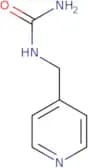
(Pyridin-4-ylmethyl)urea
CAS:Versatile small molecule scaffoldFormula:C7H9N3OPurity:Min. 95%Molecular weight:151.17 g/molN-(3-Pyridinylmethyl)urea
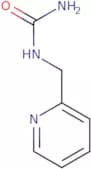
CAS:Controlled ProductN-(3-Pyridinylmethyl)urea is an analog of isonicotinamide. It binds to the receptor tyrosine and inhibits the growth of cells that are exposed to radiation. N-(3-Pyridinylmethyl)urea has been shown to inhibit cell proliferation in vitro by preventing DNA synthesis. This compound can also be used as a fluorescent probe for tyrosine kinase activity.Formula:C7H9N3OPurity:Min. 95%Molecular weight:151.17 g/mol(Pyridin-2-ylmethyl)urea
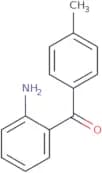
CAS:Versatile small molecule scaffoldFormula:C7H9N3OPurity:Min. 95%Molecular weight:151.17 g/mol(2-Aminophenyl)(p-tolyl)methanone+
CAS:The isomeric 2-aminophenyl (p-tolyl)methanone+ is a hydrogen bond acceptor. It has been synthesised by the diazotisation reaction of 3-acetylacetonate and aluminium. The synthesis of this compound has been achieved by the removal of water from 3-acetylacetonate, followed by the addition of aluminium to form an acetylacetonate complex. The reaction was completed by adding a solution of phenothiazine in acridone to produce the desired product. The nature and solvents used for this synthesis were not listed.br>br>
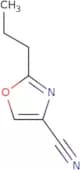
Formula:C14H13NOPurity:Min. 95%Molecular weight:211.27 g/mol2-Propyl-1,3-oxazole-4-carbonitrile
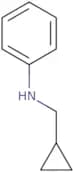
CAS:Versatile small molecule scaffoldFormula:C7H8N2OPurity:Min. 95%Molecular weight:136.15 g/molN-(Cyclopropylmethyl)aniline
CAS:Versatile small molecule scaffold
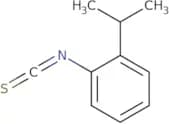
Formula:C10H13NPurity:Min. 95%Molecular weight:147.22 g/molBenzene, 1-isothiocyanato-2-(1-methylethyl)-
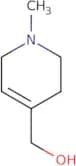
CAS:Versatile small molecule scaffoldFormula:C10H11NSPurity:Min. 95%Molecular weight:177.27 g/mol1-Methyl-4-(hydroxymethyl)-1,2,3,6-tetrahydropyridine
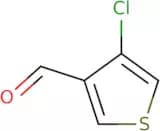
CAS:Versatile small molecule scaffoldFormula:C7H13NOPurity:Min. 95%Molecular weight:127.18 g/mol4-Chlorothiophene-3-carbaldehyde
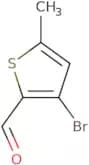
CAS:Versatile small molecule scaffoldFormula:C5H3ClOSPurity:Min. 95%Molecular weight:146.6 g/mol3-bromo-5-methylthiophene-2-carbaldehyde
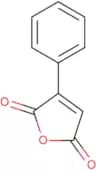
CAS:Versatile small molecule scaffoldFormula:C6H5BrOSPurity:Min. 95%Molecular weight:205.1 g/molPhenylmaleic Anhydride
CAS:Phenylmaleic anhydride is a polycarboxylic acid that contains a reactive carbonyl group. It can be used as an intermediate in the synthesis of prostacyclin receptor agonists and has been shown to have anti-inflammatory effects in various animal models. Phenylmaleic anhydride is also used as an ingredient in creams or gels that are applied to the skin for treatments of inflammatory diseases such as psoriasis, eczema, or dermatitis. Some of the properties of phenylmaleic anhydride include viscosity and hydrogen bonding ability, which make it useful for these types of applications.Formula:C10H6O3Purity:Min. 95%Molecular weight:174.16 g/mol3-[(2-Chlorophenyl)methyl]-2-sulfanyl-3,4-dihydroquinazolin-4-one
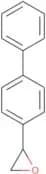
CAS:Versatile small molecule scaffoldFormula:C15H11ClN2OSPurity:Min. 95%Molecular weight:302.8 g/mol2-(4-Phenylphenyl)oxirane
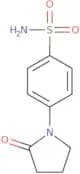
CAS:Versatile small molecule scaffoldFormula:C14H12OPurity:Min. 95%Molecular weight:196.24 g/mol4-(2-Oxopyrrolidin-1-yl)benzene-1-sulfonamide
CAS:Versatile small molecule scaffoldFormula:C10H12N2O3SPurity:Min. 95%Molecular weight:240.28 g/mol[4-(1H-1,3-Benzodiazol-2-yl)phenyl]methanamine
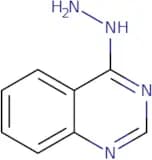
CAS:Versatile small molecule scaffoldFormula:C14H13N3Purity:Min. 95%Molecular weight:223.27 g/mol4-Hydrazinoquinazoline
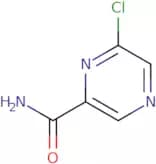
CAS:4-Hydrazinoquinazoline is a type of inhibitor that binds to the polymerase domain of the ns5B enzyme and inhibits bacterial growth. The binding of 4-hydrazinoquinazoline to the polymerase domain of the ns5B enzyme prevents the formation of nucleotides, which are necessary for RNA synthesis. 4-Hydrazinoquinazoline has been shown to be an effective antibacterial agent with a broad spectrum against Gram-positive and Gram-negative bacteria, as well as fungi. It has also been shown to be active against Mycobacterium tuberculosis in culture. 4-Hydrazinoquinazoline is used in small amounts because it is unstable in aqueous solution.Formula:C8H8N4Purity:Min. 95%Molecular weight:160.18 g/mol6-Chloropyrazine-2-carboxamide
CAS:6-Chloropyrazine-2-carboxamide is a tuberculostatic agent that inhibits the growth of Mycobacterium tuberculosis by alkylating nucleophilic sites on the bacterial cell wall. The antimycobacterial activity of 6-chloropyrazine-2-carboxamide has been shown in vitro using a densitometric assay, where it was able to inhibit the growth of M. tuberculosis. This drug also possesses antibacterial properties and has been shown to be effective against other bacteria such as Escherichia coli and Staphylococcus aureus. 6-Chloropyrazine-2-carboxamide is an amidating agent that reacts with amines to form amides or with carboxylic acids to form esters, which may have been used for its synthesis.
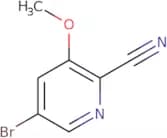
6-Chloropyrazine-2-carboxamide is a white crystalline powder that is soluble in water and alcoholFormula:C5H4ClN3OPurity:Min. 95%Molecular weight:157.56 g/mol5-Bromo-3-methoxy-pyridine 2-carbonitrile
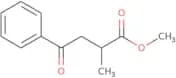
CAS:Versatile small molecule scaffoldFormula:C7H5BrN2OPurity:Min. 95%Molecular weight:213.03 g/molMethyl 2-methyl-4-oxo-4-phenylbutanoate
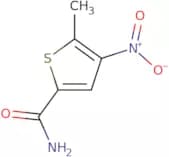
CAS:Methyl 2-methyl-4-oxo-4-phenylbutanoate (MMOB) is an inhibitor of histone lysine methylation and demethylation. MMOB binds to the active site of protein and acts as a competitive inhibitor of histone methyltransferases. Methyl 2-methyl-4-oxo-4-phenylbutanoate can be used to study the effect of epigenetic changes on gene expression at the cellular level. This drug has been shown to have clastogenic effects in mammalian cells, which may be due to its ability to inhibit DNA replication by binding to actin filaments or its ability to alter the structure of chromatin.Formula:C12H14O3Purity:Min. 95%Molecular weight:206.24 g/mol5-Methyl-4-nitrothiophene-2-carboxamide
CAS:Versatile small molecule scaffoldFormula:C6H6N2O3SPurity:Min. 95%Molecular weight:186.19 g/mol

![3-[(2-Chlorophenyl)methyl]-2-sulfanyl-3,4-dihydroquinazolin-4-one](/_next/image/?url=https%3A%2Fstatic.cymitquimica.com%2Fproducts%2F3D%2Fthumb-webp%2FLBA12041.webp&w=3840&q=75)
![[4-(1H-1,3-Benzodiazol-2-yl)phenyl]methanamine](/_next/image/?url=https%3A%2Fstatic.cymitquimica.com%2Fproducts%2F3D%2Fthumb-webp%2FLBA07889.webp&w=3840&q=75)