Building Blocks
This section contains fundamental products for the synthesis of organic and biological compounds. Building blocks are the essential starting materials used to construct complex molecules through various chemical reactions. They play a critical role in drug discovery, material science, and chemical research. At CymitQuimica, we offer a diverse range of high-quality building blocks to support your innovative research and industrial projects, ensuring you have the essential components for successful synthesis.
Subcategories of "Building Blocks"
- Boronic Acids & Boronic Acid Derivatives(5,756 products)
- Chiral Building Blocks(1,242 products)
- Hydrocarbon Building Blocks(6,095 products)
- Organic Building Blocks(61,038 products)
Found 196817 products of "Building Blocks"
Sort by
Purity (%)
0
100
|
0
|
50
|
90
|
95
|
100
6-(Piperazin-1-yl)-[1,2,4]triazolo[4,3-b]pyridazine
CAS:<p>Versatile small molecule scaffold</p>Formula:C9H12N6Purity:Min. 95%Molecular weight:204.23 g/mol4-(2-Cyclopropyl-2-oxoethoxy)benzoic acid
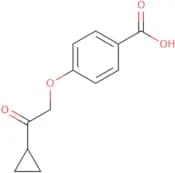
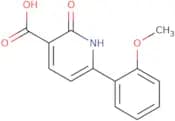
CAS:<p>Versatile small molecule scaffold</p>Formula:C12H12O4Purity:Min. 95%Molecular weight:220.22 g/mol6-(2-Methoxyphenyl)-2-oxo-1,2-dihydropyridine-3-carboxylic acid
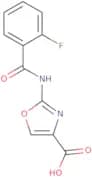
CAS:<p>Versatile small molecule scaffold</p>Formula:C13H11NO4Purity:Min. 95%Molecular weight:245.23 g/mol2-(2-Fluorobenzamido)-1,3-oxazole-4-carboxylic acid
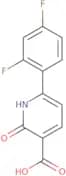
CAS:<p>Versatile small molecule scaffold</p>Formula:C11H7FN2O4Purity:Min. 95%Molecular weight:250.18 g/mol6-(2,4-Difluorophenyl)-2-oxo-1,2-dihydropyridine-3-carboxylic acid
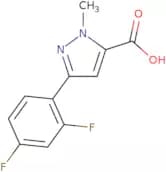
CAS:<p>Versatile small molecule scaffold</p>Formula:C12H7F2NO3Purity:Min. 95%Molecular weight:251.18 g/mol3-(2,4-Difluorophenyl)-1-methyl-1H-pyrazole-5-carboxylic acid
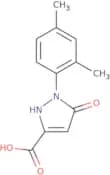
CAS:<p>Versatile small molecule scaffold</p>Formula:C11H8F2N2O2Purity:Min. 95%Molecular weight:238.19 g/mol1-(2,4-Dimethylphenyl)-5-oxo-2,5-dihydro-1H-pyrazole-3-carboxylic acid
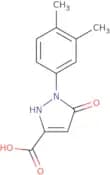
CAS:<p>Versatile small molecule scaffold</p>Formula:C12H12N2O3Purity:Min. 95%Molecular weight:232.23 g/mol1-(3,4-Dimethylphenyl)-5-oxo-2,5-dihydro-1H-pyrazole-3-carboxylic acid
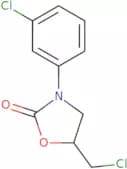
CAS:<p>Versatile small molecule scaffold</p>Formula:C12H12N2O3Purity:Min. 95%Molecular weight:232.23 g/mol5-(Chloromethyl)-3-(3-chlorophenyl)-1,3-oxazolidin-2-one
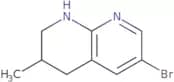
CAS:<p>Versatile small molecule scaffold</p>Formula:C10H9Cl2NO2Purity:Min. 95%Molecular weight:246.09 g/mol6-bromo-3-methyl-1,2,3,4-tetrahydro-1,8-naphthyridine
CAS:<p>Versatile small molecule scaffold</p>Formula:C9H11BrN2Purity:Min. 95%Molecular weight:227.1 g/mol2-Methyl-4-{[1,3]thiazolo[5,4-b]pyridin-2-yl}aniline
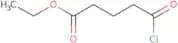
CAS:<p>Versatile small molecule scaffold</p>Formula:C13H11N3SPurity:Min. 95%Molecular weight:241.31 g/molGlutaric acid monoethyl ester chloride
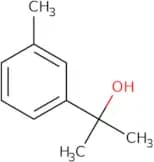
CAS:<p>Glutaric acid monoethyl ester chloride is an acid that has been used in pharmaceutical preparations and as a topical agent. It is used to treat chronic pulmonary diseases, such as asthma. The acidic properties of glutaric acid monoethyl ester chloride make it an effective agent for the treatment of autoimmune diseases, such as rheumatoid arthritis and multiple sclerosis. Glutaric acid monoethyl ester chloride also has dopamine-enhancing effects and can be used for the treatment of cancer. It is a monoclonal antibody that binds to brain infarction sites, preventing the progression of this disease. Glutaric acid monoethyl ester chloride has also been shown to have anti-inflammatory properties in bowel disease models, making it an effective treatment for inflammatory bowel disease (IBD).</p>Formula:C7H11ClO3Purity:Min. 95%Molecular weight:178.61 g/mol2-(3-Methylphenyl)propan-2-ol
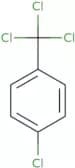
CAS:<p>2-(3-Methylphenyl)propan-2-ol is an oxygenated compound that has been shown to have antibacterial activity against Staphylococcus. It has also been shown to have antiacetylcholinesterase and bactericidal effects, which are believed to be due to its ability to inhibit the synthesis of a neurotransmitter called acetylcholine. 2-(3-Methylphenyl)propan-2-ol has also been shown to have antimicrobial bioactivities against Trichophyton mentagrophytes, a fungus that causes ringworm in humans. Interestingly, this molecule was found in plants from the Lamiaceae family, which includes herbs such as sage and thyme. These plants are used for their antimicrobial properties in traditional medicine. 2-(3-Methylphenyl)propan-2-ol also shows bioactivities against Alzheimer's disease and chemical compositions that may be helpful for treating these diseases.</p>Formula:C10H14OPurity:Min. 95%Molecular weight:150.22 g/mol4-Chlorobenzotrichloride
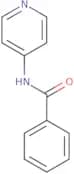
CAS:<p>4-Chlorobenzotrichloride is a hydrogen fluoride reagent that is used as an antibacterial agent. It has been shown to be highly active against gram-negative bacteria, including Pseudomonas aeruginosa and Escherichia coli. 4-Chlorobenzotrichloride is also a specific inhibitor of the bacterial enzyme DNA polymerase III and can inhibit the synthesis of DNA in mammalian cells. The administration of this drug has been shown to protect mice from brain damage due to oxygen deprivation. 4-Chlorobenzotrichloride has also been shown to have anti-cancer activity in various types of cancers, including breast cancer and chronic bronchitis. This drug binds specifically to mouse monoclonal antibodies that are specific for the cell surface markers CD3, CD4, or CD8 on T cells.</p>Formula:C7H4Cl4Purity:Min. 95%Molecular weight:229.91 g/molN-(Pyridin-4-yl)benzamide
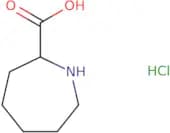
CAS:<p>N-(Pyridin-4-yl)benzamide is a control agent that is used as a pest control. It inhibits the enzyme nitric oxide synthase and prevents the production of nitric oxide, which has been implicated in the uncontrolled proliferation of certain cells. N-(Pyridin-4-yl)benzamide also has anti-cancer properties, inhibiting cancer cell growth by regulating DNA replication and protein synthesis. This drug is effective against colon cancer cells but not against breast cancer cells.<br>The supramolecular chemistry of this molecule was studied using diffraction techniques on calf thymus DNA and bacterial DNA gyrase. The transfer of energy from one molecule to another was observed using absorption spectroscopy on mouse brain tissue.</p>Formula:C12H10N2OPurity:Min. 95%Molecular weight:198.22 g/molAzepane-2-carboxylic acid hydrochloride
CAS:<p>Versatile small molecule scaffold</p>Formula:C7H14ClNO2Purity:Min. 95%Molecular weight:179.64 g/mol2-[(Naphthalen-2-yloxy)methyl]oxirane
CAS:<p>2-[(Naphthalen-2-yloxy)methyl]oxirane is a monomer that can be used to produce epoxides, amines, and other organic compounds. It is used as a transport agent and catalytic agent for the ring-opening of epoxides. The cyanosilylation reaction of 2-[(naphthalen-2-yloxy)methyl]oxirane with bis[trimethylsilyl]acetamide produces cyanosilylated products. This compound has been shown to be a ligand for phosphazene and polyethers, as well as an effective catalyst in the synthesis of cyclic ethers.</p>Formula:C13H12O2Purity:Min. 95%Molecular weight:200.23 g/molButyl ethenyl(methyl)phosphinate
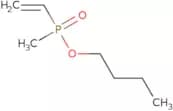
CAS:<p>Versatile small molecule scaffold</p>Formula:C7H15O2PPurity:Min. 95%Molecular weight:162.17 g/molNorbornane-2-methanol
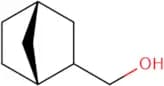
CAS:<p>Norbornane-2-methanol is a viscosity additive in lubricants, diesel fuel, and other industrial products. It is also used as a grignard reagent for the synthesis of organic compounds. Norbornane-2-methanol has been shown to react with copper chromite to produce the reactive chemical species quadricyclane, which can be used to synthesize organic compounds. Norbornane-2-methanol also reacts with primary alcohols to form a thermally stable c–h bond. The deuterium labeled version of this compound has been used in techniques such as nuclear magnetic resonance spectroscopy and mass spectrometry.</p>Formula:C8H14OPurity:Min. 95%Molecular weight:126.2 g/mol4-Bromo-1,2-thiazole-5-carbaldehyde
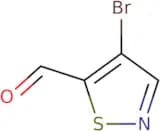
CAS:<p>Versatile small molecule scaffold</p>Formula:C4H2BrNOSPurity:Min. 95%Molecular weight:192.04 g/mol
![6-(Piperazin-1-yl)-[1,2,4]triazolo[4,3-b]pyridazine](/_next/image/?url=https%3A%2Fstatic.cymitquimica.com%2Fproducts%2F3D%2Fthumb-webp%2FEYB29627.webp&w=3840&q=75)

![2-Methyl-4-{[1,3]thiazolo[5,4-b]pyridin-2-yl}aniline](/_next/image/?url=https%3A%2Fstatic.cymitquimica.com%2Fproducts%2F3D%2Fthumb-webp%2FEYB29768.webp&w=3840&q=75)
![2-[(Naphthalen-2-yloxy)methyl]oxirane](/_next/image/?url=https%3A%2Fstatic.cymitquimica.com%2Fproducts%2F3D%2Fthumb-webp%2FFAA23406.webp&w=3840&q=75)