Building Blocks
This section contains fundamental products for the synthesis of organic and biological compounds. Building blocks are the essential starting materials used to construct complex molecules through various chemical reactions. They play a critical role in drug discovery, material science, and chemical research. At CymitQuimica, we offer a diverse range of high-quality building blocks to support your innovative research and industrial projects, ensuring you have the essential components for successful synthesis.
Subcategories of "Building Blocks"
- Boronic Acids & Boronic Acid Derivatives(5,778 products)
- Chiral Building Blocks(1,242 products)
- Hydrocarbon Building Blocks(6,098 products)
- Organic Building Blocks(61,034 products)
Found 199601 products of "Building Blocks"
Sort by
Purity (%)
0
100
|
0
|
50
|
90
|
95
|
100
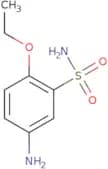
5-Amino-2-ethoxybenzene-1-sulfonamide
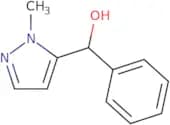
CAS:Versatile small molecule scaffoldFormula:C8H12N2O3SPurity:Min. 95%Molecular weight:216.26 g/mol(1-Methyl-1H-pyrazol-5-yl)(phenyl)methanol
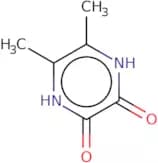
CAS:<p>Versatile small molecule scaffold</p>Formula:C11H12N2OPurity:Min. 95%Molecular weight:188.23 g/mol5,6-Dimethylpyrazine-2,3(1H,4H)-dione
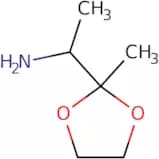
CAS:<p>Versatile small molecule scaffold</p>Formula:C6H8N2O2Purity:Min. 95%Molecular weight:140.14 g/mol1-(2-Methyl-1,3-dioxolan-2-yl)ethan-1-amine
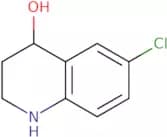
CAS:<p>Versatile small molecule scaffold</p>Formula:C6H13NO2Purity:Min. 95%Molecular weight:131.17 g/mol6-Chloro-1,2,3,4-tetrahydroquinolin-4-ol
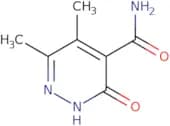
CAS:<p>Versatile small molecule scaffold</p>Formula:C9H10ClNOPurity:Min. 95%Molecular weight:183.63 g/mol5,6-Dimethyl-3-oxo-2,3-dihydropyridazine-4-carboxamide
CAS:Versatile small molecule scaffoldFormula:C7H9N3O2Purity:Min. 95%Molecular weight:167.17 g/mol3-(4-Fluorophenyl)-5H,6H,7H,8H,9H-imidazo[1,5-a]azepine-1-carboxylic acid
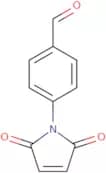
CAS:Versatile small molecule scaffoldFormula:C15H15FN2O2Purity:Min. 95%Molecular weight:274.29 g/mol4-(2,5-Dioxo-2,5-dihydro-1H-pyrrol-1-yl)benzaldehyde
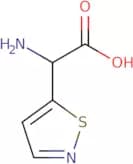
CAS:<p>Versatile small molecule scaffold</p>Formula:C11H7NO3Purity:Min. 95%Molecular weight:201.18 g/mol2-Amino-2-(1,2-thiazol-5-yl)acetic acid
CAS:<p>Versatile small molecule scaffold</p>Formula:C5H6N2O2SPurity:Min. 95%Molecular weight:158.18 g/molN-{1-[2-(Difluoromethoxy)phenyl]propylidene}hydroxylamine
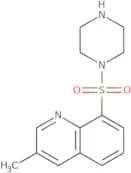
CAS:<p>Versatile small molecule scaffold</p>Formula:C10H11F2NO2Purity:Min. 95%Molecular weight:215.2 g/mol3-Methyl-8-(piperazine-1-sulfonyl)quinoline
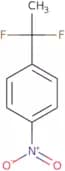
CAS:<p>Versatile small molecule scaffold</p>Formula:C14H17N3O2SPurity:Min. 95%Molecular weight:291.37 g/mol1-(1,1-Difluoroethyl)-4-nitrobenzene
CAS:<p>Versatile small molecule scaffold</p>Formula:C8H7F2NO2Purity:Min. 95%Molecular weight:187.15 g/mol1-[3-Methoxy-4-(methylsulfanyl)phenyl]ethan-1-one
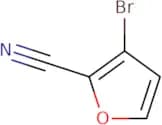
CAS:Versatile small molecule scaffoldFormula:C10H12O2SPurity:Min. 95%Molecular weight:196.27 g/mol3-Bromofuran-2-carbonitrile
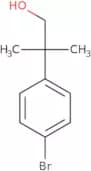
CAS:<p>Versatile small molecule scaffold</p>Formula:C5H2BrNOPurity:Min. 95%Molecular weight:171.98 g/mol2-(4-Bromophenyl)-2-methylpropan-1-ol
CAS:<p>Versatile small molecule scaffold</p>Formula:C10H13BrOPurity:Min. 95%Molecular weight:229.11 g/molN-[(2-Aminophenyl)methyl]-N-methylacetamide
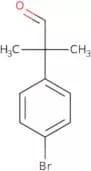
CAS:<p>Versatile small molecule scaffold</p>Formula:C10H14N2OPurity:Min. 95%Molecular weight:178.23 g/mol2-(4-Bromophenyl)-2-methylpropanal
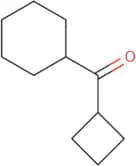
CAS:<p>Versatile small molecule scaffold</p>Formula:C10H11BrOPurity:Min. 95%Molecular weight:227.1 g/molCyclobutyl(cyclohexyl)methanone
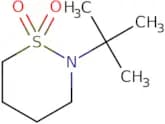
CAS:<p>Versatile small molecule scaffold</p>Formula:C11H18OPurity:Min. 95%Molecular weight:166.26 g/mol2-tert-Butyl-1λ⁶,2-thiazinane-1,1-dione
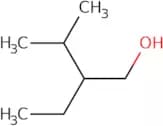
CAS:<p>Versatile small molecule scaffold</p>Formula:C8H17NO2SPurity:Min. 95%Molecular weight:191.29 g/mol2-Ethyl-3-methylbutan-1-ol
CAS:<p>2-Ethyl-3-methylbutan-1-ol is a chemical that can be activated at the 2-, 3-, or 4-position by a stepwise process. The amines are used in the synthesis of other compounds, such as pharmaceuticals and polymers. The selectivity for the alkylation reaction is high, with yields greater than 95%. The ethyl group can be removed from 2-ethyl-3-methylbutan-1-ol by using an alcohol catalyst. This chemical has been shown to have high yields when synthesized with a transfer hydrogenation reaction. It also has a byproduct that can be removed with hydrogen gas in the presence of palladium on carbon.</p>Formula:C7H16OPurity:Min. 95%Molecular weight:116.2 g/mol

![3-(4-Fluorophenyl)-5H,6H,7H,8H,9H-imidazo[1,5-a]azepine-1-carboxylic acid](/_next/image/?url=https%3A%2Fstatic.cymitquimica.com%2Fproducts%2F3D%2Fthumb-webp%2FASB88600.webp&w=3840&q=75)
![N-{1-[2-(Difluoromethoxy)phenyl]propylidene}hydroxylamine](/_next/image/?url=https%3A%2Fstatic.cymitquimica.com%2Fproducts%2F3D%2Fthumb-webp%2FASB88593.webp&w=3840&q=75)
![1-[3-Methoxy-4-(methylsulfanyl)phenyl]ethan-1-one](/_next/image/?url=https%3A%2Fstatic.cymitquimica.com%2Fproducts%2F3D%2Fthumb-webp%2FHBA46774.webp&w=3840&q=75)
![N-[(2-Aminophenyl)methyl]-N-methylacetamide](/_next/image/?url=https%3A%2Fstatic.cymitquimica.com%2Fproducts%2F3D%2Fthumb-webp%2FASB88565.webp&w=3840&q=75)