Building Blocks
This section contains fundamental products for the synthesis of organic and biological compounds. Building blocks are the essential starting materials used to construct complex molecules through various chemical reactions. They play a critical role in drug discovery, material science, and chemical research. At CymitQuimica, we offer a diverse range of high-quality building blocks to support your innovative research and industrial projects, ensuring you have the essential components for successful synthesis.
Subcategories of "Building Blocks"
- Boronic Acids & Boronic Acid Derivatives(5,756 products)
- Chiral Building Blocks(1,242 products)
- Hydrocarbon Building Blocks(6,095 products)
- Organic Building Blocks(61,038 products)
Found 196817 products of "Building Blocks"
Sort by
Purity (%)
0
100
|
0
|
50
|
90
|
95
|
100
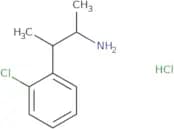
3-(2-Chlorophenyl)butan-2-amine hydrochloride
CAS:Controlled Product<p>Versatile small molecule scaffold</p>Formula:C10H15Cl2NPurity:Min. 95%Molecular weight:220.14 g/mol[3-(4-Chlorophenyl)butan-2-yl](methyl)amine
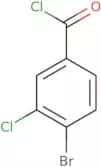
CAS:Controlled Product<p>Versatile small molecule scaffold</p>Formula:C11H16ClNPurity:Min. 95%Molecular weight:197.7 g/mol4-Bromo-3-chlorobenzoyl chloride
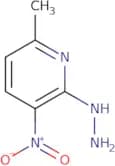
CAS:<p>Versatile small molecule scaffold</p>Formula:C7H3BrCl2OPurity:Min. 95%Molecular weight:253.9 g/mol2-Hydrazinyl-6-methyl-3-nitropyridine
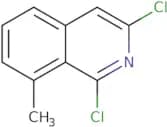
CAS:<p>Versatile small molecule scaffold</p>Formula:C6H8N4O2Purity:Min. 95%Molecular weight:168.15 g/mol1,3-Dichloro-8-methylisoquinoline
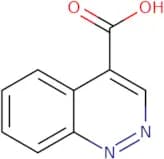
CAS:<p>Versatile small molecule scaffold</p>Formula:C10H7Cl2NPurity:Min. 95%Molecular weight:212.07 g/molCinnoline-4-carboxylic acid
CAS:<p>Cinnoline-4-carboxylic acid is a synthetic compound that is used in the synthesis of cinnolines. It is synthesized from formaldehyde and cinnamic acid through a process called decarboxylation. This process produces two molecules of CO2 and one molecule of formic acid. Cinnoline-4-carboxylic acid is soluble in organic solvents such as formamide, chloroform, or ethyl acetate, but insoluble in water. The compound has been shown to exhibit dose-dependent effects on the growth of cell cultures and can be used to study the effect of drugs on cells. It also has been shown to inhibit an enzyme called ciliaris, which is involved in the production of mucus by cells.</p>Formula:C9H6N2O2Purity:Min. 95%Molecular weight:174.16 g/mol3-(4-Chlorophenyl)butan-2-one
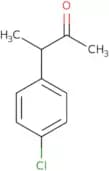
CAS:<p>Versatile small molecule scaffold</p>Formula:C10H11ClOPurity:Min. 95%Molecular weight:182.64 g/mol3-[2-(Trifluoromethyl)phenyl]butan-2-one
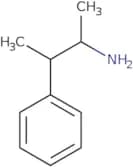
CAS:<p>Versatile small molecule scaffold</p>Formula:C11H11F3OPurity:Min. 95%Molecular weight:216.2 g/mol3-Phenylbutan-2-amine
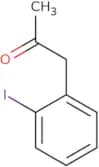
CAS:Controlled Product<p>Versatile small molecule scaffold</p>Formula:C10H15NPurity:Min. 95%Molecular weight:149.23 g/mol1-(2-Iodophenyl)propan-2-one
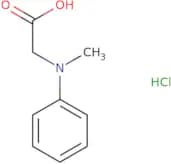
CAS:Controlled Product<p>Versatile small molecule scaffold</p>Formula:C9H9IOPurity:Min. 95%Molecular weight:260.07 g/mol2-(Methyl(phenyl)amino)acetic acid hydrochloride
CAS:<p>Versatile small molecule scaffold</p>Formula:C9H12ClNO2Purity:Min. 95%Molecular weight:201.65 g/mol2-[Ethyl(phenyl)amino]acetic acid hydrochloride
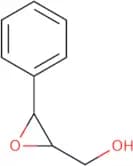
CAS:<p>Versatile small molecule scaffold</p>Formula:C10H14ClNO2Purity:Min. 95%Molecular weight:215.67 g/mol(3-Phenyloxiranyl)methanol
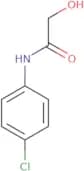
CAS:<p>3-Phenyloxiranylmethanol is a chemical compound that is used in scientific research.</p>Formula:C9H10O2Purity:Min. 95%Molecular weight:150.17 g/molN-(4-Chlorophenyl)-2-hydroxyacetamide
CAS:<p>4-Chloro-N-(2-hydroxyacetyl)aniline (NHA) is a metabolite of the anti-cancer drug piperonyl butoxide. It has been shown to inhibit the growth of tumor xenografts in mice, and may be an effective cancer treatment. The mechanism of NHA's inhibition of tumor growth is through its oxidative metabolites that induce DNA damage, leading to apoptosis. The production of these compounds is increased when it is incubated with α-tocopherol or rhesus monkeys, which suggests that they are conjugates with glucuronic acid. In humans, 4-chloro-NHA undergoes oxidation by dehydrogenases to form 4-chloroaniline and 2-(4-chlorophenoxy)-N-(2-hydroxyacetyl)acetic acid (4CPHAA). This last compound can be conjugated with either glutathione or glucuronic acid to form</p>Formula:C8H8ClNO2Purity:Min. 95%Molecular weight:185.61 g/molMethyl [4-(chlorosulfonyl)phenyl]carbamate
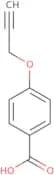
CAS:<p>Versatile small molecule scaffold</p>Formula:C8H8ClNO4SPurity:Min. 95%Molecular weight:249.67 g/mol4-(2-Propynyloxy)benzoic acid
CAS:<p>4-(Prop-2-yn-1-yloxy)benzoic acid is a colorless to white crystalline solid. It is soluble in water, ethanol, ether and benzene. The substance is an intermediate in the synthesis of pharmaceuticals such as propofol and etoposide. 4-(Prop-2-yn-1-yloxy)benzoic acid can be used for the synthesis of polymers that are polymerizable and have a high degree of crosslinking. This substance can also be used as a reagent for the conversion of halides, azobenzene, anthracene, phenols, and naphthalenes into their corresponding ethers.</p>Formula:C10H8O3Purity:Min. 95%Molecular weight:176.17 g/molEthyl 3-oxo-2-azabicyclo[2.2.2]octane-4-carboxylate
CAS:<p>Versatile small molecule scaffold</p>Formula:C10H15NO3Purity:Min. 95%Molecular weight:197.23 g/mol{2-Azabicyclo[2.2.2]octan-4-yl}methanol hydrochloride
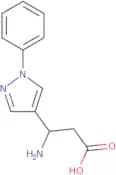
CAS:<p>Versatile small molecule scaffold</p>Formula:C8H16ClNOPurity:Min. 95%Molecular weight:177.7 g/mol3-Amino-3-(1-phenyl-1H-pyrazol-4-yl)propanoic acid
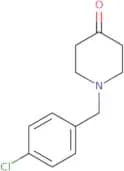
CAS:<p>Versatile small molecule scaffold</p>Formula:C12H13N3O2Purity:Min. 95%Molecular weight:231.25 g/mol1-(4-chlorobenzyl)piperidin-4-one
CAS:<p>Versatile small molecule scaffold</p>Formula:C12H14ClNOPurity:Min. 95%Molecular weight:223.7 g/mol

amine](/_next/image/?url=https%3A%2Fstatic.cymitquimica.com%2Fproducts%2F3D%2Fthumb-webp%2FWAA90014.webp&w=3840&q=75)
![3-[2-(Trifluoromethyl)phenyl]butan-2-one](/_next/image/?url=https%3A%2Fstatic.cymitquimica.com%2Fproducts%2F3D%2Fthumb-webp%2FWAA90606.webp&w=3840&q=75)
![2-[Ethyl(phenyl)amino]acetic acid hydrochloride](/_next/image/?url=https%3A%2Fstatic.cymitquimica.com%2Fproducts%2F3D%2Fthumb-webp%2FWAA91178.webp&w=3840&q=75)
![Methyl [4-(chlorosulfonyl)phenyl]carbamate](/_next/image/?url=https%3A%2Fstatic.cymitquimica.com%2Fproducts%2F3D%2Fthumb-webp%2FWAA92653.webp&w=3840&q=75)
![Ethyl 3-oxo-2-azabicyclo[2.2.2]octane-4-carboxylate](/_next/image/?url=https%3A%2Fstatic.cymitquimica.com%2Fproducts%2F3D%2Fthumb-webp%2FWAA93315.webp&w=3840&q=75)
![{2-Azabicyclo[2.2.2]octan-4-yl}methanol hydrochloride](/_next/image/?url=https%3A%2Fstatic.cymitquimica.com%2Fproducts%2F3D%2Fthumb-webp%2FWAA93320.webp&w=3840&q=75)